

The complete guide
How To Choose And Use A Disposable Shower Drain Hair Catcher
The problem nobody deals with until it is too late
Shower drains do not fail suddenly. They fail slowly, over months, and you barely notice until you are standing in two inches of grey water waiting for it to go down.
The cause is almost always hair. A single shower sheds more than you would think, and that hair does not break down in a pipe. It catches on the inside wall, on a joint, on whatever is already there, and it starts to hold onto soap scum and skin oils. What begins as a few strands turns into a dense mat that water has to squeeze past. By the time you notice the slow drain, the mat has been building for a season.
The fix most people reach for is reactive. Pull up the cover, poke at it with a tool, deal with what comes out. It is unpleasant, it takes time, and it has to be repeated. A disposable shower drain hair catcher flips the order of operations. It stops the hair at the floor, where you can see it and where getting rid of it takes four seconds.
How a peel and stick drain sticker works
There is not much to it, which is the appeal.
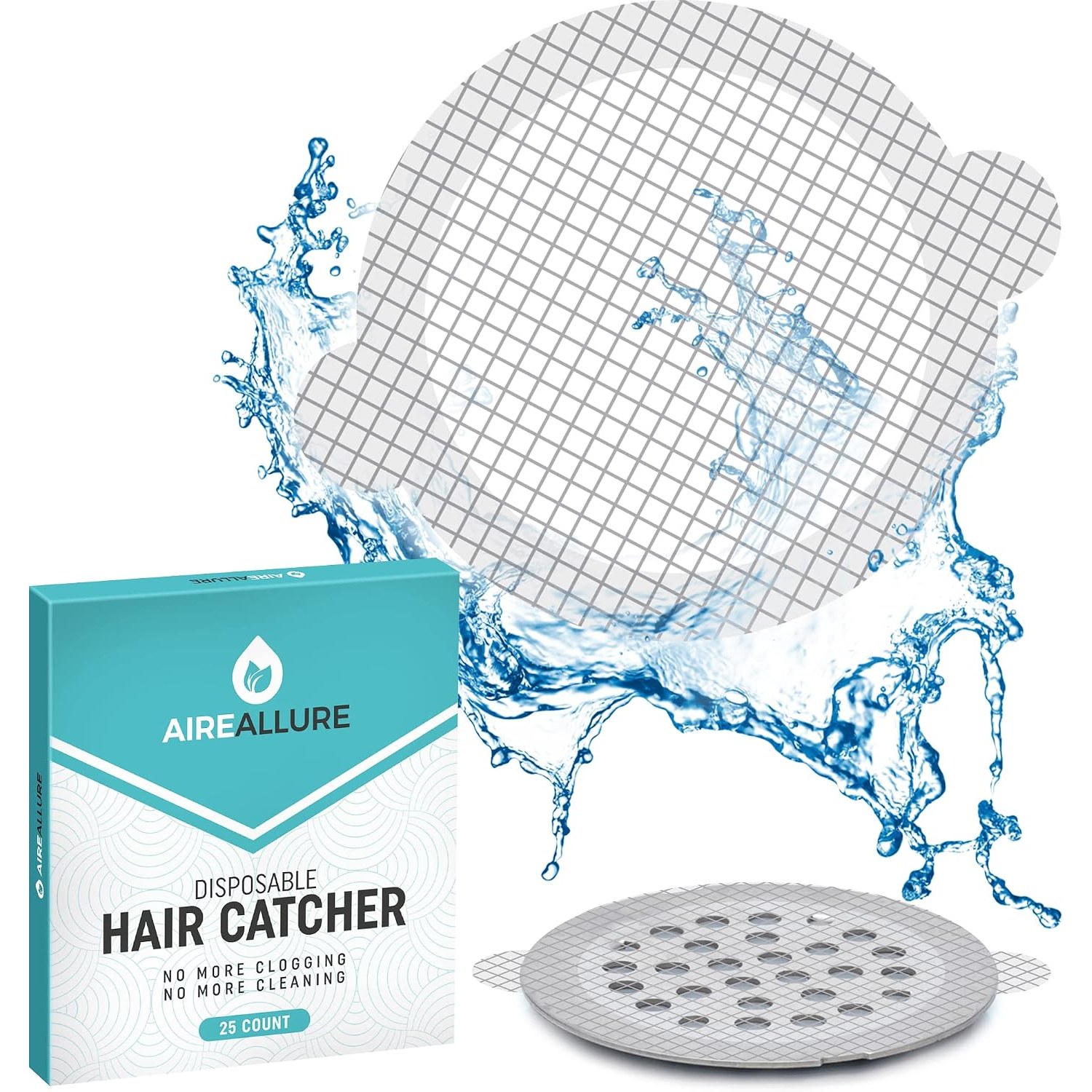
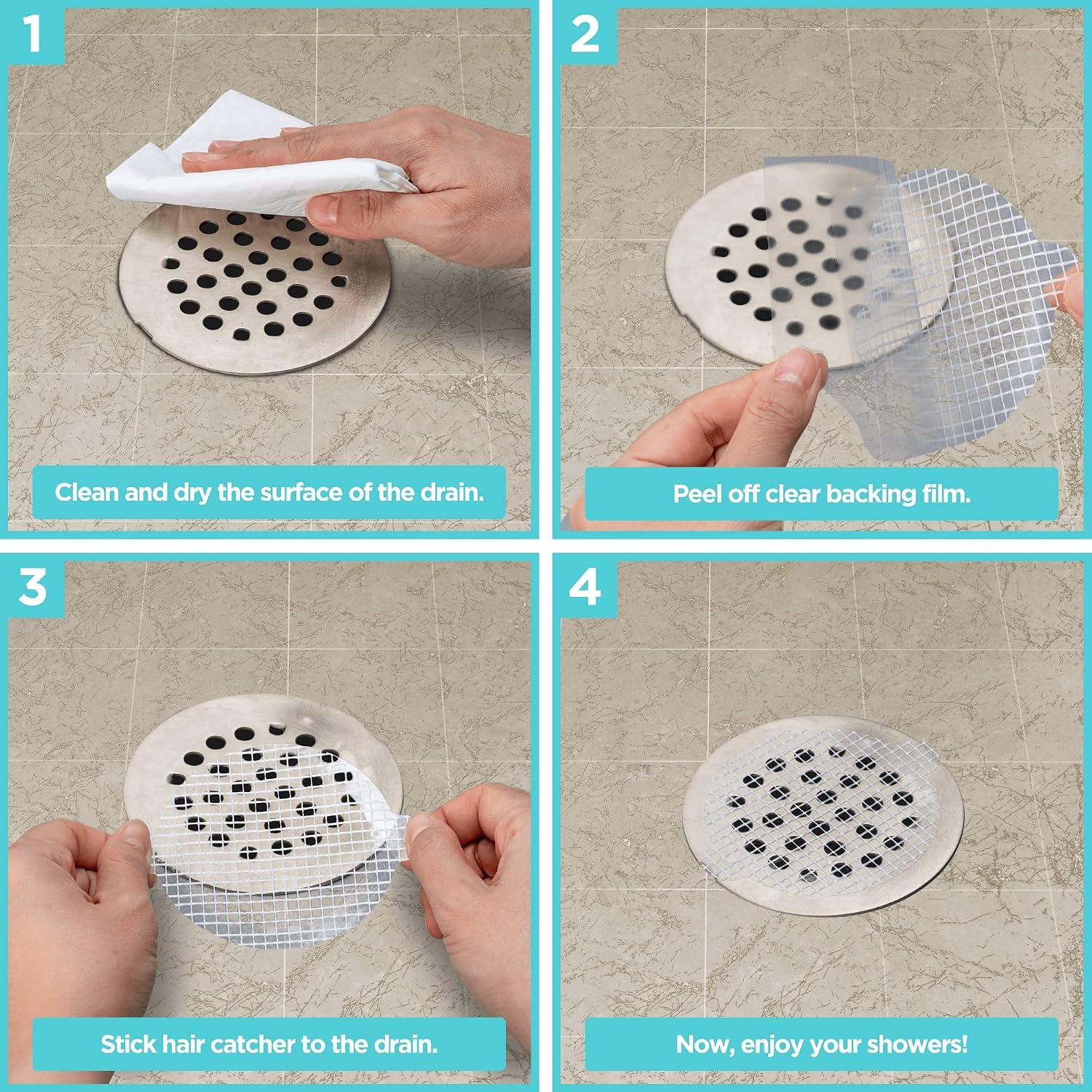
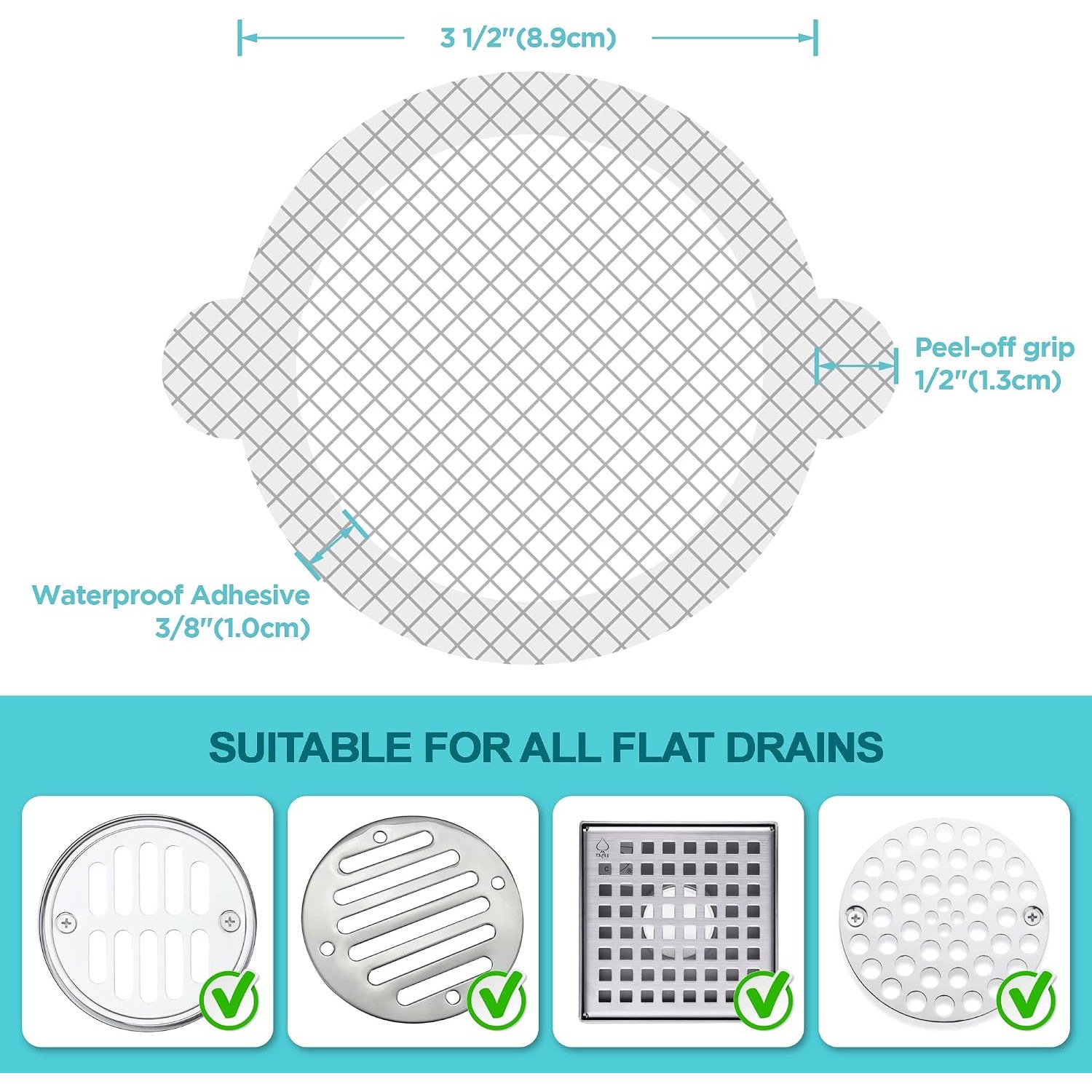
Each unit in this 25 pack is a flat plastic sticker, 5.1 inches wide by 4.7 inches high, with a mesh face and an adhesive band around the edge. You dry the floor around the drain, peel the backing off, centre the mesh over the drain opening and press the edge down. Water goes through the mesh and away. Hair stays on top.
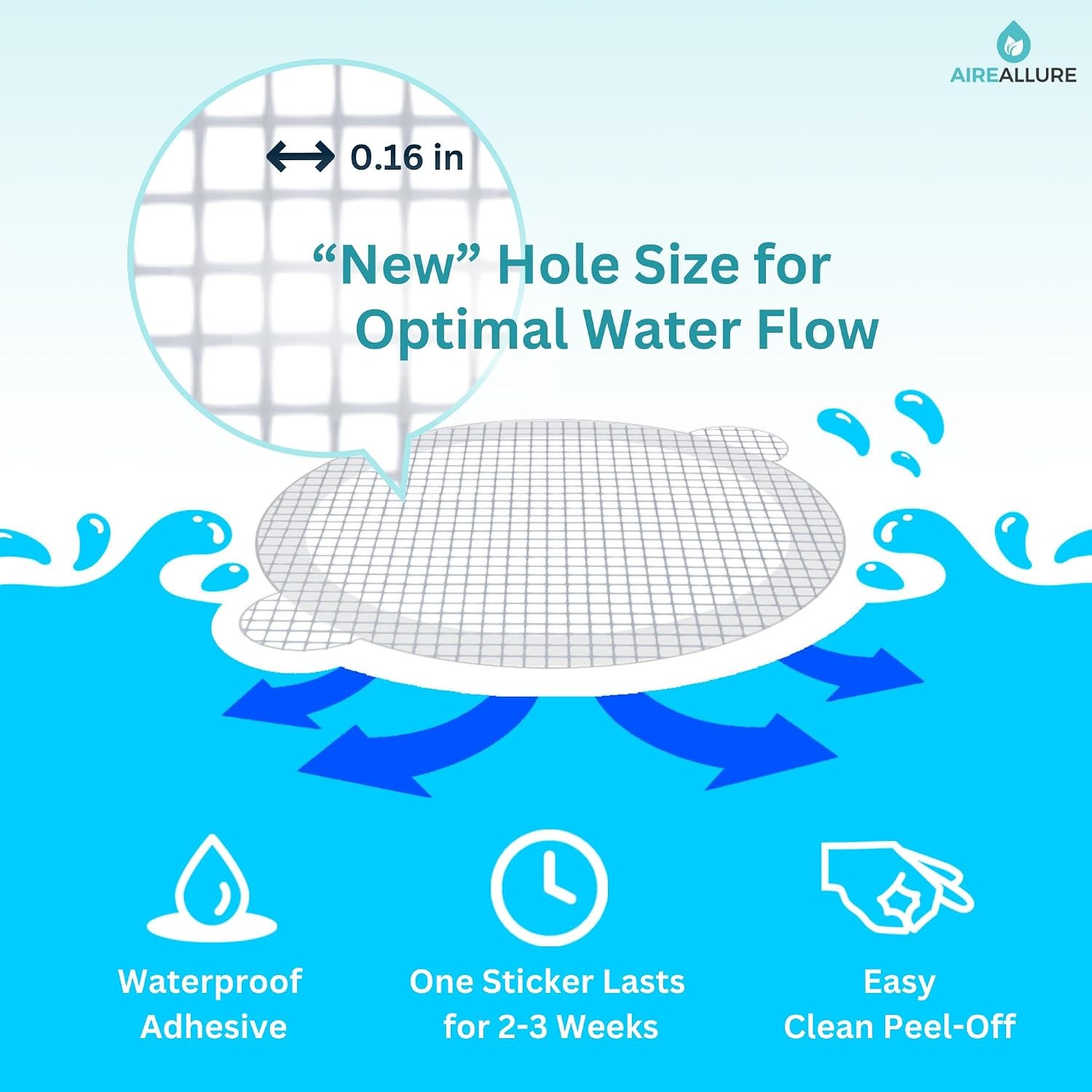
The adhesive is made to be waterproof, because a shower adhesive that gives up when it gets wet is useless. It is stated to grip metal, plastic and tile, which covers most shower floor drains and their covers. The mesh sits flush rather than standing proud, so there is nothing to catch a foot on and nothing that looks obviously bolted on.
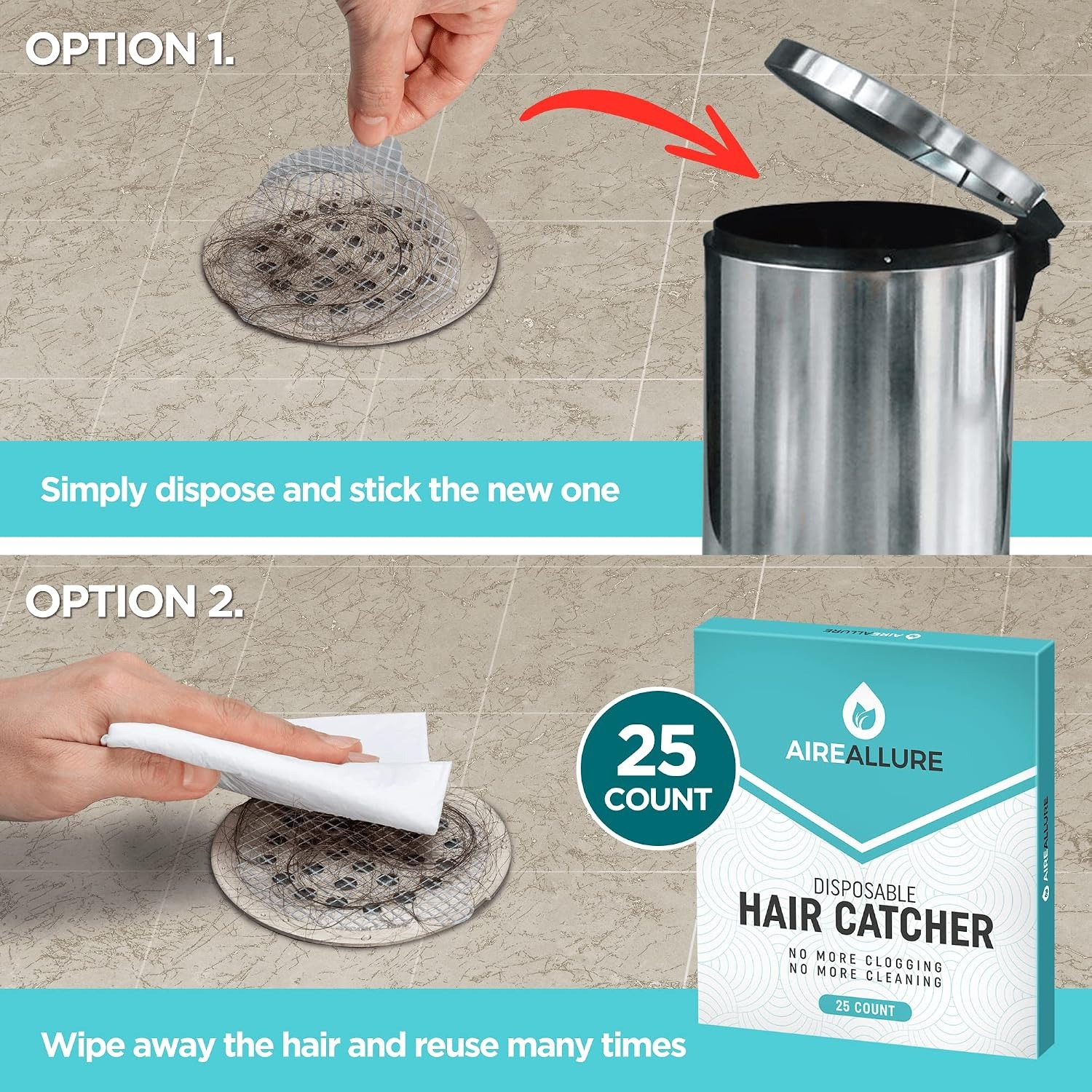
The part that makes it genuinely different from a reusable strainer is the disposal. When the mesh is visibly loaded, you lift one edge, peel it back on itself and fold it inward so the hair is sealed inside. Into the garbage it goes. You never touch the hair, you never rinse anything in the sink, and you never stand there with a wet clump in your hand wondering where to put it.
Who this suits
Long hair households are the obvious case. If one or two people in the house have hair past the shoulders, the volume going down a shower drain every week is considerable, and that is where the worst build ups come from.
Renters are another good fit. You are not drilling anything, not fitting hardware, and not altering a fixture you do not own. The sticker goes on and comes off.
Shared houses and student places benefit too, because the person who finds the catcher full is the person who can fix it in seconds without needing to care enough to clean a strainer properly. Lowering the effort is what makes it actually happen.
It also suits anyone who washes a dog in the shower. Dog hair is short, plentiful and clings to everything, and the best shower drain protector in that situation is one you can throw away afterward.
Who it does not suit: anyone whose drain is not around 3.5 inches, anyone with a drain assembly that leaves no flat ring of surface around the opening, and anyone who would rather own one thing for ten years than a box of consumables. That is a legitimate preference, and a basket strainer is the answer there.
How to choose
Measure the drain first. This is the whole decision. Put a ruler across the widest part of the open hole, not the outer decorative ring. If your cover sits in a recessed groove, measure that groove across its middle. This product lists a 3.5 inch (89 mm) fits hole size and a 3.5 inch compatible groove diameter, and the sticker overall is 5.1 inches wide so the adhesive edge has somewhere to land.
Check the surface around the drain. Adhesive needs a flat, smooth ring of floor or cover to press against. Heavily textured anti slip tile, a deep decorative grate with wide gaps, or a drain sitting in a dip will all reduce how well the edge grips. Run a finger around the area and see what you are working with.
Think about pack size against how fast you will use them. At a change every two to three weeks, 25 stickers is roughly a year for one shower. Two bathrooms, or a house with a lot of hair, will burn through them faster. Buying the best bulk hair catcher pack you will realistically use beats buying small packs repeatedly.
Be honest about which format you will stick with. Plenty of people buy a reusable strainer, clean it twice and then stop. If that is you, a disposable is not laziness, it is just matching the product to your actual habits.
Getting the application right
Most of the complaints about any stick on drain filter trace back to how it went on.
Clean the area first. Soap film is the enemy of adhesive, and shower floors around a drain usually have plenty of it. A quick wipe with a cloth, then a rinse, then a proper dry with a towel.
Dry is the word that matters. Not damp, not nearly dry. Give it a minute if you need to. The adhesive band needs to meet a dry surface to form its bond, and almost every early lift comes from skipping this step.
Centre the mesh over the opening before you press anything down, because repositioning after contact weakens the edge. Then press firmly all the way round, working from one side to the other, so there are no air gaps under the band.
Leave it a few minutes before the next shower if you can. Not essential, but it helps.
Replacing and getting rid of it
You will know when. The mesh goes from clear to visibly matted, and water starts sitting on the surface for a second before going through. That is the point to change it, not three weeks later.
Do the swap while the area is wet. The maker specifically suggests removing it wet, and in practice that makes a real difference: the adhesive releases more easily and you are far less likely to leave a residue ring on a brushed finish.
Lift an edge with a fingernail, peel it back over itself so the mesh folds inward, and the hair ends up trapped inside the fold. It goes in the garbage. Not down the drain, and never down the toilet, where a plastic sticker just creates a worse problem somewhere further along the pipe.
Wipe the drain area, let it dry, and put the next one on. The whole job takes less time than finding your shampoo.
Storage and small details
Keep the spares flat and dry. Steam is not good for an unused adhesive edge, so the shelf of a linen closet beats the ledge in the bathroom. The packaging keeps them from picking up dust, which also matters for how well they stick.
If one lifts at an edge partway through its life, press it back down on a dry surface. If it keeps lifting, replace it rather than fighting it, and pay closer attention to drying the floor next time.
Do not trim them smaller to fit a tighter drain. The outer band is the adhesive, and cutting it away removes the part doing the work.
What this will not do
It catches hair that lands on it. It will not clear a blockage that is already sitting in your pipe, and it will not help with anything that got in before you started using one. If your shower is already draining slowly, deal with the existing build up first, then start fresh with a catcher so the problem does not come back.
Anything persistent, anything involving more than one fixture at once, or anything behind a wall is work for a licensed plumber. A sticker is prevention, not repair.
The short version
Hair is what blocks shower drains, and catching it at the surface is far easier than removing it from a pipe. This 25 pack gives you flat mesh stickers with a waterproof adhesive edge, sized for a 3.5 inch drain opening, that peel on in seconds and lift off with the hair still attached.
Measure your drain first. Dry the floor properly before applying. Change it every two to three weeks, remove it while wet, fold it inward and bin it. Twenty five of them is about a year for one shower.
It is a small, unglamorous product that quietly saves you from a job nobody enjoys.