
The complete guide
How to Choose and Use a Drain Snake Set
The slow drain nobody notices until it is bad
Drains rarely fail overnight. They slow down. First the bathroom sink takes a second longer to empty after you brush your teeth. Then the tub holds an inch of water while you finish your shower. A few weeks later you are standing in a puddle wondering when this happened.
What is going on inside the pipe is simple and a bit grim. Hair goes down the drain with every shower and shave. Soap, conditioner and body oil coat the inside of the pipe. Hair catches on that coating, more soap sticks to the hair, and a soft mat starts building on the pipe wall. In a kitchen sink it is the same story with grease and food scraps instead.
The good news is that this buildup almost always sits near the drain opening, inside the trap or the first stretch of pipe. That is well within reach of a hand tool. You do not need to open up plumbing to fix it, and you do not need to pour anything down there.
How a flexible drain snake works
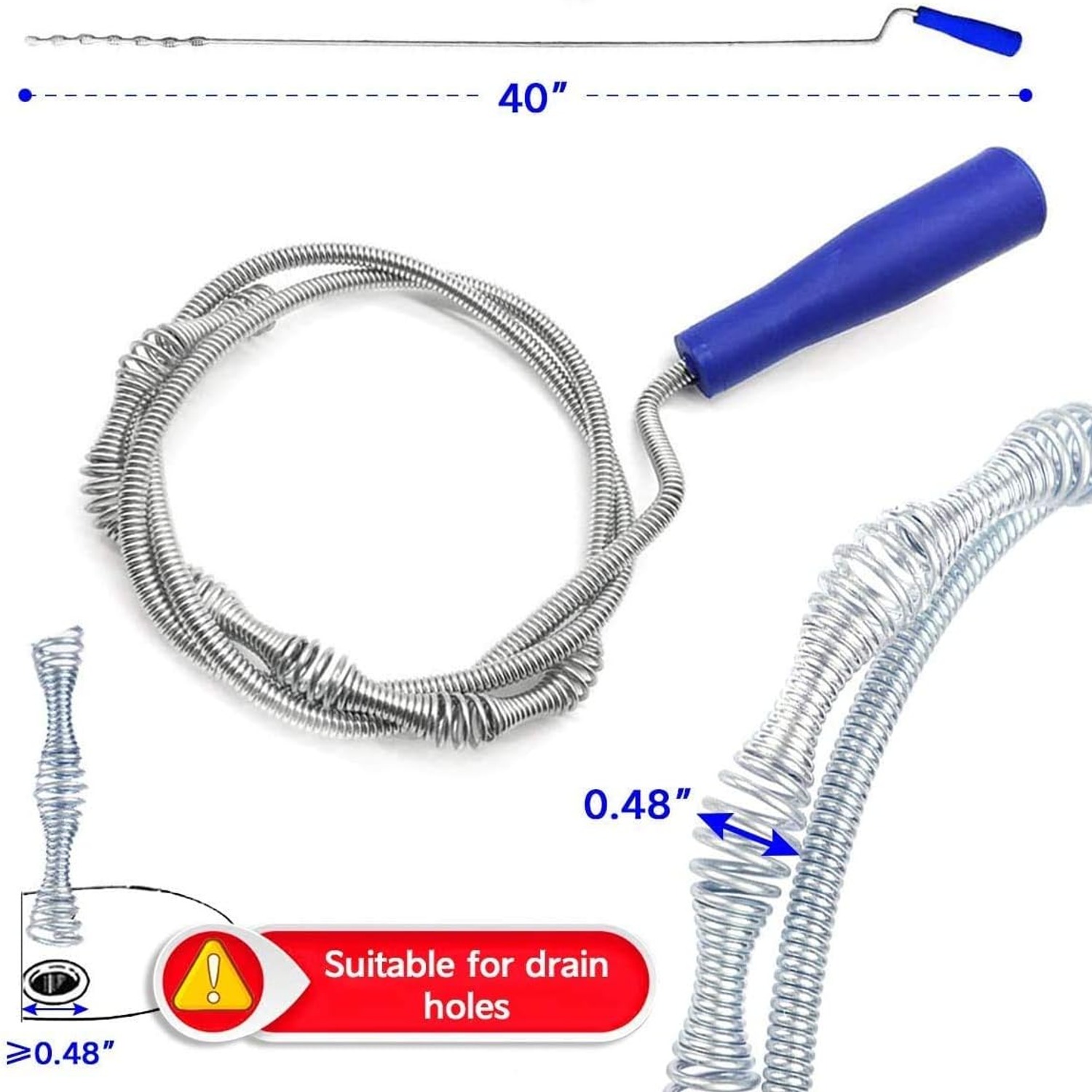
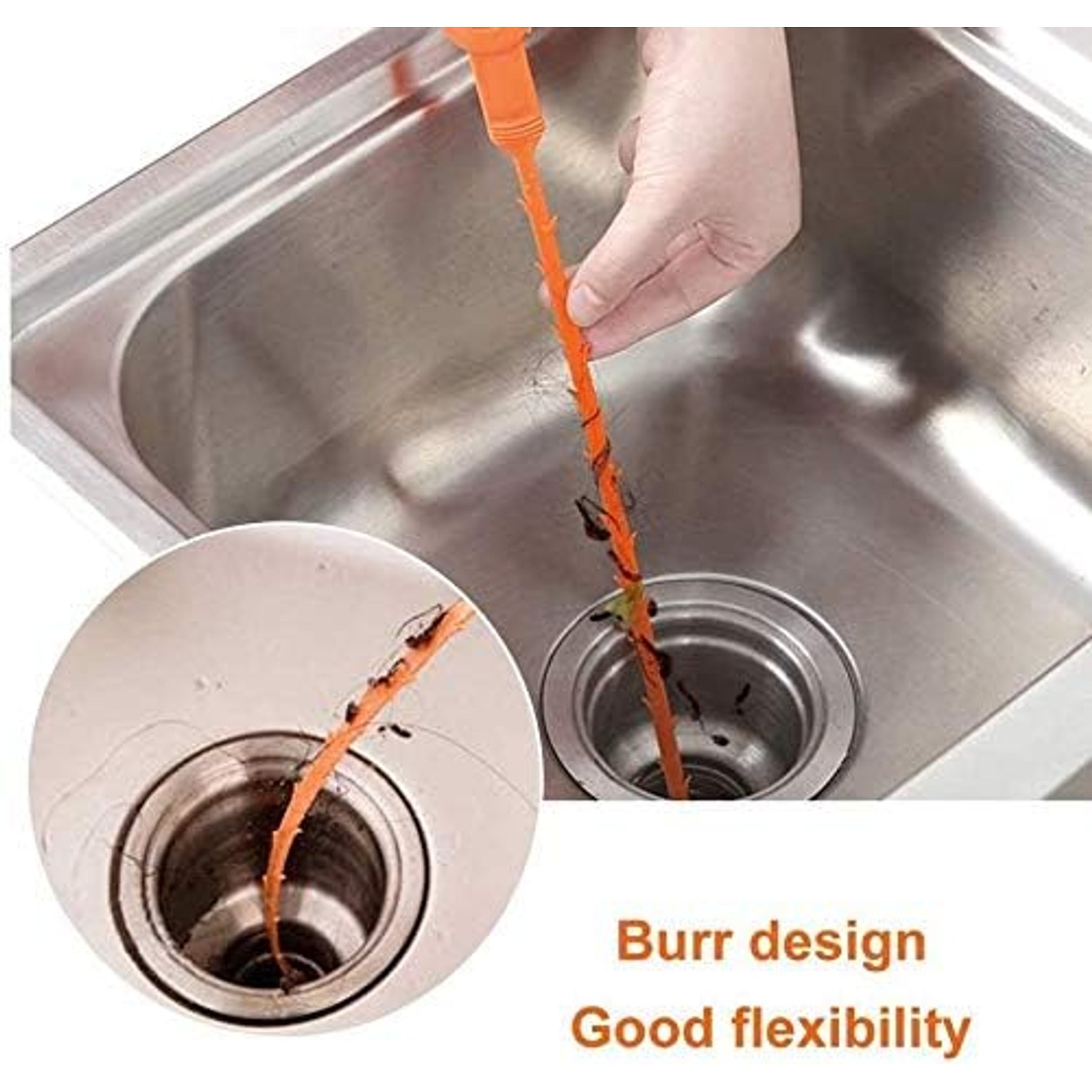
A drain snake is a long flexible shaft that bends through the curves of a trap. Along the shaft are barbs, hooks or a coil shape. You feed the tool into the drain opening until it meets resistance, give it a slow turn so the barbs catch the hair, then draw it back out.
The clog comes with it. That is the whole trick. A chemical approach tries to dissolve the mass in place, and a plunger pushes it along to somewhere else in the pipe. A snake hooks it and removes it, which is why the drain tends to stay clear longer afterward.
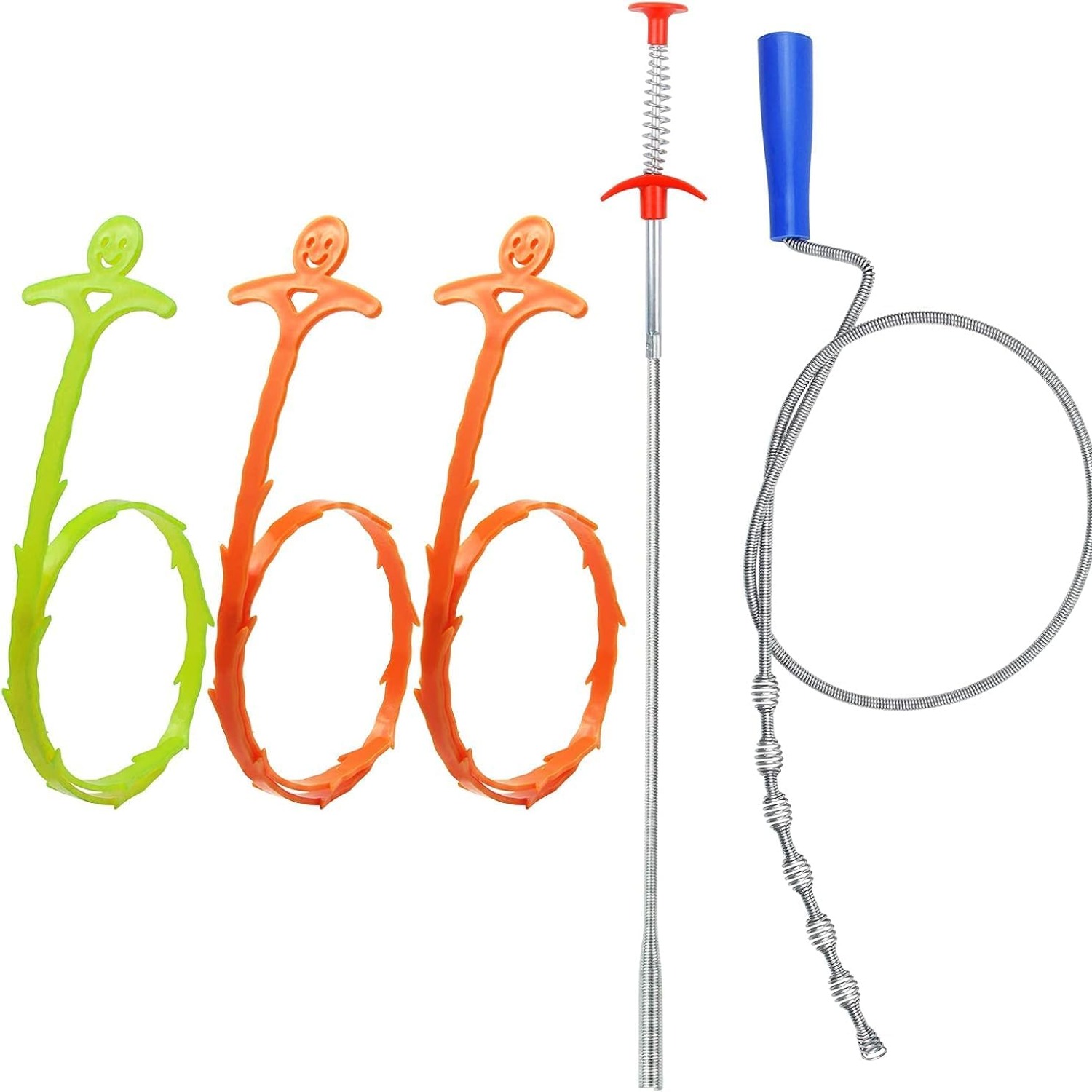
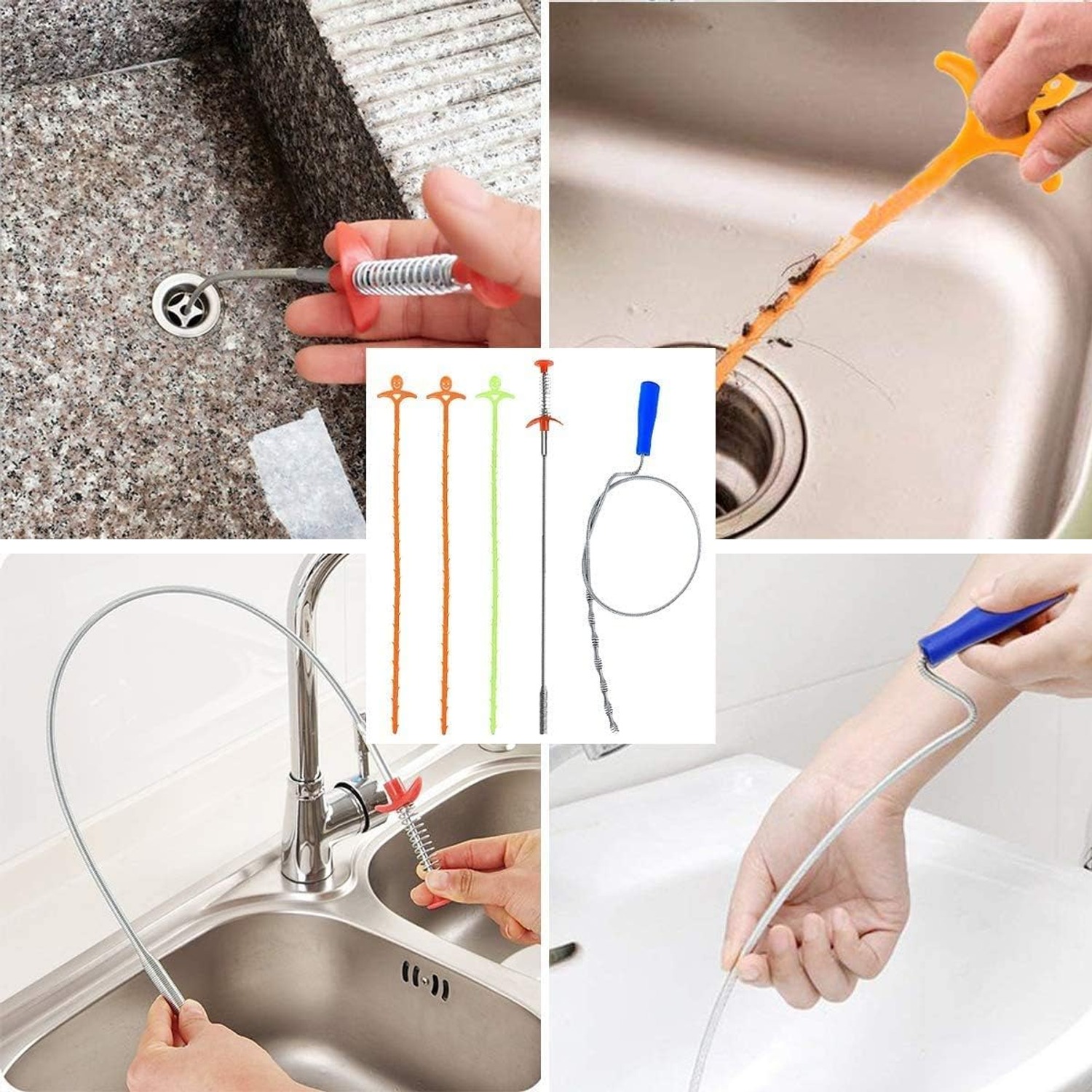
This set includes five pieces in three styles, so you have a choice of shape as well as length. The barbed strips are the usual first pick for hair. The coil designs cope better with a mixed clog of soap, grease and grit. Having both means you are not forcing one shape to do a job it was not made for, which is where people get frustrated and give up.
Length matters more than people expect
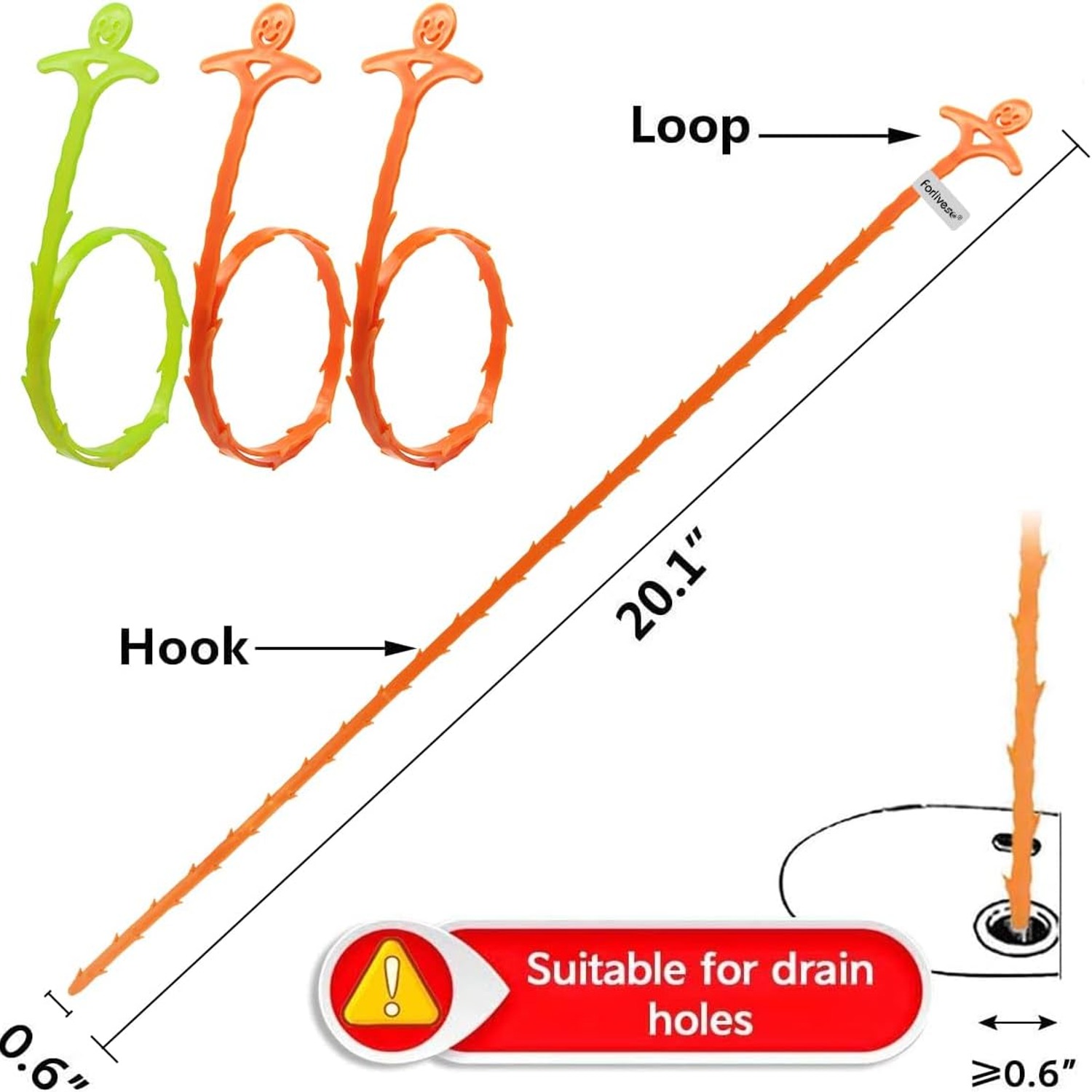
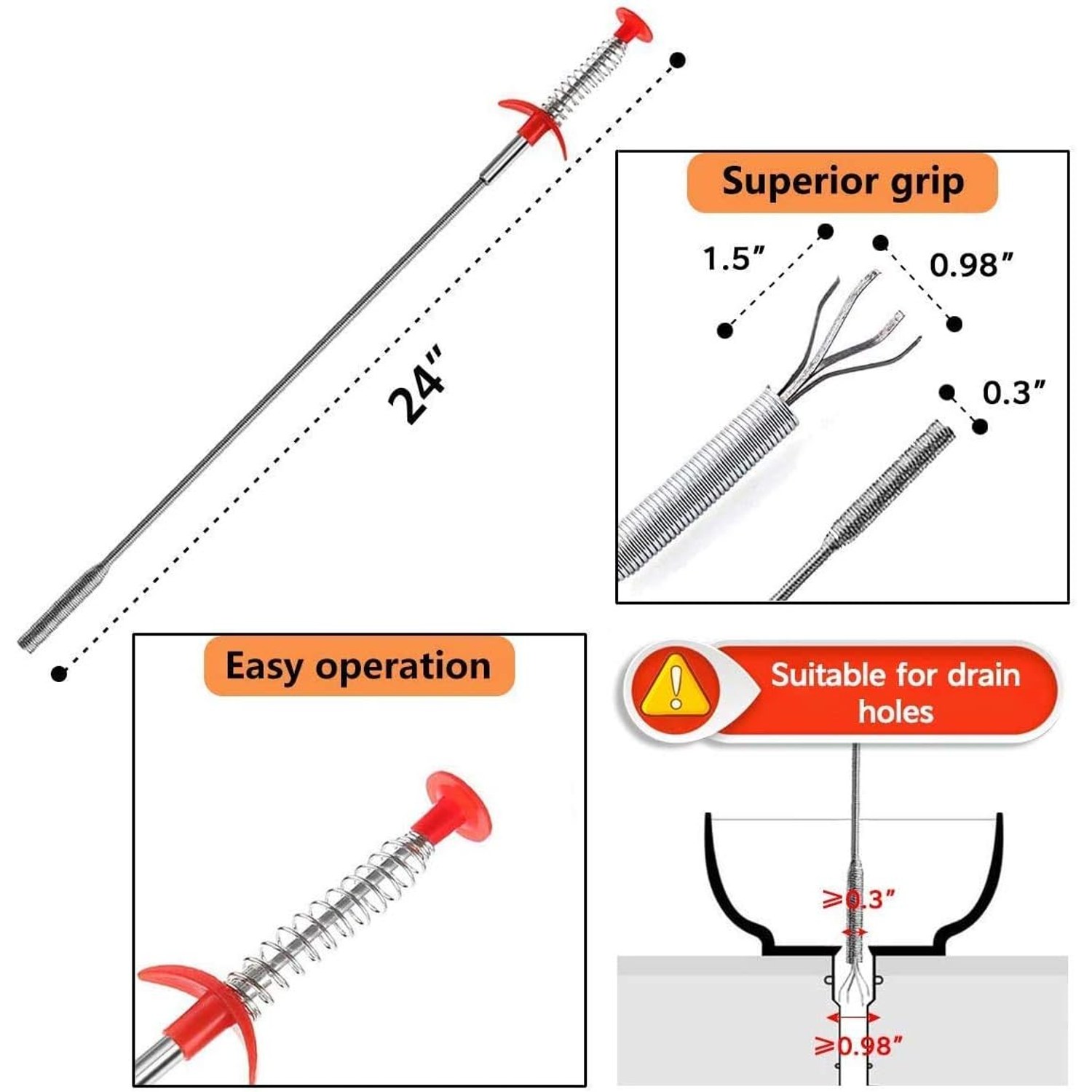
The set covers three lengths: 40 in, 24 in and 20.1 in. In metric that is roughly 102 cm, 61 cm and 51 cm.
It is tempting to assume longer is always better. It is not. A bathroom sink in a small powder room might have only a foot of clearance above the drain before you hit the faucet or the mirror. Trying to feed a 40 in tool in there means wrestling with a long tail of flexible plastic that keeps bending back on you. The 20.1 in size is far easier to control in that spot.
The long 40 in tool earns its keep elsewhere. Floor drains, kitchen sink lines and tub drains with a long horizontal run before the trap all benefit from the extra reach. If the first tool you try hits the end of its travel and you still feel resistance, switching to the longer one is the obvious next move.
As a rough guide, start short and go longer. The best sink snake for a given job is usually the shortest one that reaches the clog, because a shorter tool transmits your twisting motion more directly.
Who this suits
This kit is aimed at homeowners and renters who would rather fix a slow drain themselves than wait for an appointment. If you have long hair in the house, a shared bathroom, or a kitchen sink that sees a lot of cooking, you will use it regularly.
It also suits anyone who wants to stop pouring things down the drain. A mechanical tool costs nothing to use after you buy it, and you can see exactly what came out, which tells you whether the problem is hair, grease or something else.
It is not the right tool for every situation. If water is backing up in more than one fixture at once, if a clog returns within days of clearing it, or if a drain gurgles when you run a different one, the problem is further down the line. That is a job for a licensed plumber with proper equipment, not a hand tool. The same goes for anything fixed, like cutting, moving or connecting pipes.
How to actually use it
Set yourself up first. Lay an old towel around the drain, open a garbage bag, and put on rubber gloves if you have them. What comes out is wet and smells, and it is much easier when you have somewhere to put it immediately.
Pick your tool, starting with a barbed strip for a bathroom drain. If the stopper lifts out or unscrews easily, take it out, but for most bathroom drains you can work around it. Feed the tool in slowly. You will feel it pass through the bend of the trap, then meet something softer.
Now turn it. A slow rotation, not a frantic one. You are giving the barbs time to bite into the mat of hair. Then pull back steadily. If it feels stuck, turn it the other way slightly and try again rather than yanking.
Wipe whatever came out straight into the bag and repeat. Two or three passes usually gets everything. Finish by running hot water from the faucet for thirty seconds to flush the loose residue that the tool disturbed but did not catch.
If you got nothing on the first pass, try a different tool from the set. A different shape or a longer reach often finds what the first one missed.
Keeping drains clear afterward
Clearing a drain is satisfying. Keeping it clear is easier.
A hair catcher over the shower and tub drain stops most of the problem before it starts. Emptying it takes five seconds and saves you the whole job later. In the kitchen, keeping grease out of the sink makes the biggest difference. Let it cool and scrape it into the garbage instead.
Then run a tool through once a month or so. It takes two minutes when the drain is only slightly slow, compared to twenty when it is fully blocked. The best drain cleaning tool kit is the one you actually reach for before things get bad.
Looking after the tools
Rinse each piece under running water when you finish and wipe it down. Let it dry fully before it goes back in the drawer, otherwise you are storing a damp hooked thing in a dark space, which nobody enjoys discovering later.
Store them flat or hanging by the handle so the flexible shafts keep their shape. Keep them away from heat sources that could soften the plastic. Beyond that, there is nothing to maintain. They are simple tools with no moving parts.
The short version
A slow drain is almost always hair and soap sitting within reach of the drain opening. A flexible snake hooks that mass and pulls it out, which is quicker and cleaner than anything you could pour in.
This set gives you five pieces in three styles at 40 in, 24 in and 20.1 in, so you can match the tool to the drain instead of forcing one shape everywhere. It works on kitchen sinks, toilets, washbasins, tubs and floor drains, and most bathroom drains need no disassembly at all.
Buy it, keep it under the sink, and use it the week a drain starts slowing rather than the month it stops. If a blockage keeps coming back or more than one fixture is affected, that is when you call a licensed plumber.