
The complete guide
How to Get a Dropped Object Out of a Toilet Without Making It Worse
The clog that a plunger cannot fix
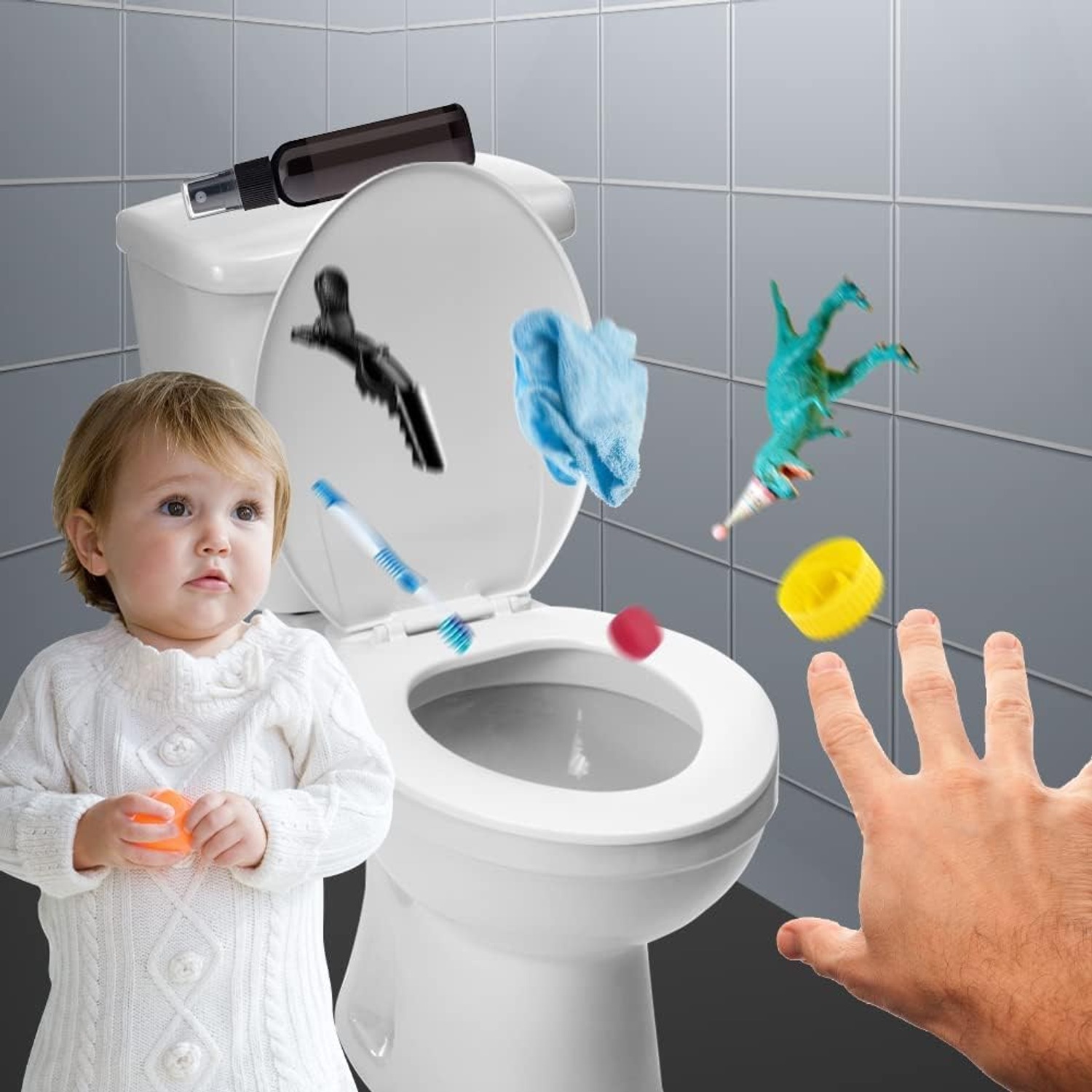
There is a specific kind of toilet problem that makes people stand in the bathroom feeling stuck. The bowl is slow or not draining at all, and you know exactly why, because you watched a toothbrush, a toy, a bottle cap or a face cloth go in. You reach for the plunger, because that is what everyone reaches for, and nothing much happens.
That is not bad luck. A plunger works by moving water, and moving water pushes soft material along. A solid object does not respond the same way. At best it shifts a little further into the trap, which is worse than where it started, because now it is harder to reach and closer to pipework you cannot see.
A standard auger has the same mismatch. An auger is built to bore through and break up a blockage. Breaking up a plastic dinosaur is not the goal. You want that dinosaur back out of the pipe, in one piece, so the toilet drains properly again and nothing is left behind to catch the next thing that comes along.
This is the gap a grabber tool fills. Instead of pushing or breaking, it grips and lifts.
How the four claw grabber works
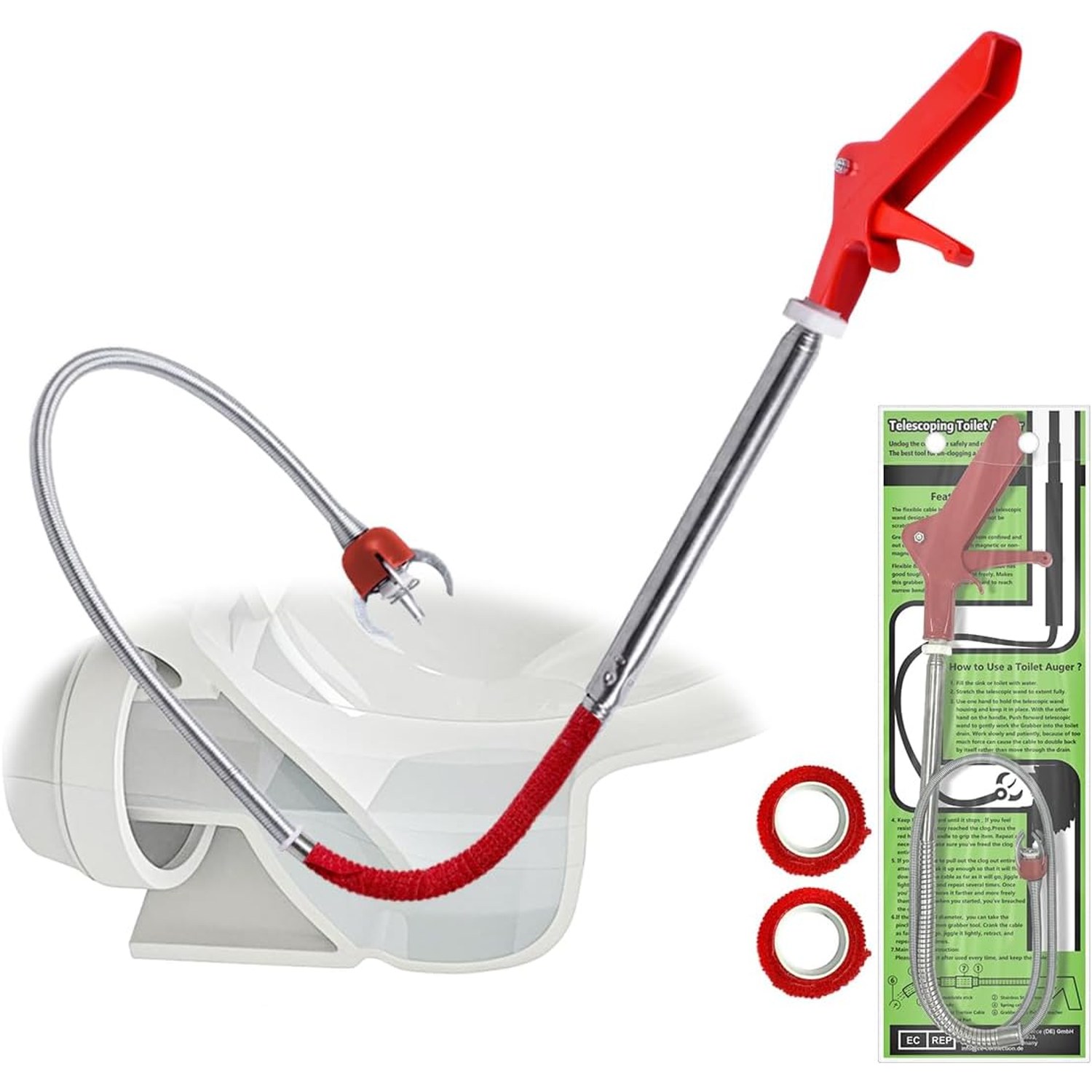
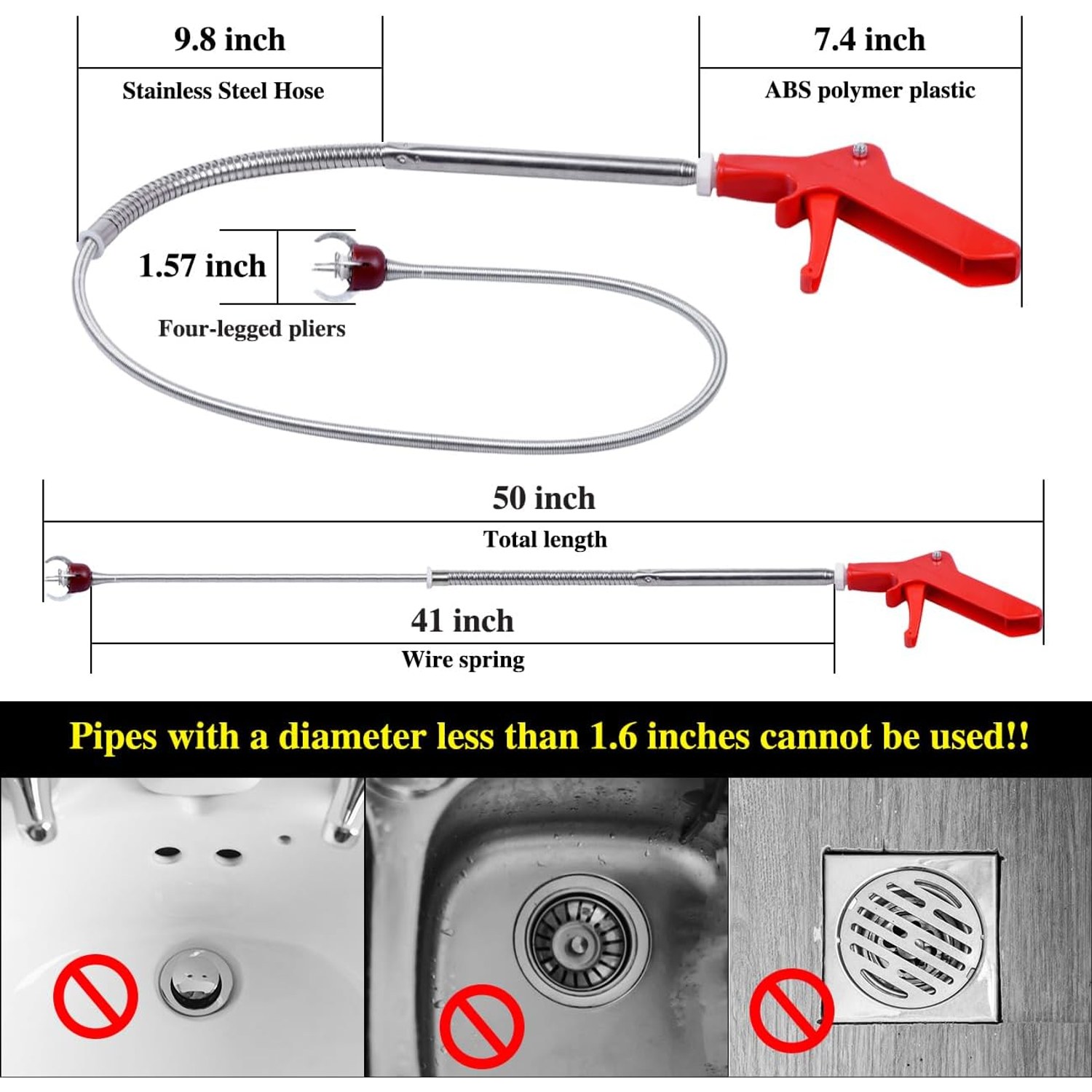
The tool is 51 inches long and splits into three parts you can feel while you work.
At your end is a 7.4 inch red handle with a trigger. Squeeze it and the four claws at the far end close. Let go and they open. That is the entire control system, and it is deliberately simple, because you will be operating it blind for most of the job.
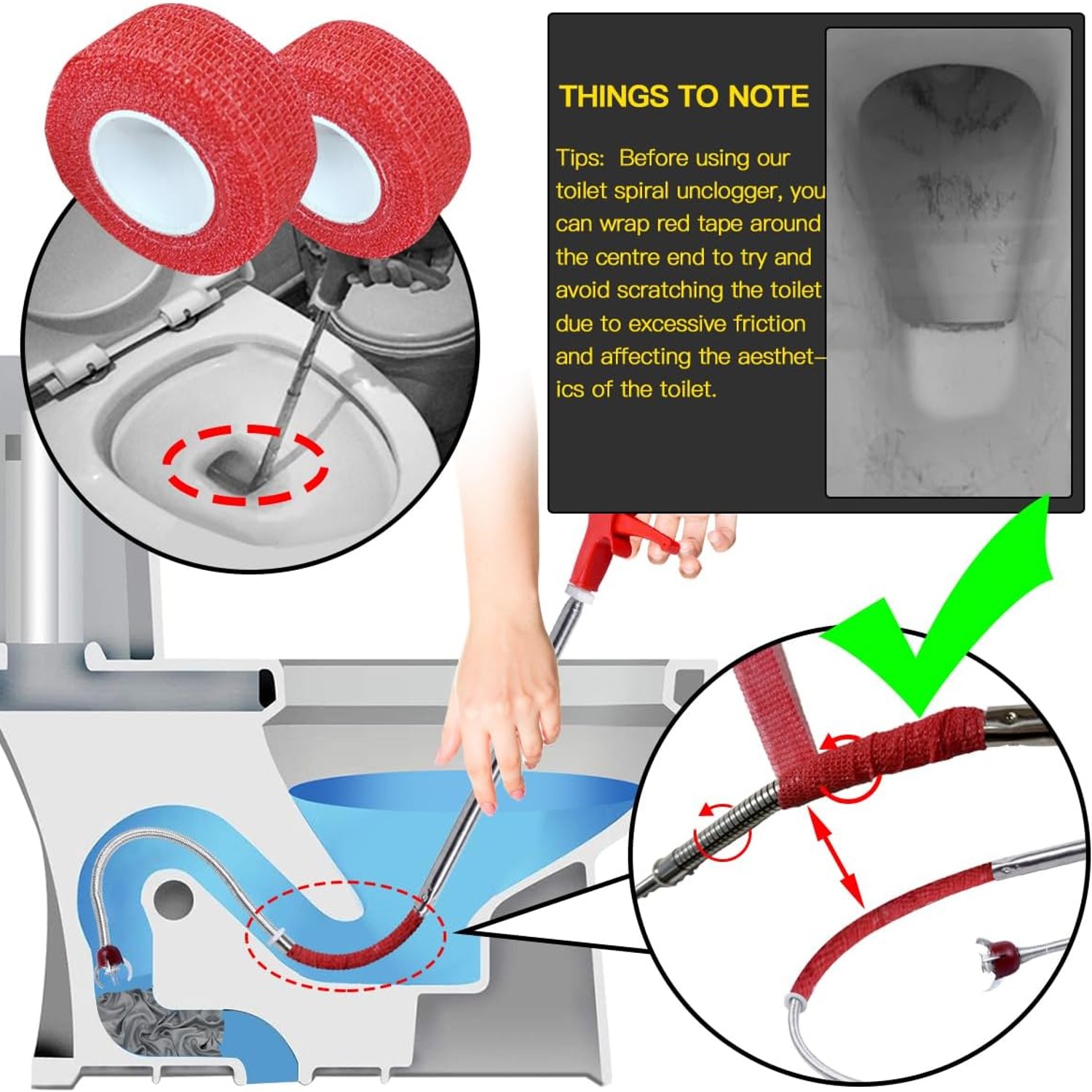
Next comes a 12 inch stainless steel hose. This section is stiffer than the rest. It gives you something to steer with, and it holds the angle you set instead of flopping. It is also the part the maker suggests wrapping with a Velcro strap, which keeps bare metal off the ceramic while you move around the bowl.
Then there is the 43 inch spring loaded cable. This is the long, flexible section that actually goes around the bend of the trap. A spring cable bends without kinking, and it still carries your twist and push down to the head.
The grabber itself has a 1.6 inch jaw diameter. That number matters twice over. It is the widest the claws will open, so it sets the size of object you can grip. It is also the minimum pipe width the tool can enter, because the head needs room to spread. Pipes narrower than 1.6 inches are out of range.
Full tool weight is listed at 18 g, which is lighter than most people expect. That is a genuine advantage, since you can keep one hand on the handle and the other feeding the cable without your arms tiring halfway through.
Who this tool suits
It suits anyone with small children, which is the most common reason a solid object ends up in a toilet. It suits households where grooming items live on a shelf above the bowl and occasionally fall. It suits landlords and property managers who get the same phone call a few times a year.
It also suits people who would rather try one careful thing themselves before calling anyone out. A retrieval that takes fifteen patient minutes is a reasonable thing to attempt at home.
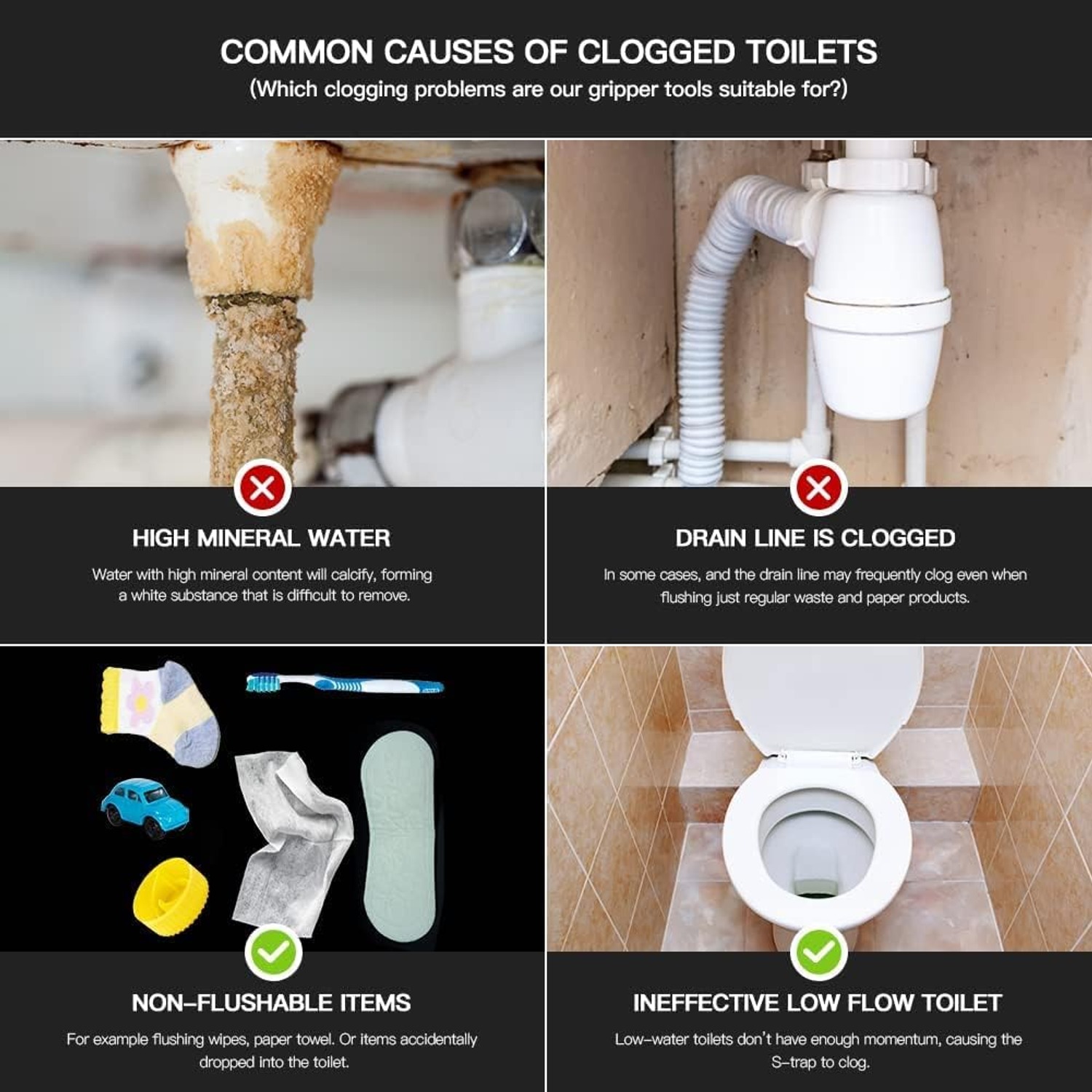
It is less suited to soft blockages. If the problem is wadded paper or a tangled mass with nothing firm in it, the claws have little to bite. The tool is honest about this, and so are we. Knowing which kind of blockage you have is the single most useful thing you can work out before you start.
And if the water is backing up in more than one fixture, or you suspect the problem is further down the line, stop and call a licensed plumber. Any fixed plumbing work such as cutting, moving or connecting pipes belongs with a professional.
Working out whether it will reach
Before buying, do two quick checks.
First, think about size. Is the object inside a 1.6 inch span in at least one direction? The claws need to close around something. A toy car, a cap, a toothbrush head, a rolled sock all pass this test easily. An object wider than the jaw span does not.
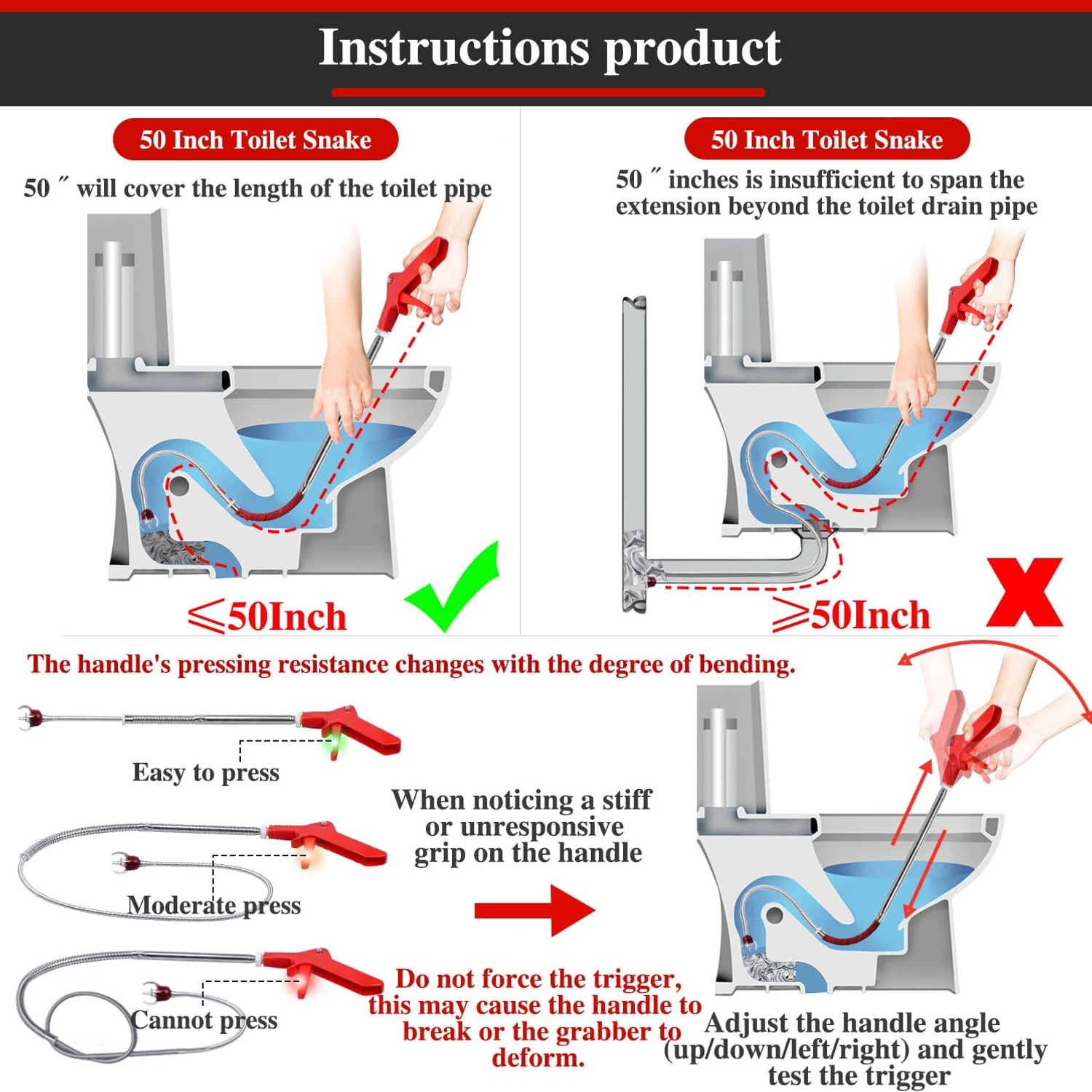
Second, think about distance. Fifty one inches covers a toilet trap and a stretch of pipe past it, which is where most dropped objects stop. If something has travelled well beyond that, no hand tool reaches it and the job changes shape entirely.
If you are unsure, a flashlight pointed into the bowl tells you a surprising amount. Many objects are visible or partly visible once you look properly, and seeing it changes how you approach the retrieval.
Technique, because this part really matters
This tool rewards patience and punishes force. That is worth repeating, because the most common way people damage a grabber is by pulling harder when it will not move.
Start with the claws open and feed the cable in slowly. Follow the curve of the trap rather than shoving straight down. You are letting the cable find the path, not making one.
When the head touches something, stop. Do not squeeze yet. Move the handle up, down, left and right in small movements and feel for how the resistance changes. You are trying to get the claws sitting over the object rather than against its side.
Then squeeze the trigger gently and test it. If you have a grip, you will feel the object move with the cable. Draw the whole tool back out the same way it went in, steady and slow.
If the trigger feels stiff or will not move, that is information, not a fault. It usually means the grabber is pressed against the clog or the pipe wall. Rotate the handle a little, ease off the pressure, and try again. Never jerk the rod or force the trigger. That is what bends handles and deforms claw heads.
Two small protective habits are worth building in. Wrap the Velcro strap around the steel shaft before you begin, and keep the grabber near the centre of the bowl so it touches the rim as little as possible. Putting a cloth against the inner wall of the pipe gives the metal something soft to rest against.
Cleaning up and putting it away
Have a bucket and an old towel ready before you start, not after. The moment the object comes out is the moment everything drips.
Rinse the cable, the hose and the claw head under running water. Wash them with a damp cloth and a little dish soap, and use the included brush to get between the claws where things collect. Then dry everything properly. The stainless steel section handles moisture well, but water left sitting on any metal part is a habit worth avoiding.
Store the tool hanging or laid flat. Coiling a spring cable tightly for months at a time puts a set in it, and a cable with a permanent curve is harder to steer. Keep it somewhere dry and grit free, and work the trigger a few times before the next job to check it still moves cleanly.
The short version
A plunger moves water. An auger breaks things up. Neither of those is what you want when a solid object is stuck in a toilet trap.
This 51 inch grabber takes the third approach. Four claws with a 1.6 inch jaw span close around the object and lift it out, carried on a 43 inch spring cable with a 12 inch steel hose and a trigger handle at your end. It is light at 18 g, it is reusable, and a cleaning brush comes with it.
It is right for hard, grippable items in pipes of at least 1.6 inches. It is wrong for soft or tangled blockages. Use it slowly, never force the trigger, and protect the ceramic with the strap. If the blockage is deeper than this tool reaches or spread across more than one fixture, that is a plumber's call, and it is better to make it early than after a long afternoon.