
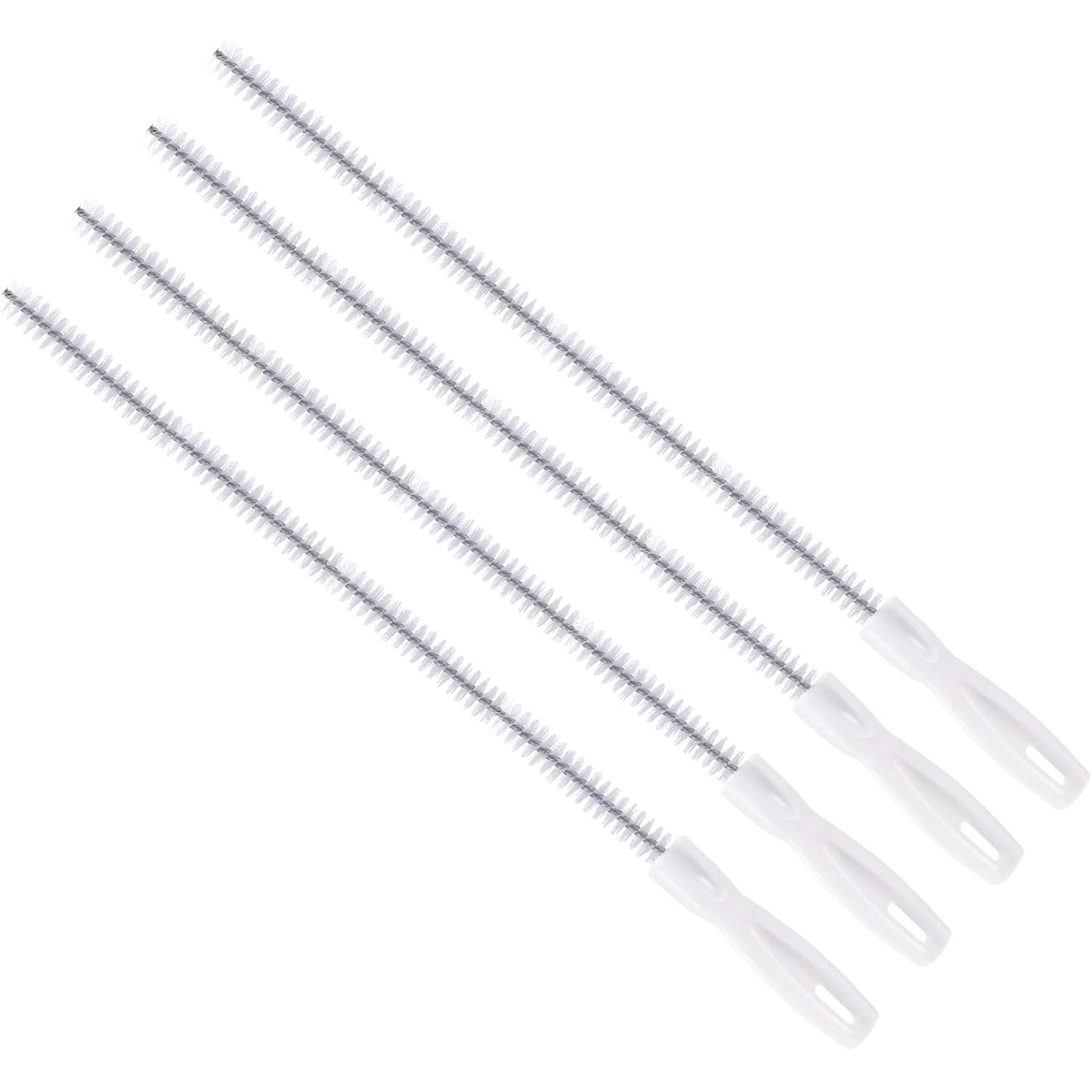
The complete guide
How To Choose And Use A Flexible Sink Drain Cleaning Brush
The problem nobody notices until it is annoying
Drains fail slowly. For weeks, the bathroom sink empties a little slower than it used to, and nobody says anything. Then one morning you brush your teeth and the water sits there, swirling lazily, and suddenly it is a problem that needs solving before work.
What is actually happening inside the pipe is simple. Hair goes down the drain and catches on the inside wall or on the crossbar under the stopper. Soap, toothpaste, shaving cream and skin oil stick to the hair. More hair catches on that. Over a month or two you get a soft, grey mat clinging to the pipe just below the opening, narrowing the channel water has to pass through. In a kitchen sink the same thing happens with grease and food bits instead of hair.
The important detail is where this happens. Most of this buildup sits within the first foot or so of the drain, right around the trap bend. That is reachable. It does not need a plumber and it does not need anything poured down the pipe. It needs something long, thin, and bendy that can go in there and physically pull the mess back out.
How a flexible drain brush works
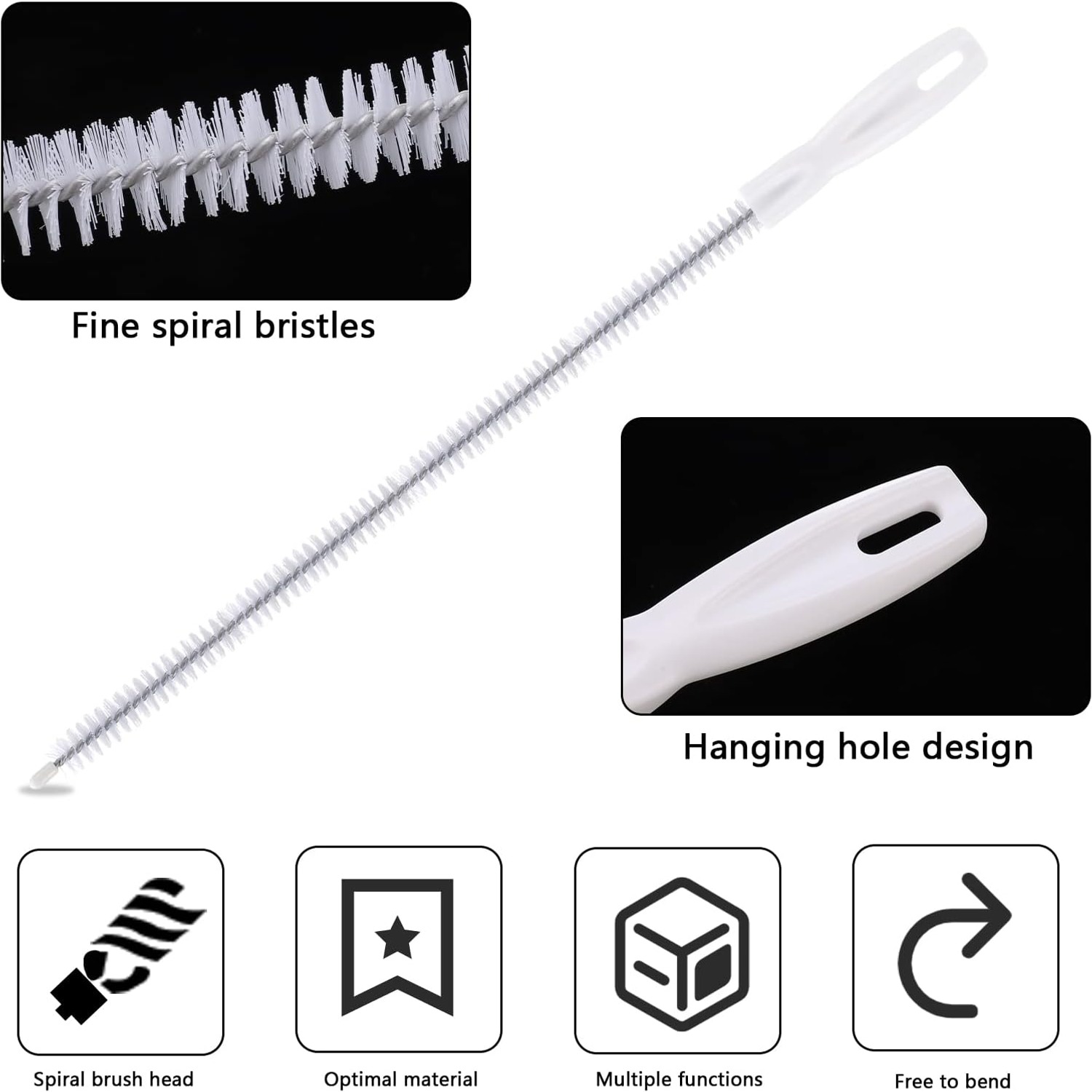
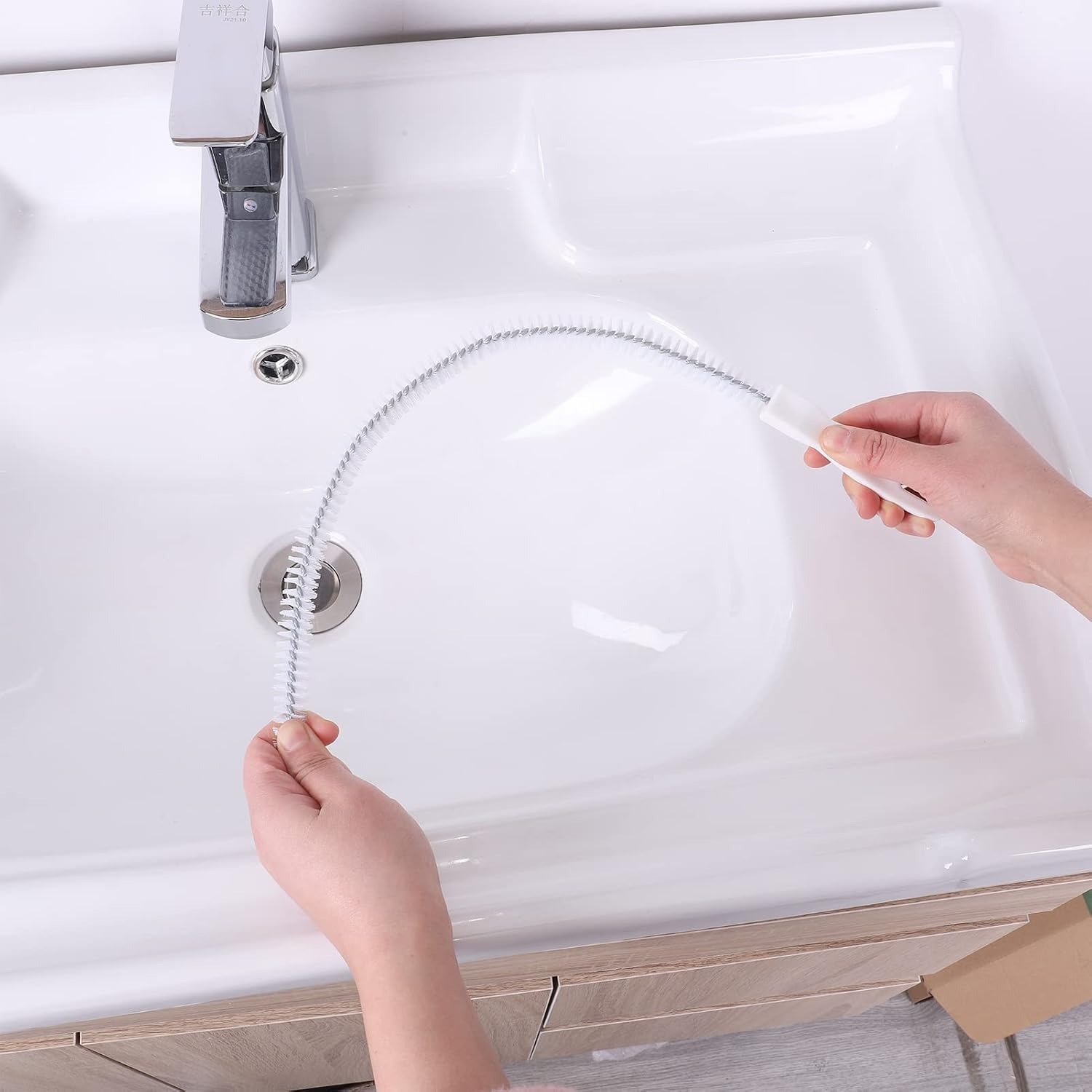
The design is not complicated, which is part of why it works. Two strands of stainless steel wire are twisted together in a double helix, and nylon bristles are trapped between those strands so they stick out in a spiral along the length. One end gets a moulded ABS handle so you have something solid to turn.
That spiral is the whole trick. When you twist the handle, the bristles rotate like a corkscrew. Hair wraps around them the way thread wraps around a spool, and soft buildup gets scraped off the pipe wall and carried along with it. Pull the brush out and the mess comes with it, in one go, into the garbage.
The wire core gives you two things at once. It is stiff enough along its length to push through resistance, and flexible enough across its width to follow a curve. That is why a brush like this gets past the trap bend when a rigid tool just stops. The bristles on this set are described as relatively firm with some flexibility, which is the useful middle ground. Bristles that are too soft slide over buildup without lifting it. Bristles that are too stiff bind up in a tight section.
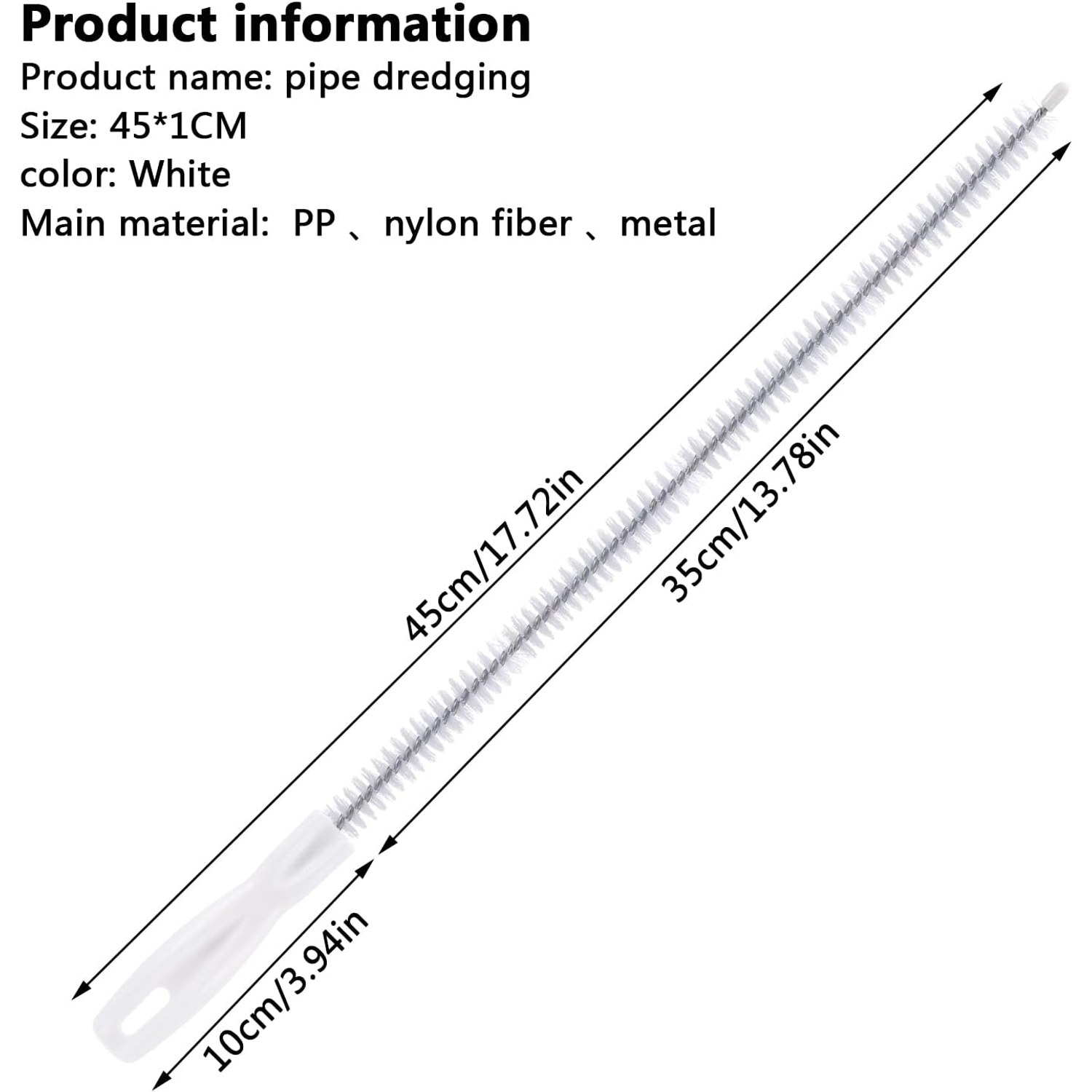
Length matters too. These brushes are 17.7 inches (45 cm). That is enough to reach well past the opening and work the bend on a typical bathroom sink, tub or shower drain, without being so long that it becomes awkward to handle over a sink.
Who this suits
Anyone with hair in the house is the obvious answer. Bathrooms with two or more people using the same sink build up fastest, and so do showers and tubs where long hair is involved.
It is also worth having if you cook a lot. Kitchen drains do not collect hair, but they collect grease, and grease hardens on the pipe wall as it cools. A regular pass with a brush scrubs that film off before it narrows the pipe enough to matter.
Renters find these useful because there is nothing to install and nothing permanent. Homeowners like them because the brush catches problems while they are still small. And anyone who would rather not pour anything down a drain will appreciate that this is purely mechanical. You are not treating the pipe, you are just cleaning it.
Where it is not the answer: a drain that is completely blocked with standing water that will not move, a blockage deep in the line past the trap, or any situation where more than one fixture is draining slowly at the same time. That last one usually points to a problem further along, and it is a job for a licensed plumber. The same goes for any fixed plumbing work such as cutting, moving or connecting pipes.
How to pick the right one
Check your opening first. This is the step people skip. These brushes need a drain opening wider than 0.3 inch (7 mm), measured with the stopper or cover removed. Pull out the stopper, look at the narrowest point, and measure it. Most bathroom sinks and tubs are well clear of that figure, but a bar sink or an unusual floor drain might not be.
Think about length versus your fixtures. A 17.7 inch brush is a good general size. It reaches the trap on a sink and goes deep into a tub drain while still being manageable in your hand. Much shorter and you are only cleaning the opening. Much longer and it becomes unwieldy over a small sink.
Look at the bristle arrangement. A spiral layout grabs hair. Bristles that only sit at the tip just poke at the problem. The spiral along the full length is what lets you clean the pipe wall on the way in and pull debris on the way out.
Count the brushes. A single brush tends to end up in one bathroom and stay there, which means the kitchen drain never gets done. Four brushes means one at every drain you care about, and spares when the first one wears out. That is the practical difference between owning a tool and actually using it.
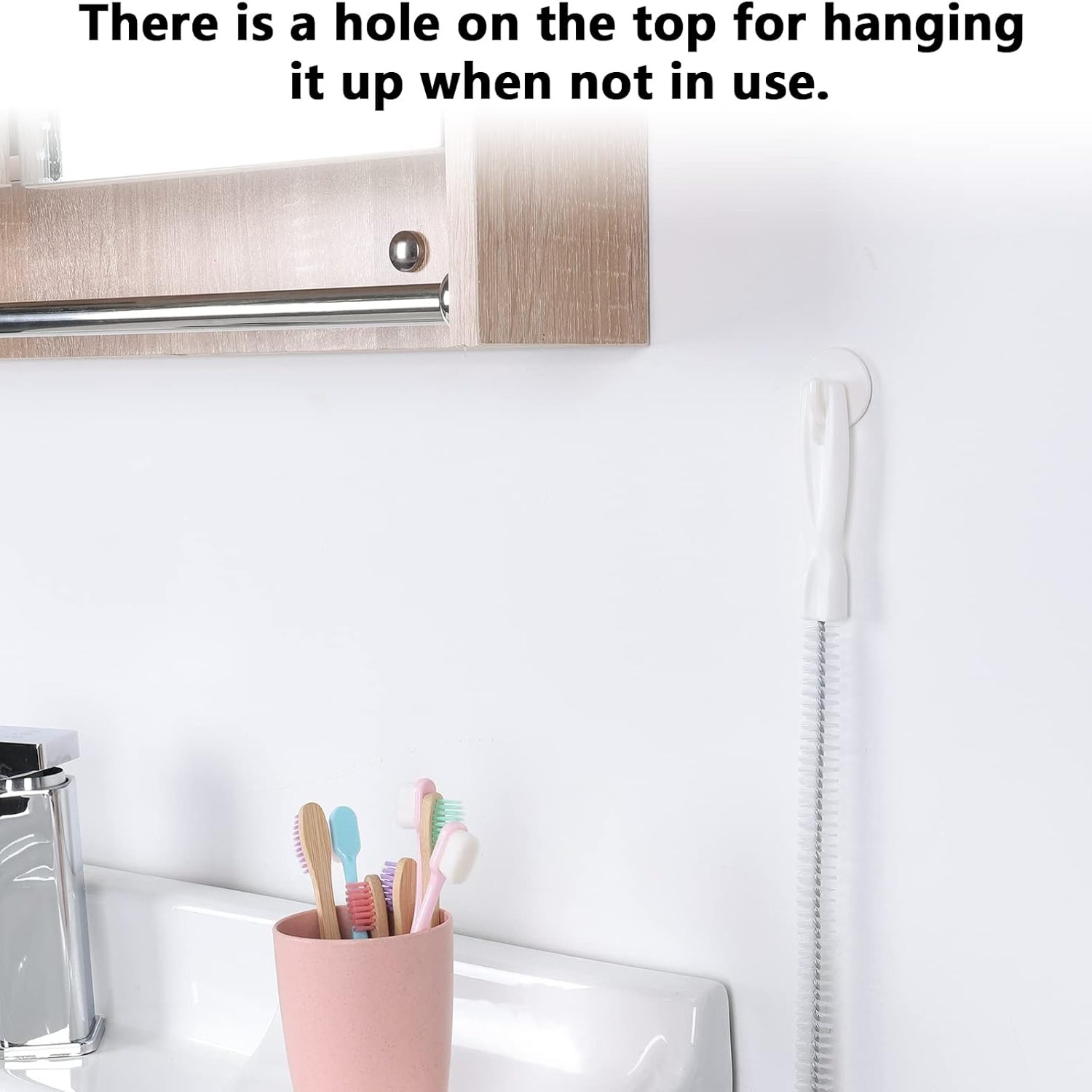
Check the handle. A moulded ABS handle with a hanging hole is a small thing that changes how the tool lives in your home. Hanging it means it dries. Drawer storage means it stays damp and gets shoved to the back.
Getting the most out of it
Start by taking the stopper out. On most bathroom sinks it lifts straight out or twists a quarter turn. Some are connected to a pivot rod under the sink, in which case you loosen the nut behind the drain body and slide the rod back. If that sounds like more work than you want, the overflow opening near the top of the sink is an alternative route and worth cleaning anyway.
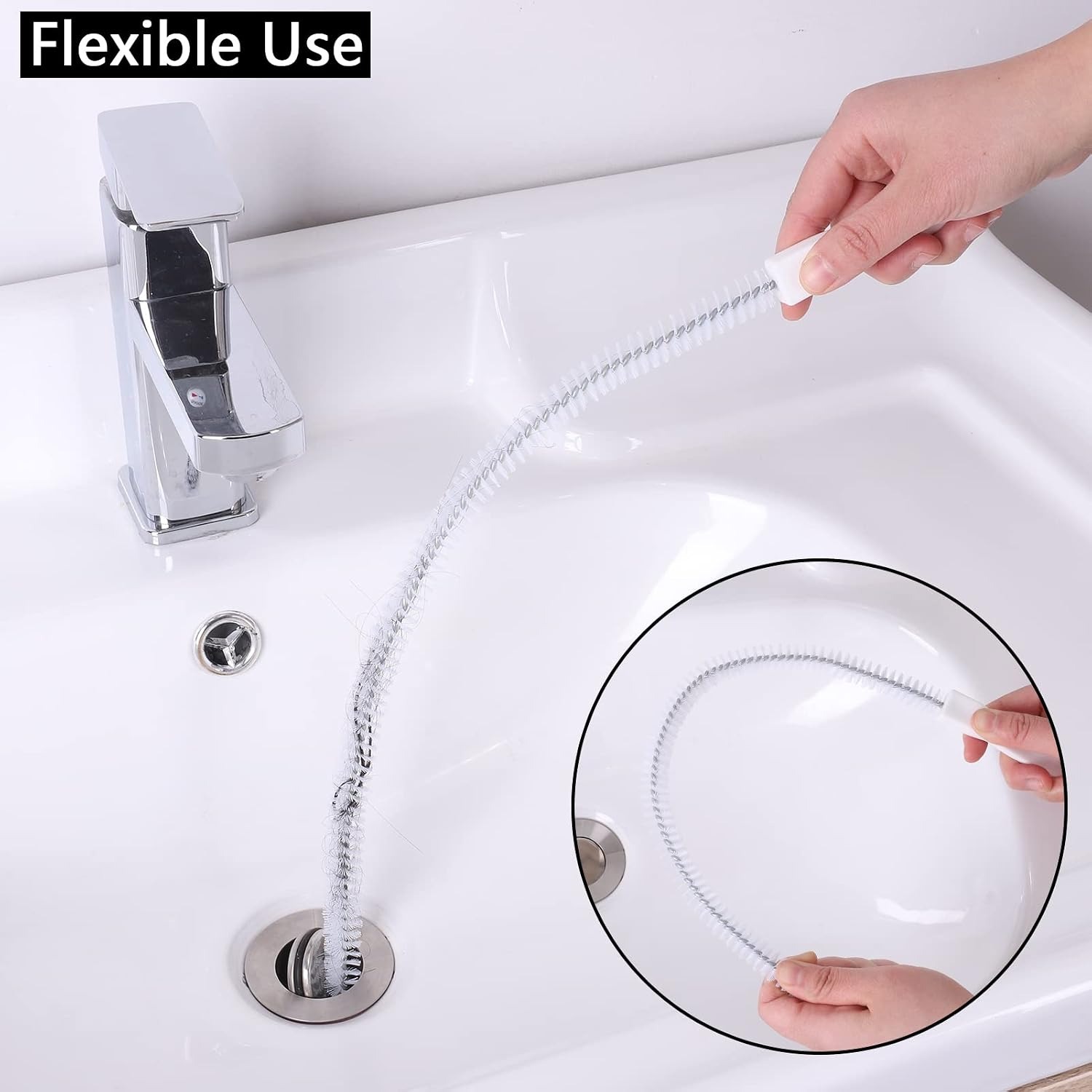
Feed the brush in slowly. Do not ram it. When you feel the bend, twist the handle as you push and let the bristles find their way around. Go as deep as the brush will comfortably go, then turn the handle a few full rotations to wind up whatever is in there.
Pull it back out steadily. Have paper or the garbage ready, because what comes out is not pleasant. Wipe the brush off, rinse it, and go again. Most bathroom sinks take two or three passes before the brush comes back clean. Finish by running hot water for a minute to flush anything you loosened but did not catch.
Then make it a habit. Once or twice a week per drain takes maybe two minutes total and means you never get to the stage of standing water. That is the real value here. The brush is not a rescue tool, it is a maintenance tool, and maintenance is cheaper than everything else.
Looking after the brushes
Rinse after every use, with dish soap worked through the bristles if the job was greasy. Shake the water off and hang the brush by the hole in the handle, ideally on a hook inside a vanity or under the kitchen sink. Air drying matters more than you would think, both for odour and for how long the bristles last.
Avoid creasing the wire hard at a single point. It is made to curve, not to fold. If you need to bend it to reach something, let the bend spread along the shaft.
Retire a brush when the bristles have flattened and stopped gripping, or if the wire has taken a sharp permanent kink. With four in the pack you can rotate a worn one out without a gap.
The short version
Slow drains are usually a soft mat of hair and soap sitting within a foot of the opening, and that is within reach of a brush. These four brushes are 17.7 inches (45 cm) long, built around a double helix stainless steel wire core with nylon bristles in a spiral and a moulded ABS handle. Remove the stopper, feed the brush in, twist, pull the mess out, repeat.
Check your opening is wider than 0.3 inch (7 mm) before you buy. Use a brush once or twice a week at each drain rather than waiting for trouble. Rinse and hang them to dry. If a drain is fully blocked, if water will not move at all, or if several fixtures are slow at once, stop and call a licensed plumber instead.