
The complete guide
Choosing an Outdoor Drain Cover That Actually Keeps Working
The problem nobody notices until it rains
Outdoor drains do not usually block all at once. It happens quietly. A few wet leaves slip into the opening after a storm, a twig goes in sideways and catches, and grit settles on top of that. For weeks nothing looks wrong. Then there is a heavy downpour, the water has nowhere to go, and you have a puddle on the balcony or water finding its way somewhere it should not be.
The frustrating part is that the material causing the trouble is almost always big enough to see. Leaves, seed pods, moss, twigs, roof grit. None of that is subtle. It only becomes a problem because the drain opening is a wide hole with nothing across it, so everything the wind drops on your roof or terrace ends up in the pipe.
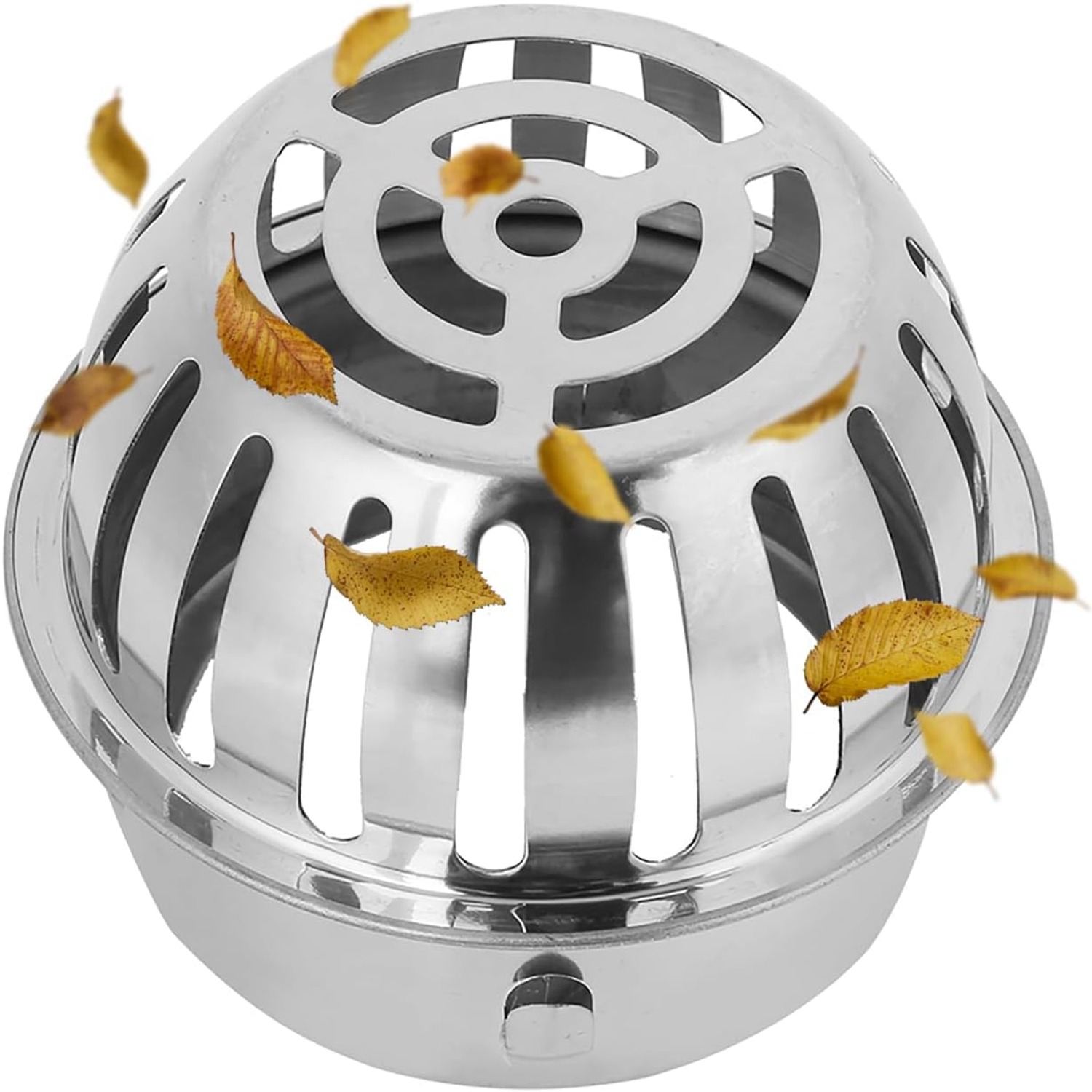
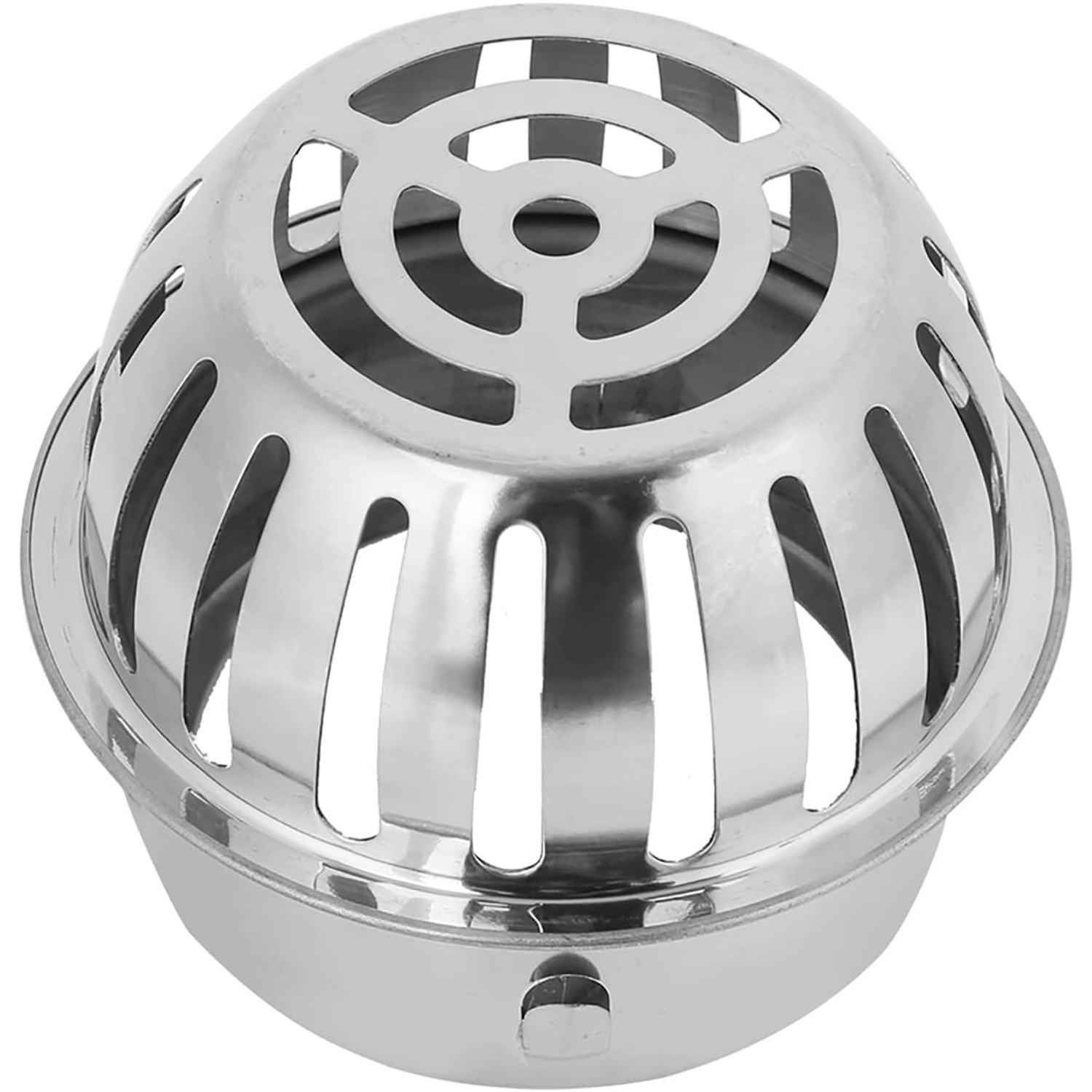
A dome drain cover is the small piece of hardware that breaks that chain. It sits in the opening, holds the bulky material on the surface where you can sweep it up, and lets the water carry on down.
How a dome strainer differs from a flat one
Flat strainers are everywhere and they work fine indoors, where what you are catching is hair and soap. Outdoors they have a weakness. Debris is flat too. A soaked leaf will lie across a flat plate and seal it like a lid. Half a dozen leaves do the job completely, and from above it still looks like the drain is clear.
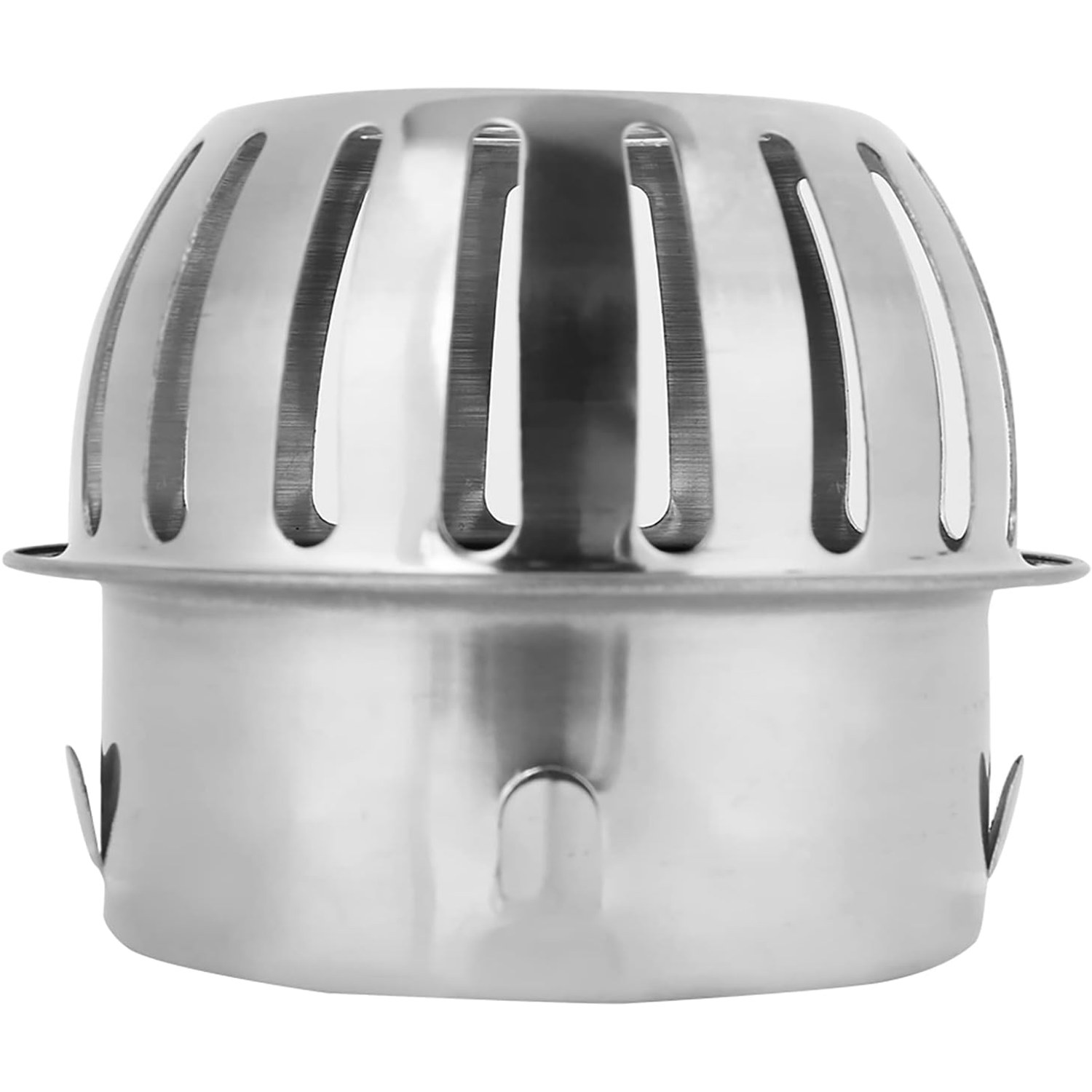
A dome changes the geometry. Because the cover rises into an open cage shape, debris collects against the lower part and slides against the sides, while the top of the dome stays above the pile. Water has somewhere to get in even when leaves have gathered around the base. It is not magic, and a thick enough mat will eventually smother anything, but it buys you a lot more time between cleanings.
That extra time is really what you are paying for. The best outdoor floor drain cover is the one you do not have to think about between storms.
Why stainless steel outdoors
Material choice matters more outside than people expect. Plastic strainers sitting in full sun get brittle. Frost and thaw cycles work on them too. After a couple of seasons they crack, a piece breaks off, and the remains either fall into the pipe or stop gripping the opening.
Stainless steel does not have that problem. It keeps its shape and its spring, so a cover that fitted snugly on the day you bought it still fits snugly later. The brushed finish on this cover hides water spots and light scratching reasonably well, which is handy because outdoor drains collect grit and grit scratches things.
Steel is also easier to clean. You can scrub it with a brush without worrying about damage, and it does not hold on to the smell that plastic sometimes picks up after sitting in a damp drain.
Getting the size right
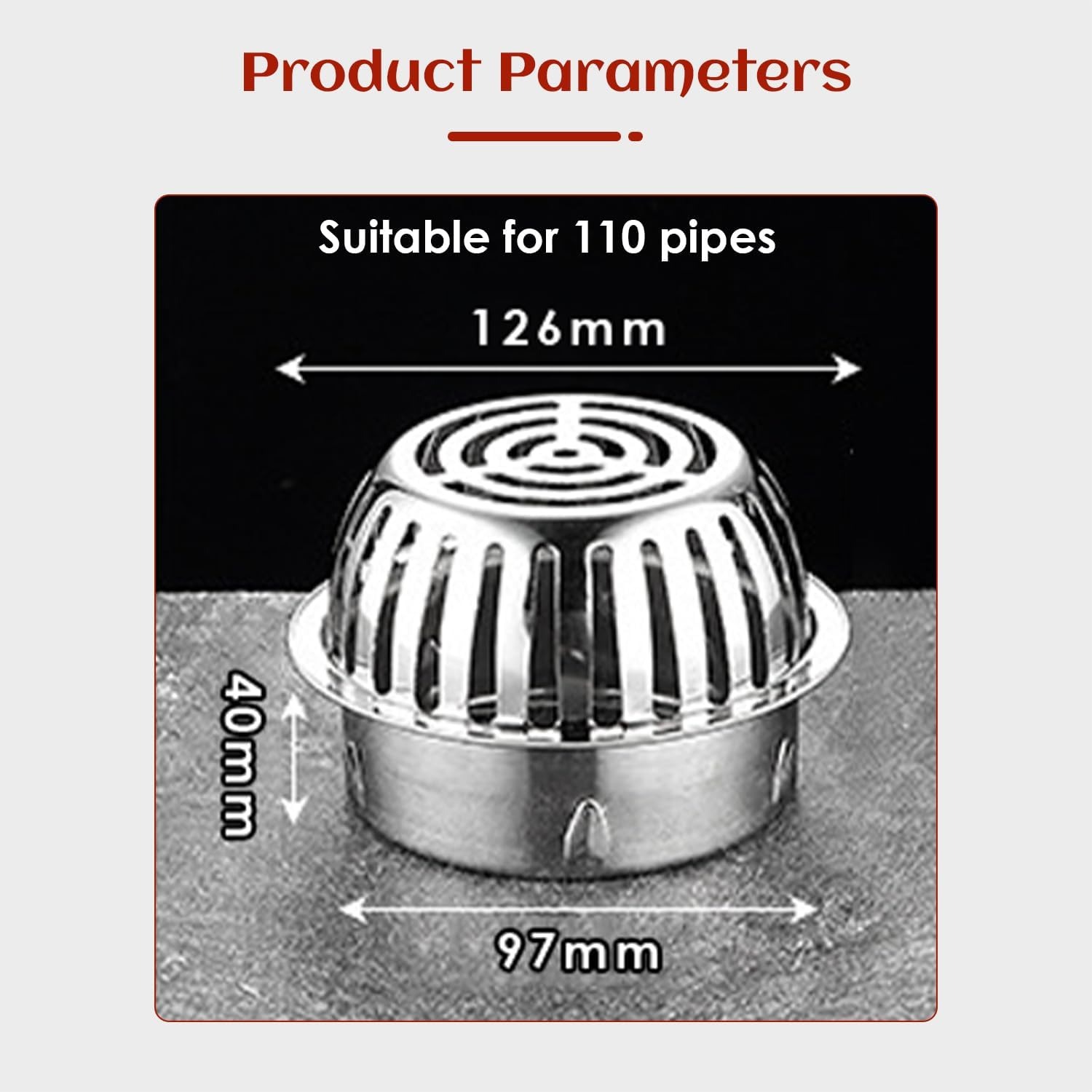
This is the one thing worth slowing down for. This cover is made for a 4 inch opening, around 102 mm. The listed compatible groove diameter and depth are both 4 inches, and the item depth is 4 inches, so the cover needs that depth of clear pipe below the opening as well as the width.
Measure the inside of the drain, not the outside of the pipe. Pipes have wall thickness, and a pipe that is 4 inches on the outside has a smaller opening than one that is 4 inches inside. Put a tape across the opening at its widest point and note the number. If you are between sizes, do not try to force a cover in or cut one down, since trimming stainless steel leaves sharp edges and a poor fit.
Also check what is around the drain. A dome stands proud of the surface, so a drain in the middle of a walkway or a doorway is not the best spot. Corners, roof outlets, planted areas and spots you walk around are where this shape works best. For a drain in a traffic path you want a flush, load-rated grate instead, and this cover is not sold as one.
Where it earns its keep
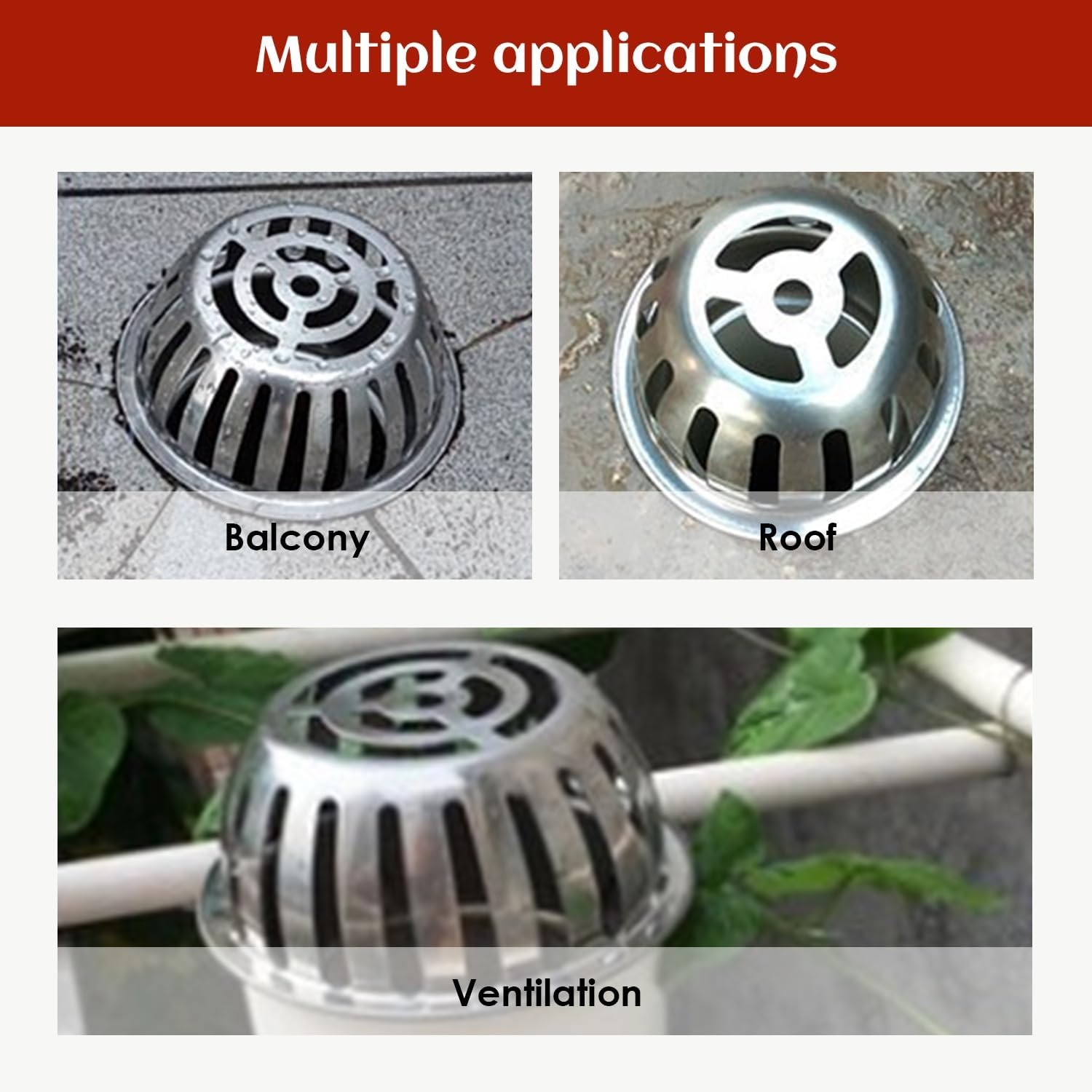
Roof outlets are the obvious case. Roofs gather everything the wind carries and nobody checks them often. A roof drain strainer here can save a lot of trouble.
Balconies are next. A balcony drain is small, usually tucked in a corner, and it collects windblown leaves and dust all year. Clearing a balcony drain after it has blocked is an unpleasant job, so keeping the material on top is worth the few minutes it takes to fit a cover.
Yards, patios, terraces and gardens all have the same story with more mud in it. Here a cover also catches soil washed off beds and planters, which is the sort of material that settles quietly in a pipe and never comes back out on its own.
Basement floor drains are worth a mention too. They catch lint, hair and dust, and in a laundry area that adds up. Just keep the dome out of the walking route.
Fitting and living with it
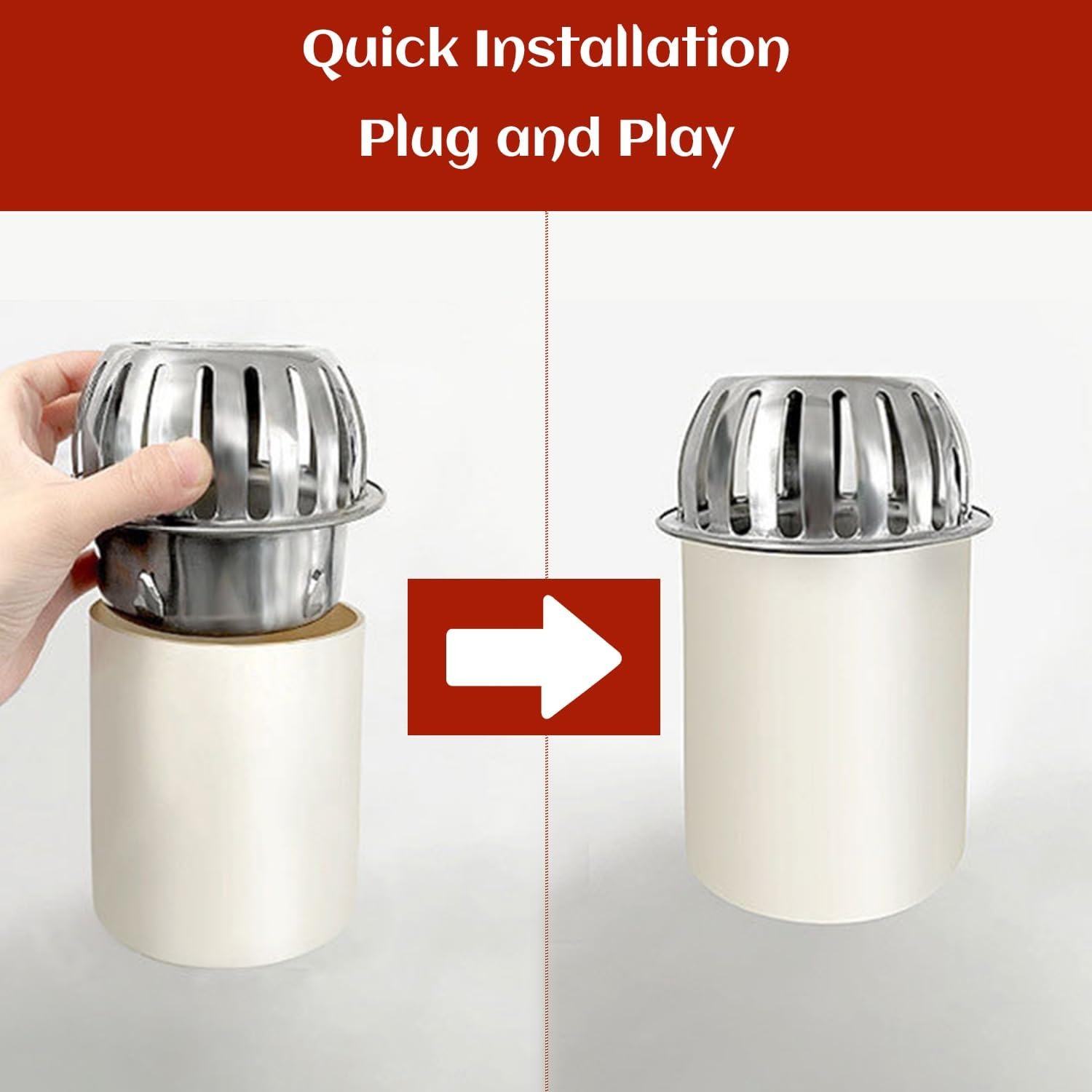
Fitting is as plain as it gets. Measure, then push the cover into the opening by hand until it seats. There is nothing to glue, screw or cement. That is deliberate, because a cover you cannot easily remove is a cover you will not clean.
Living with it comes down to a habit. Lift it after heavy rain, tip the debris into the garbage or compost, give it a rinse, drop it back. In autumn, when leaves are coming down, check it more often. In the quiet months you can leave it alone for weeks.
If you notice water pooling and draining slowly, the cover is telling you something. Nine times out of ten the answer is a wet mat of leaves around the base, and thirty seconds with a rinse fixes it. If a clean cover still drains slowly, the problem is further down the pipe and that is a different job.
For cleaning, warm soapy water and a soft brush handle most of it. Avoid aggressive scouring pads so the brushed finish stays even, and give it a rinse after exposure to road salt or heavy grit. Do not pour chemical drain cleaners through it. If a pipe is genuinely blocked, mechanical clearing or a plumber is the better route, and any work that involves cutting or reconnecting fixed pipe should go to a licensed plumber.
What to check before you buy
Four things, in order. The inside measurement of your opening. The depth of clear pipe below it. Whether anyone walks over that drain. And how many drains you want to cover, since this pack contains a single cover.
If all four line up, this is a straightforward piece of hardware. Light at 0.09 kg, 10.2 cm across and tall, stainless steel, no fixings, no maintenance beyond a rinse.
The short version
Outdoor drains block because the stuff that blocks them is allowed straight in. A dome drain cover 4 inch stops the leaves, twigs and grit at the surface while keeping an open path for water, and its raised shape keeps working when a flat strainer would already be sealed over. Stainless steel means it survives the weather instead of going brittle. Measure the inside of your opening, push it in, and rinse it out after storms. That is the whole job.