
The complete guide
How To Choose And Use A Drain Snake For Hair Clogs
The slow drain nobody wants to deal with
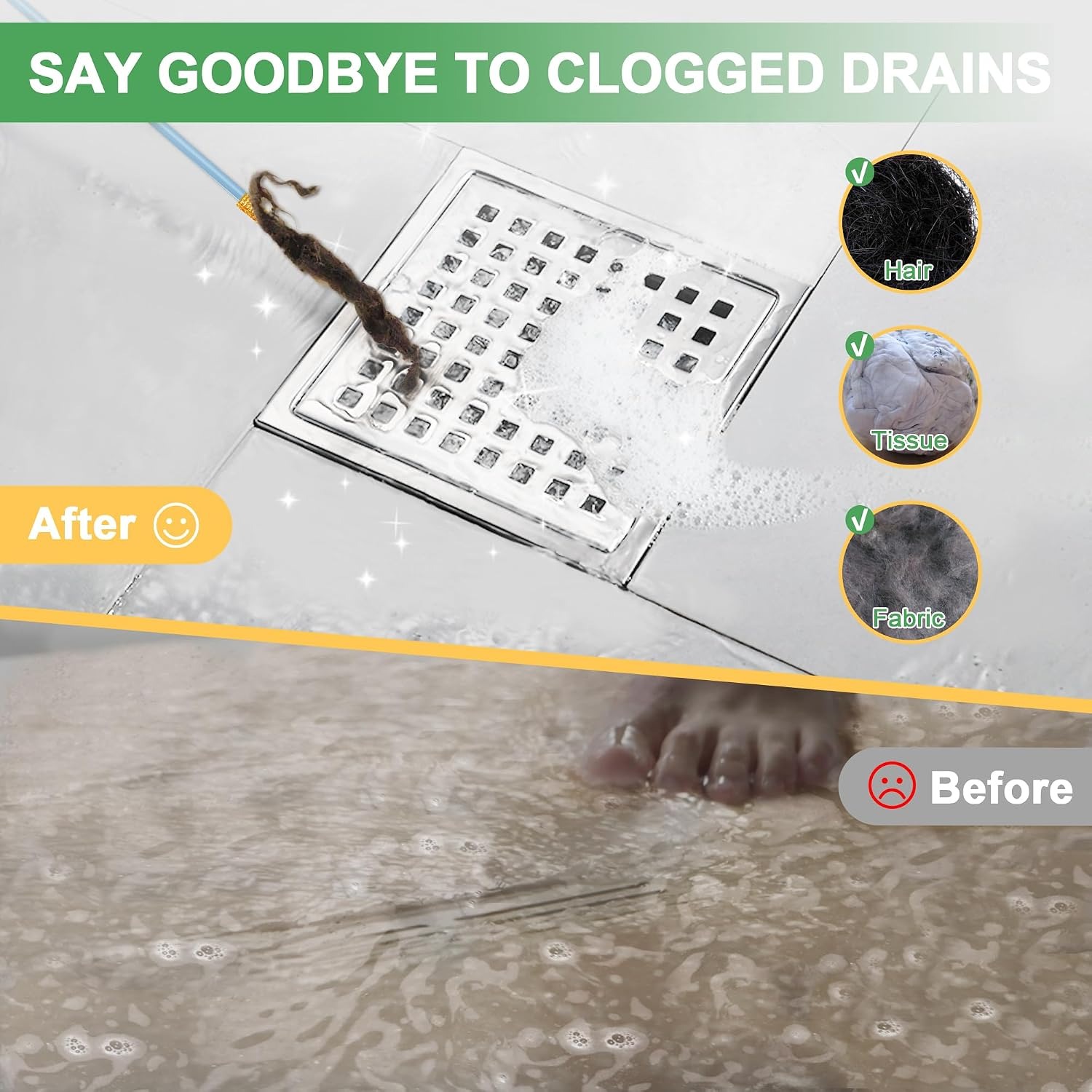
You notice it in the shower first. Water pools around your feet, then takes a minute to disappear after you turn the faucet off. A few weeks later the bathroom sink joins in, draining with a gulp and a smell that comes up when you run hot water.
Almost every time, the cause is the same. Hair goes down with the water. It catches on a rough spot or a bend inside the pipe, and once a few strands anchor themselves, everything else starts sticking too. Soap residue, skin cells, toothpaste, shampoo film. Within a couple of months that loose tangle turns into a soft, wet plug that water has to squeeze past.
The frustrating part is that it sits just out of sight. Shine a light down the drain and you often see nothing at all, because the real mass is past the bend of the trap. That is why poking at it with tweezers or a bent coat hanger rarely works. You need something long and flexible enough to follow the pipe.
How a flexible drain snake works
A drain snake is not complicated. It is a long, thin wand with small hooks along it. You feed it into the drain, it bends around the trap, the hooks catch hold of the hair, and you pull the whole mess back up.
The difference between a snake that works and one that frustrates you comes down to three things. Length, thickness, and what the hooks are made of.
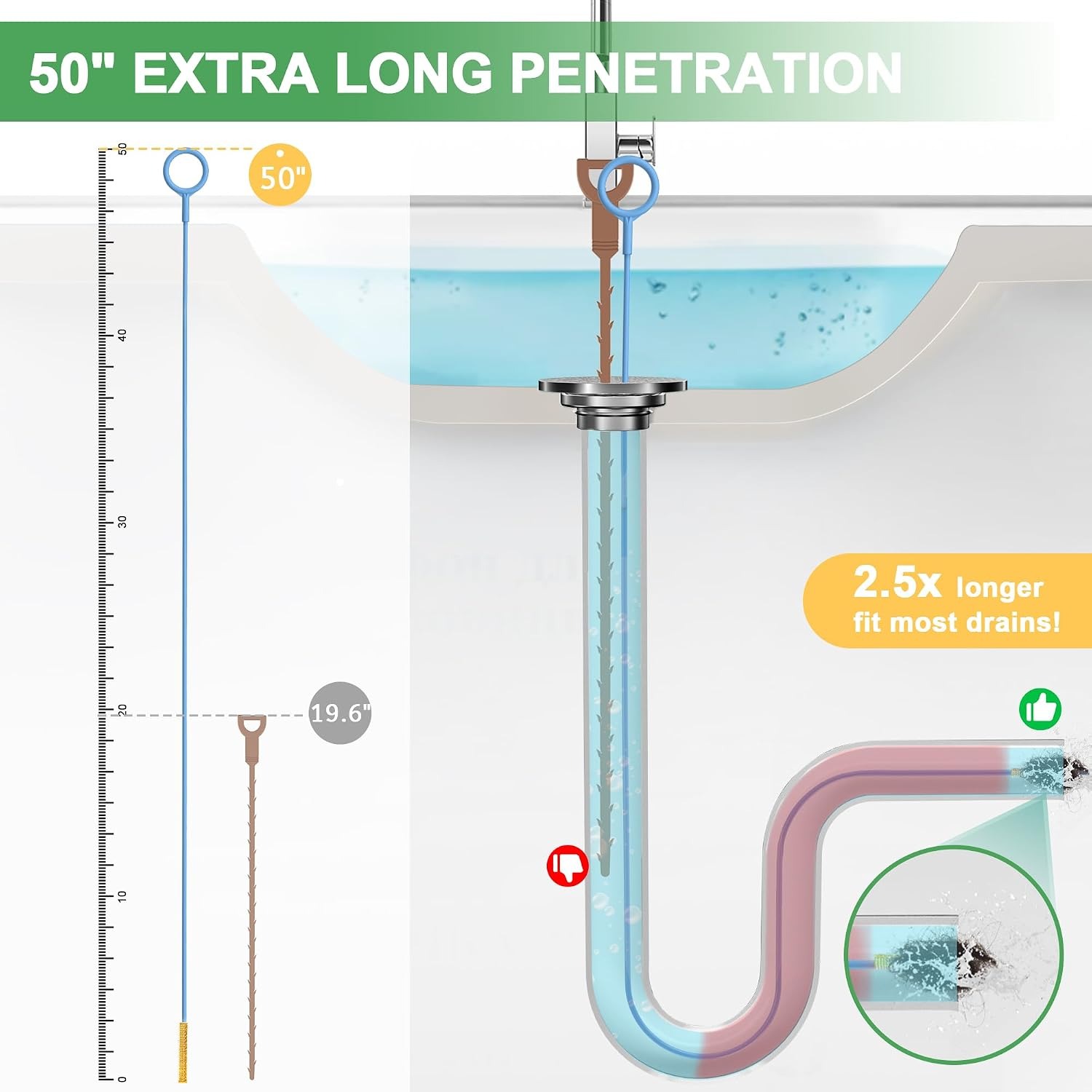
Length decides whether you reach the clog at all. This one is 50 in (127 cm), which gets you well past the trap on a typical bathroom sink or shower and into the stretch of pipe beyond. Short plastic strips sold in hardware aisles are often a quarter of that, which means they clear the top of the drain and nothing else.
Thickness decides whether it fits. The wand here is 0.11 in (2.8 mm) and the head is 0.22 in (5.6 mm). That slimness is deliberate. A thicker auger will not pass through the slots of a fixed strainer or a narrow drain opening, and it tends to wedge on the way back out, which turns a five minute job into a problem.
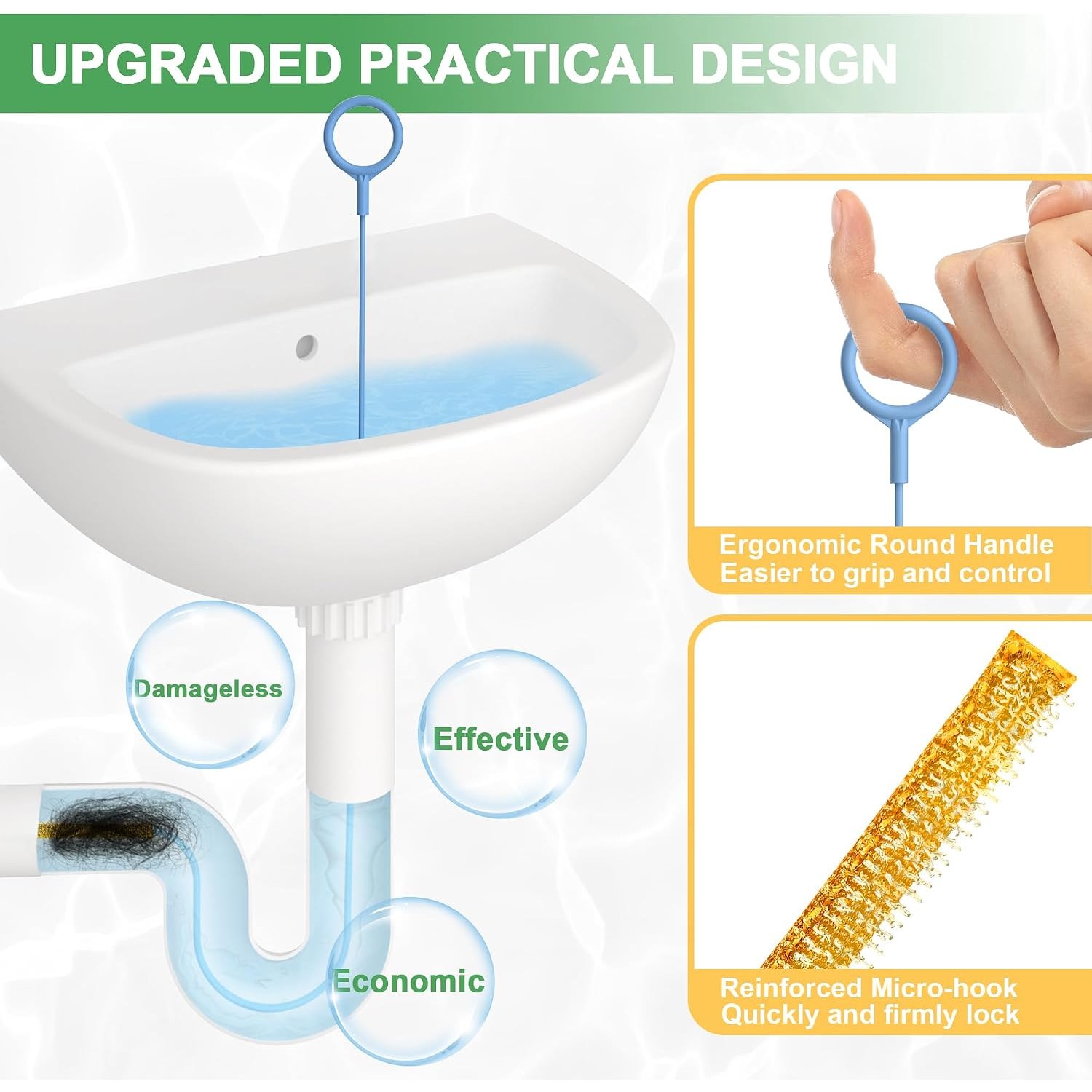
The hooks decide whether you actually bring anything up. These are stitched and glued onto the wand rather than moulded as plastic barbs. Moulded barbs have a habit of snapping off inside the pipe, which adds to the problem you were trying to solve.
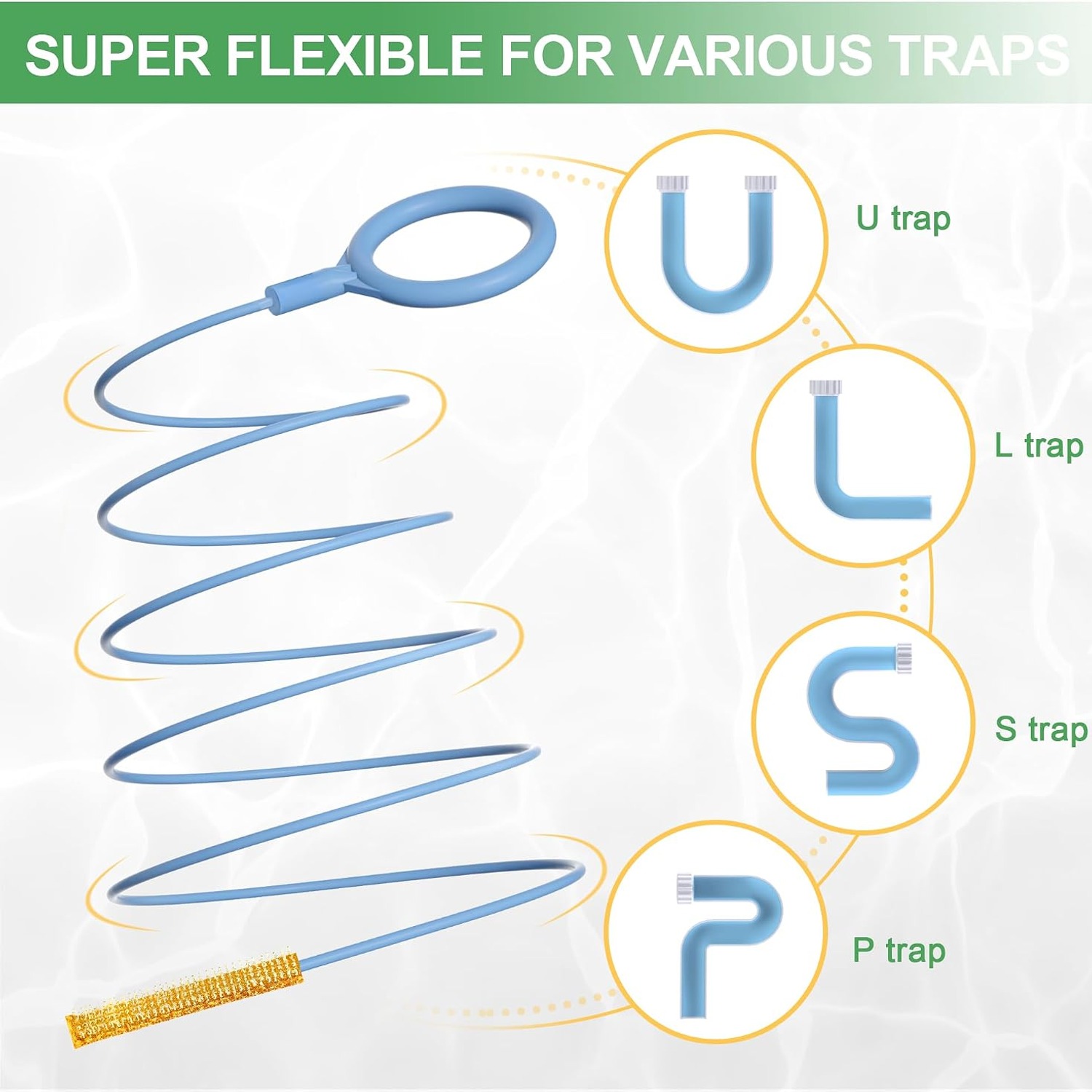
Underneath all of that sits the core. Nineteen helical steel wires run through this snake, and the maker rates it to withstand over 300 lb of pushing and pulling force. A nylon layer wraps the steel, which keeps the wand flexible enough to curve through a trap instead of binding against the pipe wall. The result is a tool that pushes like a rod but bends like a cable.
Who this suits
Anyone with long hair in the house will get the most out of it. Long strands bind into mats that catch everything else, so bathrooms shared by two or three people with long hair tend to clog fastest.
It also suits people who would rather not pour anything down the drain. We do not recommend chemical drain cleaners, and a mechanical snake sidesteps the question entirely. You pull the blockage out, bag it, and the pipe is clear.
Renters find it useful because nothing is permanent and nothing is dismantled. You are not unscrewing a trap or lying on the floor of a cupboard with a bucket. Feed, spin, pull.
Where it is not the right tool is any blockage further along than the wand can reach. If water is backing up in more than one fixture at once, or if the toilet gurgles when you drain the tub, the problem is likely in the main line. That is a job for a licensed plumber, and so is any work involving cutting, moving or connecting pipes.
Using it without making a mess
Have a bag open and some paper towel on the counter before you start. This is not a tool you want to be hunting for supplies halfway through.
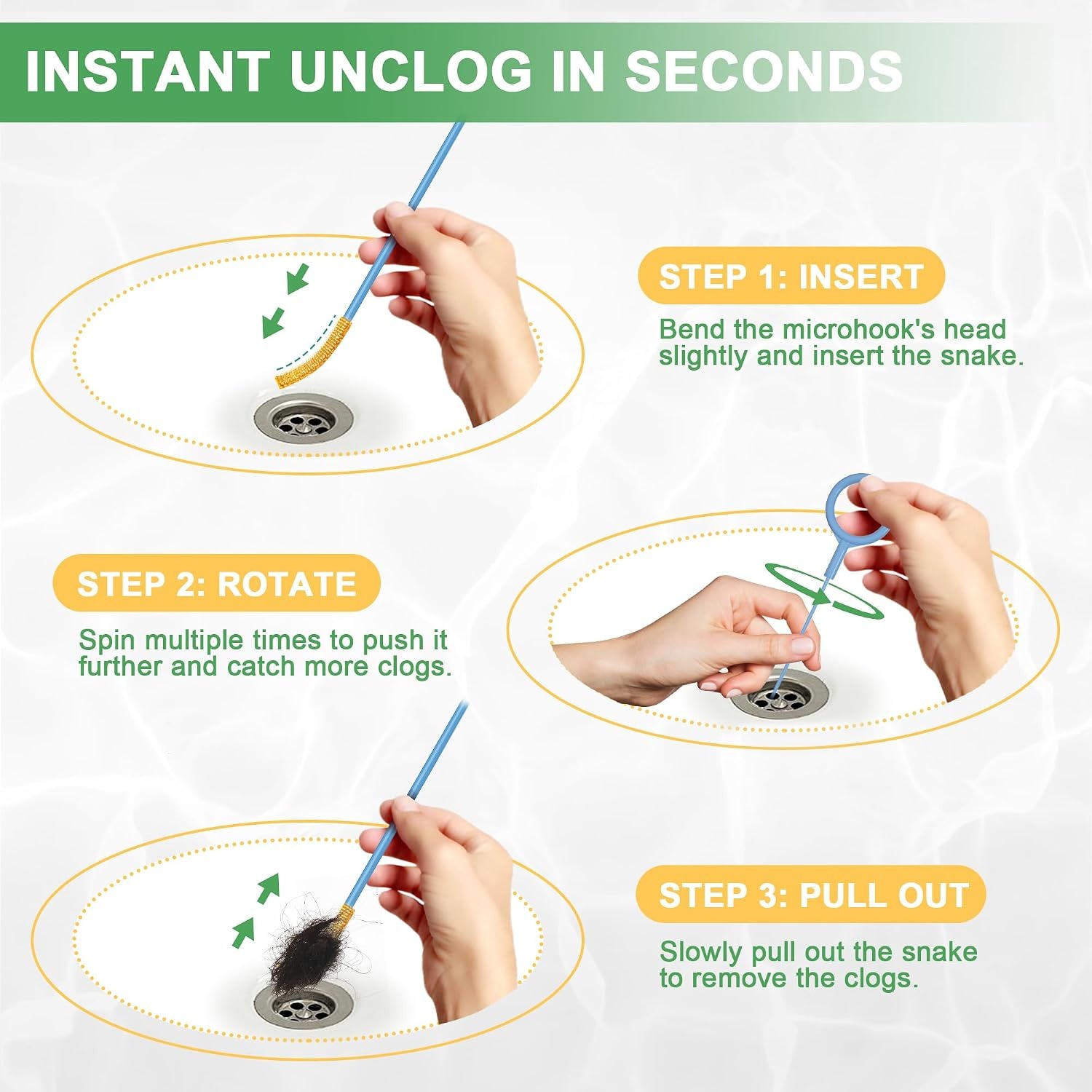
Bend the hooked tip slightly with your fingers before you insert it. A small curve helps the head follow the bend of the trap rather than nosing into the pipe wall. It is the single tip that makes the biggest difference for first time users.
Feed the snake in slowly. When you feel resistance, that is usually the trap or the clog itself. Spin the wand a few turns so the hooks wind into the hair, then draw it out slowly and steadily. Rushing the pull is how you lose the clog halfway up and have to start again.
What comes out will be unpleasant. Straight into the bag, then run hot water for a minute to flush whatever residue was left behind.
If the snake snags on the way back, stop pulling and turn it the other way while easing it out. Nearly every snag releases with a little rotation.
Choosing between tools
People usually try three things in this order. A plunger, a chemical pour, then a snake.
A plunger moves water back and forth, which can dislodge soft material but rarely removes a bound hair mat. It is a good second step after snaking, not a first step before it.
A short plastic hook strip is cheap and does clear the very top of a drain. If your clog is visible from above, it will do. If it is not, you are going to need length.
A full drain auger with a crank handle is a bigger tool for bigger jobs, usually in the main line or a kitchen stack. For a bathroom sink or shower, it is more than you need and often too thick to pass the opening.
That leaves the long flexible snake as the practical middle ground for bathroom clogs. It is thin enough to fit, long enough to reach, and strong enough to pull.
Care, and knowing when to swap
Rinse the snake under hot running water as soon as you have finished, then wipe it down. Let it dry fully before it goes away, because hooks that sit damp in a cupboard do not stay in good shape.
Store it hanging straight or coiled loosely. A tight kink becomes permanent and makes feeding harder the next time.
Replace a snake when the hooks look flattened or the nylon coating starts to fray. Flattened hooks slide past hair instead of catching it, which feels like the drain has beaten you when really the tool has worn out. Three in the pack means that replacement is already sitting in the cupboard.
Many households find a quick pull every month or two keeps things flowing, long before a blockage forms. Two minutes of maintenance beats an hour of emergency work.
The short version
Bathroom drains slow down because hair catches past the bend where you cannot see it. A snake with real length reaches it. This one measures 50 in (127 cm) with a 0.11 in (2.8 mm) wand and a 0.22 in (5.6 mm) head, slim enough to fit narrow openings, with 19 helical steel wires under a nylon layer and stitched micro-hooks that stay attached.
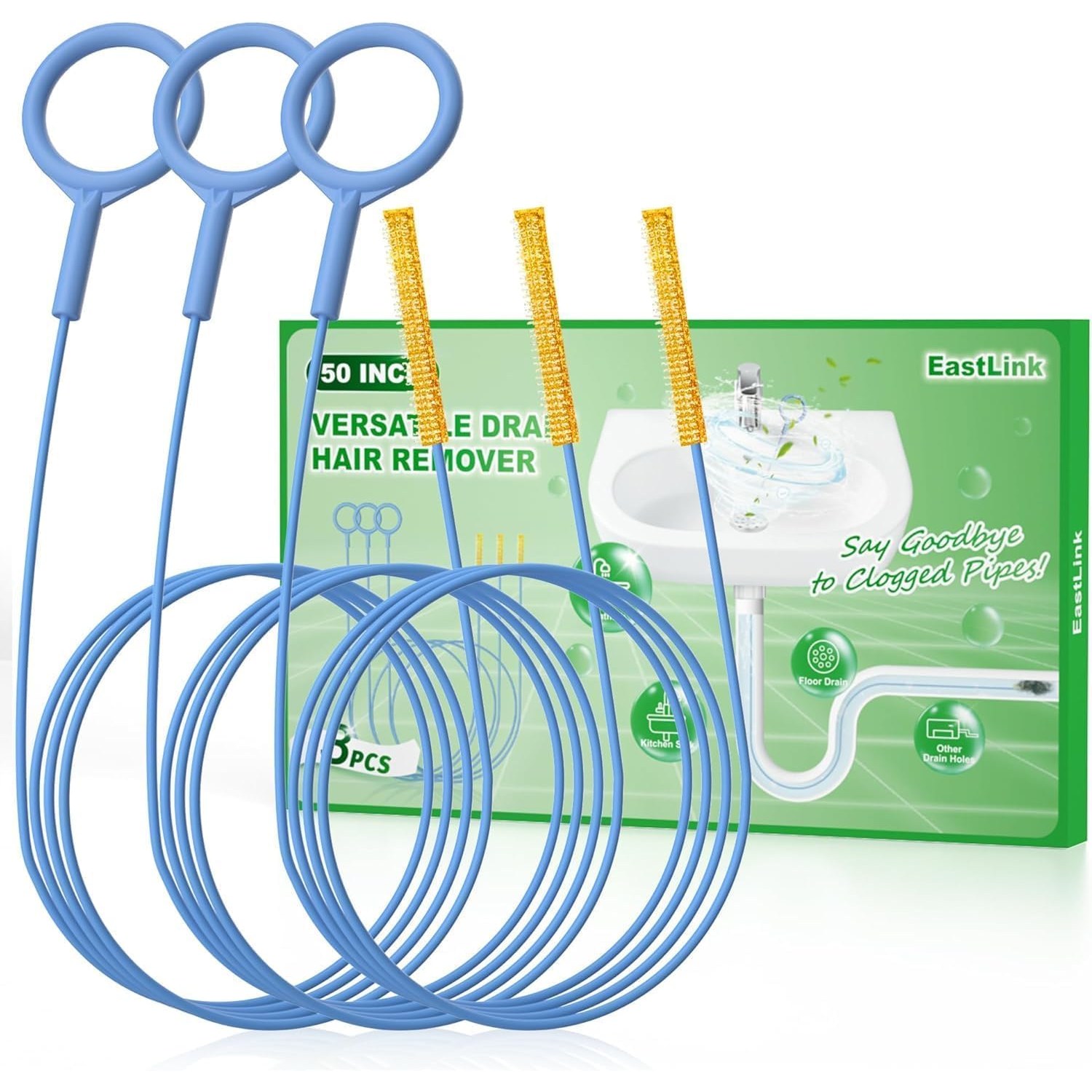
Feed it, spin it, pull slowly. Rinse, dry, store straight. Three snakes come in the pack, so you can keep one near each bathroom and still have a spare for when the hooks give up.