
The complete guide
Downspout Strainers, A Buyer's Guide To Keeping Gutters Flowing
The problem starts at one small hole
Walk around after a storm and look at where water is spilling over the edge of your gutter. Nine times out of ten, the trough itself is fine. The trouble is at the downspout opening, the hole in the floor of the gutter that drops water into the vertical pipe.
That hole is the narrowest point in the whole system. Everything that lands on your roof eventually washes toward it: leaves, pine needles, seed pods, roof moss, shingle grit, the odd tennis ball. The trough is wide enough to let that material slide along. The opening is not. So it packs together, water backs up behind it, and now you have a trough full of standing water with nowhere to go.
Standing water in a gutter is heavier than people expect. It sags the brackets, it finds its way behind the fascia, and in a cold snap it freezes into a block that nothing can shift until spring. Meanwhile the overflow runs straight down the wall or pools at the foundation, which is the one place you least want it.
A downspout strainer fixes the problem at the choke point instead of trying to cover the entire roofline.
How an expandable strainer works
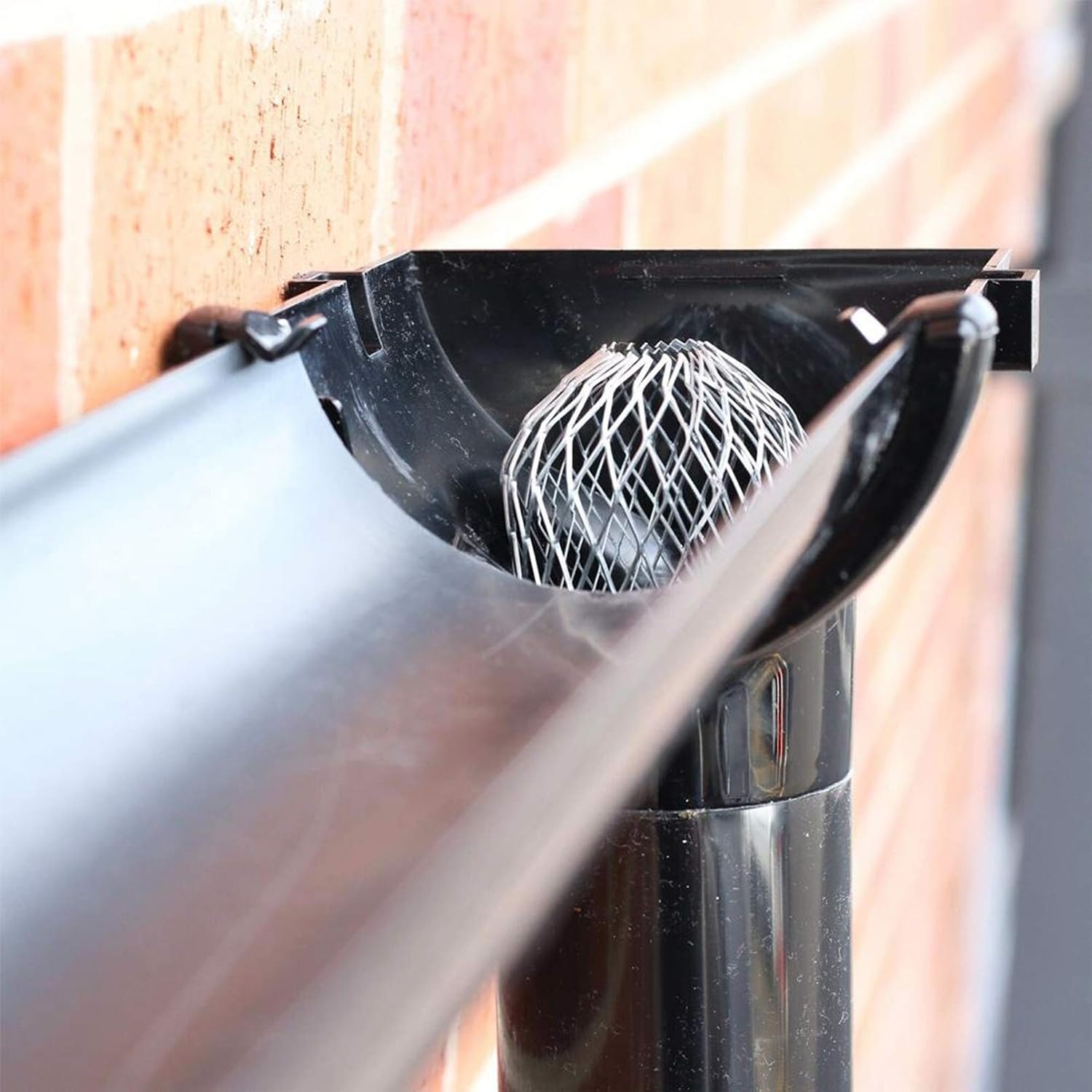
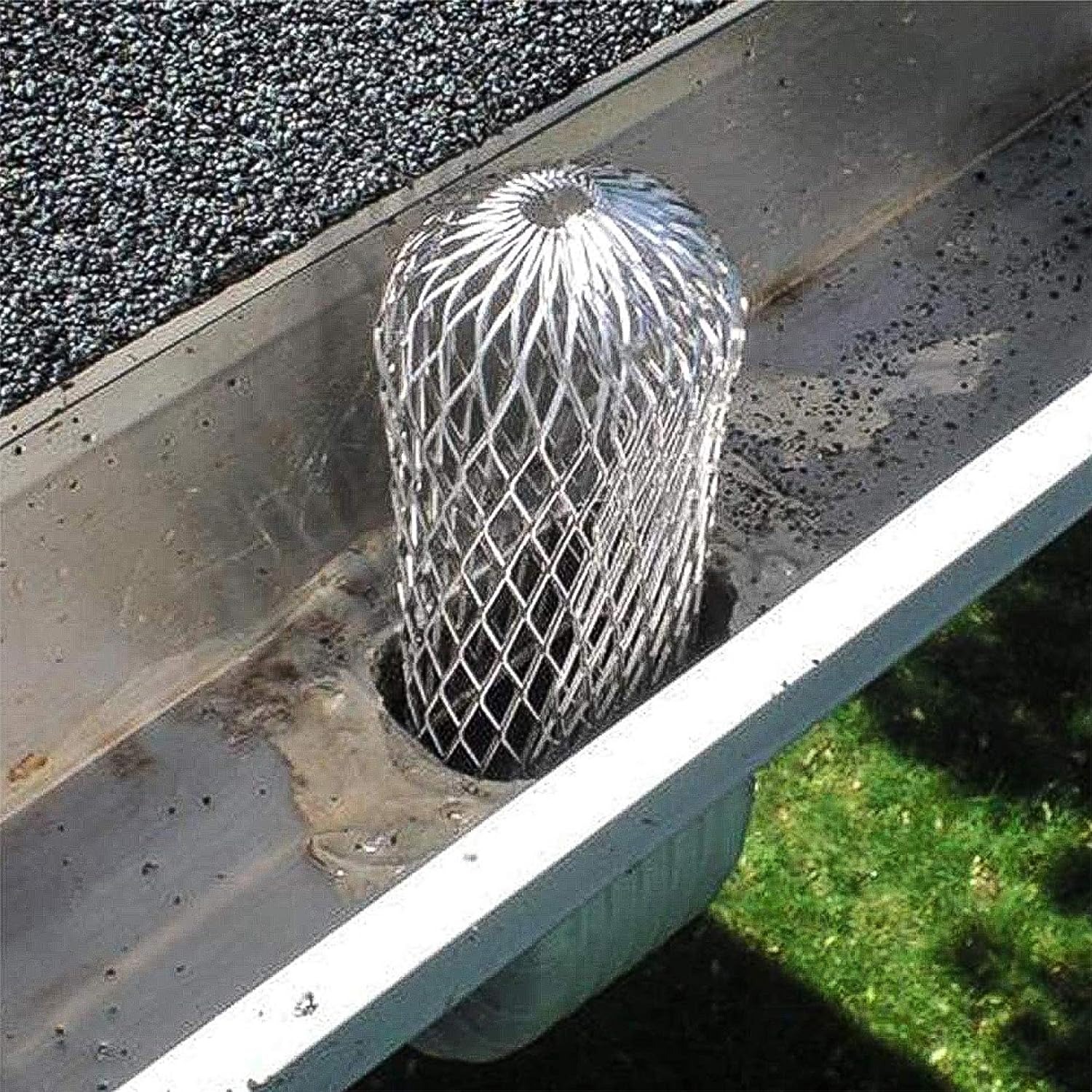
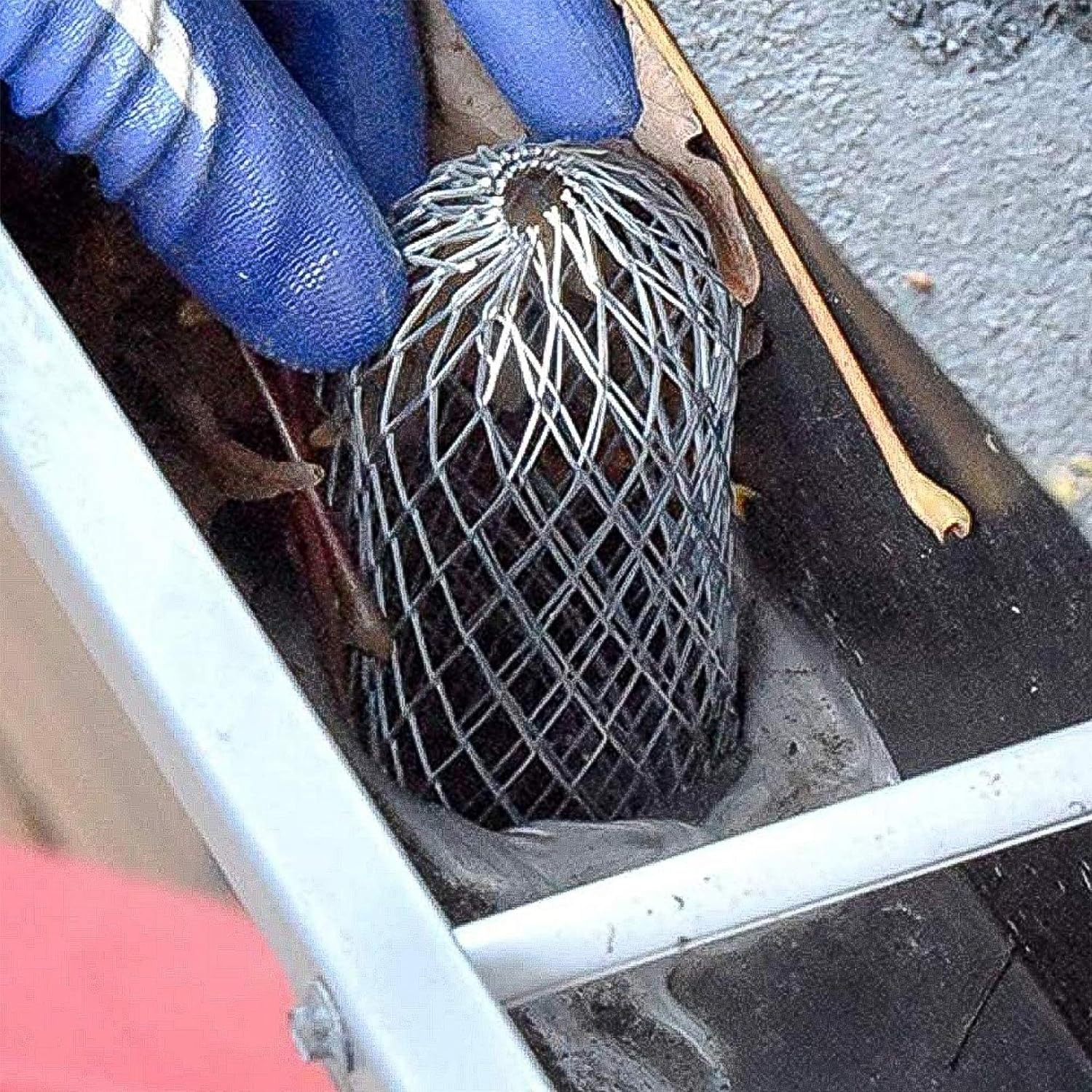
The idea is simple. You take a piece of aluminum mesh, shape it into a dome or cylinder, and set it into the downspout opening. Water runs through the mesh holes and carries on down the pipe. Leaves and twigs land on top of the mesh and stay there, where they dry out and either blow away or wait for you to lift them off.
The expandable part matters more than it sounds. Gutter systems are not standardised the way you might hope. Openings differ by manufacturer, by age of the house and by whoever installed the last set of eavestroughs. A rigid moulded plug only fits one size. A mesh you can squeeze or open with your hands can be coaxed to grip a range of openings, which is why this style has become the default choice for people fitting a whole house in one go.
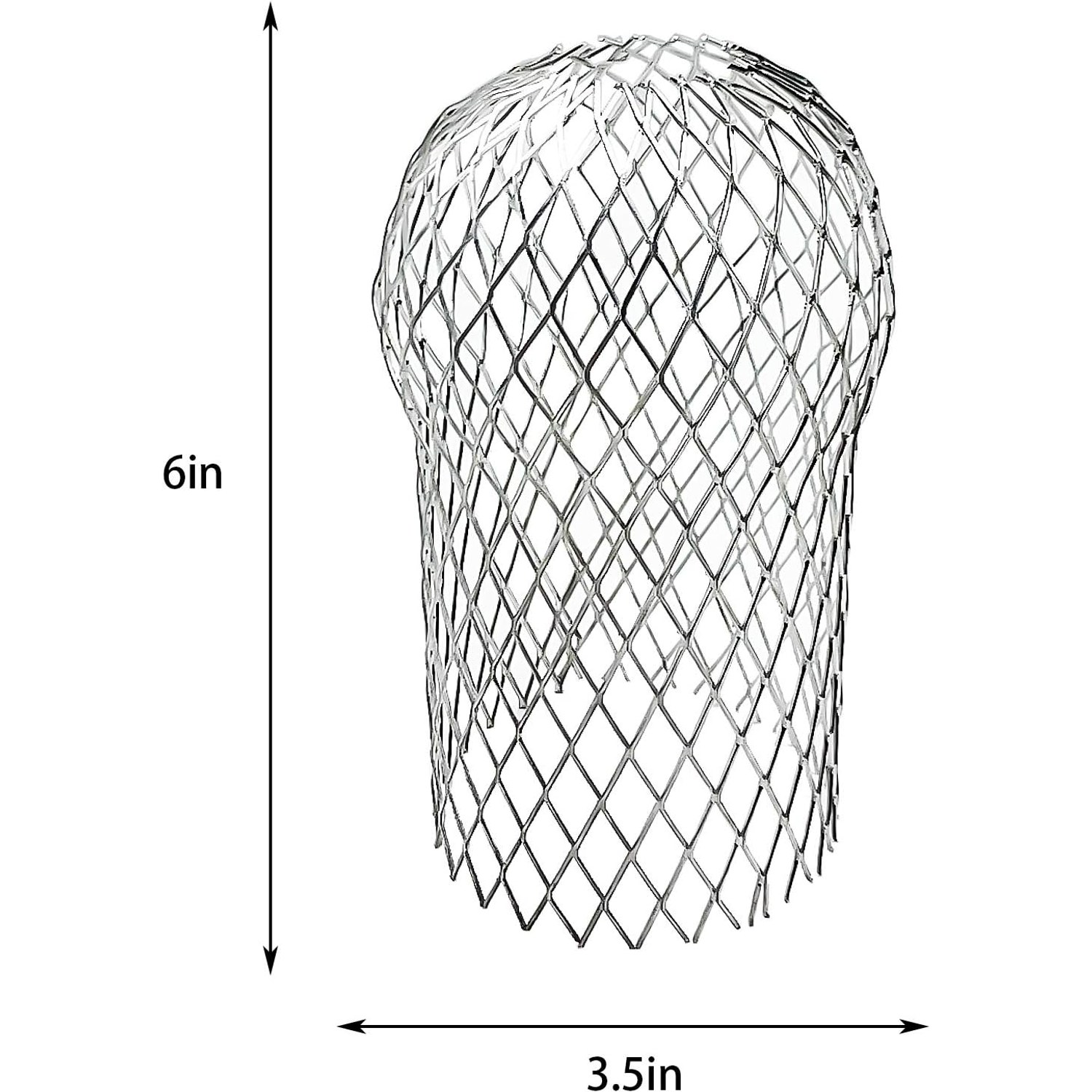
Each piece here measures 8.9 cm wide by 15.2 cm high, which is 3.5 inches by 6 inches. The listed compatible opening diameter is 5 cm (2 in). The extra height gives you something to hold onto when you lift it out, and it keeps the top of the mesh above the usual debris line so water still has somewhere to enter even when the sides are partly covered.
Why aluminum rather than plastic
You will see plastic strainers sold for the same job, and they are cheaper. They also have a short life outdoors. Sun makes thin plastic brittle, freeze and thaw cycles crack it, and a year or two of that leaves you picking shards out of the gutter.
Aluminum behaves better. It does not rust the way bare steel does, it holds its shape through temperature swings, and it can be bent back into shape if something lands on it. The brushed finish on these keeps the appearance plain, so they are not flashing sunlight back at your neighbours.
The trade-off is that cut mesh edges are sharp. That is worth repeating because it catches people out. Wear gloves when you handle these, both when you separate the stack and when you fit them. A thin garden glove is enough.
Who this suits
If your house is surrounded by mature trees, this is a product you will notice the benefit of immediately. Maples, oaks and anything that drops needles will fill a downspout opening faster than you think.
It also suits anyone who would rather not pay for a full gutter cover system. Those products lid the entire trough and typically mean a professional install and a four-figure invoice. A set of strainers is a fraction of the cost and goes in during an afternoon. You will still clean the gutters, but you will be lifting a handful of leaves off a screen rather than digging a packed plug out of a pipe with a length of wire.
Rental property owners tend to like the simplicity too. Nothing is screwed down, nothing is glued, and anything that needs replacing can be swapped by hand.
Where this is not the right answer is if your gutters are already damaged, sagging or pitched the wrong way. A strainer cannot fix a trough that does not drain. Sort the slope and the brackets first, then add the filter.
Choosing and measuring
Before you order anything, do one thing: get up and measure your downspout openings. A tape measure across the hole takes ten seconds and saves a return.
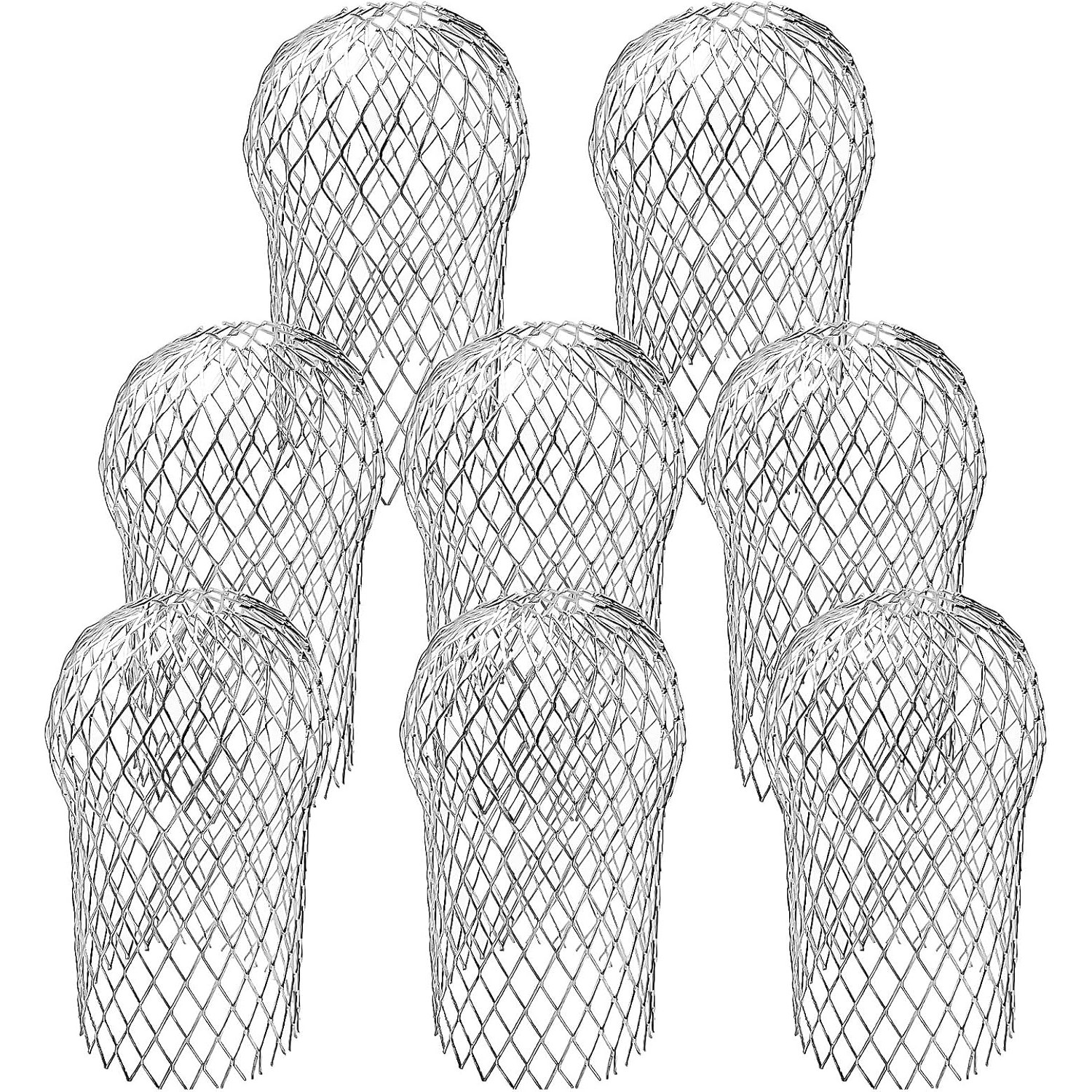
Then count the openings. Most homes have four to six. A pack of eight covers that with spares, which is useful because the odd one gets crushed or goes missing over the years. If you have a large or complicated roof with eight or more downspouts, order accordingly.
Think about what lands on your roof. Fine material like pine needles and shingle grit behaves differently from broad leaves. Broad leaves sit on a mesh and are easy to lift. Needles tend to weave into the mesh and need a rinse with a hose rather than a shake. Neither is a problem, it just changes how you clean.
One more practical point. Buying a multi pack means every opening gets treated on the same trip. Doing half the house and promising yourself you will finish next weekend is how a single uncovered opening ends up being the one that blocks.
Fitting them
Pick a dry, still day. Wind and ladders are a bad mix.
Separate the strainers first, while you are on the ground. They ship stacked tightly together and it is easy to think you have four when you have eight nested inside each other. Count them, put them in a bucket, and take the bucket up with you.
Clear the trough around each opening before you fit anything. There is no point sealing fresh debris under a new screen. Scoop out what is there, rinse if you have a hose handy, then shape the mesh with your hands until it is a touch wider than the opening and push it down until it seats firmly against the sides.
Give it a light tug to check it holds. Then move to the next one.
Keeping them working
A strainer is not a set and forget part. It is a part that makes maintenance quick rather than removing it.
Plan on two or three checks a year. Late autumn is the important one, after most leaves have come down and before the first hard freeze. Spring is worth a look too, because seed pods and blossom build up fast and they are stickier than dry leaves.
The routine is the same every time. Lift the strainer out, shake it, rinse it if the mesh is clogged with fine material, and put it back. If one has been flattened or torn, that is what the spares in the pack are for.
A quick look during heavy rain tells you a lot. If water is pooling in the trough above a strainer rather than draining through, it needs clearing. That is useful feedback you would never get from a sealed system.
The short version
Blockages form at the downspout opening because it is the narrowest point in the gutter. An expandable aluminum mesh strainer sits in that opening, lets water through and holds debris on top where you can see it and lift it off.
These come eight to a pack, each 8.9 cm by 15.2 cm (3.5 in by 6 in), in brushed aluminum, with a listed compatible opening diameter of 5 cm (2 in). They flex by hand to suit the opening and need no tools to fit.
Measure your openings, count how many you need, wear gloves while fitting, and check them two or three times a year. Done that way, gutter maintenance turns into a short job rather than a dreaded one.