
The complete guide
How To Choose And Use A Stainless Steel Drain Hair Catcher
The problem nobody notices until the water stops going down
Drains do not block suddenly. They block slowly, and then one morning you are standing in a pool of grey water waiting for the shower to catch up. The cause is almost always the same combination: hair, soap residue, skin and grit that bind into a soft plug somewhere in the first stretch of pipe.
Kitchen drains go the same way, just with different ingredients. Coffee grounds, rice, oats, scraps off a plate and a slick of cooking fat. Each one on its own would wash away. Together, over weeks, they build.
The fix is not complicated. If the material never gets past the drain opening, it never gets a chance to collect in the pipe. That is the entire job of a drain strainer, and a flat stainless steel one does it about as simply as it can be done.
How a perforated stainless strainer works
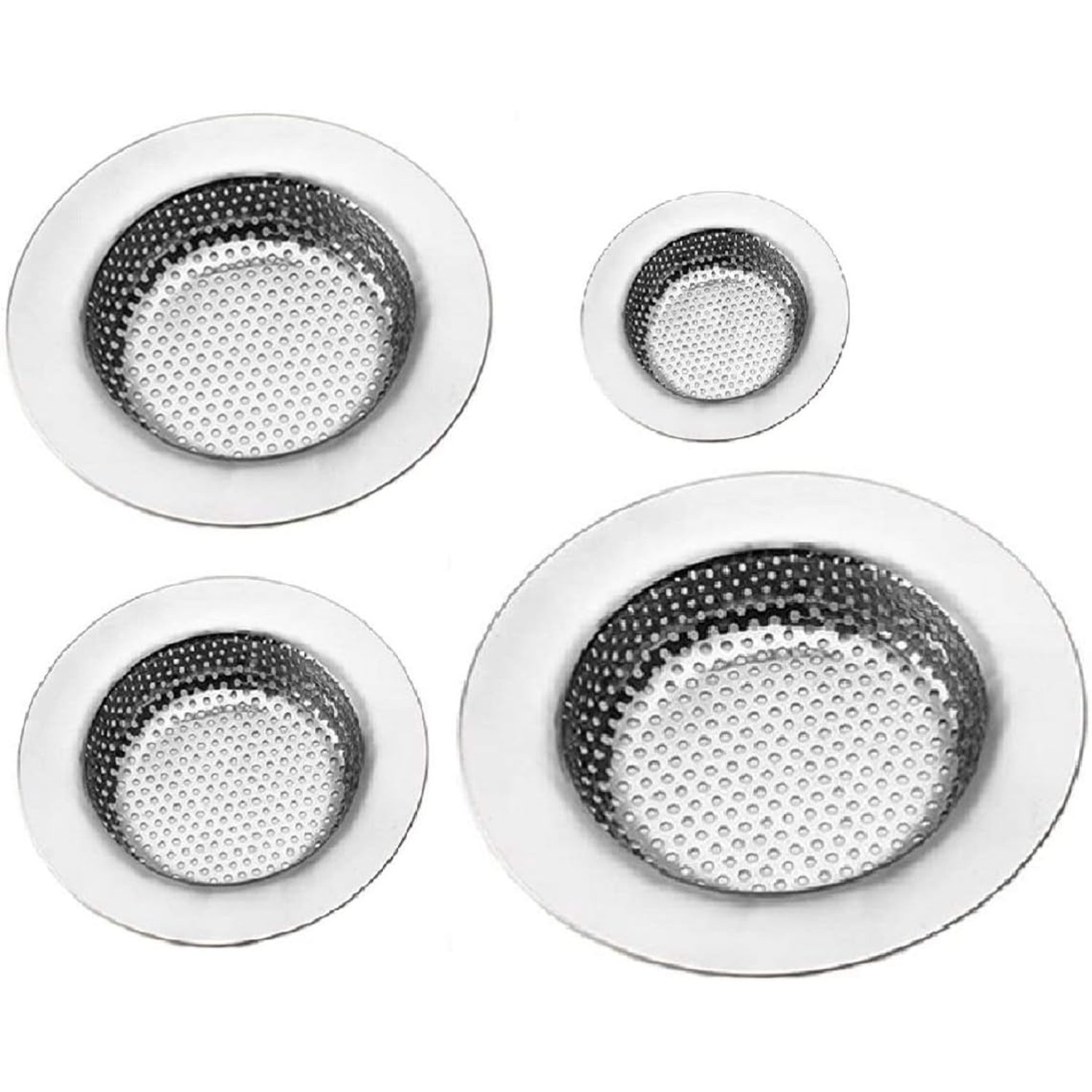
This is a flat disc of stainless steel, perforated across its whole face, that rests over the drain opening. Water runs through the holes. Hair and solids stay on top.
The hole size matters more than it looks on a spec sheet. These are 2 mm across, which is a deliberate choice. Go smaller and the strainer clogs with soap scum and slows the flow. Go larger and fine hair slips through. At 2 mm, with the holes packed closely together, you get a lot of open area for water and still a surface that hair cannot thread through easily.
There is a second advantage to a flat perforated disc over a mesh basket. Mesh traps hair in the weave, and getting it out means picking at it with your fingers or a brush. On a flat face, hair collects as a loose mat you can lift straight off. The cleaning takes a few seconds, which means you actually do it, which is the only reason any strainer keeps working.
Why stainless steel and not plastic
A drain strainer lives in water. It is wet after every shower, every wash-up, every time the tub empties. Plastic survives that, but it discolours, it stains around soap scum, and thin plastic can warp if hot water from a kettle or a pot goes past it.
Stainless steel does not have those problems. It resists rust and corrosion, it holds its shape under water pressure instead of flexing, and the polished face cleans back to bright with soapy water and a cloth. The maker also notes there are no sharp edges on these, which is worth something when you are fishing one out of a drain with wet, soapy hands.
The steel also sits still. A light plastic strainer can float or shift when a lot of water hits it. A steel disc stays put on the surround.
Picking the right size from the four
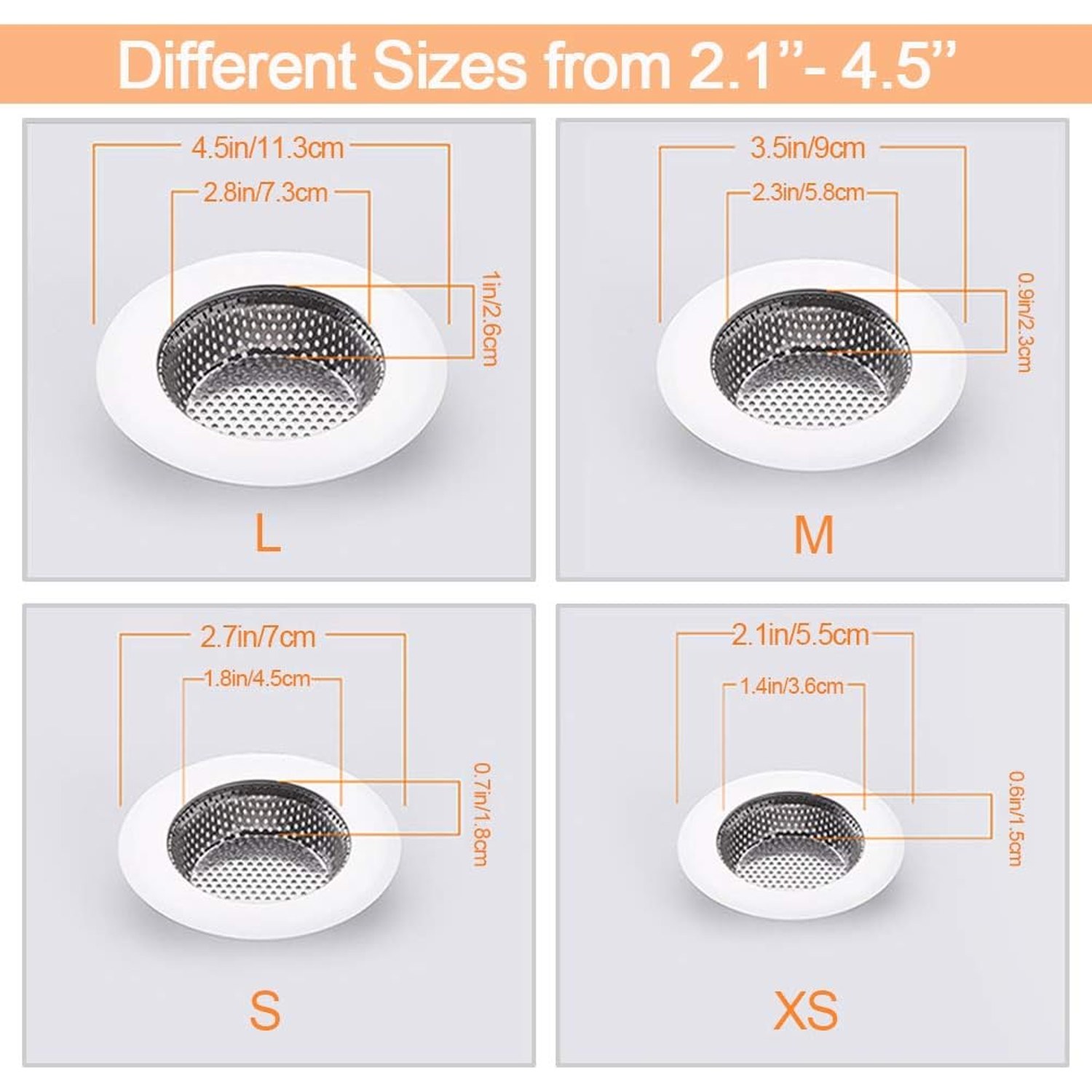
The pack gives you four diameters rather than four of the same, which is the practical way to buy. Before you fit anything, get a ruler or tape and measure each drain opening across its widest point in inches.
Then match the strainer to the drain using one rule: you want the strainer to overlap the opening and rest on the flat surround. A strainer that overlaps catches everything heading for the drain. A strainer that is slightly too small drops into the well, where water can run around the edge and carry hair straight past it.
Look at the surround while you are measuring. If the area around your drain is flat, almost any correctly sized strainer will sit well. If there is a raised rim, a decorative grate or a protruding stopper, check there is room for the disc to lie level. A strainer that sits on an angle leaves a gap, and a gap is where the hair goes.
Most households end up assigning the sizes something like this. The largest tends to suit a shower or floor drain, the middle sizes suit a tub or kitchen sink, and the smallest usually ends up in a bathroom sink. Your fixtures may be different, which is exactly why the pack includes a range.
Living with one day to day
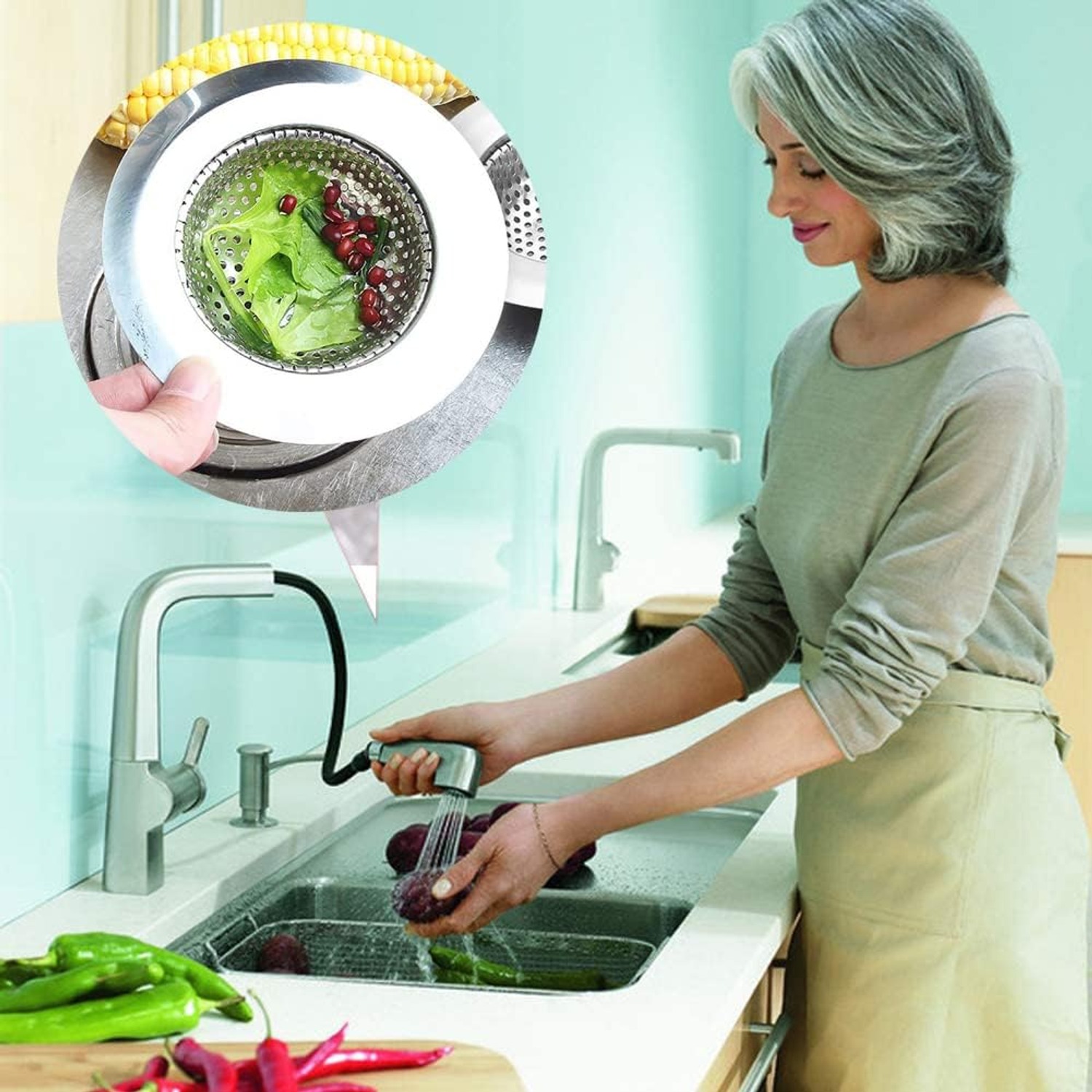
The routine is short. After a shower, lift the strainer, tip whatever is on it into the garbage, and put it back. In the kitchen, do the same after washing up. That is it.
Every week or two, give each one a proper wash in warm soapy water. A soft brush gets anything out of the perforations, and a wipe dry keeps the polished face from showing water marks. Avoid steel wool and scouring powders, which will dull the finish over time. Skip chemical drain cleaners as well. They are hard on plumbing and they do nothing useful for a strainer that you can clean in ten seconds under the faucet.
If you notice water pooling on the strainer face, that is just the signal to empty it. It is not a fault, and it is a far better warning than a blocked pipe.
One more thing worth saying plainly: a strainer prevents new material going down. It does not clear what is already there. If your drain is slow today, sort out the existing build-up first, then fit the strainer to keep the pipe clear afterwards. If the blockage is deep or recurring, or if the job involves cutting, moving or connecting pipe, that is work for a licensed plumber.
Who this suits
Anyone with long hair in the house will feel the difference first. Long strands are the single biggest contributor to a slow shower drain, and they are the easiest thing for a flat strainer to catch.
Households with several bathrooms get good value from a four pack, since one purchase covers multiple drains. The same goes for rentals and shared houses, where nothing here is fixed to the fixture, so the strainers come away cleanly when you move out.
Kitchens benefit for a different reason. Scraps that look harmless, rice and coffee grounds in particular, swell and settle in the pipe. A strainer sends them to the garbage where they belong.
If you have an unusual drain, a deeply recessed well or a stopper assembly that sits proud of the opening, measure carefully first. These are flat covers, not fitted inserts, and they need a reasonably level surround to do their job.
The short version
Hair and food scraps cause most slow drains, and the cheapest place to stop them is at the opening. This pack gives you four stainless steel strainers in different sizes, each perforated with 2 mm holes that let water through quickly while holding solids on the surface.
Measure your drains, pick the strainer that overlaps each opening, and get into the habit of lifting and emptying it. Wash them in warm soapy water now and then. Stainless steel handles the wet without rusting, and there is nothing to assemble or install.
It is a small thing to put in a drain. It saves a lot of standing in cold water wondering where it all went wrong.