
The complete guide
How To Choose And Fit A Snap In Shower Drain Cover
The small part that makes a shower look old
Bathrooms age unevenly. The tile can be fine, the glass can be spotless, and then there is a drain cover in the middle of the floor that has gone from shiny to patchy to frankly grim. Plated covers flake. Plastic ones yellow and crack around the pin holes. Some just loosen over the years until they lift every time water pushes against them.
The good news is that this is one of the cheapest fixes in the house. On most round shower drains the cover is a separate piece that sits in the opening and comes straight out. The pipework underneath is untouched. You are replacing a lid, not doing plumbing.
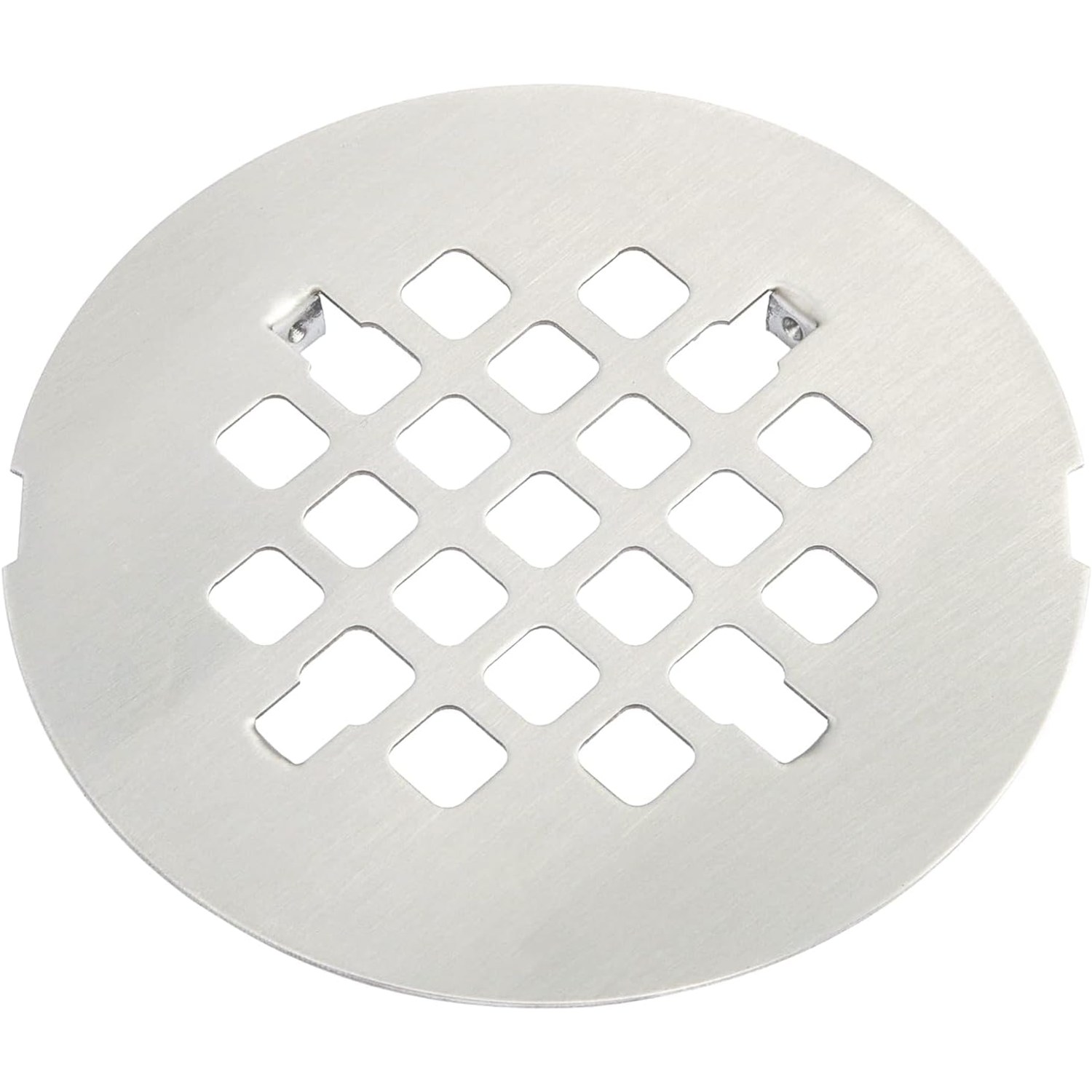
A snap in shower drain cover 4.25 inch like this one is made for that job. It is 304 stainless steel with a brushed finish, it has two pins on the underside that drop into the existing holes, and it comes out again whenever you need to clear hair.
How a snap in cover actually works
Look at your current cover from below and you will usually see two short posts sticking down. Those posts sit in matching holes in the drain body. Friction holds everything together. There is no thread, no clip and no glue.
That simple arrangement has two advantages. First, fitting takes seconds. You line up the pins, press down, and the rim sits flat on the floor. Second, removal takes the same few seconds, which matters more than people expect. A cover you can lift is a cover you will actually clean.
Fixed grates that screw down tend to get cleaned once a year, if that. A removable one gets cleaned when you notice the water pooling, which is exactly when the hair needs pulling out.
The two measurements that decide everything
This is the part worth slowing down for, because almost every fit problem comes back to it.
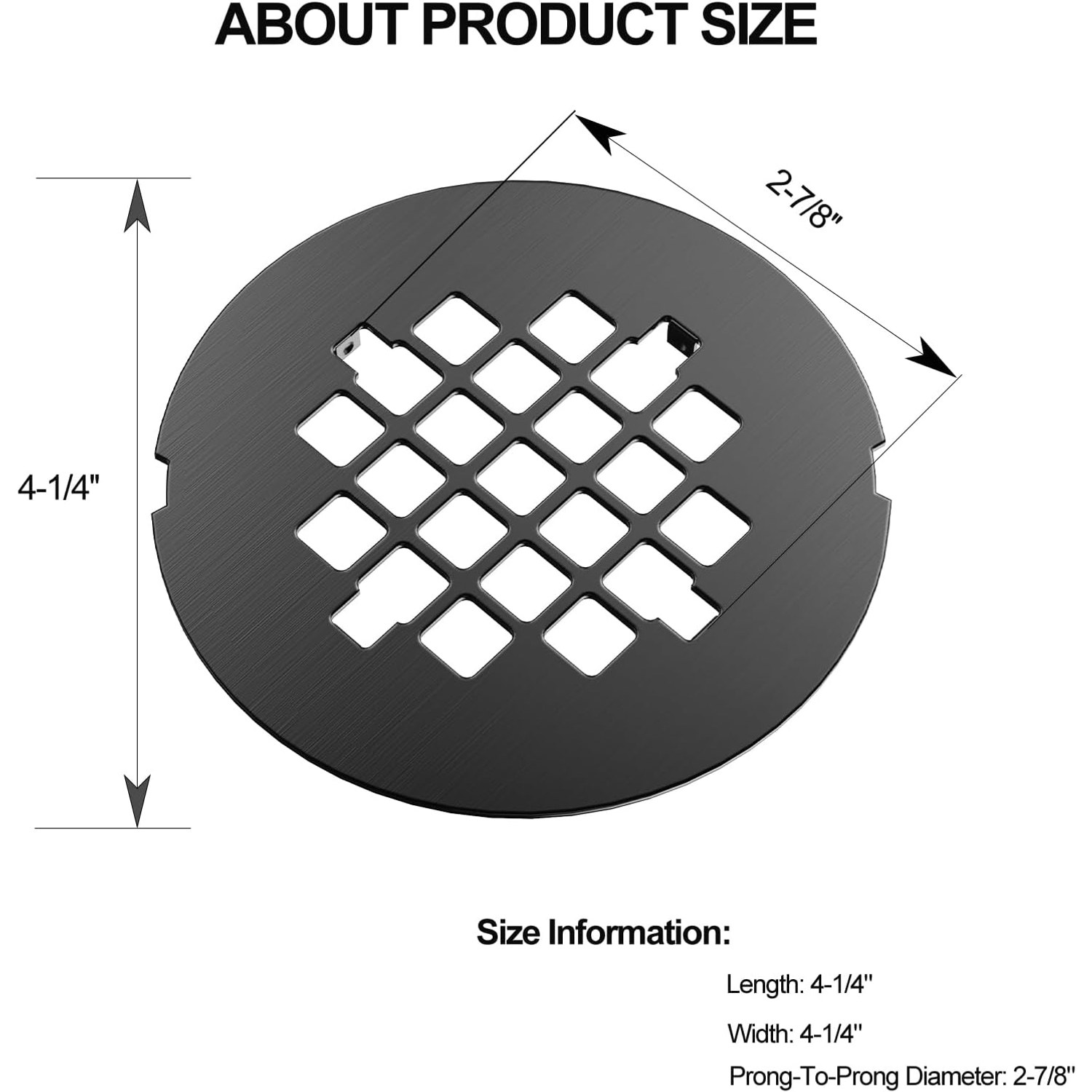
The first number is the outer diameter. On this cover that is 4-1/4 inches, which works out around 108 mm. Measure across the top of your existing cover, edge to edge, through the middle. If your old cover is cracked, measure the opening in the floor instead and allow for the rim sitting on the surrounding tile.
The second number is the pin spacing. Lift the old cover out and measure from the centre of one pin to the centre of the other. On this cover that distance is 2-7/8 inches, about 73 mm. The listed compatible groove diameter is 2.88 inches.
Both numbers need to match. A cover with the right diameter but the wrong pin spacing will not seat. It will sit proud, rock underfoot, or pop loose. There is no workaround and no trimming it to fit. Spend two minutes with a ruler and you will get the right part the first time.
Why stainless steel is the sensible material
Shower drain covers live in constant water, soap and warm air. That combination is unkind to most materials.
Plated steel and plated plastic look fine for a while, then the plating lifts at an edge and the base material underneath starts to show. Raw plastic goes brittle and discolours. Thin pressed metal bends when somebody stands on the edge.
304 stainless steel holds up better in all three ways. It keeps its colour in wet conditions, it does not go brittle, and at the thickness used for drain covers it keeps its shape under foot traffic. That is why most people shopping for the best stainless steel shower drain cover end up looking at this grade specifically.
The brushed finish is a practical choice as well as a visual one. Polished chrome shows every water spot and fingerprint. A brushed grain scatters light, so hard water marks and the fine scratches that come with normal use blend in rather than catching your eye.
Who this suits
If your shower has a round drain of the right size and the existing cover is damaged, discoloured or missing, this is a straightforward replacement.
It is also a cheap way to update the look of an older bathroom. Swapping a yellowed plastic grate for a brushed metal one changes the floor more than you would think, especially in a small shower where the drain is right in your sightline.
Renters often like it for the same reason. Nothing is cut, screwed or glued, so the original cover can go back in when you move out.
Where it is not the answer is if the drain body itself is the problem. If the opening is cracked, if the pin holes are broken out, or if water is backing up from further down the line, a new cover will not fix that. Fixed plumbing work, including cutting, moving or connecting pipes, belongs with a licensed plumber.
Fitting it
There is very little to say here, which is the point.
Lift the old cover out. If it has been in place a long time it may need a gentle twist, or a flat tool worked under the rim to break the soap seal. Clear any gunk from the top of the drain opening while you have access, since it is the easiest it will ever be to reach.
Check the new cover against the opening dry, without pushing it home, to confirm the pins line up. Then press down evenly until the rim sits flat against the floor. Run the shower for a moment and watch the water. It should disappear through the slots without pooling around the rim.
If the cover sits high or wobbles, take it out and measure again rather than forcing it.
Keeping it clean
A cover like this only works as well as its last clean. Hair gathers on the underside of the slots, catches soap residue, and slowly turns into a mat that water has to fight through.
Every week or two, lift the cover, pull the hair off, and rinse both pieces. Wash the cover in warm water with a little dish soap if it has a film on it, then dry it with a soft cloth so the brushed grain stays even.
Stay away from steel wool, scouring powder and bleach based cleaners. They scratch the finish and the scratches then hold dirt. Skip chemical drain cleaners too. Pulling the hair out from above deals with the usual cause of a slow shower drain without putting anything harsh into the pipes.
At 59 g the cover is light enough to handle comfortably with wet hands, which removes one more excuse not to do it.
What to compare when you are shopping
Price is not the useful comparison here, because these parts are all inexpensive. The things that actually differ are fit, material and whether the cover comes out.
Check the diameter and pin spacing first, every time. Then look at what the cover is made from and whether the maker states the grade. Then confirm it is removable rather than fixed, because a cover you cannot lift is a cover you cannot clear.
Slot pattern matters a little as well. More open area moves water faster, while finer slots catch more debris. A middle ground works for most showers, and clearing the hair regularly matters far more than the exact pattern.
The short version
A snap in shower drain cover is a two minute, no tools fix for a part that makes a whole bathroom look tired. This one is 304 stainless steel with a brushed finish, 4-1/4 inches across, with pins set 2-7/8 inches apart.
Measure your old cover edge to edge, then measure between the pin hole centres. If both match, press this one in and get on with your day. Lift it out every week or two, clear the hair, and it will keep doing its job quietly for a long time.