
The complete guide
How to Choose a Kitchen Sink Strainer That Actually Stays Put
The small problem that turns into a big one
Nobody calls a plumber because of one grain of rice. Drains fail slowly. A bit of coffee ground here, a few strands of onion skin there, a scrape of leftover sauce rinsed off a plate because it seemed easier than wiping it into the garbage. Each item on its own is nothing. Together, over a few months, they settle into the trap and the elbow below the sink, mix with grease, and start narrowing the pipe.
You notice it first as a sink that takes a second longer to empty. Then the water sits for a moment after you pull the stopper. Then one evening you have an inch of grey water standing in the bowl and a kitchen that smells faintly of last week.
A strainer is the cheapest way to break that chain. It does one thing, it keeps solids out of the pipe, and it does it every single time you run the faucet. There is no setup, no maintenance beyond a rinse, and nothing to go wrong.
How a perforated strainer works
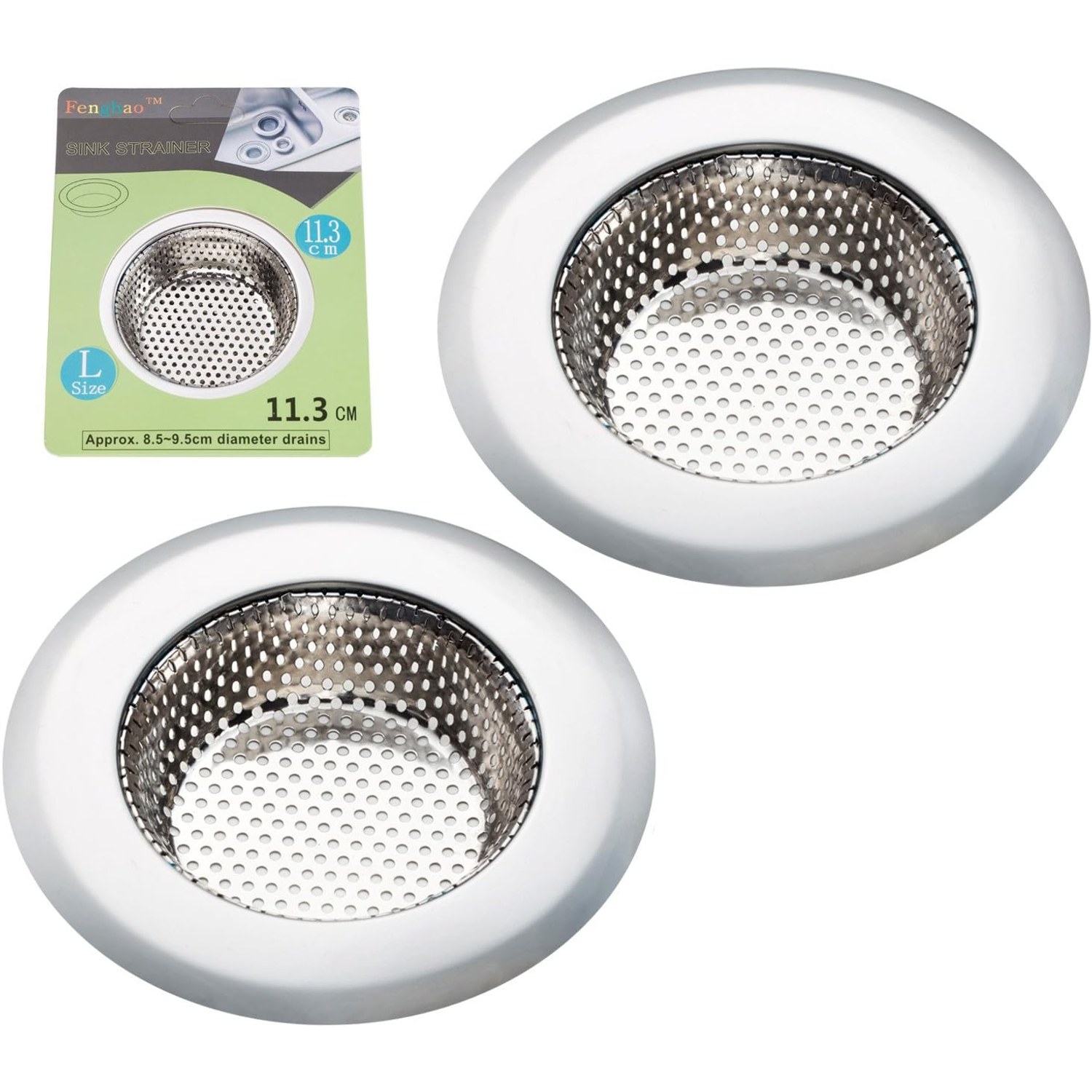
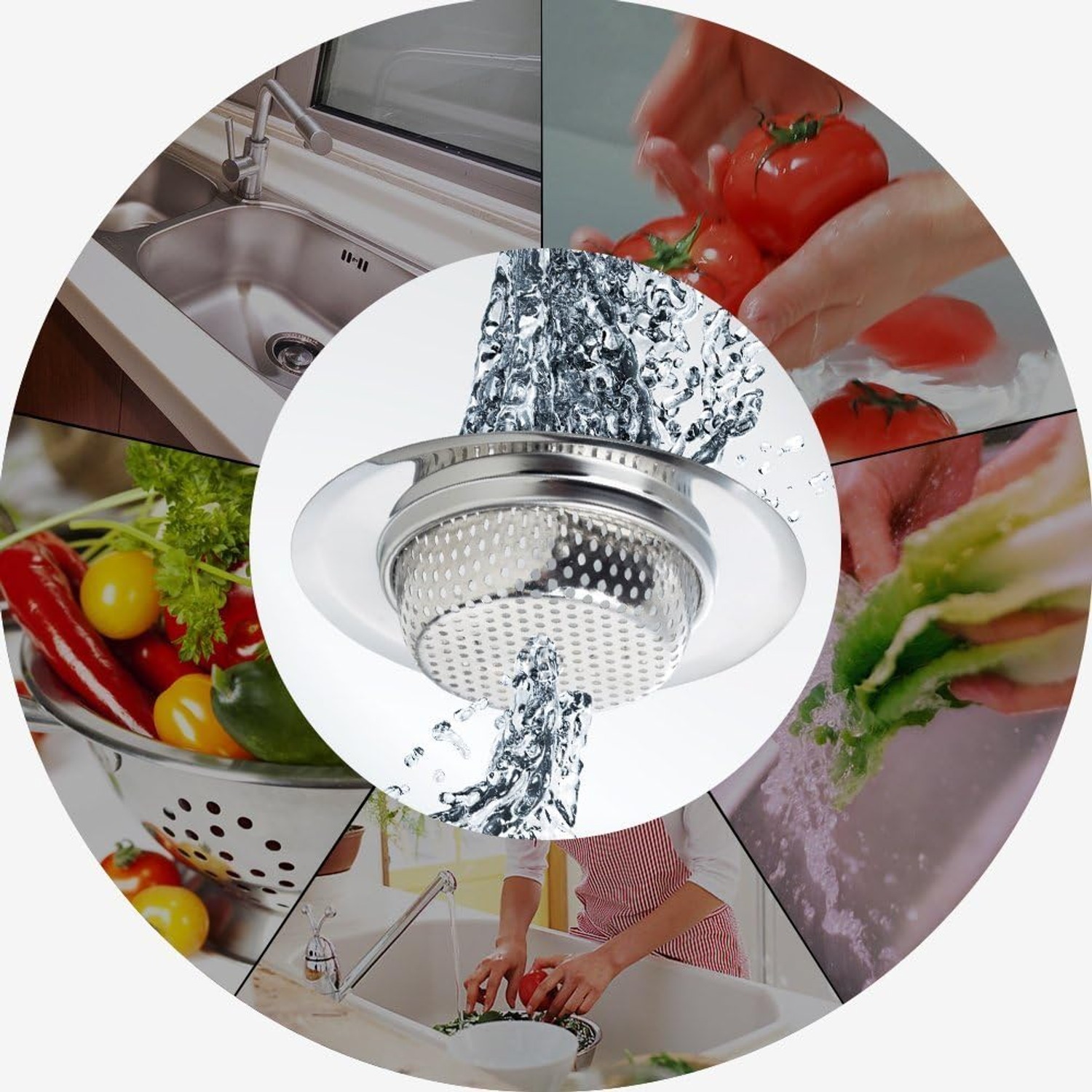
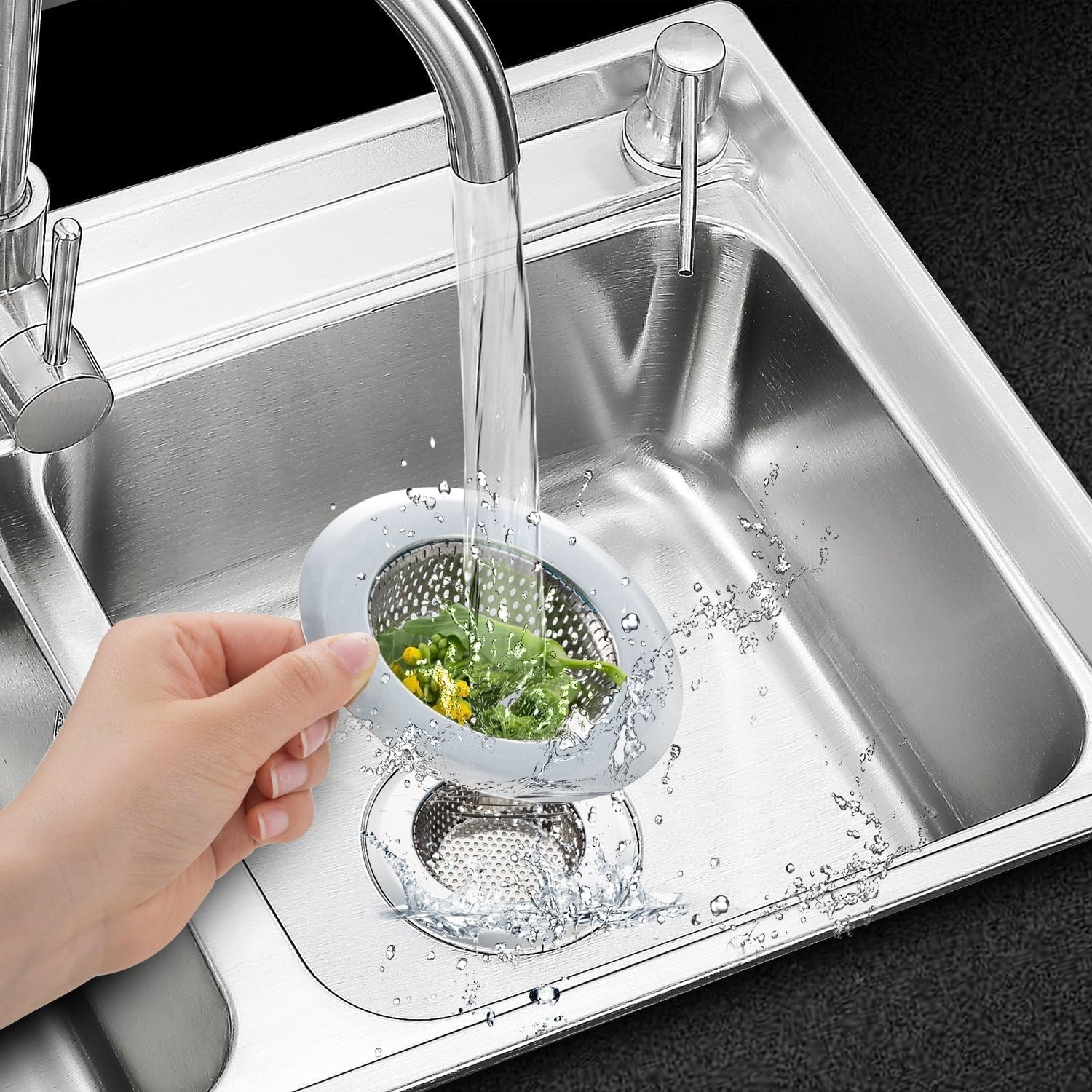
There are two broad types of sink strainer. One is a mesh basket that drops into the drain opening and sits below the sink surface. The other is a flat perforated disc that rests on top of the drain opening. This is the second kind.
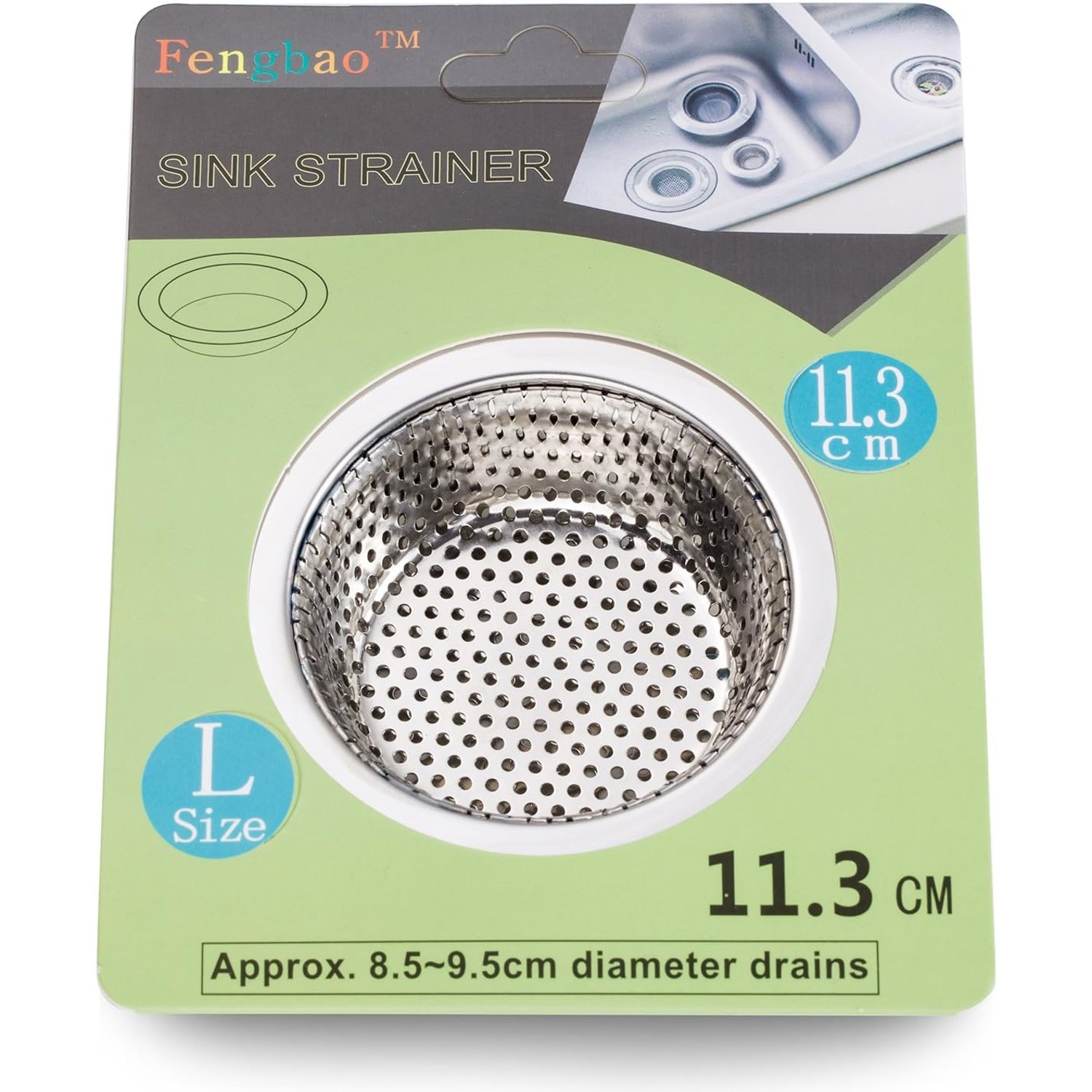
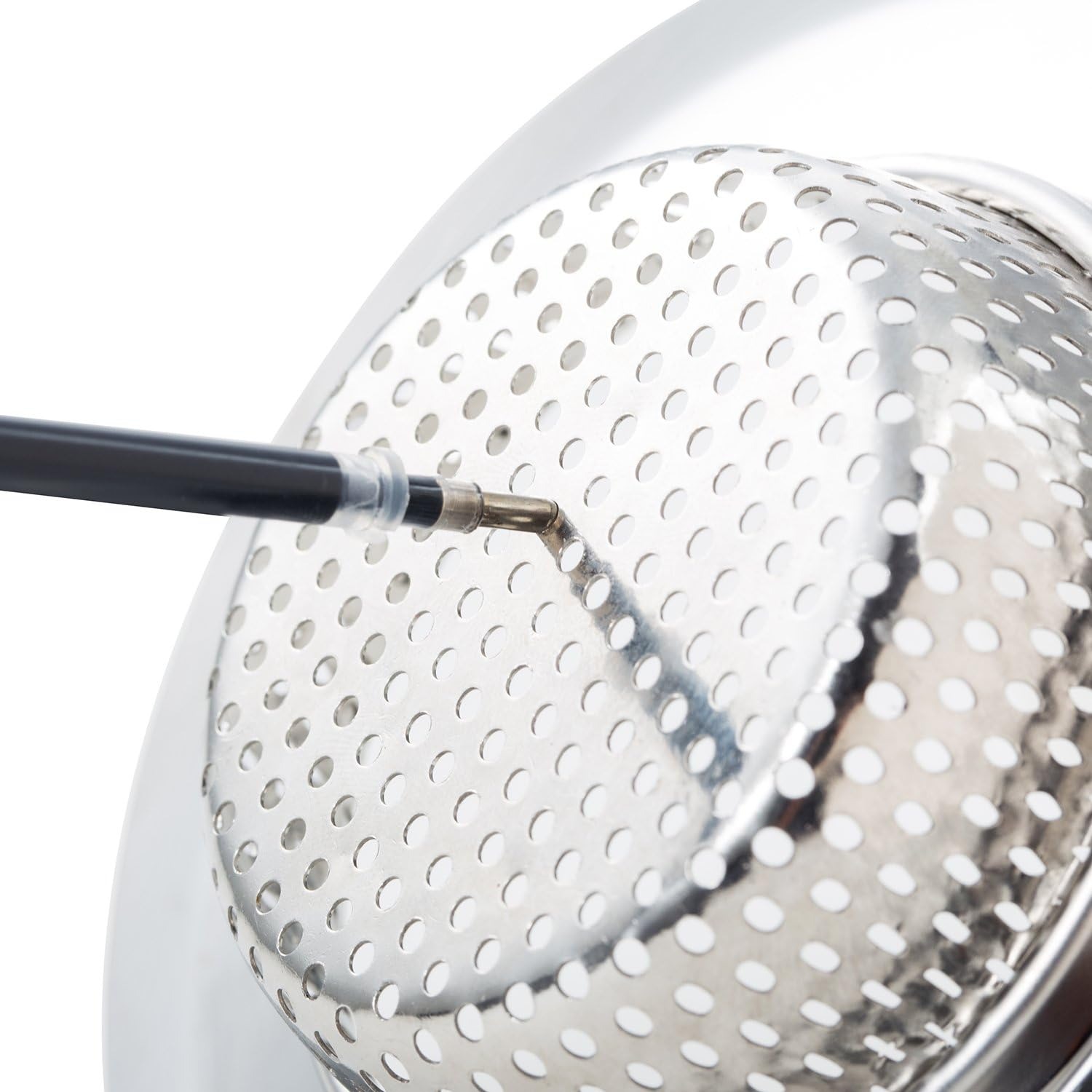
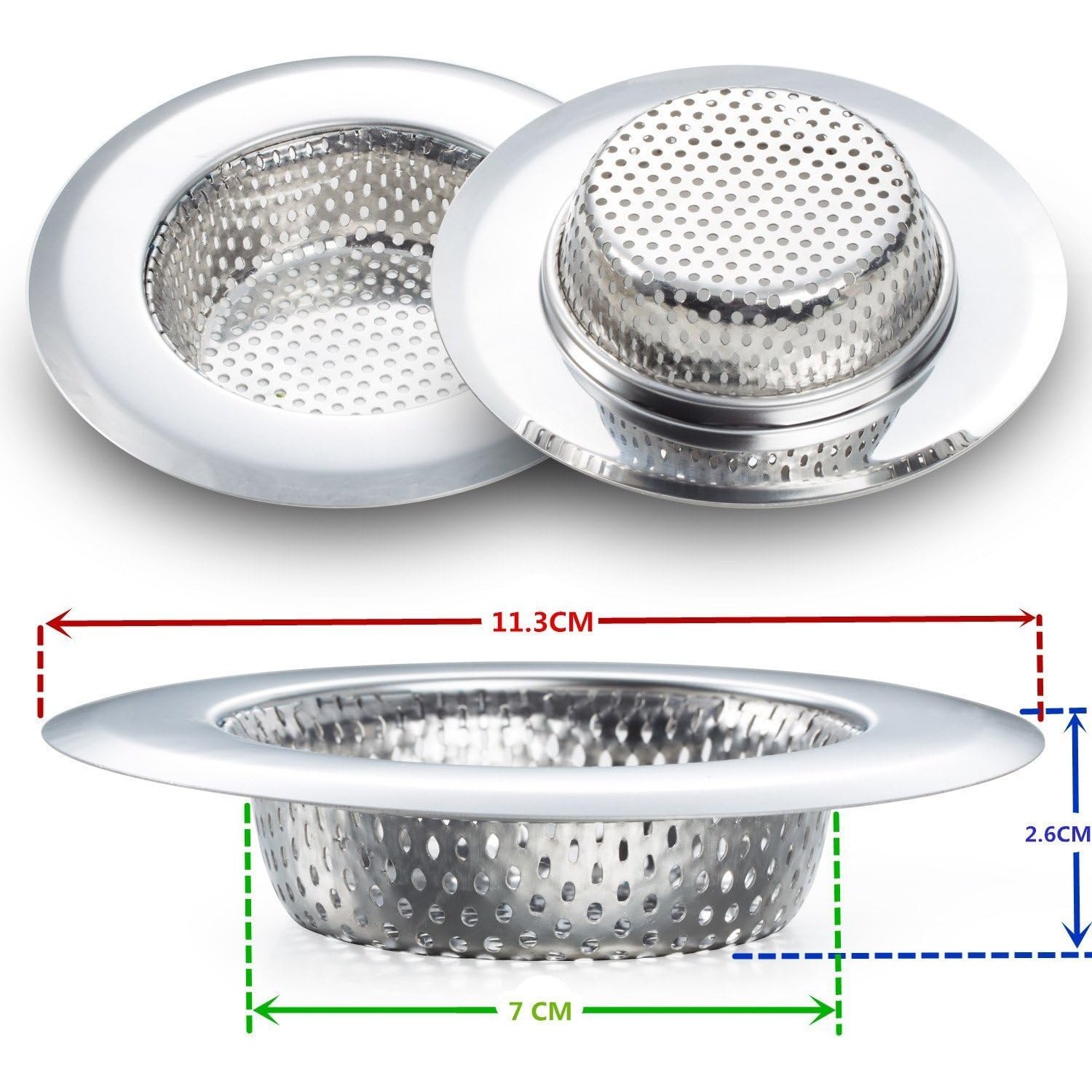
The disc is 4.5 inches (114 mm) across. The middle 2.75 inches (70 mm) is punched with 2 mm holes, forming a shallow bowl. Water, suds and anything dissolved run straight through those holes. Anything bigger than 2 mm stays in the bowl, visible, where you can deal with it in two seconds.
That 2 mm figure matters more than people expect. Punch the holes much larger and fine debris like coffee grounds and tea leaves slip through, which defeats the point. Punch them much smaller and the strainer blocks constantly, so you spend your evening clearing it instead of washing dishes. Two millimetres sits in a sensible middle, holding back the things that actually cause problems while letting dishwater clear at a normal rate.
The outer rim is flat and two-ply, which means the metal is folded over on itself at the edge. That doubling is not decorative. It stiffens the rim so the disc does not flex, and it adds just enough weight that the strainer sits where you put it rather than drifting when the faucet runs. Thin single-layer discs have a habit of tipping up on one edge and letting scraps slide underneath, which is exactly the failure you are trying to avoid.
Who this suits
If you cook from scratch, you will get the most out of it. Peeling, chopping and draining produce a steady stream of small solids, and a strainer catches them at the moment they are created rather than hours later in the trap.
It also suits households with a double sink, since the pack contains two. One in each bowl means you are never caught out because the strainer happens to be on the wrong side.
Renters have a particular reason to like a rest-on-top strainer. Nothing is fitted, nothing is cut, nothing is modified. You set it down, you use it, and when you move out it goes in a drawer with your other kitchen bits. There is no landlord conversation to have.
If you share a kitchen with people who rinse plates without scraping them first, a strainer quietly solves that argument. The scraps end up somewhere obvious instead of somewhere you cannot see.
Choosing the right size
This is where most strainer purchases go wrong, and it takes thirty seconds to avoid.
Measure across your drain opening at its widest point. A ruler across the top of the hole is fine. The strainer rests on the flat sink surface surrounding that opening, so the opening needs to be comfortably smaller than 4.5 inches (114 mm) for the rim to have something to sit on. If your opening is close to or wider than that figure, this strainer is not the one.
Then look at the surface around the drain. Is it flat? Many stainless sinks have a slight dish shape toward the drain, which is fine, the rim will still bed down. What causes trouble is a raised flange or a domed fitting standing proud of the sink floor. A flat rim on a domed surface rocks, and a rocking strainer lets debris slide under the edge.
If you already have a drain basket fitted, check whether its top sits flush. Flush is fine. Proud is a problem.
Living with it day to day
The routine is simple enough to become automatic. When the dishes are done, lift the strainer by one edge, turn it over the garbage, and tap. Most of what it caught will fall straight out. Rinse under the faucet and set it back.
Once a week or so, give it a proper wash. Warm soapy water and a sponge handle the thin film of grease that builds up around the perforations. If you would rather not think about it, stand it in the dishwasher with the rest of the load, since it is dishwasher safe.
Two things to avoid. The first is steel wool and scouring powder, which scratch the finish and give grease something to grip. The second is bleach based cleaners sitting on the surface, which can mark metal. Neither is a dramatic risk, but a strainer that stays bright looks better in the sink and costs you nothing extra in effort.
If your water is hard and you see white spots after washing, dry it with a cloth. That is a cosmetic issue rather than a problem with the item.
What a strainer will not do
Worth being straight about this. Catching solids reduces one common cause of slow drains. It does not deal with the others.
Grease is the big one. Liquid fat passes through 2 mm holes without pausing, cools further down the pipe, and sets. The fix is behavioural, not mechanical. Pour cooled fat into an old container and put it in the garbage.
Soap scum builds over time regardless. So does the general film that coats the inside of any kitchen pipe. A strainer slows the process down, it does not stop it.
And if your drain is already running slow, a strainer will not clear it. You need to deal with the existing blockage first. A plunger or cleaning out the trap handles many simple cases. Anything involving cutting, moving or connecting pipes is work for a licensed plumber. We would steer you away from chemical drain cleaners entirely.
The short version
This is a 4.5 inch (114 mm) stainless-finish disc with a 2.75 inch (70 mm) perforated bowl, 2 mm holes, a two-ply flat rim, and a listed weight of 91 g. Two come in the pack. It rests over the drain opening with no installation, holds back food scraps, rinses clean in seconds and goes in the dishwasher.
Measure your drain opening before you order, check that the surface around it is flat, and you will know within a minute whether it suits your sink. If it does, it is one of the easier habits you can add to a kitchen, and your pipes will be better for it.