
The complete guide
How to Choose and Use a Flexible Drain Brush Set
The problem nobody warns you about
A drain rarely blocks all at once. It fades. One week the bathroom sink empties a touch slower, the next week there is a little pool left after you brush your teeth, and a month later the water sits there while you stare at it. By then most people reach for a bottle of something nasty, wait, and find the drain is slow again a fortnight later.
Here is why that happens. The build-up is not sitting in a neat plug in the middle of the pipe. It is coating the inside wall, a ring of hair bound together with soap scum, skin oils and in a kitchen, cooled grease. Liquid poured down the drain takes the path of least resistance, which is straight through the hole in the middle of that ring. It never properly touches the sides. The ring grows back.
A brush does the opposite. It presses against the pipe wall, scrapes the coating loose, and drags it back toward you so you can throw it in the garbage. It is unglamorous and it works.
How this set works
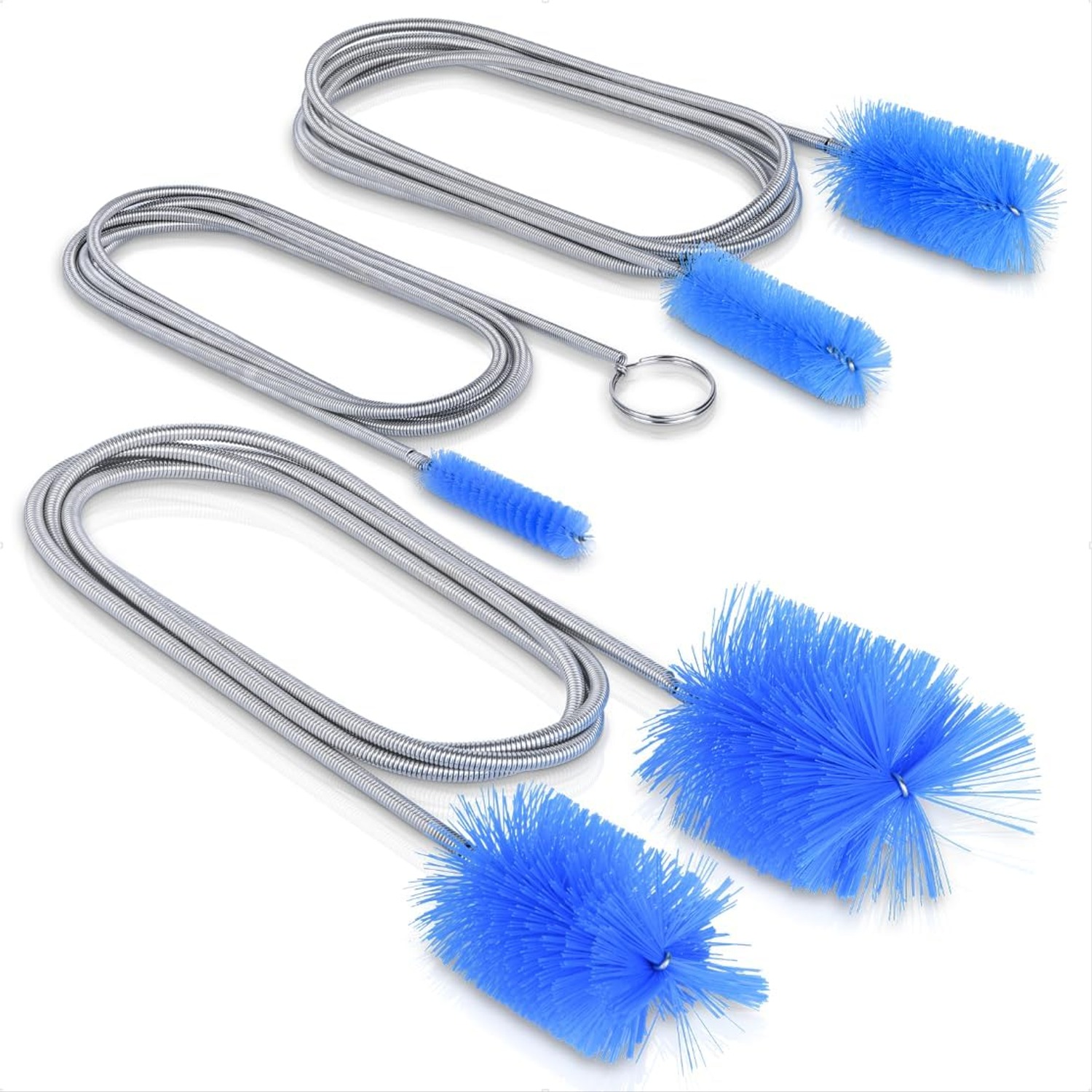
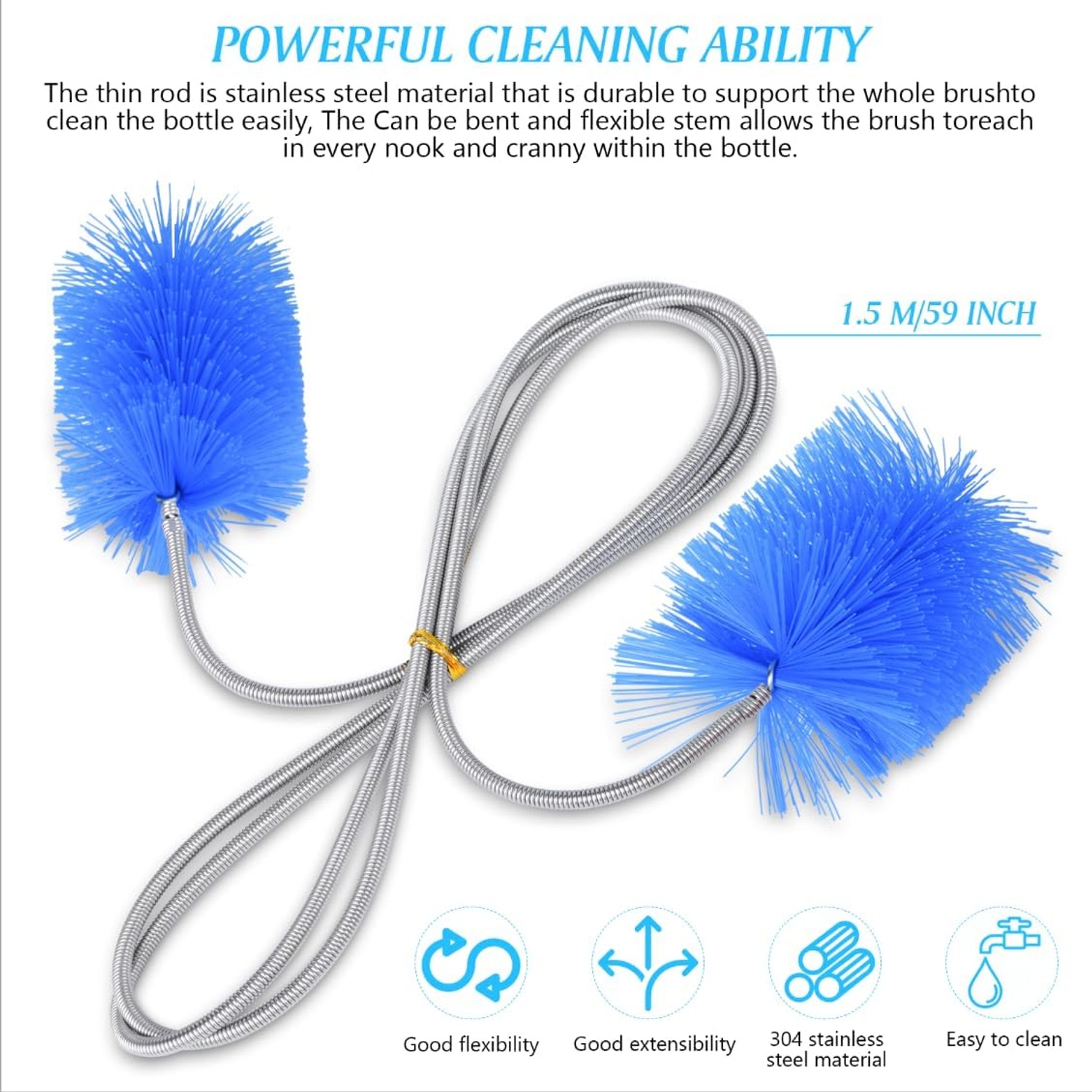
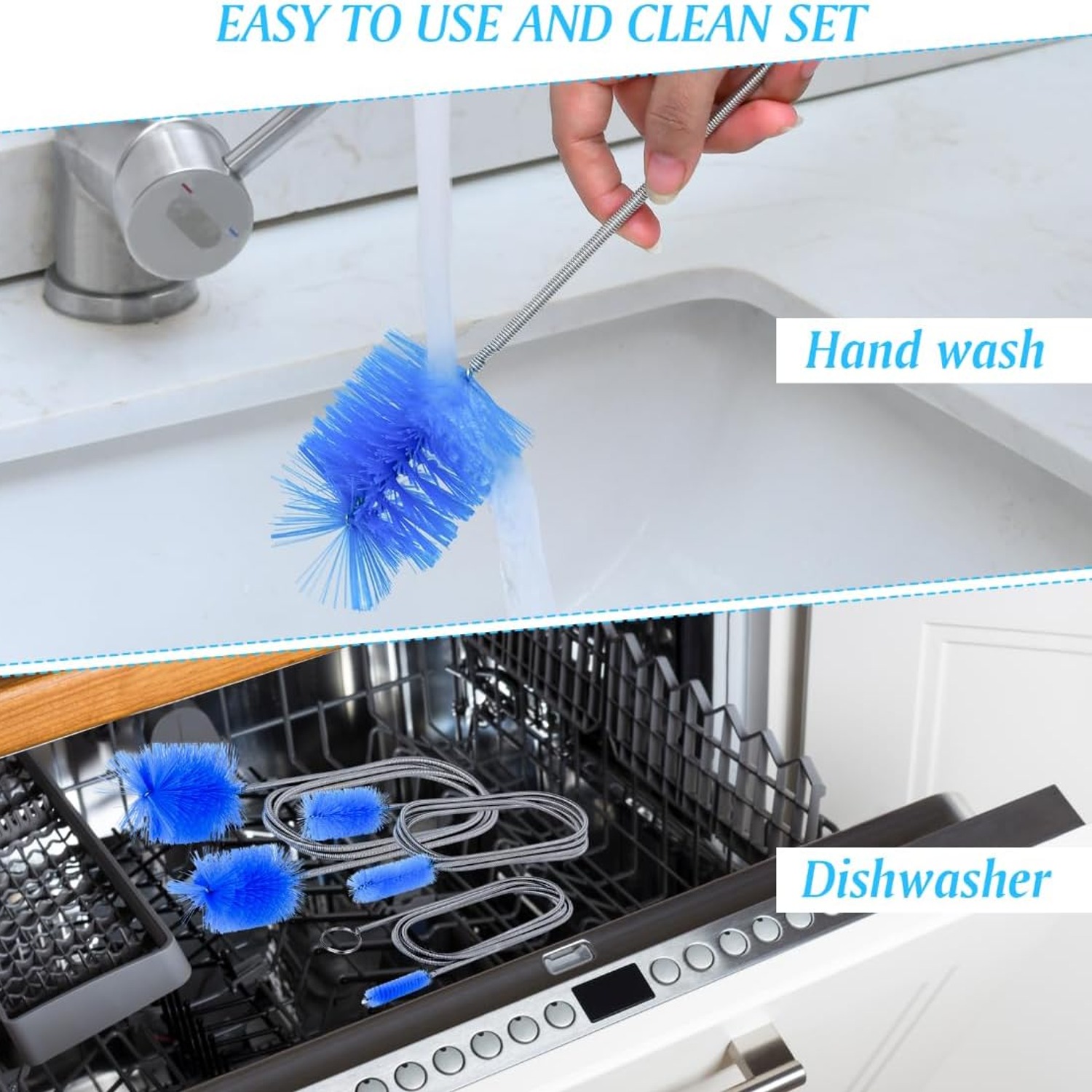
Each brush in this three piece kit is built around a stainless steel hose shaft. That shaft is the clever part. It bends readily enough to follow a pipe turn of less than 90 degrees, which means it can round the trap under a sink rather than stopping dead against the first curve. At the same time it is firm enough that when you twist the handle, the head at the other end actually turns. A floppy shaft would just wind up like a spring and do nothing.
The total length is 170.2 cm, roughly 67 in. That is long enough to get past the trap on a bathroom sink, a kitchen drain or a tub, with slack left over so you are not crouched awkwardly under the cabinet.
The bristles are plastic and they are set at an angle rather than sticking straight out. Angled bristles behave differently on the pull stroke than on the push stroke. Pushing in, they fold back and let the brush travel. Pulling out, they catch and sweep debris toward the opening. That is exactly the behaviour you want, because the aim is to remove the mess rather than compact it further down the line.
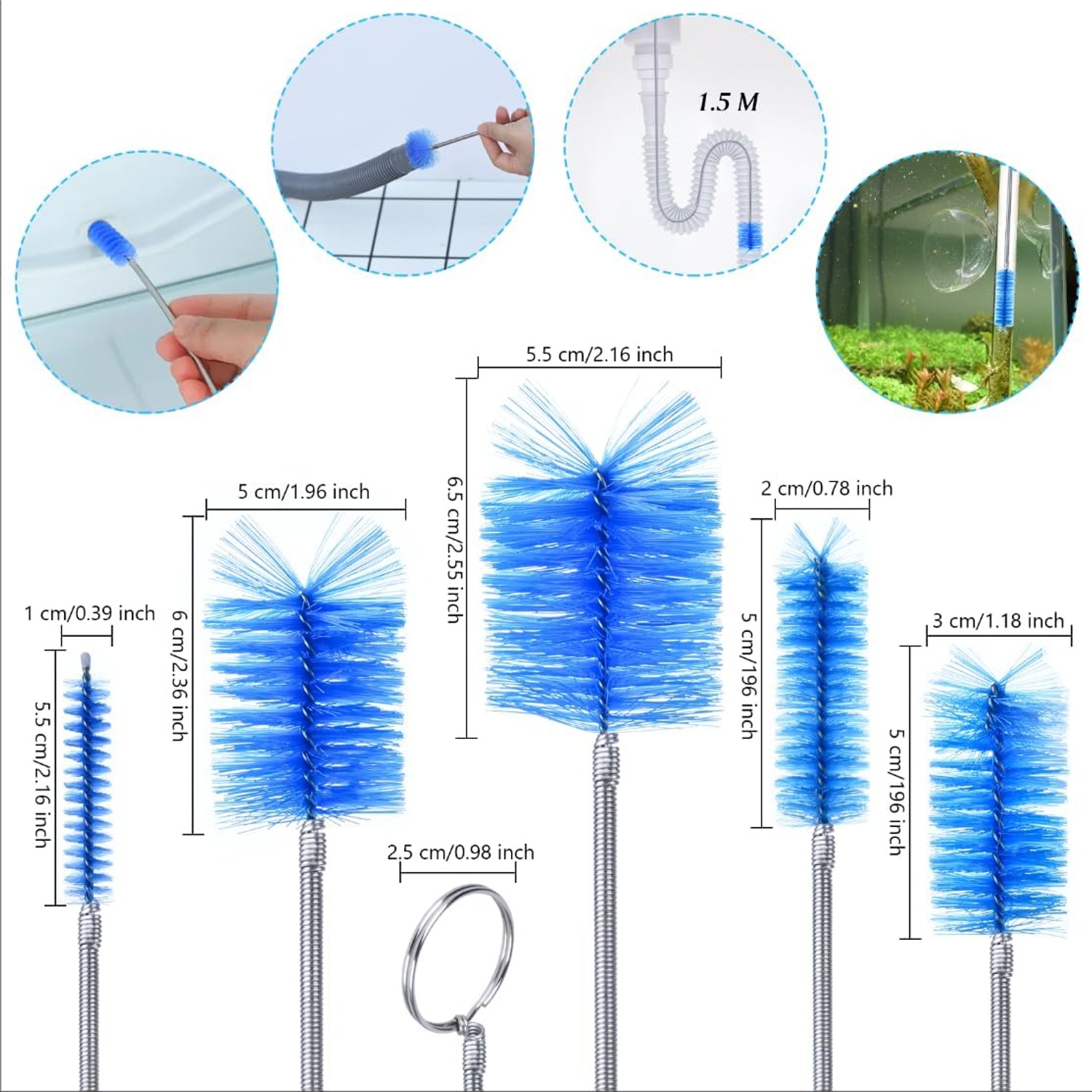
Between the three brushes you get five head diameters, listed by the maker as 0.39 in, 0.78 in, 1.18 in, 1.9 in and 2.26 in. The maker rates the overall firmness as hard, so these are working tools rather than soft cleaning brushes.
Matching the head to the pipe
This is the part most people get wrong, and it is the single biggest factor in whether a drain brush feels brilliant or useless.
A brush head that is too small slides down the centre of the pipe. It might snag a hair or two on the way back but it is not touching the wall where the build-up lives, so the drain stays slow and you conclude the tool does not work. A head that is far too big will not enter at all, or it jams a few inches in and you end up tugging.
What you want is a head that is a snug fit. Not tight, just close enough that the bristles are bent slightly against the pipe wall the whole way along. That bend is the scrubbing pressure.
As a rough starting point, the 0.39 in and 0.78 in heads suit narrow runs and tight bathroom sink drain openings. The 1.18 in and 1.9 in heads cover most kitchen waste pipe and the sort of bore you find behind a standard trap. The 2.26 in head is for wider work such as a sewer run or a larger floor drain, where anything smaller just rattles around. Try the smallest head first and work up until you feel resistance. The right head announces itself.
Who this suits
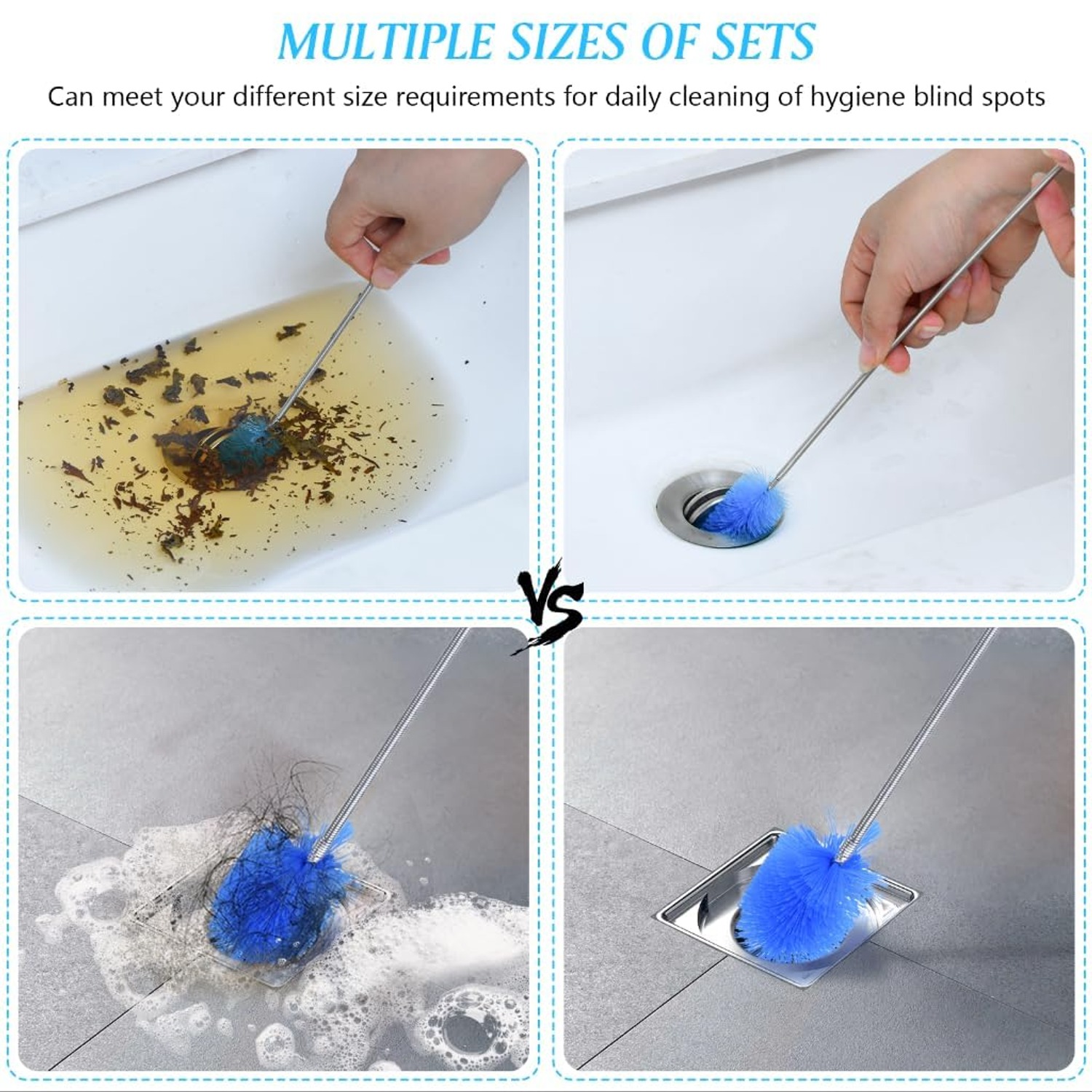
If you share a house with anyone who has long hair, a bathroom sink drain cleaning brush earns its keep within a month. Hair is the frame that everything else sticks to, and it accumulates faster than people expect.
Cooks will get the same value from the kitchen side. Grease that goes down warm does not stay warm. It cools a short way along the pipe and sets on the wall, then catches every coffee ground and fleck of food that follows. A brush worked down the kitchen drain once a month keeps that layer from ever becoming a problem.
Renters tend to like this kind of tool because nothing gets installed and no pipe work gets touched. You use it, rinse it, and put it back in the cupboard. Anyone managing a few properties will find a kit like this quicker than calling someone out for a slow drain that just needs a scrub.
It is also worth saying what this is not. A brush clears soft build-up it can physically reach. It is not going to deal with something solid jammed deep in the line, a collapsed pipe, or roots in the buried run outside. Fixed plumbing work, meaning anything involving cutting, moving or connecting pipe, should go to a licensed plumber.
Using it properly
Pull the stopper or strainer out first. Working around a stopper is how people get a brush stuck.
Feed the brush in slowly while turning it in one direction. The twist helps the head find its way past the lip of the drain opening and around the first bend. Do not jab at it. If you hit solid resistance, back off a little, turn, and try again at a slightly different angle.
Once you are at depth, rotate the brush several full turns. Then draw it out steadily, still turning. The angled bristles will bring a surprising amount back with them on the first pass. Clear the head into the garbage, not back down the drain, and repeat. Two or three passes is normal for a drain that has been neglected.
Finish by running hot water from the faucet for thirty seconds or so. That flushes any loosened fragments you did not catch.
If the water still will not move after a thorough brushing, stop. At that point the problem is further along than a brush can reach, and continuing to push only risks compacting it.
Looking after the brushes
Rinse each brush under running water as soon as you are done. Work a little dish soap through the bristles with your fingers, then rinse again until the water runs clear. Grease in particular will not shift with water alone.
Dry them properly before storage. Shake off the excess, then hang them or lay them flat somewhere with air moving. A damp brush rolled into a drawer is unpleasant to pick up next time.
When you store them, keep the shaft roughly straight or in a loose coil. A stainless steel hose tolerates bending, which is the whole point, but repeatedly folding it hard in the same spot eventually tires that spot. A gentle coil causes no problem at all.
Bristles that look a bit flattened can usually be combed back by hand once dry. When they stay flat, or start shedding, the brush has given you what it has and it is time to swap it out.
Getting it to you
Orders ship by tracked delivery within Canada, and most arrive in 4 to 7 business days. Shipping is free on orders of $150 or more and a flat $20 below that. Returns run for 14 days from delivery, on unused items in resaleable condition. Since a used drain brush cannot be returned, it is worth checking the head sizes against your drain before the first job.
The short version
Slow drains are usually a ring of soft gunk coating the pipe wall a few inches down. A flexible drain brush set reaches it, scrapes it loose and brings it out. This kit gives you three brushes, five head sizes from 0.39 in to 2.26 in, a 170.2 cm stainless steel shaft that bends around traps, and angled plastic bristles that grab on the way out.
Pick the head that fits snugly, twist it in, rotate, pull it back, and rinse it afterwards. Do that once a month and you will stop thinking about your drains, which is the whole idea.