
The complete guide
Choosing And Fitting A 4 Inch Yard Drain Grate
The bare pipe problem
Most yards that have a drainage line end the same way. A length of corrugated pipe runs from a downspout or a soggy low spot, travels under the grass, and then pops out somewhere near the edge of the property. More often than not, that outlet sits there wide open.
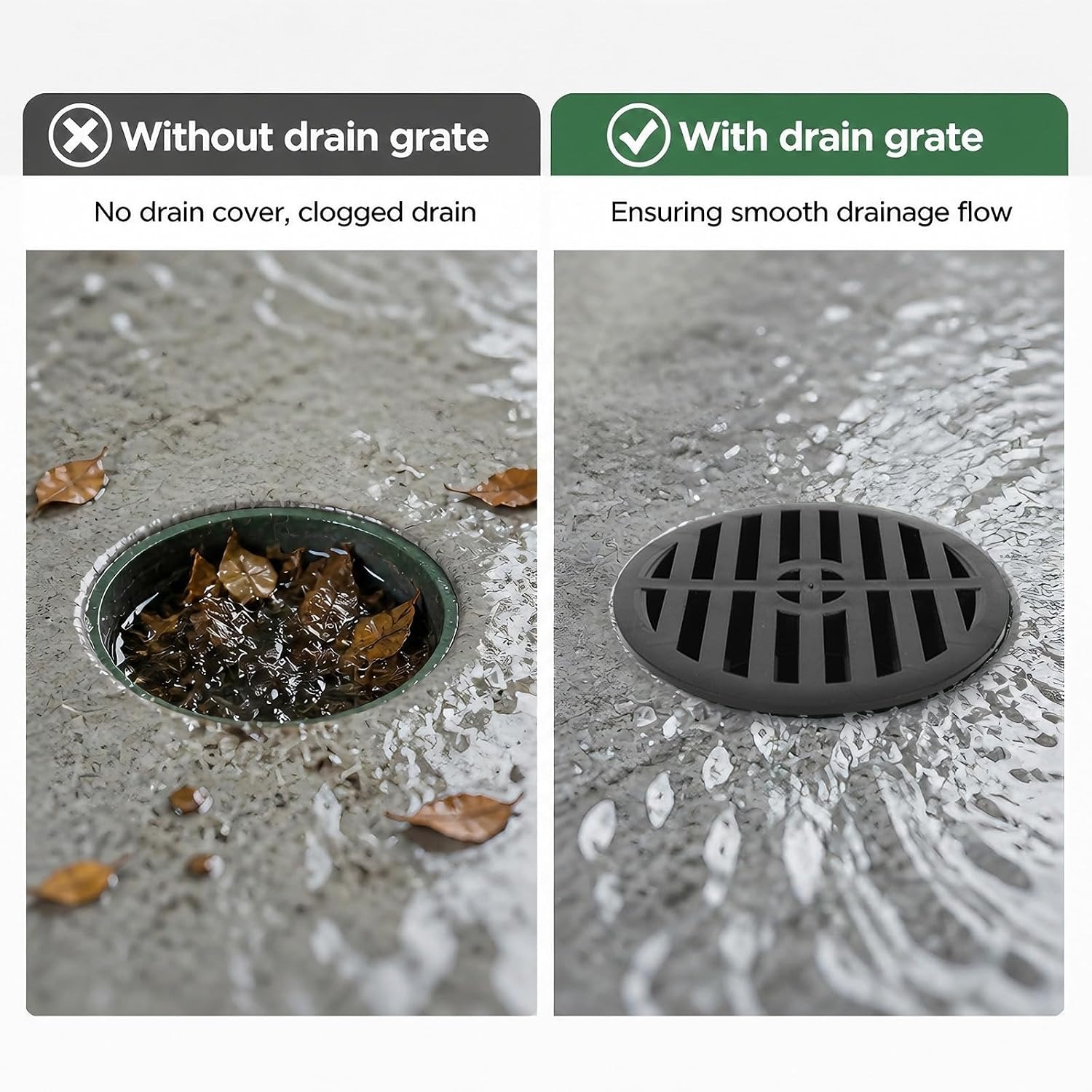
It works, in a basic sense. Water comes out. But an open pipe end collects everything. Leaves blow in. Grass clippings from the mower get flung across it. Soil washes into the mouth and settles. A kid's ball disappears down it. Over a couple of seasons, that debris travels along the pipe and settles in the low points, and the line that used to clear a storm in ten minutes starts backing up onto the lawn.
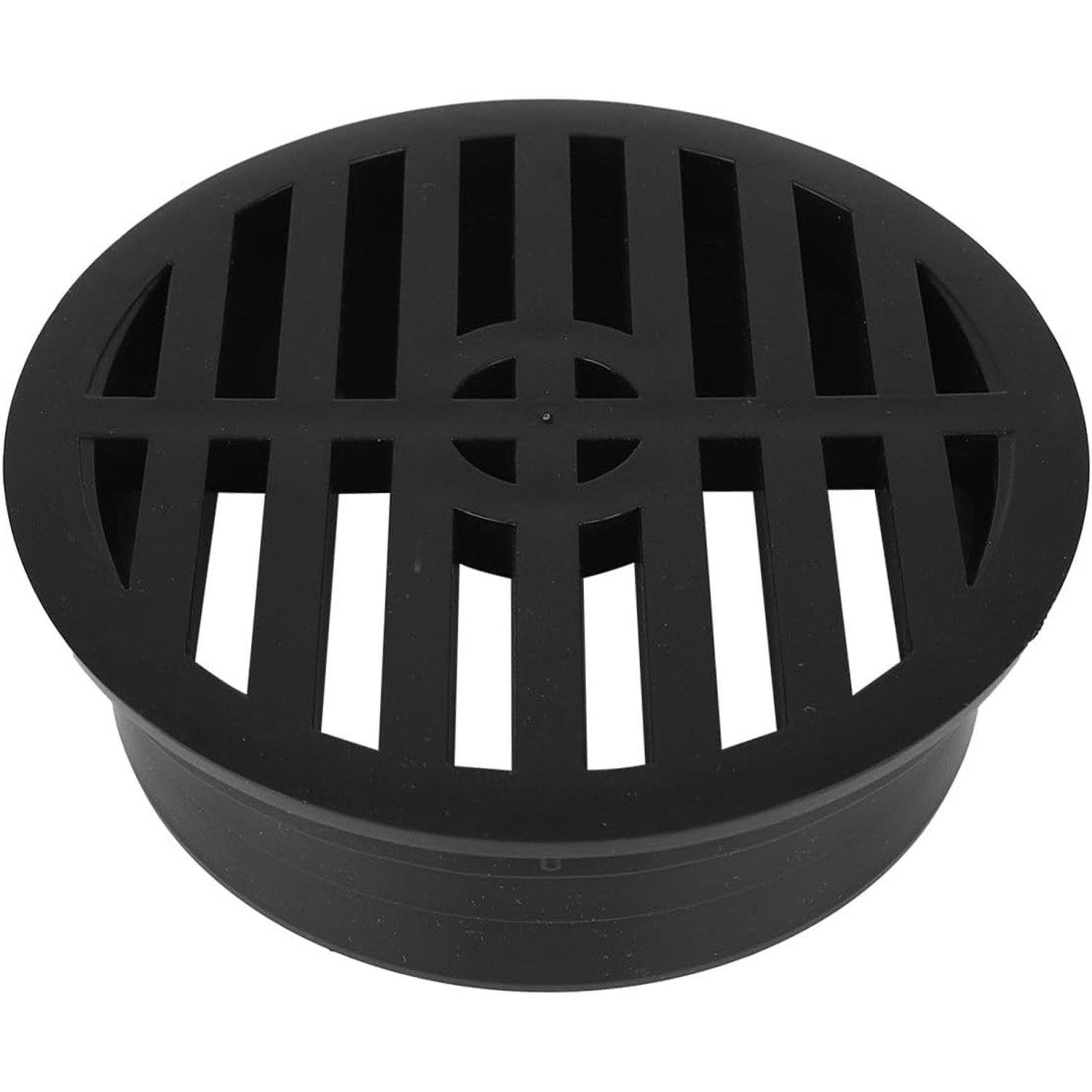
An open outlet also looks rough. You can spend real money on sod, mulch and edging, and then a black hole in the grass undoes a chunk of that work. A round yard drain grate 4 inch cover deals with both problems at once, and it costs less than a bag of soil.
How a slotted grate actually works
The idea is simple. You put a barrier across the opening with gaps big enough for water and small enough for debris.
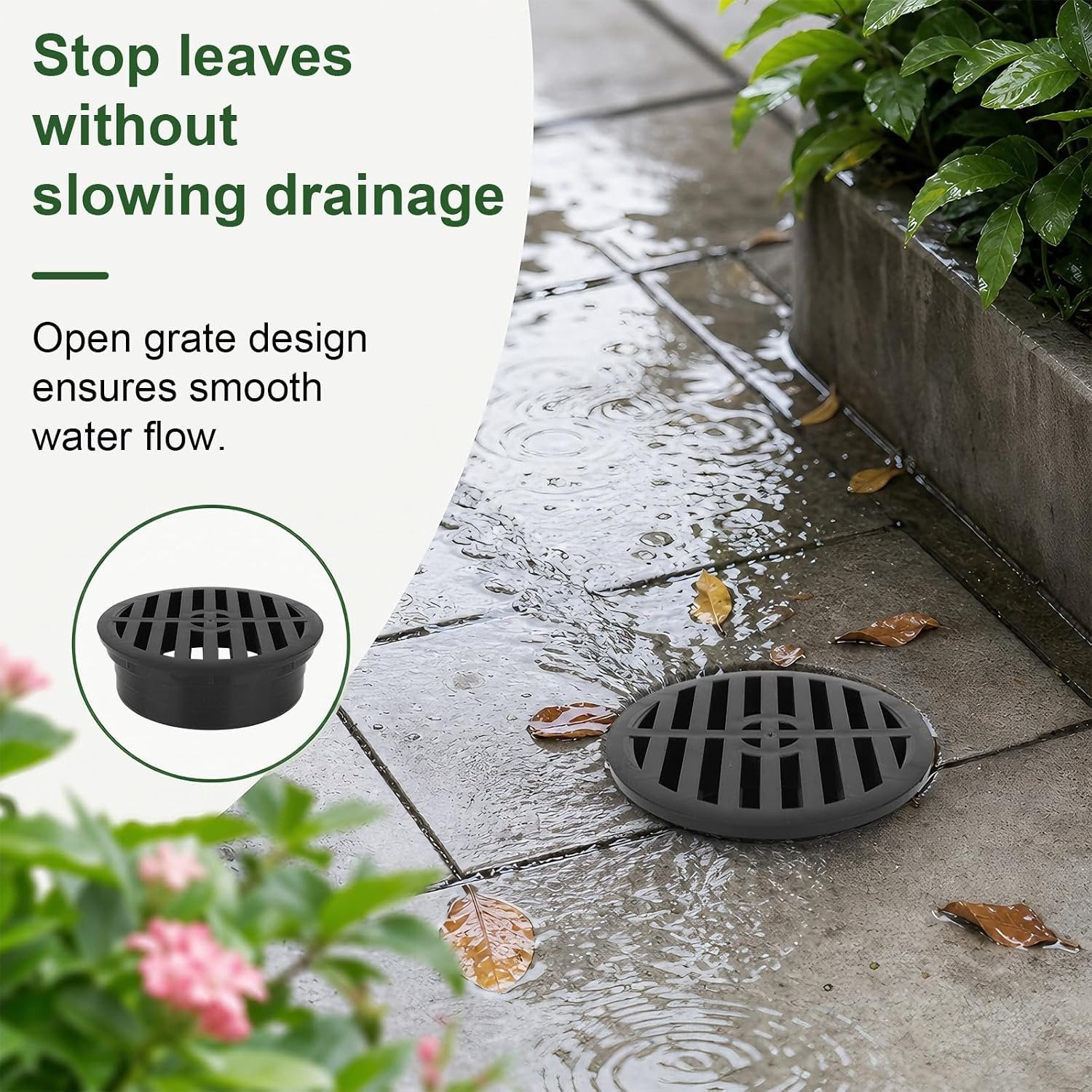
Water is the easy part. Rain running across a lawn moves slowly and spreads out, so it does not need a wide opening to get through. A pattern of slots gives plenty of area for the flow a residential line handles. During a heavy storm the lawn itself is the bottleneck more often than the grate.
Debris is where the design earns its keep. Leaves lie flat on top of the slots instead of sliding in. Grass clippings mat on the surface where you can see them. Twigs, mulch chips and bits of bark bridge across. All of that stays above ground, which means you can rake or sweep it off in thirty seconds rather than fishing it out of a pipe later.
That is the trade. You accept a small amount of surface maintenance in exchange for keeping the line clearer. It is a good trade, because clearing a grate is easy and clearing a buried pipe is not.
Why PVC suits this job
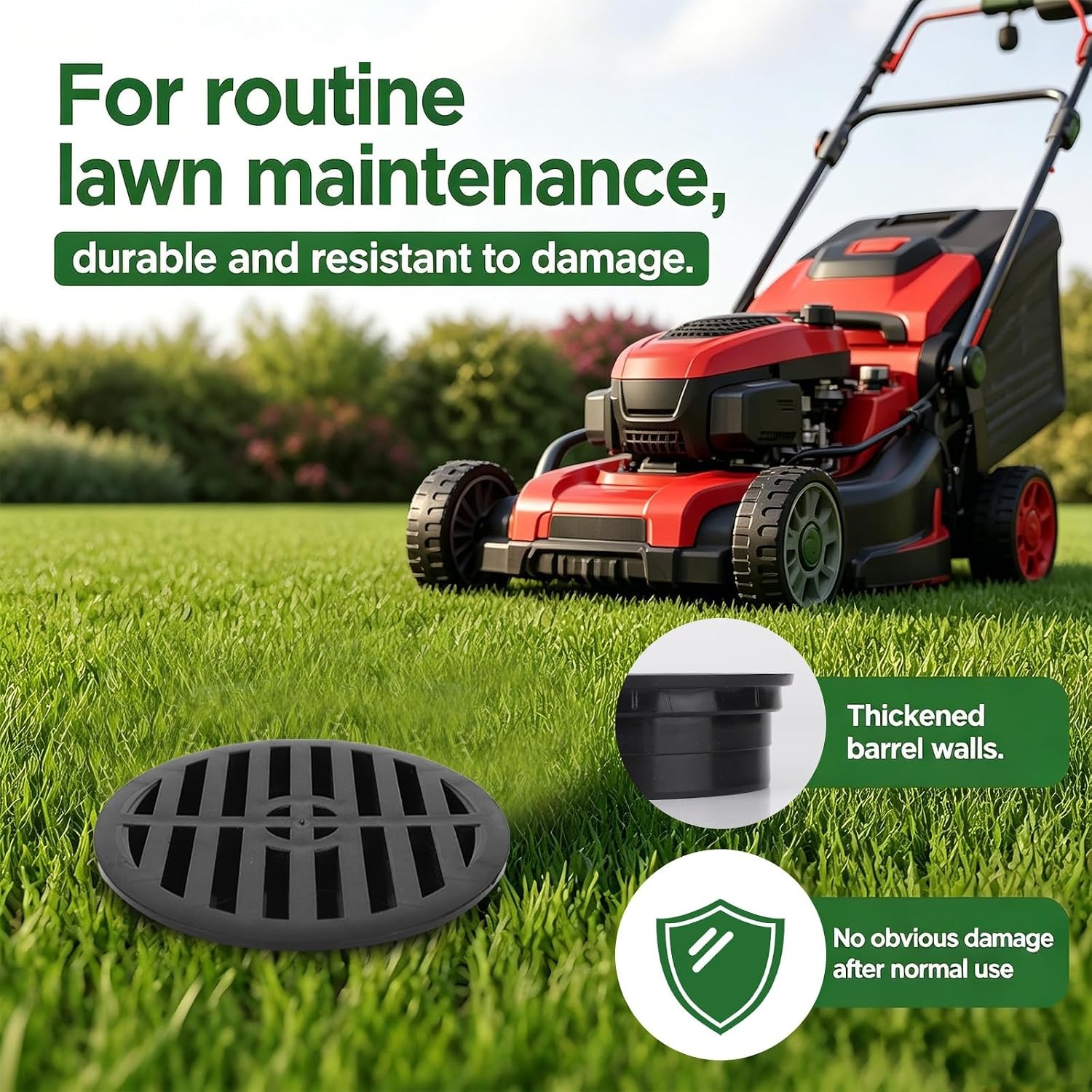
This cover is made from polyvinyl chloride, PVC for short. It is the standard material for outdoor drainage fittings for a few practical reasons.
It does not rust. A metal grate in a wet lawn eventually stains the surrounding grass and weakens at the edges. PVC sits in standing water without caring.
It takes sun and rain. A drain outlet gets full exposure all year, with heat in July and freeze-thaw cycles through the shoulder seasons. The material is made for that kind of outdoor service.
It is light. You can lift this cover with one hand, which sounds trivial until you have tried to maintain something heavy and awkward. A grate you can pop off in a second is a grate you will actually keep clean.
Getting the size right
This is the part people get wrong, so it is worth slowing down on.
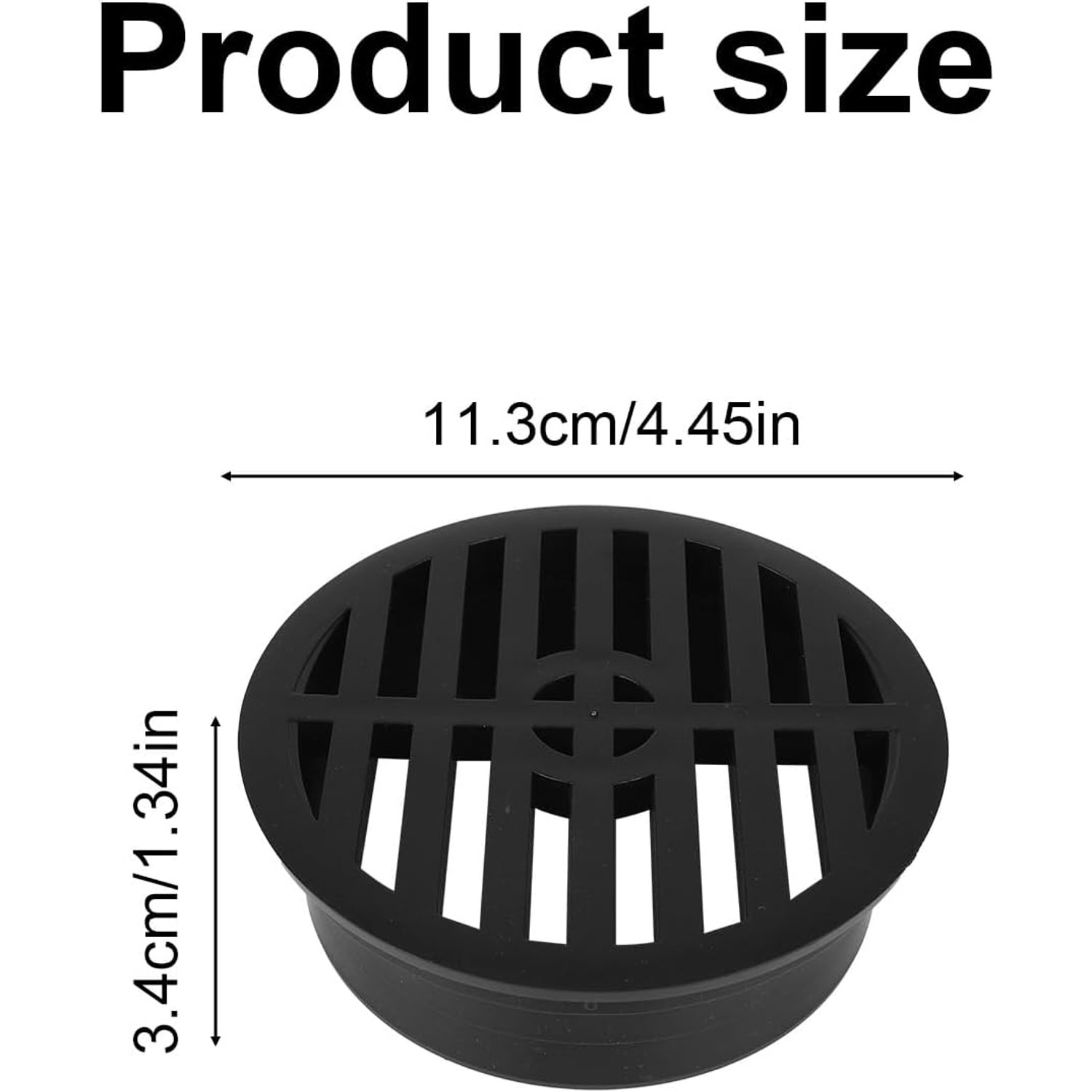
The cover is built for a 4 inch round opening. The maker gives a 4 inch compatible groove diameter and a 4 inch fits-hole size, and the product itself measures 11.3 cm wide by 3.4 cm high with an item depth of 1.34 inches. The outer face is wider than the pipe because it needs a lip to rest on.
To check your outlet, measure straight across the inside of the pipe mouth. Four inches is 25.4 mm times four, so roughly 102 mm. If your tape reads close to that, you are in the right range. If it reads noticeably more or less, this is not your part.
One more thing to confirm is the pipe type. This cover is described as suiting single-wall corrugated pipe, which is the flexible ribbed black pipe most residential yard drainage uses. If your line is smooth-wall rigid pipe, the outside profile may differ and the fit can be loose.
Who this suits
The best fit is a homeowner with one or two exposed outlets who wants them tidied up without digging anything.
It works well at the end of a downspout line, where water leaves the pipe at the edge of a lawn. It works in landscape beds, where the flat round face disappears into mulch. It works alongside patios and walkways, where a low profile means nobody catches a toe on it.
It is not a driveway part. A light surface cover is not built for vehicle loads, and putting one under a car is a quick way to crack it. If you need to cover an outlet in a drive or a parking pad, look for a load-rated grate designed for that.
It also is not a catch basin. There is no sump and no sediment trap. This is for spots where a plain surface cover is all you want, or where a sump is not needed.
Fitting it without fuss
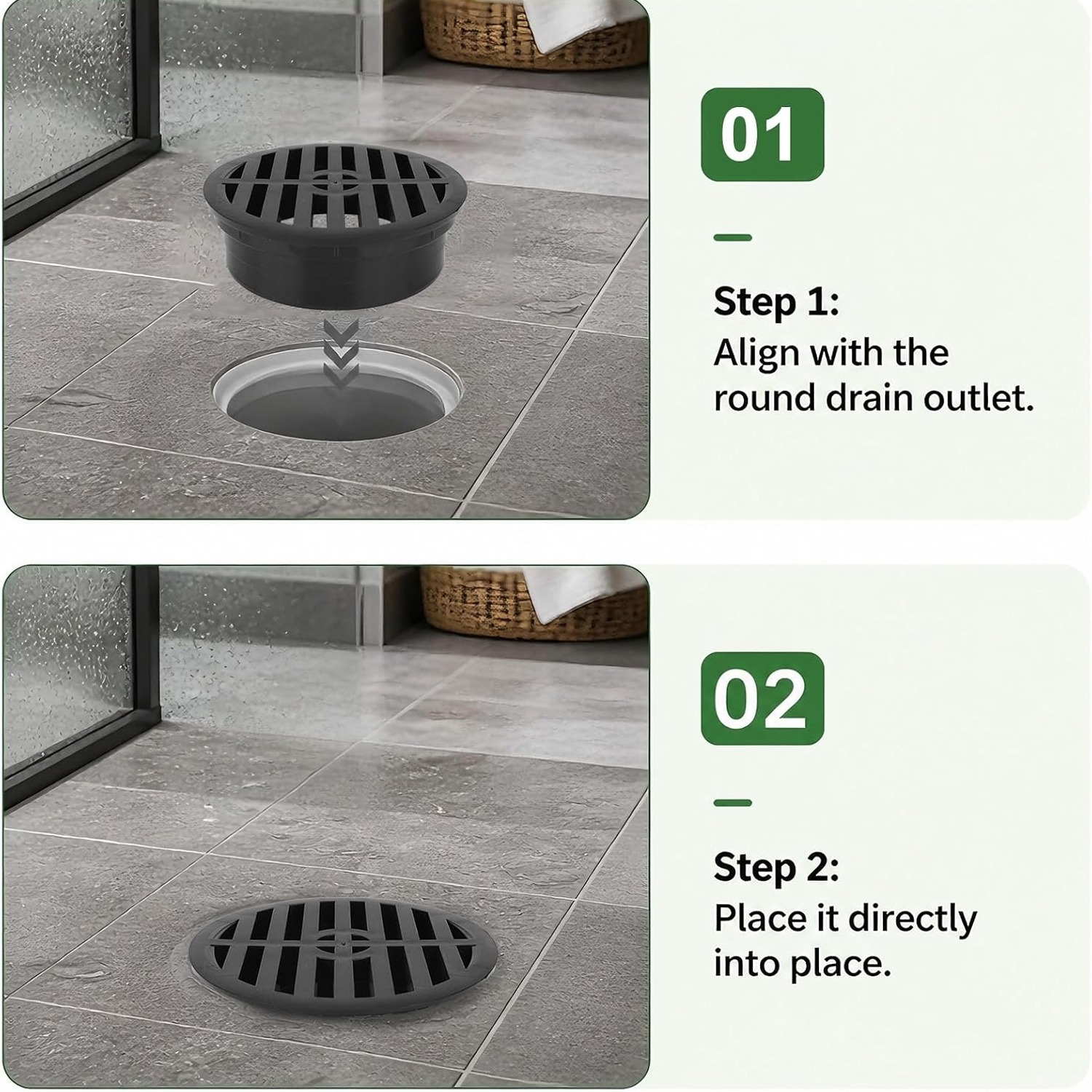
Clear the area around the pipe mouth first. Pull back grass that has grown over the lip and scrape away loose soil so you can see the full opening. Wipe the rim if it is caked with mud.
Set the cover over the outlet and press it down so it seats on the pipe. Check that it sits level. If it rocks, the ground underneath has settled unevenly, and a bit of backfill tamped firm will fix it.
Finish by bringing the soil or mulch up to the edge of the grate so water has a clean path in. A very shallow dish around the cover, no more than a centimetre or two, helps runoff find the slots instead of sheeting past them.
If the job needs anything beyond this, cutting pipe, rerouting a line, or tying into fixed plumbing, bring in a licensed plumber. Setting a cover on an existing outlet is a homeowner task. Reworking the system is not.
Keeping it working
Maintenance is light but it is not optional.
Through autumn, lift the cover every few weeks and clear what has collected. Leaves mat quickly after a wet spell and a packed grate drains no better than a blocked pipe. In the growing season, sweep clippings off after mowing so they do not build up.
Twice a year, give it a proper clean. Hose it down, scrub the slots with a stiff brush, and look at the underside for silt. Put it back dry so grit does not stick.
Spring is the right time to check the seating. Frost heave moves soil around, and an outlet that was level in November can be tilted in April. Reseat the cover and firm the ground if anything has shifted.
Skip the chemical drain cleaners. They have no place in an outdoor line, and plain water with a brush handles everything a yard grate collects.
Setting expectations
A grate reduces what enters your drainage line. It does not promise a line that never blocks. Silt can still work its way in through the slots, roots can find joints, and a pipe laid with a flat spot will hold water no matter what sits on the end of it.
What you get is a meaningful cut in the amount of leaf litter and lawn debris going underground, plus an opening that is safer to walk near and better to look at. For the price and the five minutes it takes to fit, that is a solid return.
The short version
If you have a 4 inch round outlet sitting open in a lawn, patio edge or landscape bed, this cover closes it off neatly. PVC handles the weather, the slotted face keeps leaves and clippings out of the line, and the flat round profile sits close to grade so it stays out of the way.
Measure your opening first. Confirm it is a 4 inch single-wall corrugated pipe. Clear the soil, set the cover, and add it to the list of things you clean a few times a year. That is the whole job.