
The complete guide
The Honest Buyer's Guide To Plastic Drain Snakes
The drain that never quite blocks
Most slow drains do not fail dramatically. The water just sits a little longer each week. Then one morning you are standing in two inches of grey water in the shower, and there is a smell when the faucet runs.
What is nearly always happening is simple. Hair goes down the drain, soap and conditioner coat it, and the mix sticks to the inside of the pipe just below the opening. It builds into a soft mat. Water still squeezes past, so nothing looks broken, which is exactly why people leave it for months.
That soft mat is the ideal target for a toothed plastic strip. It is close to the surface, it is grabbable, and it comes out in one piece if you have something with teeth to hook it. A plunger pushes it around. A chemical pour softens the edges and leaves the core. Pulling it out is the version that actually ends the problem.
What this tool is
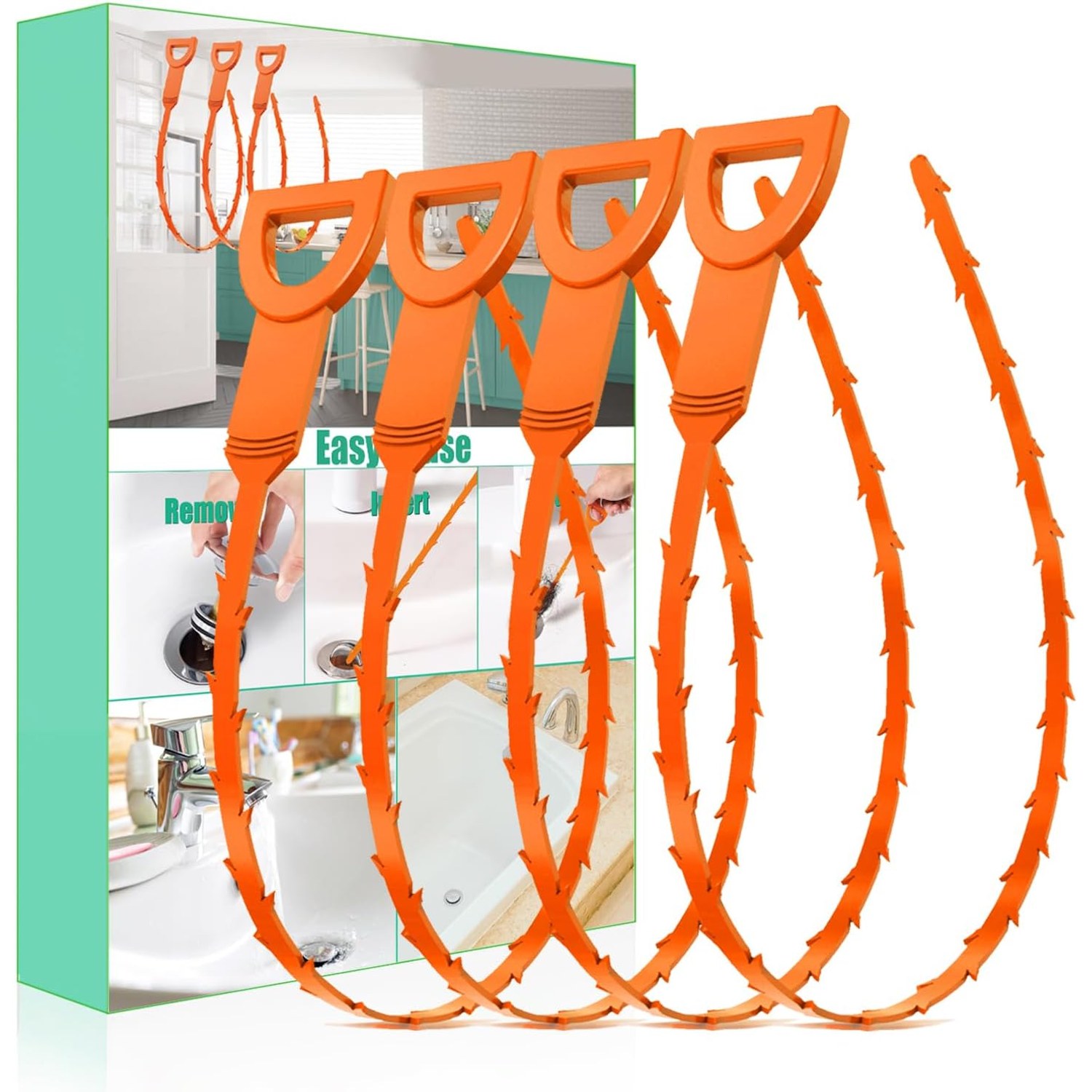
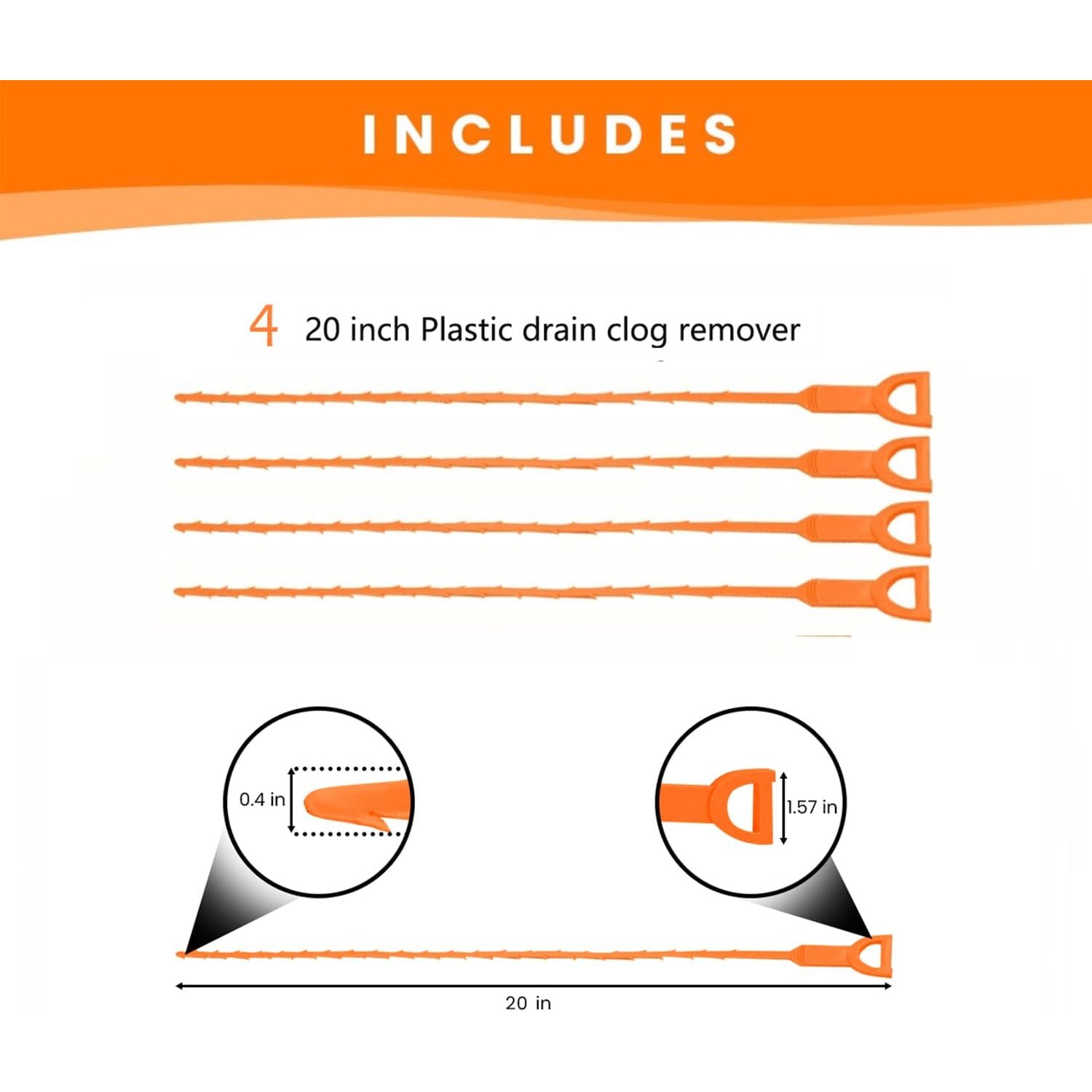
Each snake in this pack is a flat strip of soft polypropylene, 20 inches long, with rows of small angled teeth running down both edges. There are four in the pack. Nothing to assemble, no handle to screw on, no parts in a bag to lose.
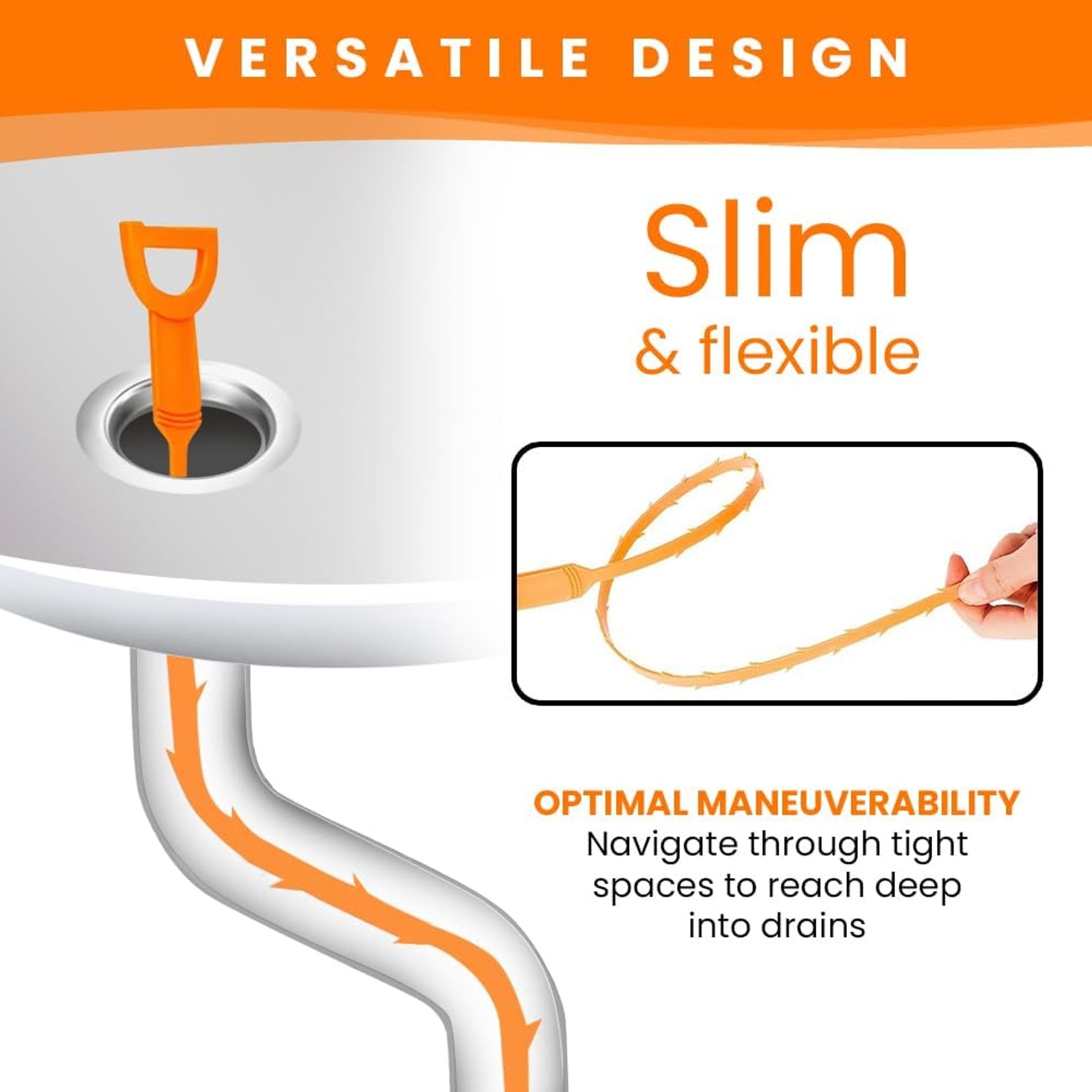
The flexibility is the whole design. A rigid wire wants to travel in a straight line, and household drains are not straight. There is a stopper in the way, or a strainer, or a bend a few inches down. A soft strip bends to follow all of that, and you can pre-bend it by hand to match an awkward opening. It springs back afterwards.
The teeth are shaped so they lie flat going in and stand up coming out. That is why feeding it down feels easy and pulling it up feels like it has caught something. It usually has.
How to actually use it
Put a plastic bag or a lined garbage can right next to you before you start. This matters more than any technique tip, because the moment of truth comes fast and you do not want to be carrying a dripping clump of hair across the room.
Gloves help. Not essential, but you will be happier.
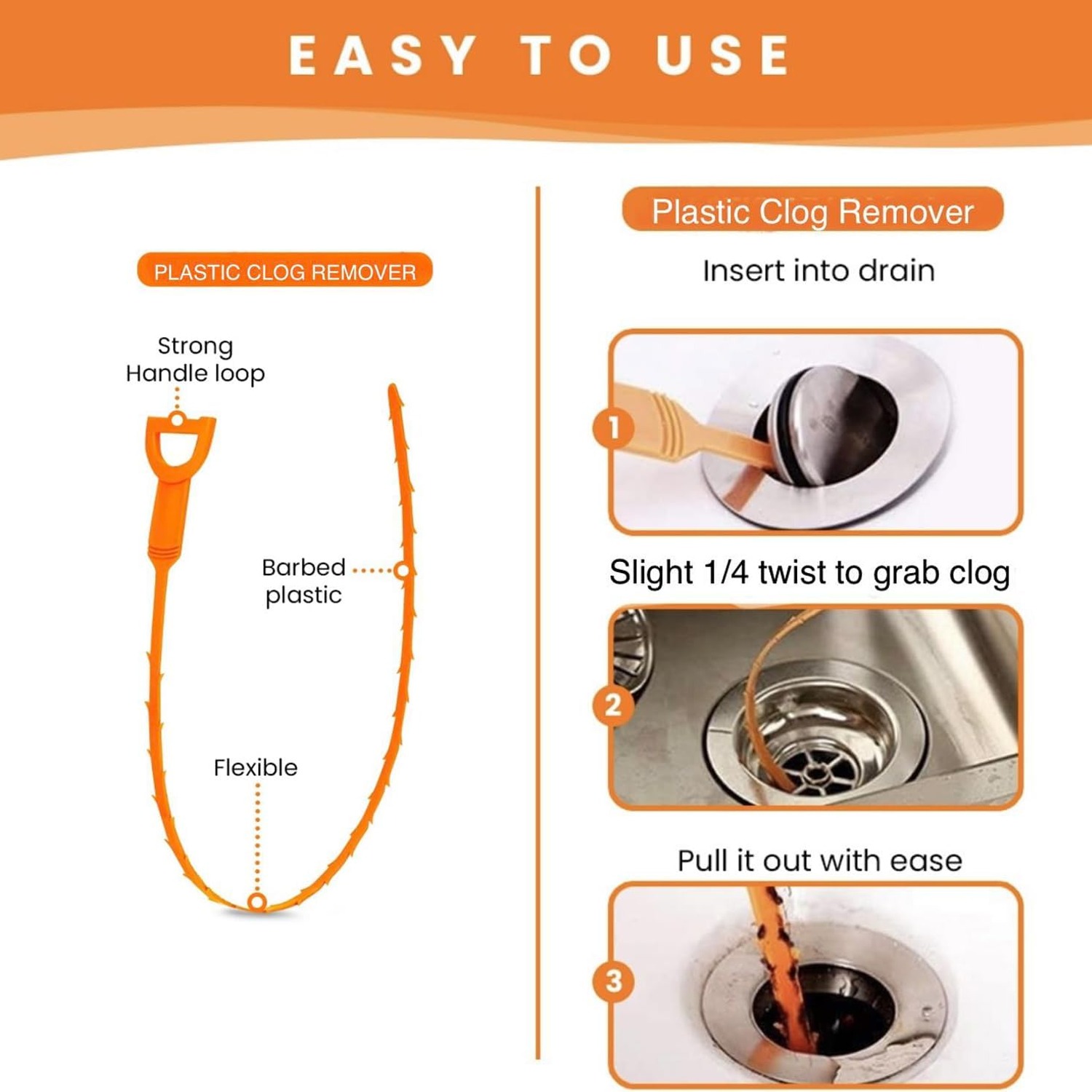
Lift the stopper out if it comes out easily. Many pop-up stoppers unscrew or lift with a quarter turn. If yours is fixed, do not fight it, because the strip bends around a stopper perfectly well.
Feed the snake in slowly. Let it find its own path rather than shoving. You will feel it slide, then stop, then slide again as it works past the strainer and into the trap. Go in as far as it will comfortably travel.
Then pull back slowly. Slowly is the instruction people ignore and regret. A fast yank can shear the clump off and leave half of it behind. A steady draw brings the whole mass up intact. Wipe it straight into the bag.
Repeat two or three times. The first pull takes the bulk. The second often surprises you. By the third, you are usually coming up clean.
Finish by running hot water for a minute to carry away whatever film you loosened on the pipe walls.
Who it suits
This is a tool for homes, not for job sites. If you have long hair in the house, or a teenager, or a dog that gets bathed indoors, you will use it regularly and it will pay for itself quickly against a single service call.
It suits renters especially well. There is nothing to dismantle and no risk of leaving a fitting loose, which makes it the kind of thing you can do without worrying about the lease.
It also suits anyone who has no interest in plumbing whatsoever. Honestly, the skill ceiling here is low. If you can thread a shoelace you can clear a drain with this.
Where it is not the answer is worth saying plainly. If water is not moving at all, or if more than one drain in the house is slow at the same time, or if the gurgling comes from a floor drain in the basement, the trouble is likely further along the line. A 20 inch hand tool will not reach that. Fixed plumbing work, anything that involves cutting, moving or connecting pipe, should go to a licensed plumber.
Choosing between drain tools
People usually weigh this against three alternatives.
Plungers are good at solid obstructions in toilets and at shifting things with pressure. They are poor at hair, because hair does not move under pressure, it just compresses and springs back.
Metal cable augers reach much further and handle serious blockages. They also cost more, take space, need two hands and some care, and are overkill for a soap-and-hair mat sitting four inches below the stopper.
Chemical pours we do not recommend. They sit in your pipes, they splash, and they tend to clear a channel through a clog rather than remove it, so the slow drain comes back.
The toothed plastic strip fills the gap nobody else covers well, which is the common, shallow, hair-based clog. For that specific job it is the best hair clog remover tool most households will own, and it costs about what a sandwich does.
If you are comparing packs, length and tooth coverage are the two things to look at. Too short and you cannot get past the stopper. Too few teeth and the strip slides past the clump without gripping.
Why four in a pack
A single drain tool ends up in a drawer in the garage, and the drain you need it for is upstairs. That is how good tools go unused.
With four, you put one under each bathroom sink, one by the tub or shower and one in the kitchen. Now clearing a drain is a two minute job you do when you notice it, not a project you schedule.
Some people label them so the kitchen one and the bathroom one never swap. That is sensible, and it costs nothing.
Looking after them
Rinse the strip under running water after every use. Teeth hold onto strands, so an old toothbrush makes short work of anything stubborn.
Let it dry before you put it away. Store it flat, or loosely coiled, so the plastic keeps its shape. A tightly rolled strip stored for a year may hold a curl.
Keep it away from heat sources and open flame. Thin plastic softens, and a warped strip will not feed properly.
If a strip tears or the teeth break off, retire it. Four in a pack means there is no reason to persist with a damaged one.
The short version
Slow drains in a house are usually a soft plug of hair and soap close to the opening. A flexible toothed plastic strip reaches it, grips it and pulls it out, which is the fix that lasts.
This pack gives you four 20 inch strips, soft enough to bend around stoppers and strainers, toothed on both edges, reusable after a rinse. They work in bathroom sinks, tubs, showers, kitchen sinks, toilets and floor drains.
Keep one near each drain that gives you grief. Pull it through once a month. You will not think about slow drains much after that.