
The complete guide
How to Choose a Rubber Tub Stopper That Actually Holds Water
The problem with a bath that will not stay full
You run the water, you get in, and ten minutes later the level has dropped two inches. Or the sink full of dishes quietly empties while you are drying the first plate. It is a small annoyance that repeats every single day, and it almost always comes down to one worn or missing part.
Plugs fail in predictable ways. The original rubber hardens and takes a permanent set, so it no longer squashes into the drain rim. A lift-and-turn mechanism seizes or snaps. Or the plug simply went missing at some point and nobody replaced it, so a folded facecloth has been doing the job for a year. Meanwhile the tub and the drain opening themselves are usually fine.
That is why a plain rubber stopper is such a sensible fix. It skips the mechanism entirely. There is nothing to install, nothing to adjust, and nothing that can jam two winters from now.
How a rubber stopper seals
A drain opening is rarely a perfect circle with a perfectly smooth rim. Years of use leave small chips, mineral deposits and scratches around the edge. A hard plastic plug sits on top of all that and water finds its way through the gaps.
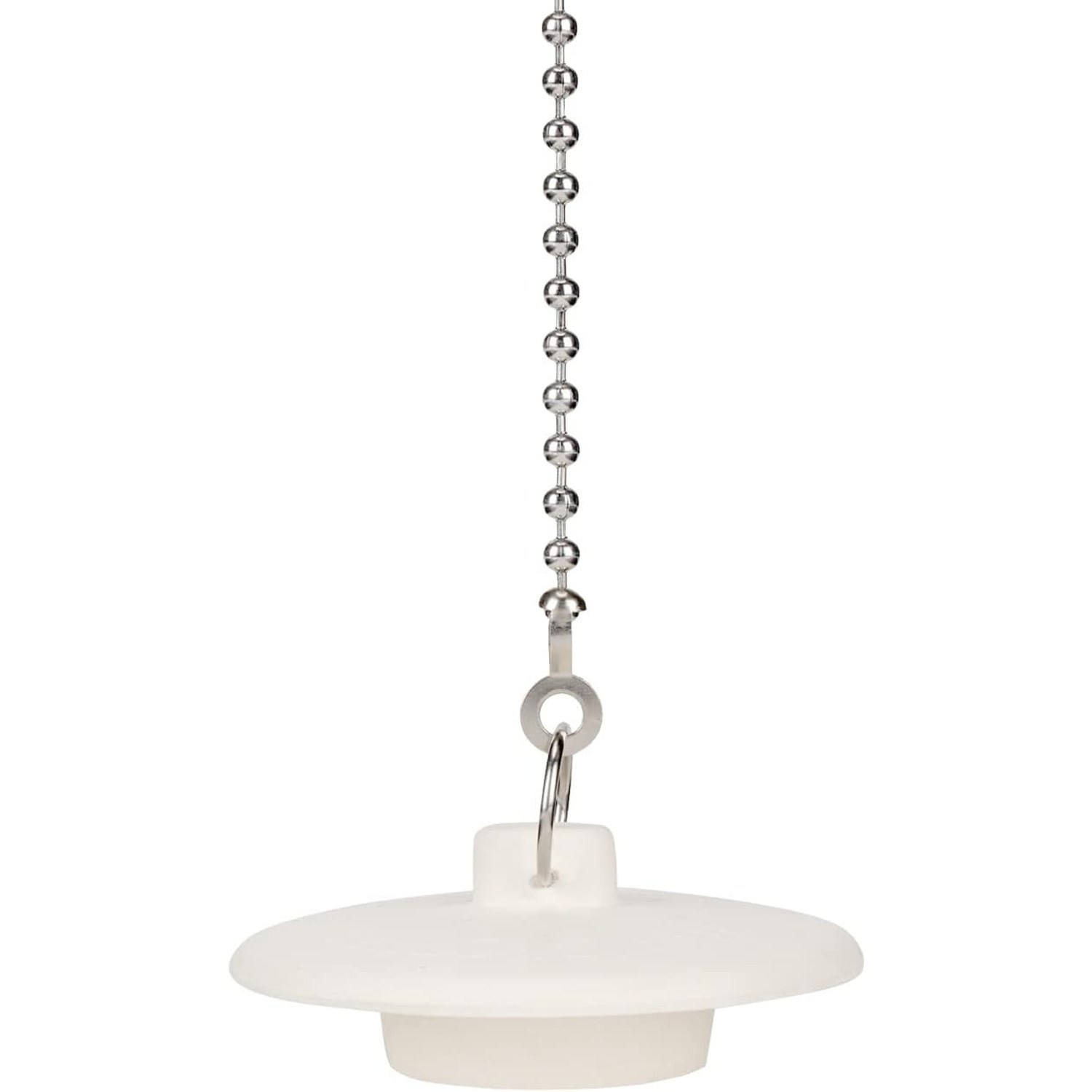
Rubber behaves differently. It stays slightly soft, so when you press it down it deforms into the imperfections of the rim rather than bridging over them. The shape of the stopper matters too. These are moulded so the body sits down inside the opening rather than resting on the lip, which means the water pressure above actually helps hold the seal rather than lifting the plug.
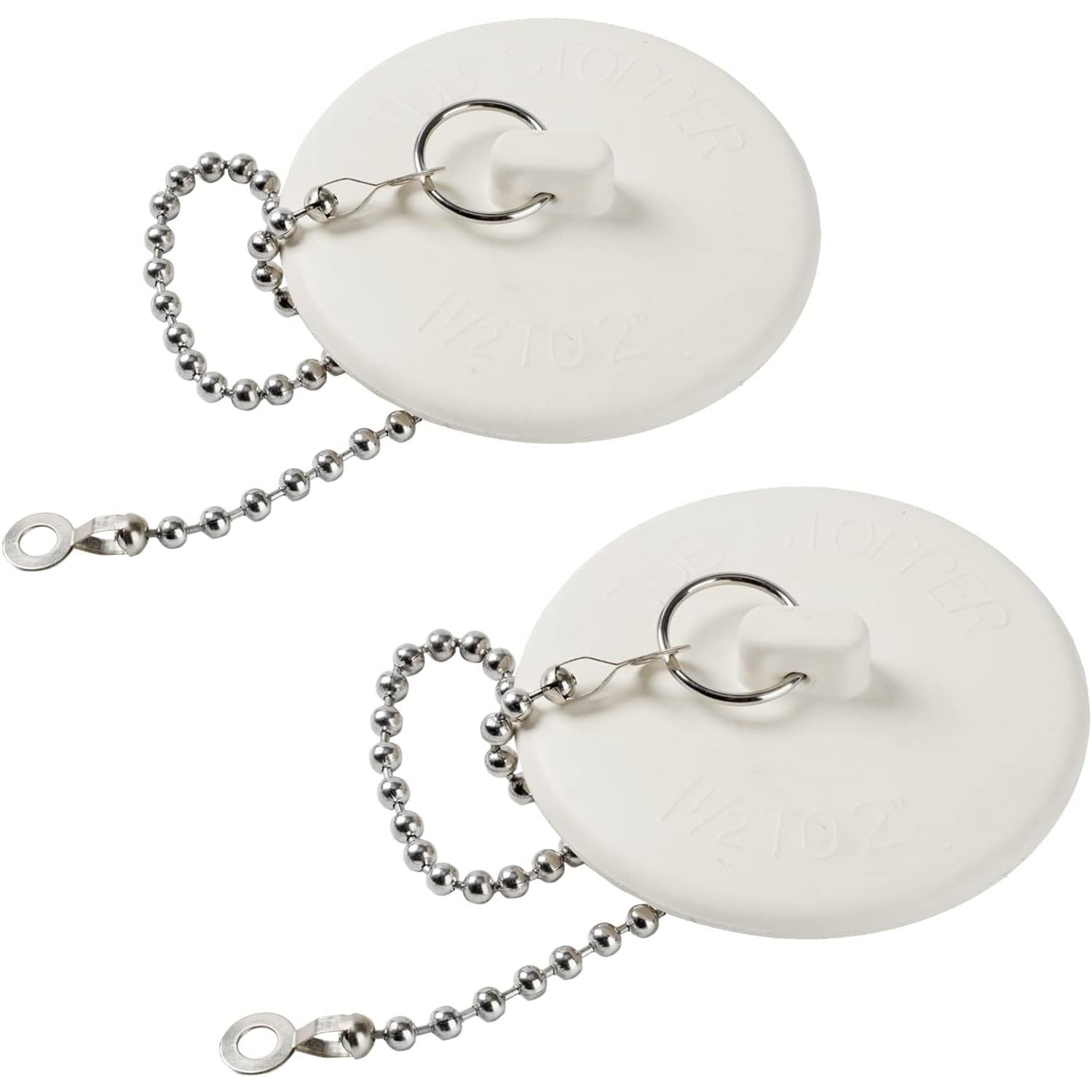
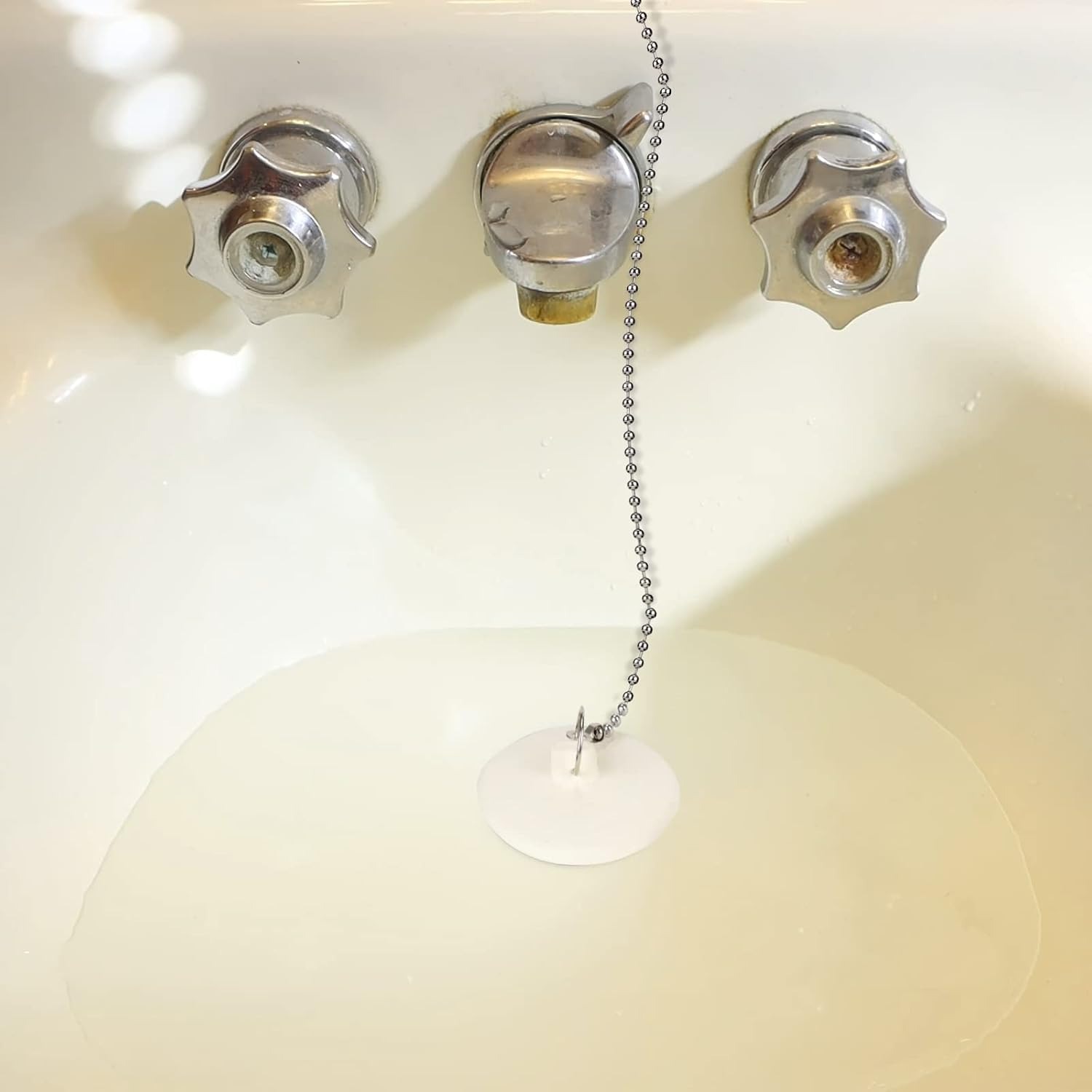
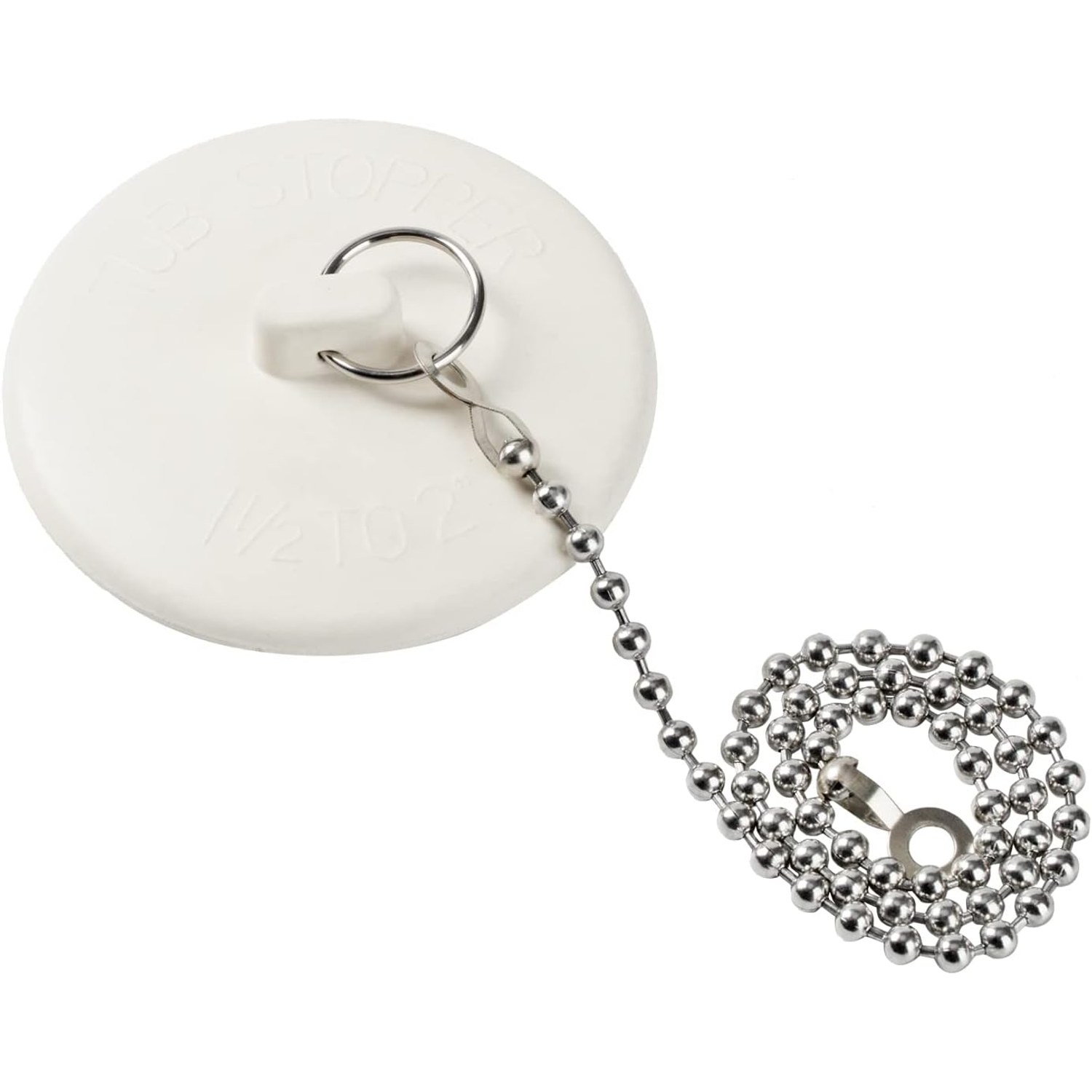
The chain and the hang ring are the practical half of the design. The split-type ring on top gives you a finger hold, so lifting the plug out of a full tub does not mean plunging your arm into cooling bathwater. The 15 inch (40 cm) stainless steel beaded chain clips to a faucet or an overflow plate and keeps the stopper from wandering. That sounds minor until you have spent five minutes hunting for a plug that rolled behind the laundry hamper.
Stainless steel is the right material for a chain that lives in soapy water. Beaded construction also means you can adjust the usable length by looping the chain back on itself, no cutting required.
Who this suits
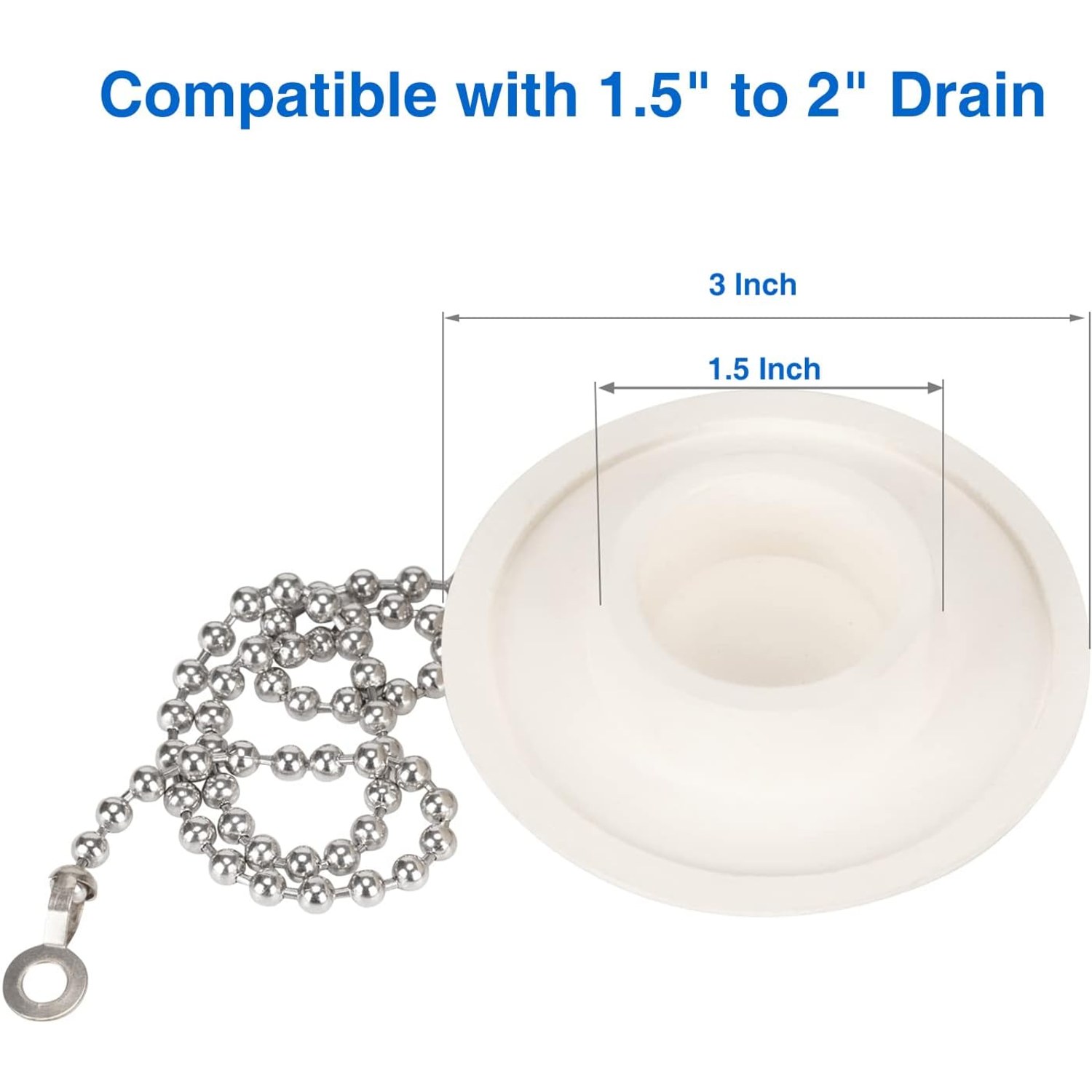
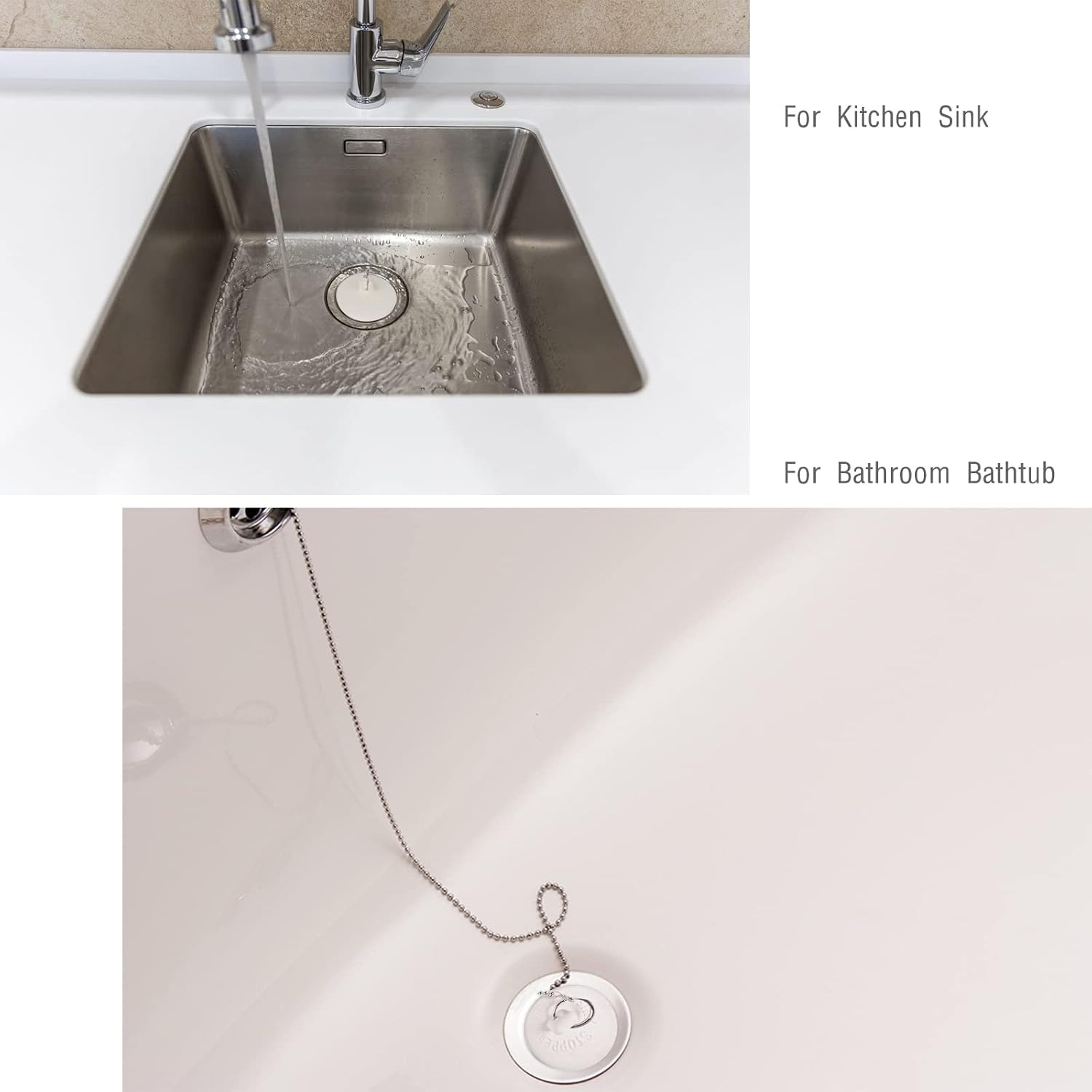
This pack suits anyone with a standard drain opening between 1.5 inch and 2 inch, which is about 38 mm to 51 mm. That range covers a large share of bathtubs, bathroom sinks, kitchen sinks, laundry tubs and slop sinks.
It suits older homes particularly well. Bathrooms that have been in service for decades often have perfectly good tubs with dead stopper mechanisms. Rather than taking on a repair that touches fixed pipework, a rubber plug drops into the cleared opening and works.
It also suits anyone who wants a backup. Two in the pack means one for the tub and one for the laundry sink, or one in use and one in the cupboard. A hardened plug always seems to give up on a Sunday evening.
It is not the right choice if your drain opening falls outside the stated size range, or if you want something that catches hair and food scraps. A stopper holds water. A strainer catches debris. They are different jobs, and trying to make one part do both usually means it does neither properly.
How to choose the right size
Measure before you buy. It takes thirty seconds and saves a return.
Remove whatever is currently in the drain, then lay a ruler or tape measure across the inside of the opening at its widest point. You want the diameter of the hole itself, not the outside of the metal flange around it. Write the number down in inches, since that is how drain openings are usually described.
If you get a figure between 1.5 and 2 inches, you are inside the range. If you land right at the edge, note that rubber has a little give in it, but a plug that is clearly too small will not seal no matter how hard you press. If you come in under 1.5 inch or over 2 inch, you want a different size entirely.
Also look at the opening itself while it is empty. If the rim is heavily corroded or badly chipped, give it a clean and inspect it. A seating surface that is rough all the way round will challenge any plug. Smoothing away loose debris and mineral buildup makes a real difference to how well the best universal sink stopper performs.
Getting a good seal every time
Seat the plug with light, even pressure rather than jamming it. You are letting the rubber settle into the rim, not forcing it. Over-pressing does not improve the seal and makes the plug harder to lift later.
Keep the sealing face clean. Hair, grit and soap film are what cause slow leaks, and they build up without you noticing. A quick rinse and a wipe after each bath handles it.
Clip the chain somewhere sensible. The faucet is the obvious anchor, but a small hook on the tub surround works too. Leave the chain resting on the faucet or over the rim rather than lying in the bowl, since dragging metal beads across enamel can mark it over time.
If water starts seeping past, lift the plug and check both surfaces before assuming the stopper has failed. Nine times out of ten it is a strand of hair.
Care and lifespan
Rinse under warm water after use. For grease in a kitchen sink or heavy soap film in a bathroom, use a little mild dish soap and a soft cloth. Dry it and let it sit in open air rather than leaving it face down in standing water.
Avoid abrasive pads and strong solvents. Both scuff the rubber, and a scuffed sealing face will not sit flat. Skip the dishwasher as well, since repeated heat and detergent cycles age rubber faster than hand washing.
Every rubber plug eventually hardens. When the body feels stiff instead of slightly giving, or when it will not hold water even after you have cleaned the drain rim and the plug face, it has reached the end. Cracking across the sealing face is the other clear signal. That is when you open the spare.
If a drain is running slowly or backing up, that is a separate issue from the plug, and mechanical clearing is the sensible first step. We do not recommend chemical drain cleaners. Anything that involves cutting, moving or reconnecting pipework should go to a licensed plumber.
The short version
A rubber tub stopper with chain is a small part that fixes a daily irritation. It seals because rubber conforms to an imperfect drain rim. It stays put because of a stainless steel beaded chain. It comes out easily because of a split hang ring on top.
Measure your drain opening first and confirm it falls between 1.5 inch and 2 inch. Keep the sealing face clean so it seats flat. Clip the chain to the faucet so you are not hunting for the plug.
Two in the pack means you can fit the tub and the laundry sink now, or fit one and keep the other for the day the first one hardens. Either way, the bath stays full.