

The complete guide
How To Choose A Kitchen Sink Strainer That Actually Gets Used
The problem nobody notices until it is too late
A sink does not clog overnight. It clogs over months, one rinse at a time.
Think about an ordinary week in a kitchen. Rice gets drained and a few grains slip into the drain. Coffee grounds get knocked out of a filter and a handful goes down with the water. Potato peelings, onion skin, the gritty bits off a pan, the scrap of spinach stuck to a plate. Each one is tiny. None of them seem worth worrying about.
They collect in the trap under your sink, which is the curved section of pipe designed to hold water and block odour. That curve also holds anything heavy enough to settle. Over time the solids pack together, the opening narrows, and one day the water takes a bit longer to disappear. Then a bit longer again. By the time it backs up properly, you are looking at pulling the trap apart or calling someone in.
A kitchen sink drain strainer sits in the opening and stops the solids before they get anywhere near that trap. It is a small piece of metal doing a job that saves you a genuinely annoying afternoon.
How a mesh strainer works
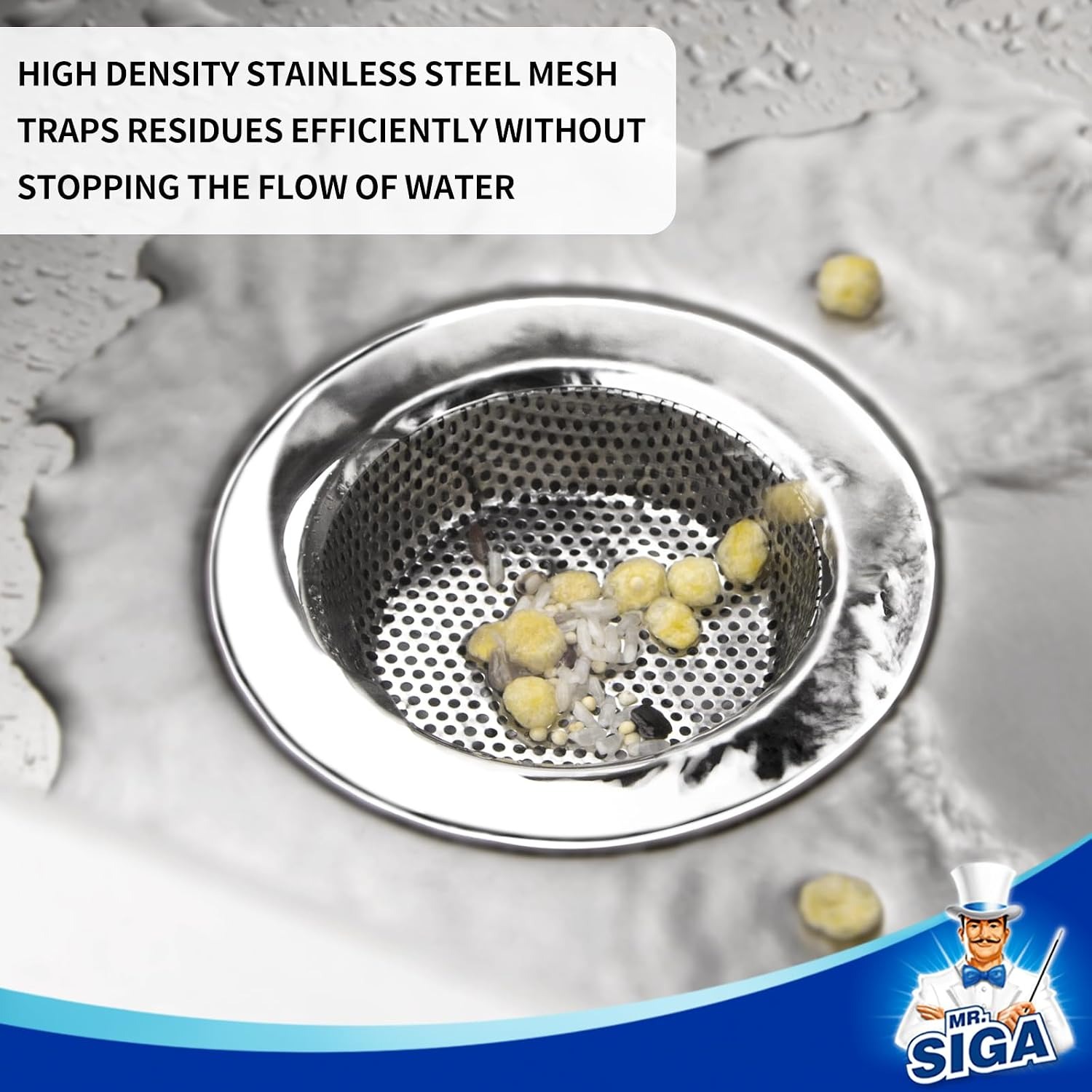
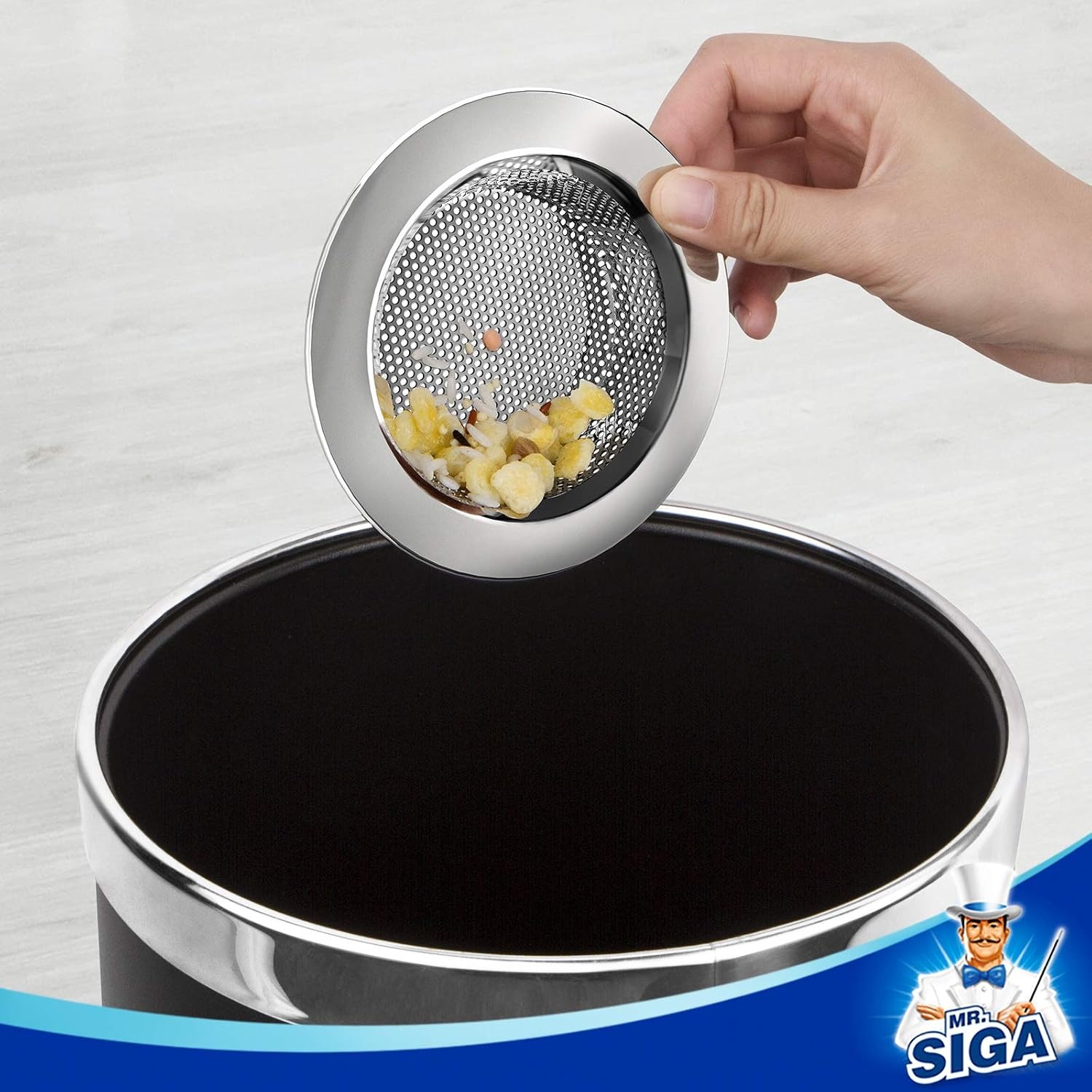
The idea is simple. A fine mesh screen sits across the drain opening. Water passes through the gaps in the weave. Anything bigger than those gaps stays on top where you can see it.
The engineering question is how fine to make the mesh. Too open and small particles like coffee grounds and rice go straight through, which defeats the point. Too tight and the water pools in the sink while you wait, which is the fastest way to get someone in the house to pull the strainer out and leave it on the counter.
This strainer uses a high density mesh that is woven to hold back small scraps while water keeps moving. In practice that means you can empty a pot of pasta water into the sink and it drains away while the stray bits of pasta sit in the mesh.
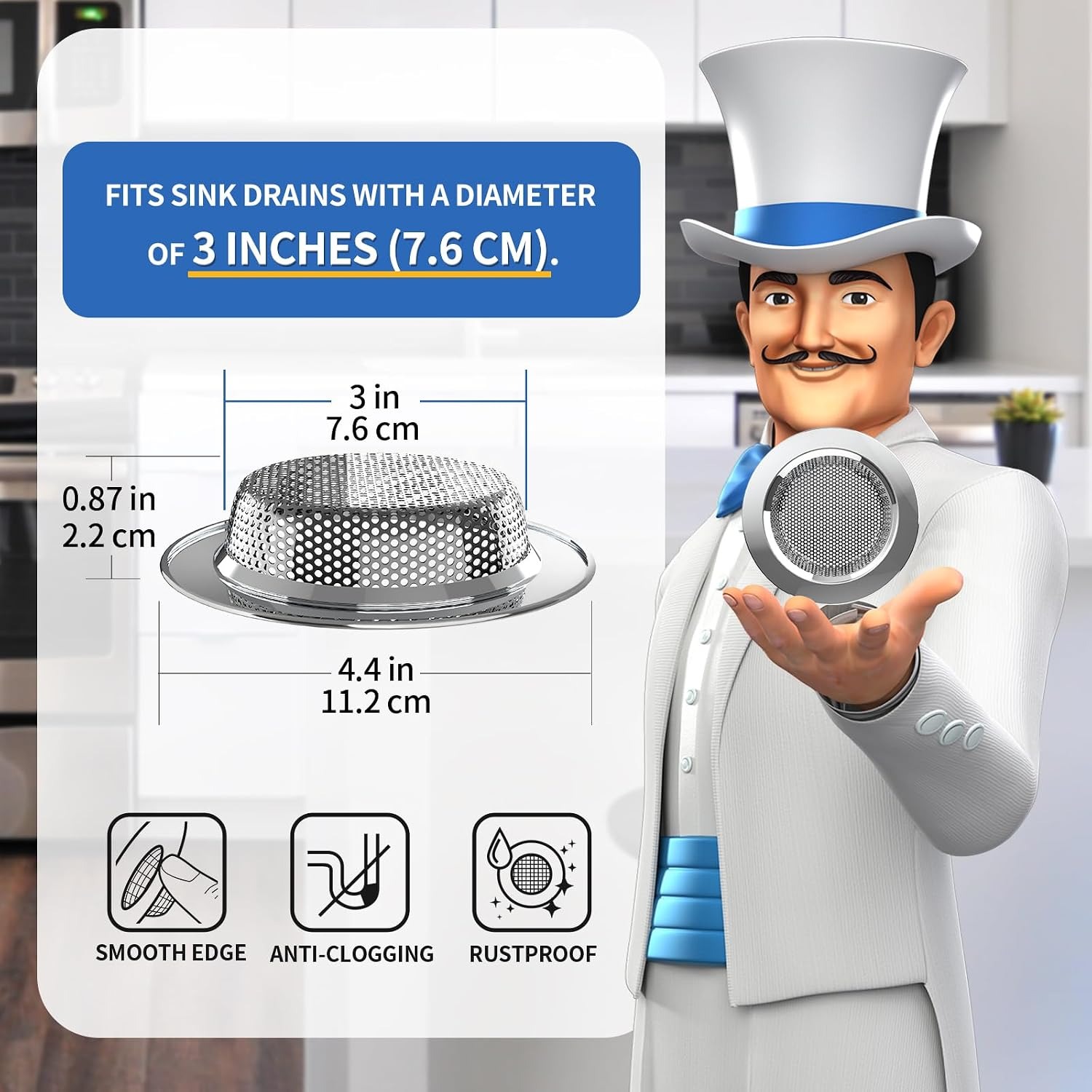
The second piece of the design is the shape. The outer rim measures 4.4 inches (11.2 cm) across and sits flat on the surround of the drain. The body below it is 3 inches (7.6 cm) across and drops into the opening. That rim is what stops the strainer being pushed down into the drain by the weight of water, and it is what lets you lift it out cleanly with two fingers.
Depth matters too. At 0.87 inches (2.2 cm), the body has room underneath for scraps to pile up without the mesh pressing against the drain below.
Who this suits
If you cook at home with any regularity, you want one. Chopping, peeling, rinsing produce and draining pots all send small solids towards the drain, and a strainer catches the lot.
It also suits anyone who shares a kitchen. In a household with several people doing dishes at different times, nobody is tracking what went down the sink. A strainer does not need anyone to remember anything. It is just there.
Renters often find them useful for a different reason. You cannot change the plumbing in a place you do not own, but you can drop a strainer in and take it with you when you leave. Nothing is fitted, cut or glued.
A bathroom sink strainer serves a slightly different purpose. There the enemy is hair and soap residue, which bind together into a mat that is miserable to deal with. Catching it on the surface is far easier than fishing it out later.
Utility sinks are the third spot. Those take grit, paint water, mop rinse and everything else, and a strainer stops a surprising amount of sediment from reaching the pipe.
How to choose
Start with the measurement. This is the step people skip and then regret. Take out any existing stopper and measure straight across the inside of the drain opening. This strainer is built for a 3 inch opening, with a matching 3 inch groove diameter. If your opening measures something else, it is the wrong strainer for that sink, no matter how good it is.
Then look at the material. Plastic strainers are cheap and they work on day one. The trouble is what hot water, detergent and time do to them. They go brittle, they stain, and the thin ribs snap. Stainless steel handles the same conditions without changing. That is the main reason a stainless steel sink strainer tends to still be in use years later when the plastic one has been replaced twice.
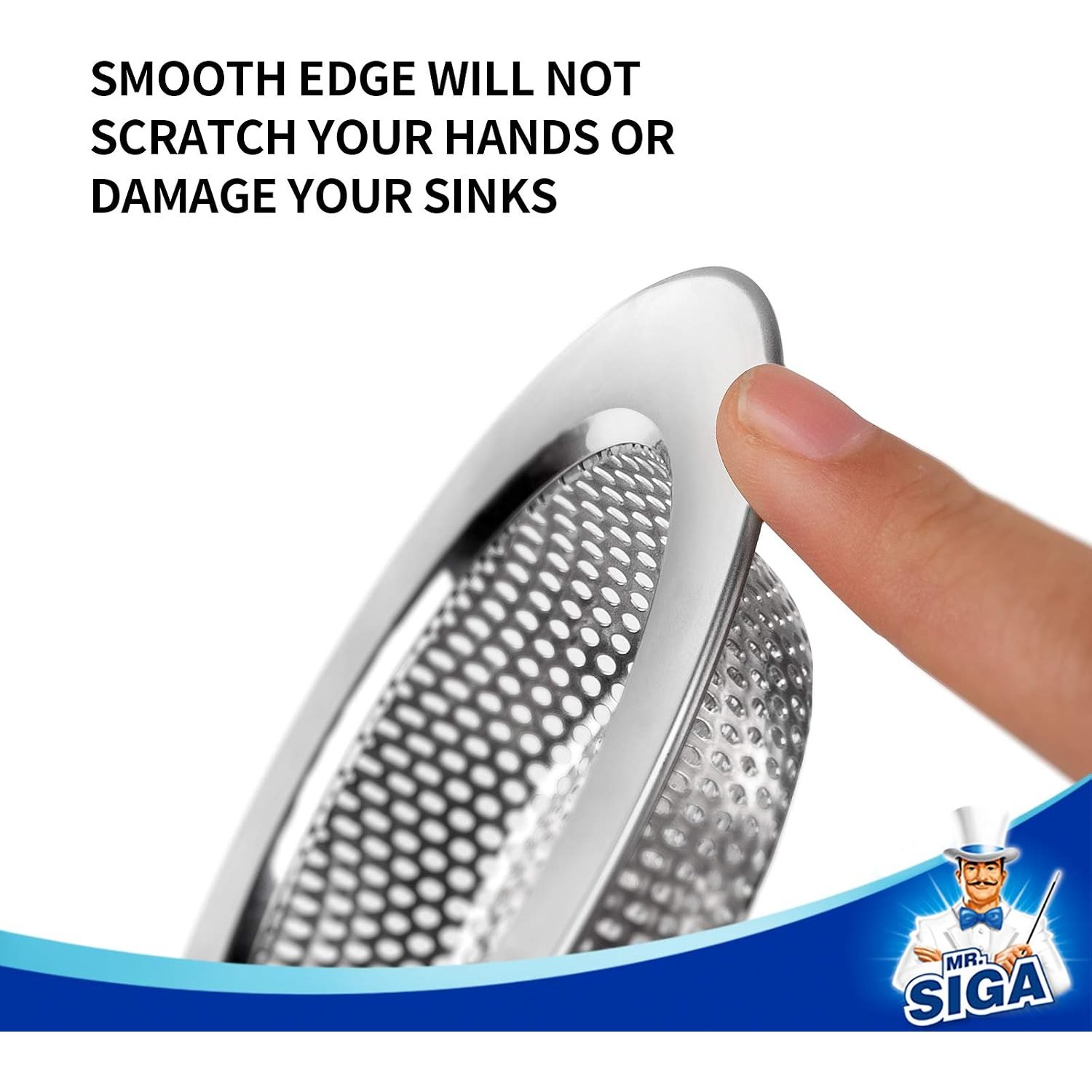
Check the edge finish. You will be reaching into a sink full of greasy water and pulling this thing out with wet hands. A rolled, smooth edge is a small thing that matters every single day. A sharp pressed edge is not.
Think about the profile. A tall basket strainer holds more but takes up room in the bowl and gets in the way when you are washing a large pan. A flat strainer like this one sits low and out of the way. For most kitchens the flat design is easier to live with.
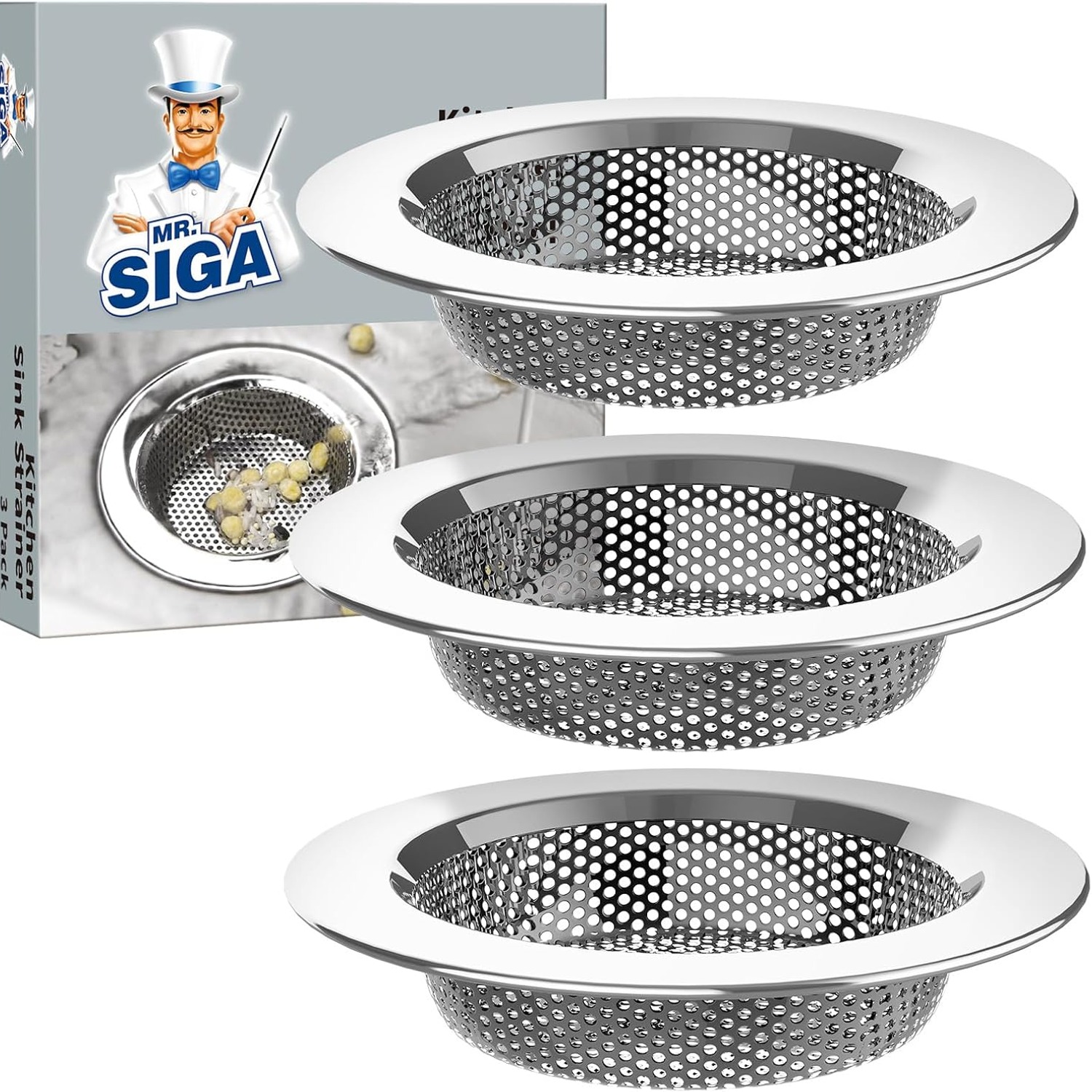
Count how many sinks you have. A single strainer covers one drain. A multipack covers the kitchen, the bathroom, and leaves one in the cupboard for when the first is in the dishwasher. That spare is more useful than it sounds, because the gap between emptying and cleaning is exactly when scraps go down the drain unchecked.
Fitting and first use
There is nothing to install. Lift out any existing stopper, set the strainer into the opening, and let the rim settle on the surround. That is it.
Run some water through it before you start cooking. You are checking two things, that it sits level and that water passes through at a normal rate. If it rocks, the rim is probably catching on a raised lip in the drain surround and you may need a different size.
Keeping it clean
The habit is more important than the method. Empty it after each sink session, not when it looks full. A mesh that is already carrying yesterday's scraps cannot catch today's, and it will drain slowly, which makes people pull it out and set it aside.
Emptying takes about three seconds. Lift, tip into the garbage, put back.
For cleaning, rinse under the faucet and use a dish brush on the mesh when residue starts to stick. Coffee grounds and starchy food like rice are the two that tend to pack into the weave, so give those a proper scrub rather than a quick rinse.
Once or twice a week, or whenever you are running a load anyway, put it in the dishwasher. This is a dishwasher safe sink strainer, so the top rack handles it fine and you get a far more thorough clean than a hand rinse.
A few things to avoid. Steel wool and scouring powder can scratch the surface and leave rough patches that trap food. Leaving the strainer sitting in standing water does it no favours either, so shake it off and let it dry.
One point worth being clear about. A strainer catches solids. It does nothing for grease, because fat goes down as a liquid and only hardens once it hits the cooler pipe. Pour cooled fat into a container and put it in the garbage. Also, if your sink is already draining slowly, that is an existing build up further down the line and a strainer will not fix it. Any work involving cutting, moving or connecting pipe should go to a licensed plumber.
The short version
A mesh sink drain strainer is a few dollars of stainless steel standing between your cooking and the inside of your pipes. It takes no installation, no maintenance beyond emptying it, and no thought once it is in place.
Measure your drain opening first and check it against the 3 inch body size. Choose stainless steel over plastic because it lasts. Get into the habit of tipping the mesh into the garbage at the end of each sink session, and run it through the dishwasher now and then.
Three in a pack means your kitchen, your bathroom and your spare drawer are all covered at once. That is the whole job.