
The complete guide
How to Choose and Fit a Washer Drain Hose Extension
The problem nobody mentions until the appliance is in the room
You buy a washer. It arrives. The delivery crew slides it into place, and then somebody notices the drain hose stops about two feet short of the standpipe. Or the laundry sink is on the far wall. Or you put the machine on a pedestal and the geometry changed.
This happens constantly, and it is not a defect. Appliance makers fit the shortest hose that works in a typical install, because every extra inch adds to the box size and the shipping cost. A typical factory drain hose gives you enough slack for a machine sitting directly beside its drain. Move it, and you run out.
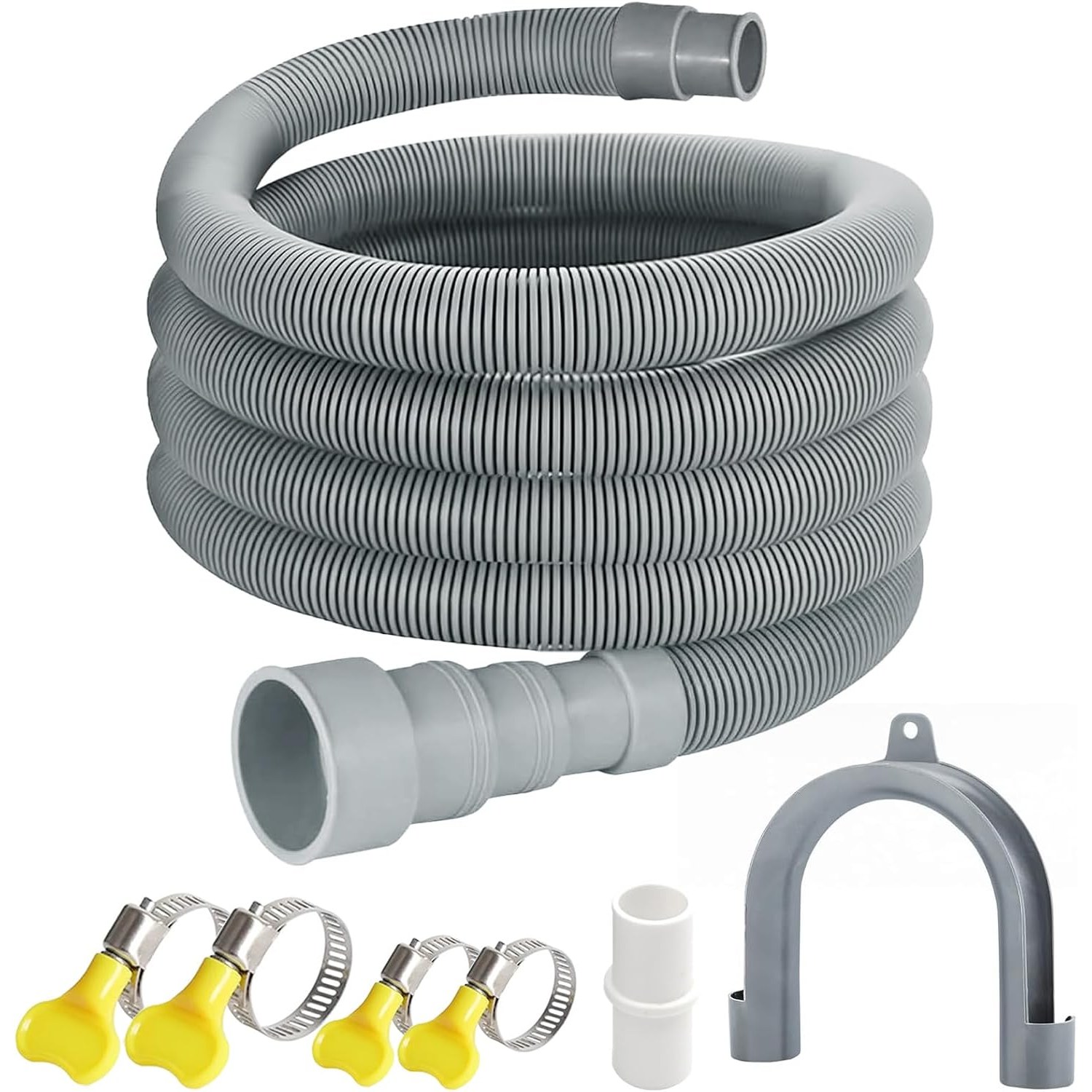
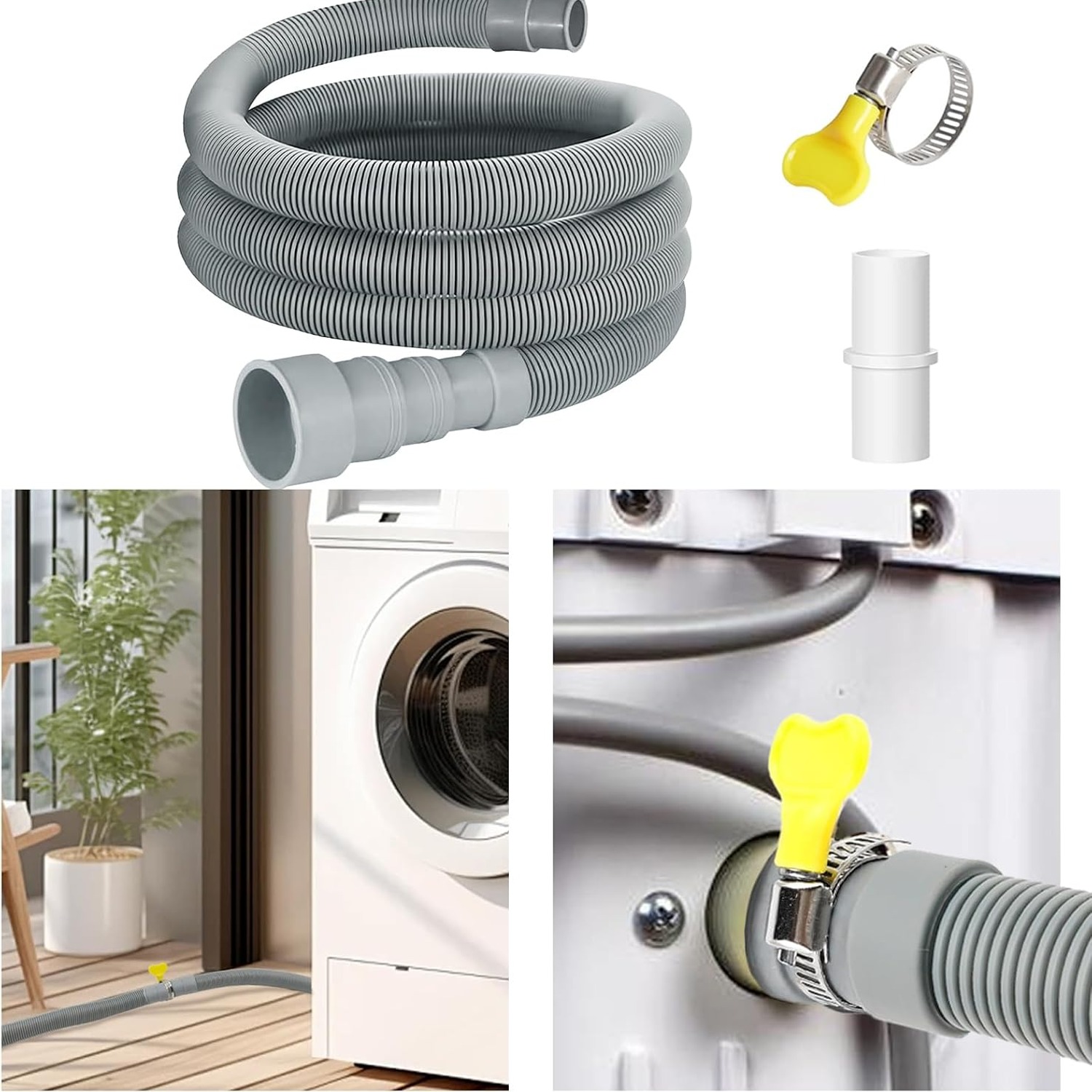
The fix is an extension. A washer drain hose extension kit 10 ft long adds the reach, and because this one ships with the adapter, clamps and a U-bend holder already in the box, you are not making a second trip for the fiddly bits that always turn out to be missing.
What an extension kit actually does
A drain hose carries water away from the appliance pump to a standpipe, a laundry sink or a floor drain. It is not under mains pressure. It handles a short, fast surge of water when the machine empties, then sits idle.
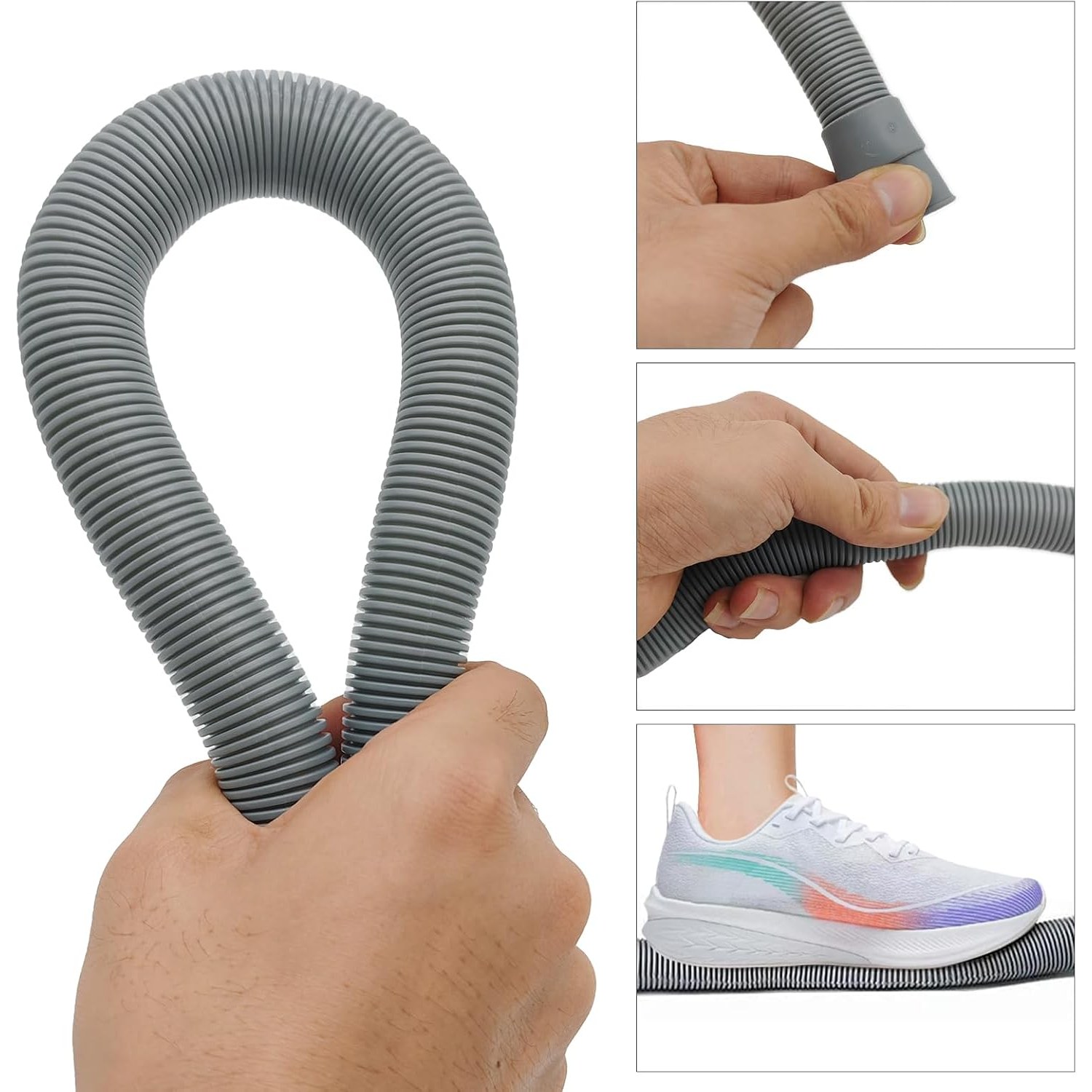
That matters because it shapes what the hose needs to be. It does not need the thick, braided construction of a water inlet hose. It needs to be flexible enough to route around a machine, wide enough inside to pass the pump's output without choking, and secure at the joints so nothing creeps loose over a few hundred cycles.
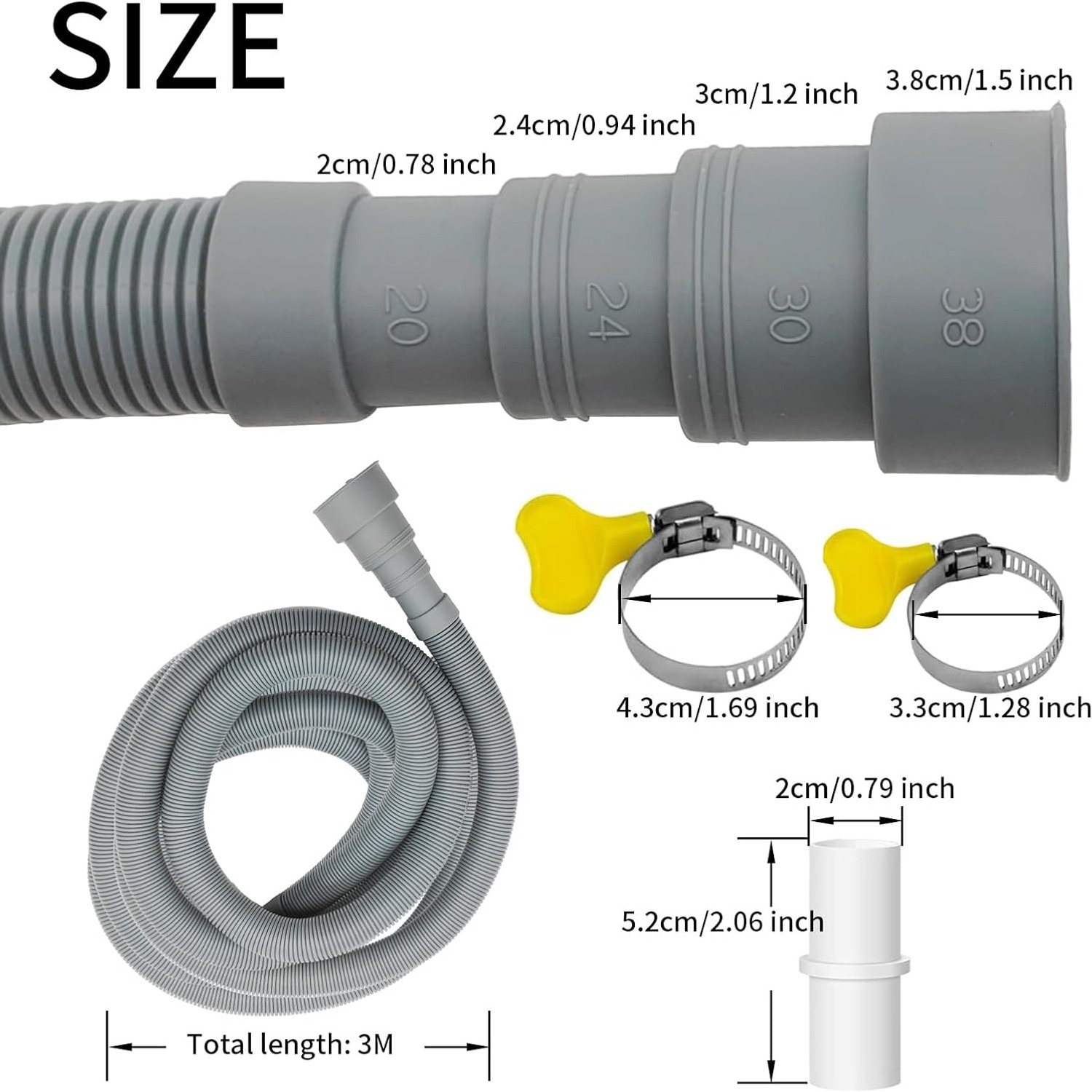
This kit is polypropylene, usually written as PP. It is a light plastic that holds a gentle bend without cracking and shrugs off detergent and rinse water. The listed outside diameter is 0.95 inches with a nominal wall thickness of 0.125 inches. The whole kit weighs 0.23 kg, so handling it behind a machine is a one-person job.
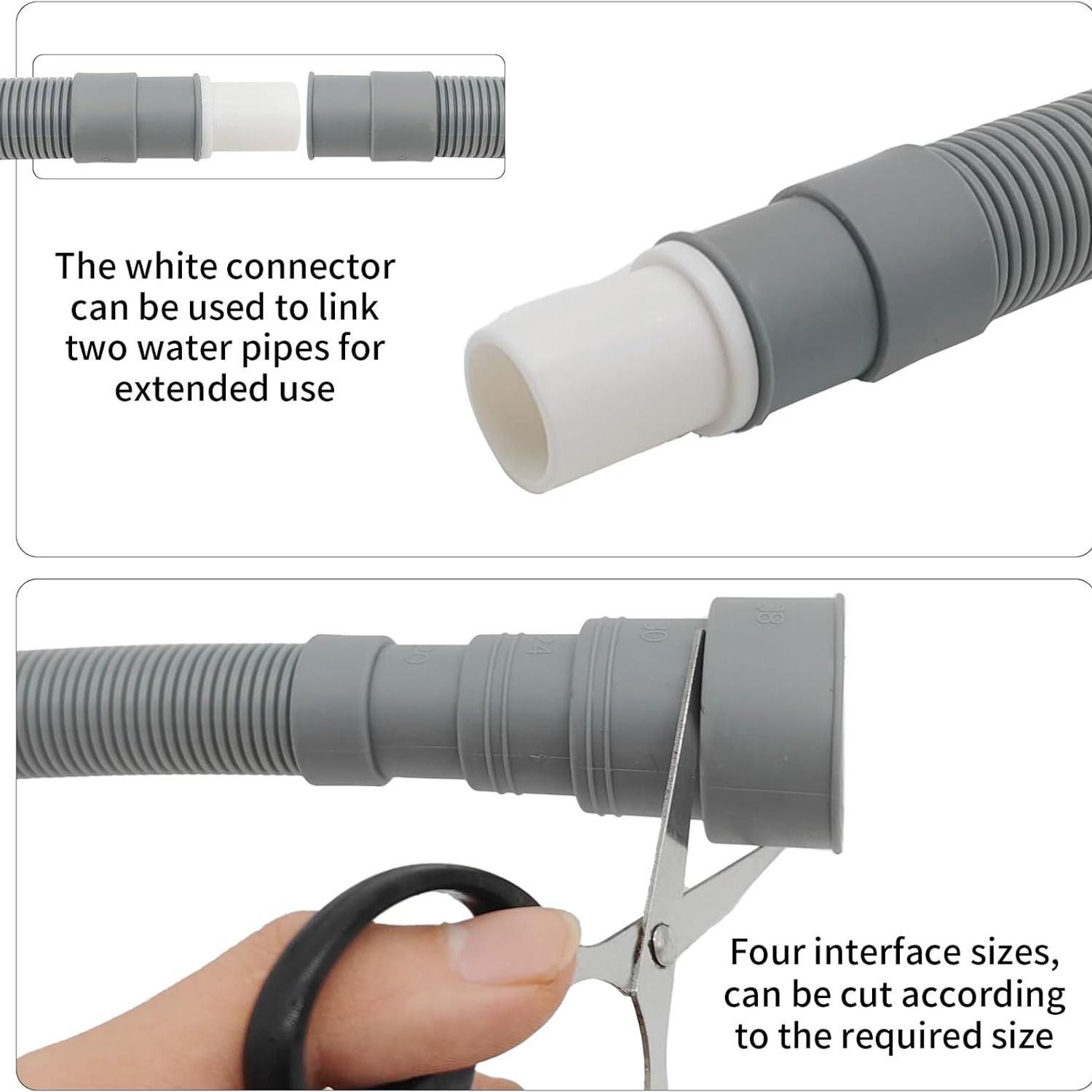
The adapter is the piece that joins the new hose to the one already on your appliance. The four clamps lock both sides of both joints. The U-bend holder is the small curved bracket that keeps the discharge end hooked over the standpipe or sink rim instead of sliding out mid-cycle.
Measuring before you buy
Two numbers decide whether an extension works for you.
The first is diameter. Pull the appliance out far enough to see the end of its drain hose and measure across the outside of it. Compare that to the 0.95 inch outside diameter listed here. Appliance drain hoses cluster around a few common sizes, so a close match is likely, but a tape measure beats an assumption every time.
The second is distance. Measure from where the hose currently ends to where you need it to end, then add slack. Hoses want a gentle curve, not a straight line pulled tight, and you need room to pull the machine out for cleaning without dragging the connection apart. Add at least a couple of feet over the bare distance.
While you have the manual out, find the maximum drain height your appliance allows. Every pump has a limit on how high it can push water. If your standpipe sits above that figure, no hose will fix it, and the answer is a plumbing change rather than a longer hose.
Fitting it without drama
Start by switching the appliance off at the outlet and shutting the water supply. Slide the machine out far enough to work behind it comfortably. Put a towel and a shallow bucket under the existing hose end, because there is always a little water sitting in it.
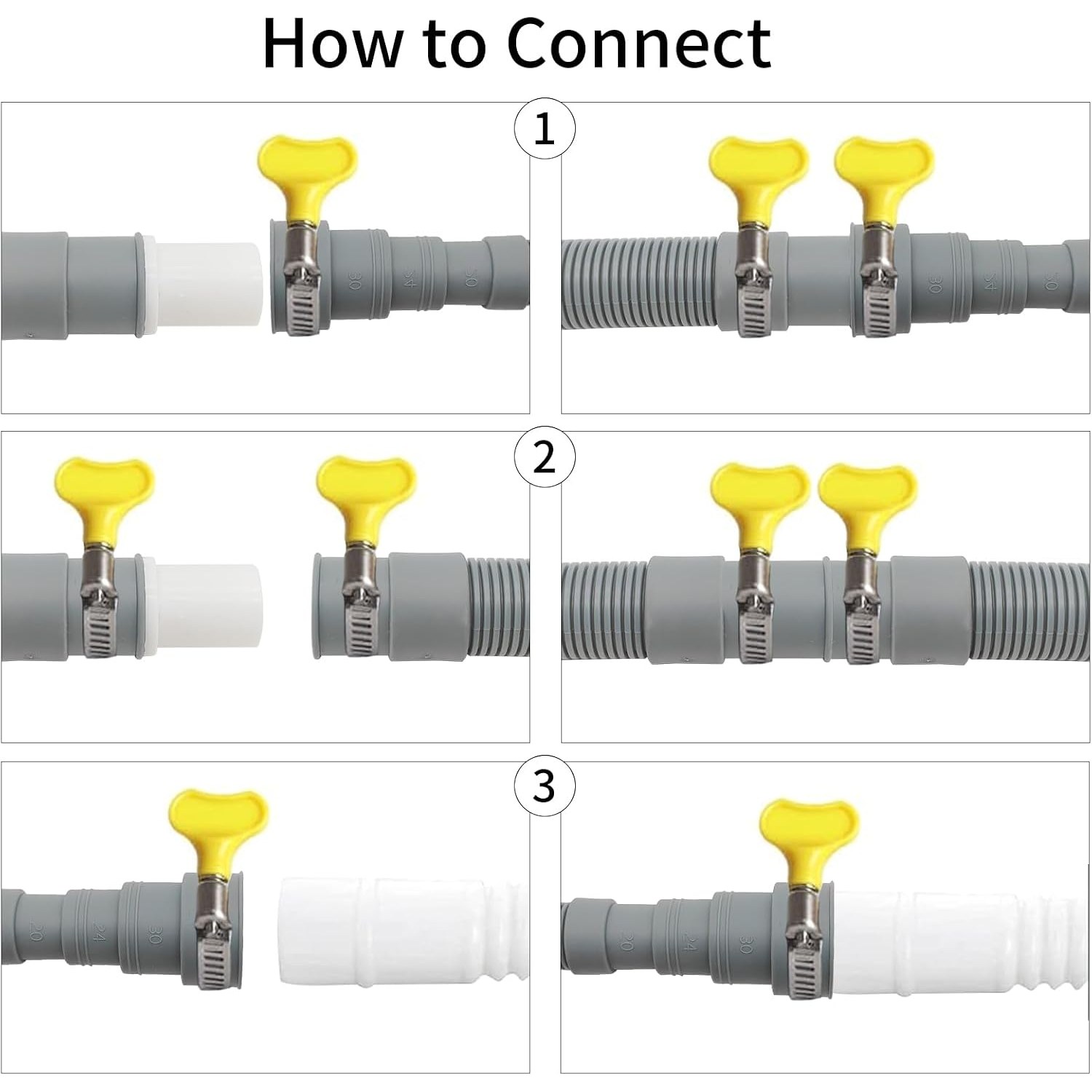
Slide a clamp onto the existing hose before you connect anything. People forget this constantly and have to take the joint back apart. Push the adapter firmly into the existing hose end, then push the extension onto the other side of the adapter. Slide the clamps over each joint so they sit squarely on the barbed section, not hanging off the edge, and tighten them evenly.
Route the hose along the wall or behind the machine in wide curves. Avoid sharp angles, and do not let it pass over a sharp cabinet edge that will wear a groove into the plastic over time. If the run is long, support it every few feet so it is not hanging under its own weight.
Fit the U-bend holder to the discharge end and hook it over the standpipe or sink rim. Keep the end above the water line in whatever it is draining into. If the hose end sits in standing water, the machine can siphon, which means it empties while it is trying to fill.
Then run a short cycle and watch. Stay there for the drain phase and look at both joints. A joint that is going to leak usually shows you on the first cycle. If you see a weep, tighten the clamp another turn and check again.
Who this suits
The obvious case is anyone moving a washer or dishwasher further from its drain. Renovations, kitchen reshuffles, a new pedestal, a second-hand machine with a short hose, a basement laundry where the drain is across the room. All of these end with the same problem.
It also suits people replacing a tired hose. Drain hoses do age. They get stiff, they crack at the bend points, and they develop slow weeps that only show up as a damp patch on the floor. If yours is yellowing or hard, a fresh length with new clamps is a cheap piece of insurance.
It is less suited to anyone who needs to alter fixed pipework. Cutting into a drain line, relocating a standpipe or changing a trap is a licensed plumber's job. An extension hose solves distance problems, not drainage design problems. If your drain is slow or backing up with the old hose, a longer hose will not change that.
Keeping it working
Drain hoses ask for very little. Once a year, pull the machine out and look at the joints. Clamps can loosen as the plastic settles, so a quarter turn to snug them up is worth doing. Check the bends for stress whitening or cracks.
If you disconnect the hose for any reason, flush it with clean water and let it drain properly before reconnecting. Lint, detergent residue and fibre build up slowly at the low points of a run, and a flush clears it before it becomes a restriction.
Store a spare or an unused extension coiled in wide loops somewhere dry. Tight coils leave a memory bend that fights you when you want the hose straight again.
Keep the run away from heat sources. A hose draped across a dryer vent or pressed against a hot pipe will stiffen faster than one sitting in free air.
A few things to avoid
Do not chain multiple extensions unless you have no alternative. Every joint is another place for a leak to start, and every extra foot asks more of the pump.
Do not submerge the discharge end. It causes siphoning and it is one of the most common reasons a machine seems to fill and empty forever.
Do not over-tighten the clamps to the point where they bite into the plastic. Snug is the target. Crushing the hose wall creates a weak spot.
Do not leave the run unsupported in a long sag. Water pooling in a low point is where residue collects.
The short version
A washer drain hose extension kit 10 ft long is one of those small parts that turns an awkward laundry layout into a workable one. This kit is polypropylene, 0.95 inches across the outside, with a 0.125 inch nominal wall, and it arrives with one adapter, four heavy-duty clamps and a U-bend holder so you can do the whole job in one go.
Measure your existing hose diameter and your run length before you order. Fit it with the clamps seated properly and the discharge end above the water line. Watch one cycle before you push the machine back. Then forget about it for a year, check the joints, and carry on.
What is listed above is what the maker states.