
The complete guide
How To Choose A Tub Drain Strainer That Actually Keeps Hair Out
The real reason your tub drains slowly
Nobody notices the first strand of hair. The problem builds quietly. A few strands slip past the drain each shower, catch on the inside of the pipe, and hold onto soap residue and skin oil. Weeks later the water is pooling around your ankles and you are standing in a cooling puddle wondering when that started.
The fix is simpler than most people expect. Hair almost never causes trouble while it is still in the open. It causes trouble once it gets past the drain and into a dark pipe where you cannot reach it. Stop it at the drain opening and the pipe stays reasonably clear.
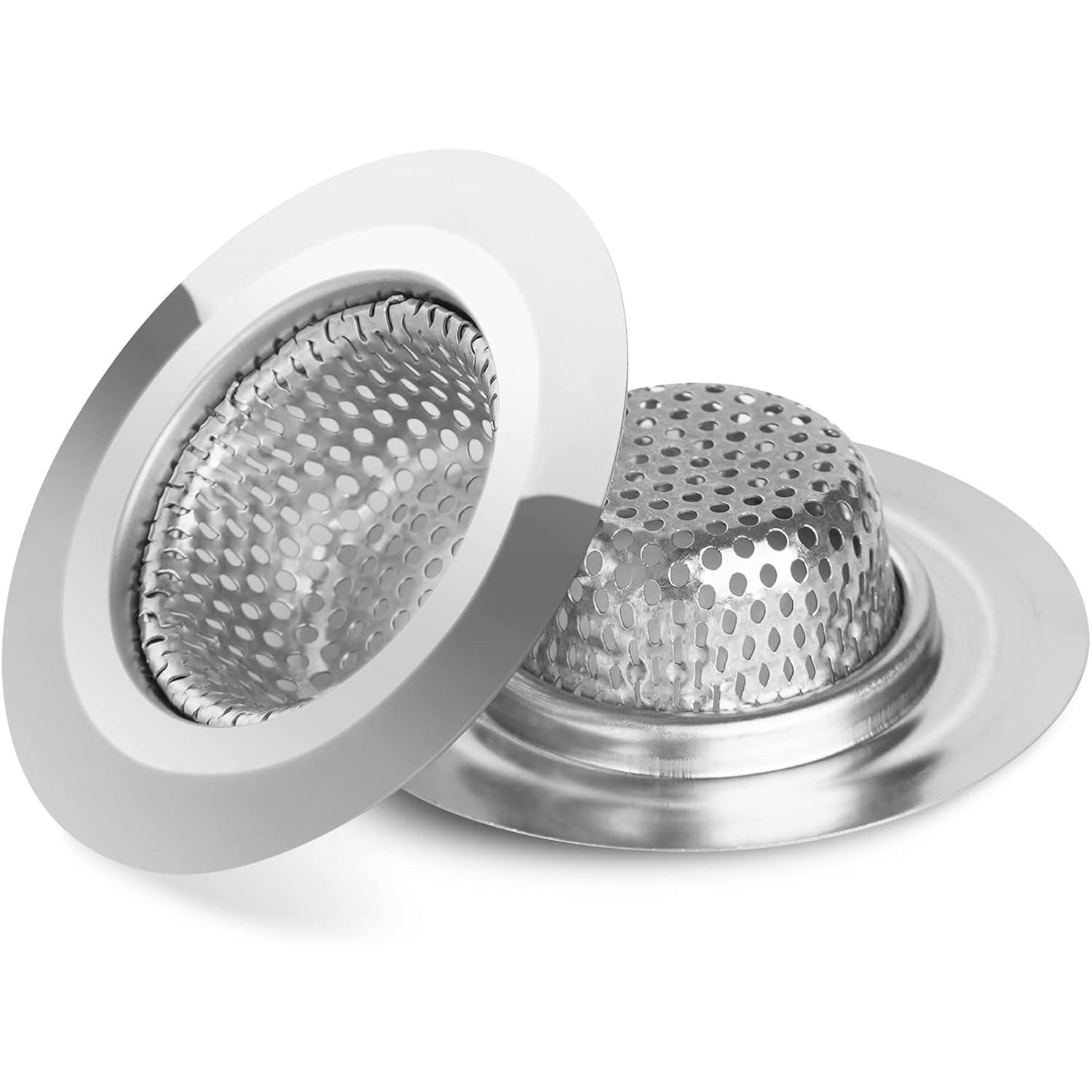
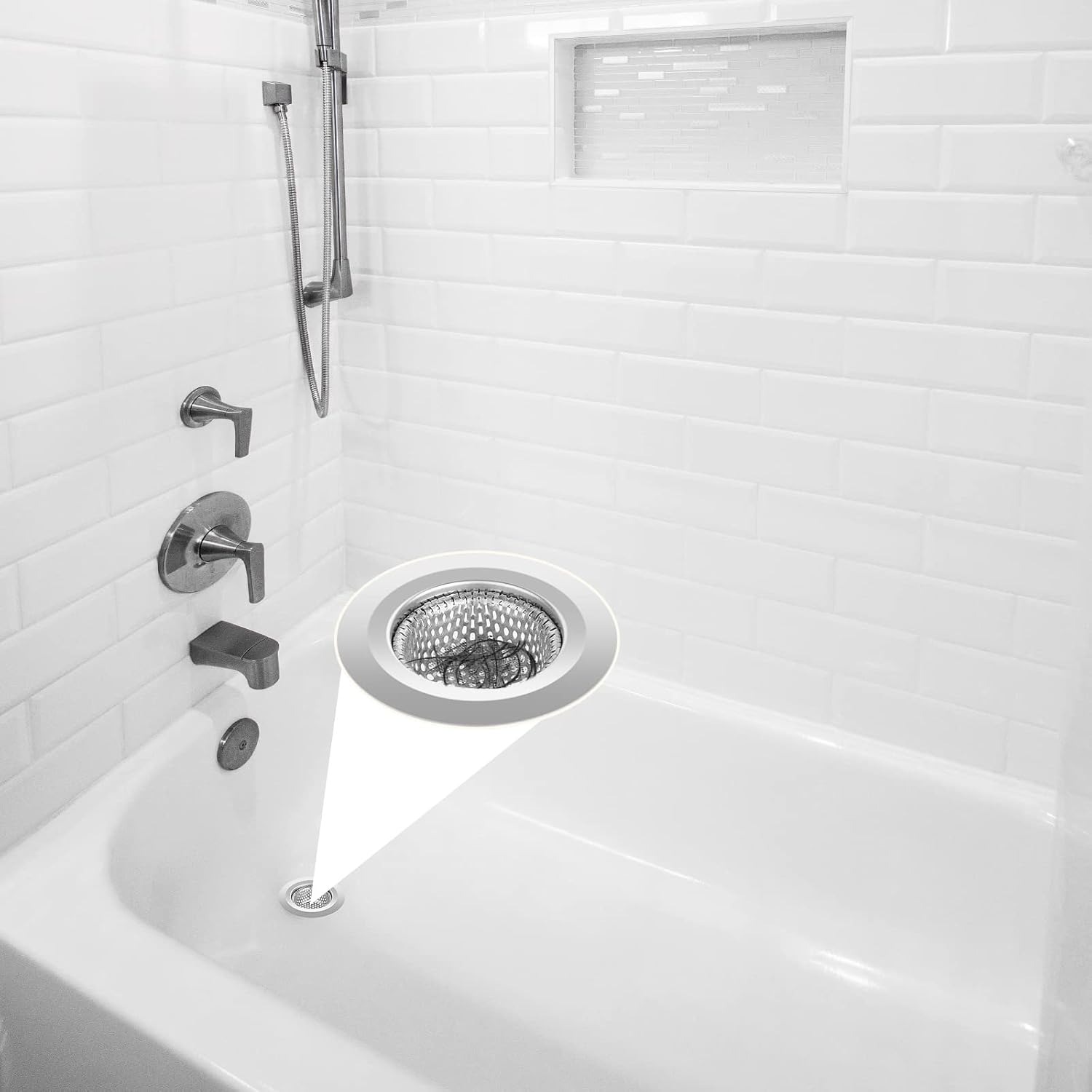
That is the whole job of a stainless steel tub drain strainer. It sits in the drain, catches the hair where you can see it, and lets you throw it in the garbage before it ever becomes a problem. It is one of those small objects that quietly saves you a lot of trouble.
How a mesh basket works
A drain strainer is a filter, and all filters face the same balancing act. Make the holes too big and hair slides straight through. Make them too small and water backs up.
This strainer uses holes measuring 0.08 inches across. Water passes through easily at that size. Hair does not, because a strand lands flat across several holes at once and has nowhere to go. Soap residue and small bits of debris stay on the surface too.
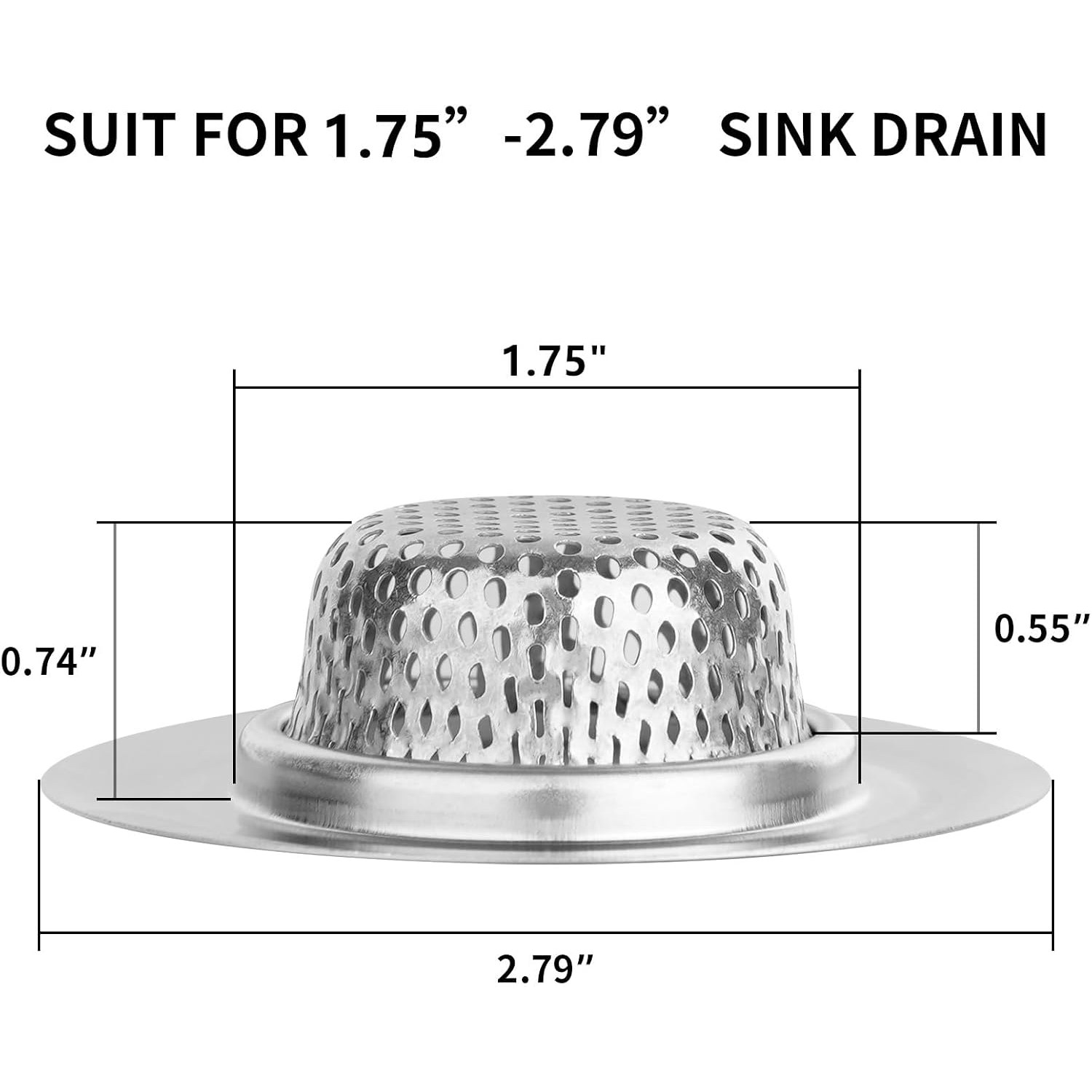
The second thing that matters is shape. A flat screen sits level with the drain and has almost no room to hold anything. The moment a handful of hair lands on it, the screen is covered and the water starts pooling. This strainer is a basket 0.74 inches deep instead. That depth gives the hair somewhere to sit while water keeps running through the sides and base of the mesh.
In practice, the depth is what gets you through a full shower without the tub filling. You still empty it afterward, but you are not standing in water halfway through washing your hair.
Fit comes before everything else
A strainer that does not fit your drain is useless, no matter how well it is made. Fit is the one thing to check before you buy.
Measure across your drain opening at its widest point. This strainer measures 2.79 inches across and the maker states it suits drain openings between 1.75 and 2.79 inches. The compatible groove diameter is listed as 2.75 inches with a groove depth of 0.74 inches.
A few practical notes on measuring. Measure the opening itself, not the decorative plate around it. If your drain has a removable stopper, take it out first and measure the hole underneath. If the stopper is a fixed pop-up mechanism that lifts and lowers on a lever, there may not be room for a basket inside, and that is worth checking before ordering.
The flat rim is what holds everything in place. It rests on the drain surface while the basket hangs below, so the strainer does not drop through. No glue, no screws, no tools. You set it in and you are done, which matters a lot if you rent and cannot modify fixtures.
Who this suits
Households with long hair get the most out of a deep basket. Long hair sheds in quantity, tangles with itself, and creates the kind of mass that genuinely stops a pipe. If that describes your bathroom, a strainer is not optional, it is maintenance.
Shared bathrooms benefit too. More people means more hair, and the hair arrives from several different heads at different times of day. Having a basket that holds a lot between cleanings saves arguments about whose turn it is.
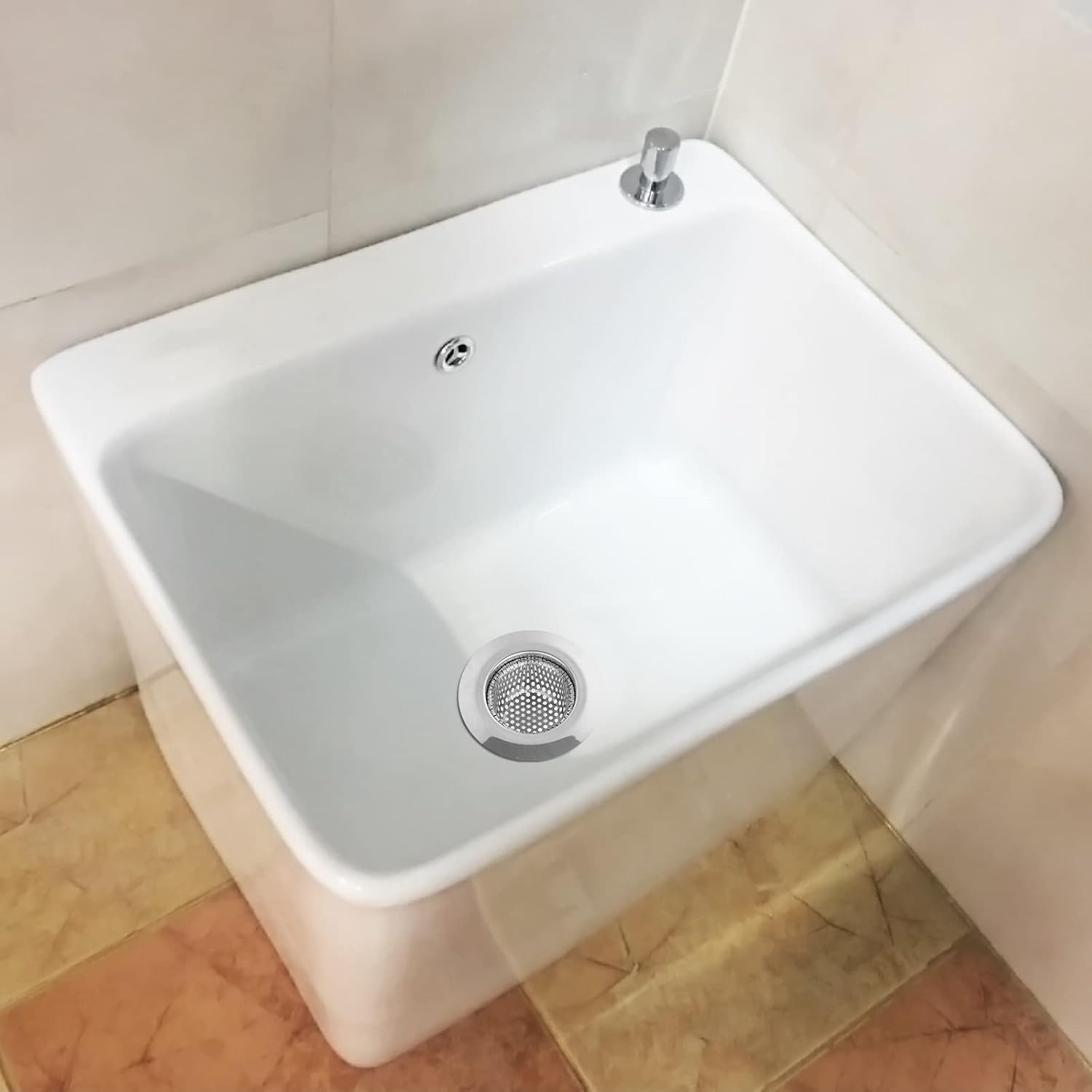
Renters have a particular reason to use one. You cannot cut into the plumbing or call a plumber for every slow drain, and you probably do not want to be the tenant who left a blocked line behind. A drop-in strainer costs little, leaves no mark, and travels with you when you move.
Then there is the plain economics. A plumber visit costs real money, and drain snakes and liquid cleaners are not a sure thing against a packed hair mass. Catching the hair at the surface is the cheapest form of prevention available.
Choosing between materials
Plastic strainers are cheap and they work, at first. The trouble is texture. Plastic surfaces hold onto soap film and body oil, which means they go cloudy and sticky within weeks. They also sit in constant damp, which is hard on thin plastic over time.
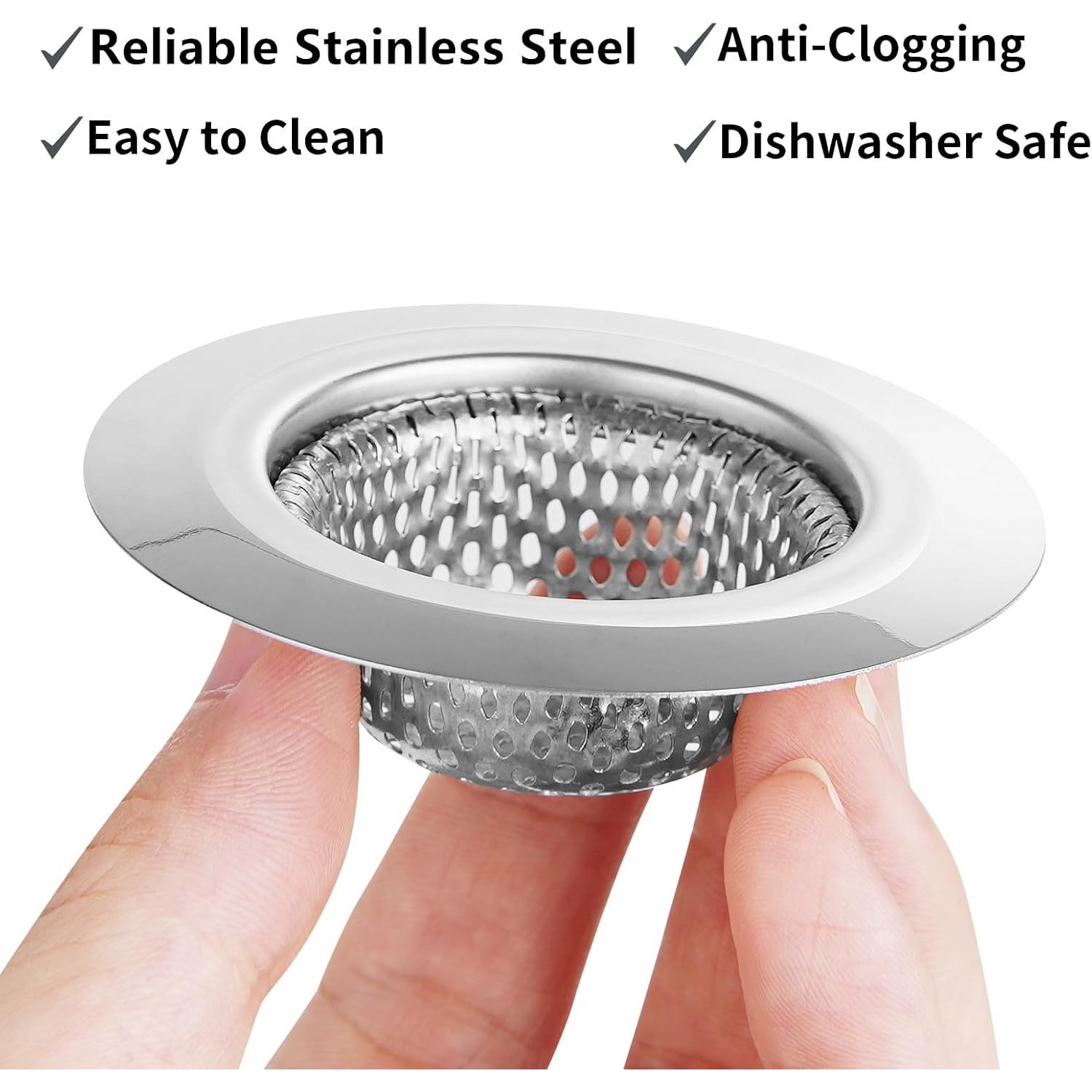
Stainless steel has the advantage here. The mirror surface on this strainer does not hold oil stains, so most residue rinses off under running water. The maker describes the steel as rust resistant, which matters in a bathroom where nothing ever really dries out. The best rust resistant drain strainer is the one you can leave in place for months without it turning orange around the rim.
Steel is also more rigid, so the basket keeps its shape. A plastic basket that warps slightly stops sitting flat in the drain and starts letting hair around the edges, which defeats the purpose.
Keeping it clean without the fuss
Cleaning is where good habits beat good intentions. The strainer itself is easy. Lift it out, tip the hair into the garbage, rinse the mesh under the faucet, set it back. Thirty seconds at most.
Do it after each shower and you will never deal with a mat of wet hair. Leave it a week and the hair knits together with soap residue into something considerably less pleasant.
When rinsing stops being enough, you have two options. A soft brush with a little dish soap clears soap film from the mesh. Or run it through the dishwasher, which the maker confirms is safe. Put it on the top rack, let it dry, and set it back.
Two things to avoid. Skip steel wool and gritty scouring powders, which scratch the mirror finish and give soap film something to cling to. And skip chemical drain cleaners entirely. They are rough on fixtures and pipes, and they do very little against a solid hair mass anyway.
Getting value from two strainers
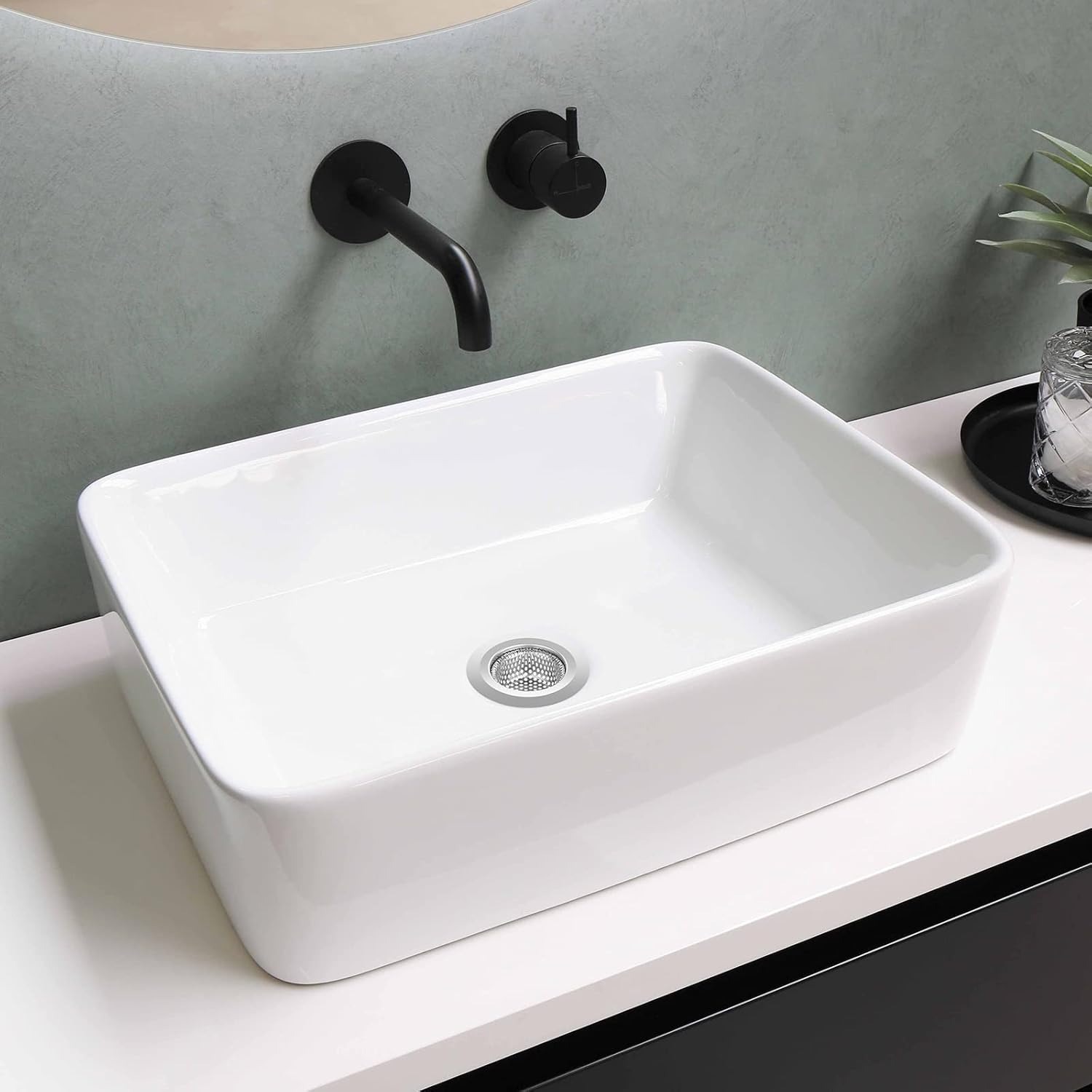
The pack contains two, and the second one is worth putting to work. Most homes have more than one drain that collects hair. The tub is the obvious one, but a bathroom sink gathers hair from shaving and brushing, and a laundry tub picks up lint and thread.
The other use for the spare is rotation. Put one in the dishwasher and swap the second in while it dries. You are never without a strainer in the drain, which is when hair slips past.
The short version
Hair is the cause of most slow bathroom drains, and the cheapest fix is to stop it before it enters the pipe. This two-pack of stainless steel strainers does that with a deep mesh basket, 0.08 inch holes that keep water moving, and a drop-in fit for drain openings between 1.75 and 2.79 inches.
Measure your drain opening first. If it falls in that range, you fit the strainer with no tools, empty it after each shower, and rinse or dishwash it when it needs more than water. Stainless steel handles the damp, the mirror surface stays clean, and the second strainer covers another drain in the house.
Small object, modest price, and a lot less time spent standing in a slowly draining tub.