
The complete guide
How To Choose And Use A 100 Ft Sewer Jetter Kit
The problem with a drain you cannot reach
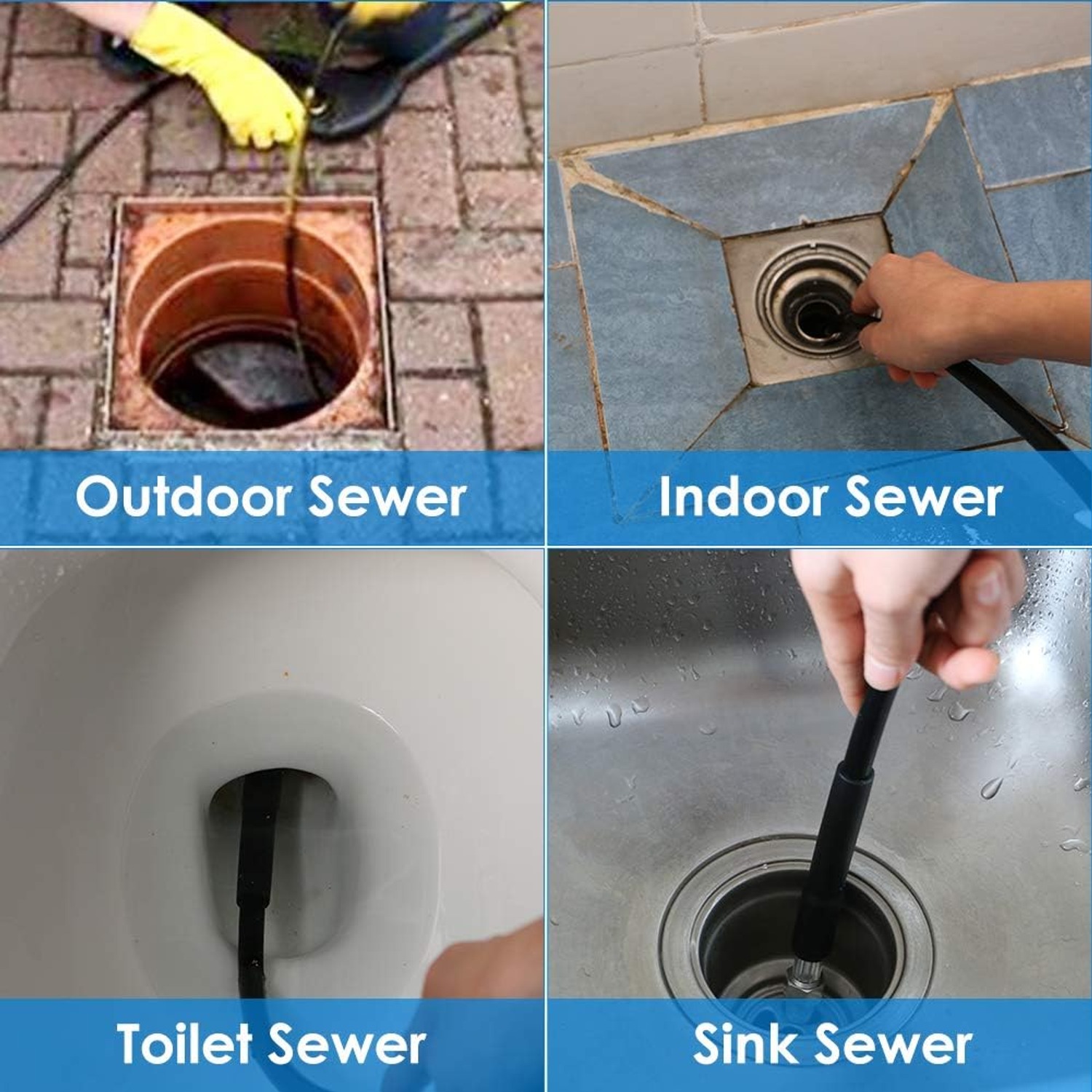
A slow drain is annoying. A slow drain that comes back two weeks after you cleaned it is worse, because it means the real problem was never at the opening in the first place. Most of the time the build-up sits further along the line, coating the inside of the pipe where a brush or a short rod will never touch it.
Grease is the usual suspect in a kitchen line. In a bathroom it is soap scum and hair. Outside, it is leaf matter, silt and whatever washed in off the yard. All of those stick to the pipe wall and narrow it gradually, so water still goes down, just slower each month. By the time it actually backs up, there may be a surprising amount of material in there.
Poking a hole through that build-up gets water moving again for a while. It does not remove the coating. That is why the problem returns, and it is why water jetting has become the method most people reach for once they have tried everything else.
How a jetter actually works
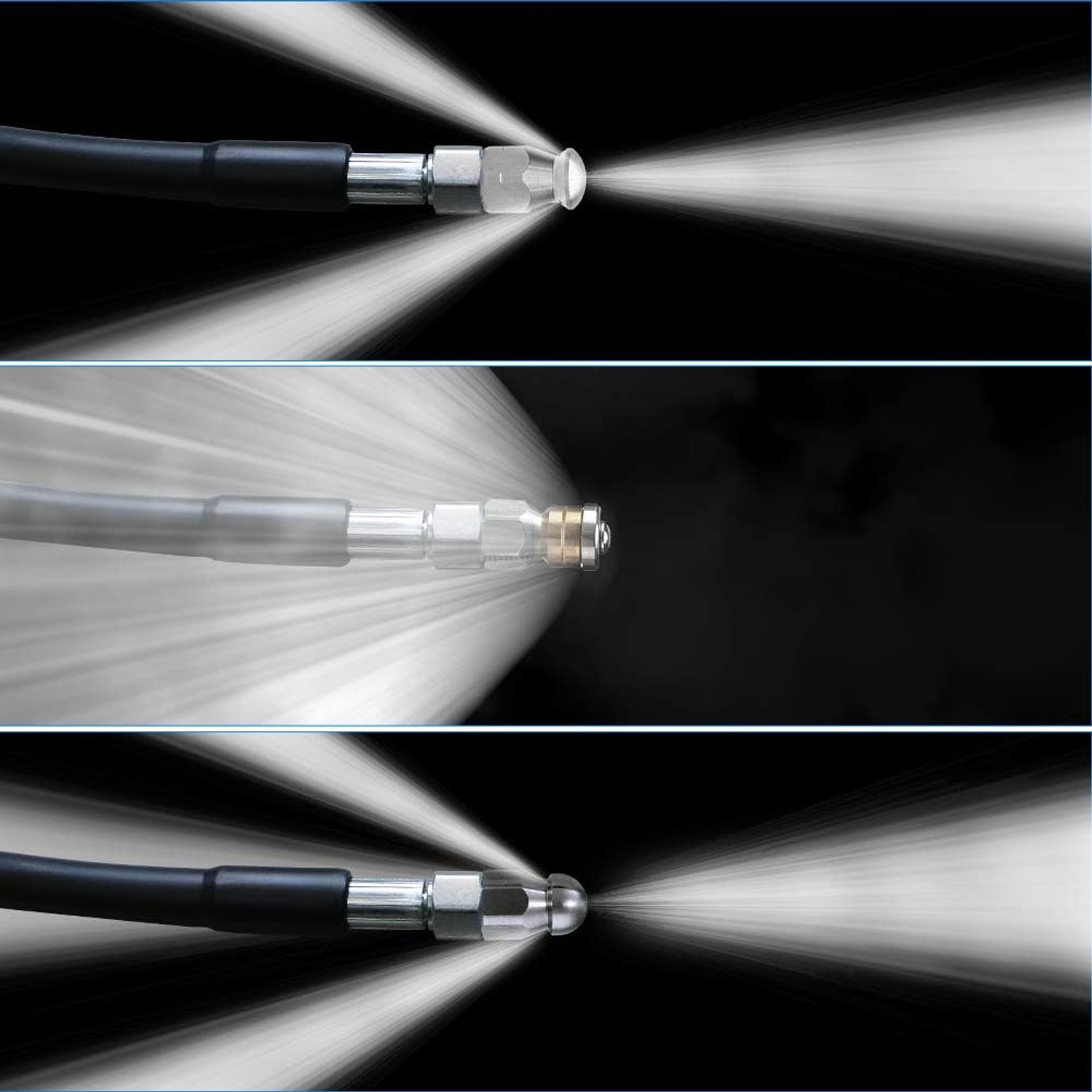
The hose is thin, flexible and carries high pressure water from your pressure washer to a nozzle at the far end. The clever part is the nozzle. Most of the jets face backward at an angle, with sometimes one facing forward.
Those rear jets do two things at once. The thrust pushes the nozzle forward, so the hose essentially crawls down the pipe on its own as long as you keep feeding it in. And the angled spray hits the pipe wall behind the nozzle, blasting loosened material back toward the opening where it can wash away. You are not dragging the mess deeper, you are flushing it back out.
The forward jet on the button nose head is the one that breaks into a blockage. With a 4.0 orifice and three rear jets at 33 degrees, it is a sensible first choice when you are not sure what you are dealing with.
The nozzles and when to use each one
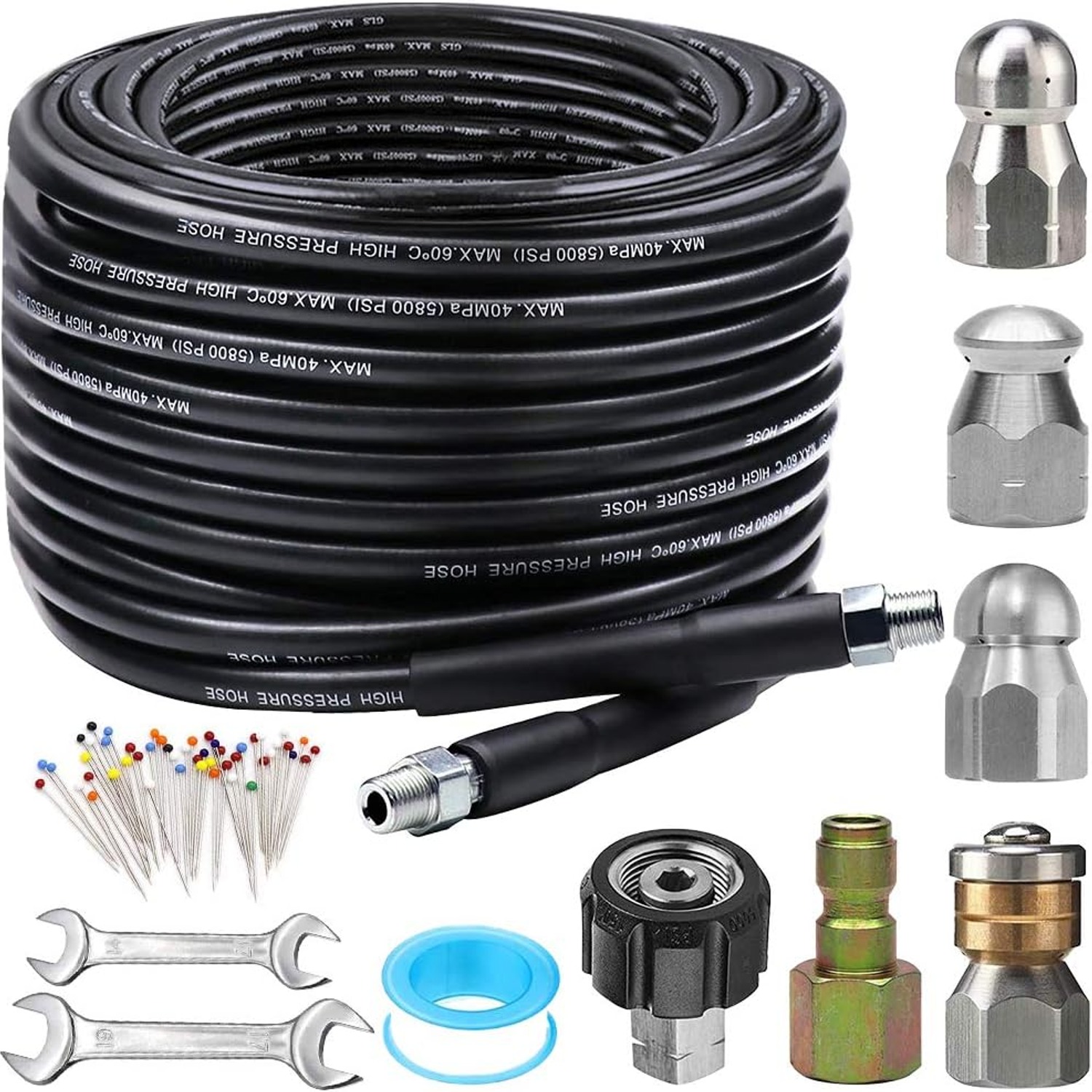
Four heads come with this sewer jetting nozzle kit, and swapping between them is a big part of getting a good result.
The button nose nozzle, as above, is your general starting head. Front jet in, rear jets flushing out.
The rotating nozzle has a 4.5 orifice and three backward rotating jets. Because the spray turns, it covers the whole inside circumference rather than three fixed stripes. This is the one for heavy wall coating, where the line is not fully blocked but is badly narrowed. Think of it as scrubbing rather than drilling.
The corner nozzle sends one jet out sideways plus three rear jets at 33 degrees. When the hose stops at an elbow and will not turn, that sideways jet reaches around the bend for you. The side hole nozzle works on the same idea with the 4.0 orifice sizing. Between the two you have a couple of options for attacking a corner clog without forcing the hose.
A practical tip: if the hose stalls, do not shove harder. Pull back a foot, let it flush, and try again. If it still will not go, change to a corner head. Forcing a jetter hose is how people kink them.
Does it suit your pressure washer
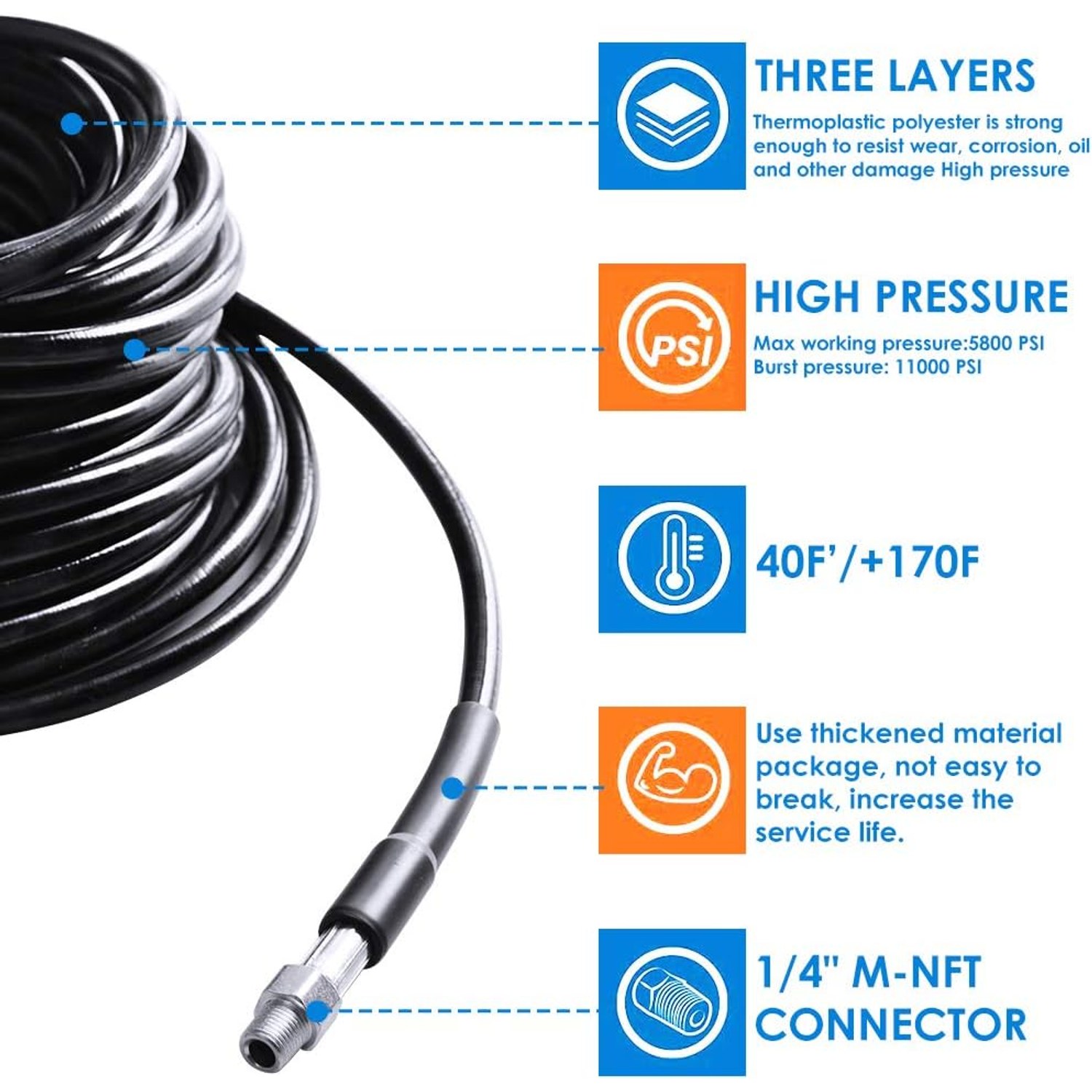
This is the question to settle before anything else. The hose is rated to a maximum of 5800 psi, which covers a wide spread of gas-powered and electric machines. Check your washer's output figure against that number.
Then check the fitting. The kit includes a 1/4 inch quick connect plug plus a coupler that converts a metric M22 14 mm female thread to 1/4 inch female NPT. That pairing handles a great many home pressure washers. If your outlet is something else, you may need an adapter, and it is worth sorting that out before the day you need the jetter.
A quick connect is genuinely useful here. Swapping between your wand and the best pressure washer drain cleaner hose takes a few seconds, so you can go back and forth without unthreading anything.
Reading the hose specs
The hose is 0.25 inches outside diameter with a 0.125 inch nominal wall thickness. In millimetres that is roughly 6.4 mm and 3.2 mm. Slim matters, because a fat hose will not turn through a bend, and thin walls would not hold pressure. This sits in the middle on purpose.
The construction is layered. A chemically bonded high strength polyester textile weave does the work of containing the pressure. Over that, a thermoplastic polyurethane cover takes the abuse: weather, oil, abrasion and ozone. Dragging a hose repeatedly through a rough pipe is hard on the outside, so a tough cover is not a luxury.
The whole kit weighs 3.31 kg, so storage and carrying are not an issue.
Working safely
Treat a high pressure stream with respect. It can injure skin and it can throw debris back at you. Eye protection, gloves and old boots are the minimum. Keep kids and pets well clear.
Feed several feet of hose into the pipe before you start the machine. Starting it with the nozzle sitting out in the open is how people end up soaked and startled. Shut the machine off before you withdraw the last section, for the same reason.
Water coming back out of a drain line is dirty. Wash your hands properly, hose down the work area, and do not eat or drink while you are working.
One other boundary worth stating: this is a cleaning tool. Soft build-up is what it handles well. Hard obstructions, collapsed pipe or heavy root intrusion are plumbing problems, not cleaning problems, and fixed pipework such as cutting, moving or connecting pipes should be left to a licensed plumber.
Looking after the kit
Run clean water through the hose after every job and let it drain before you put it away. That flushes out grit that would otherwise sit in the line and work its way into a nozzle.
Dry the fittings. Grit in a quick connect makes it stiff and stops it seating properly, which causes leaks. Wipe it and keep it clean.
Coil the hose in big loose loops. Tight bends and sharp folds shorten the life of any high pressure hose. Store it somewhere shaded, dry and above freezing.
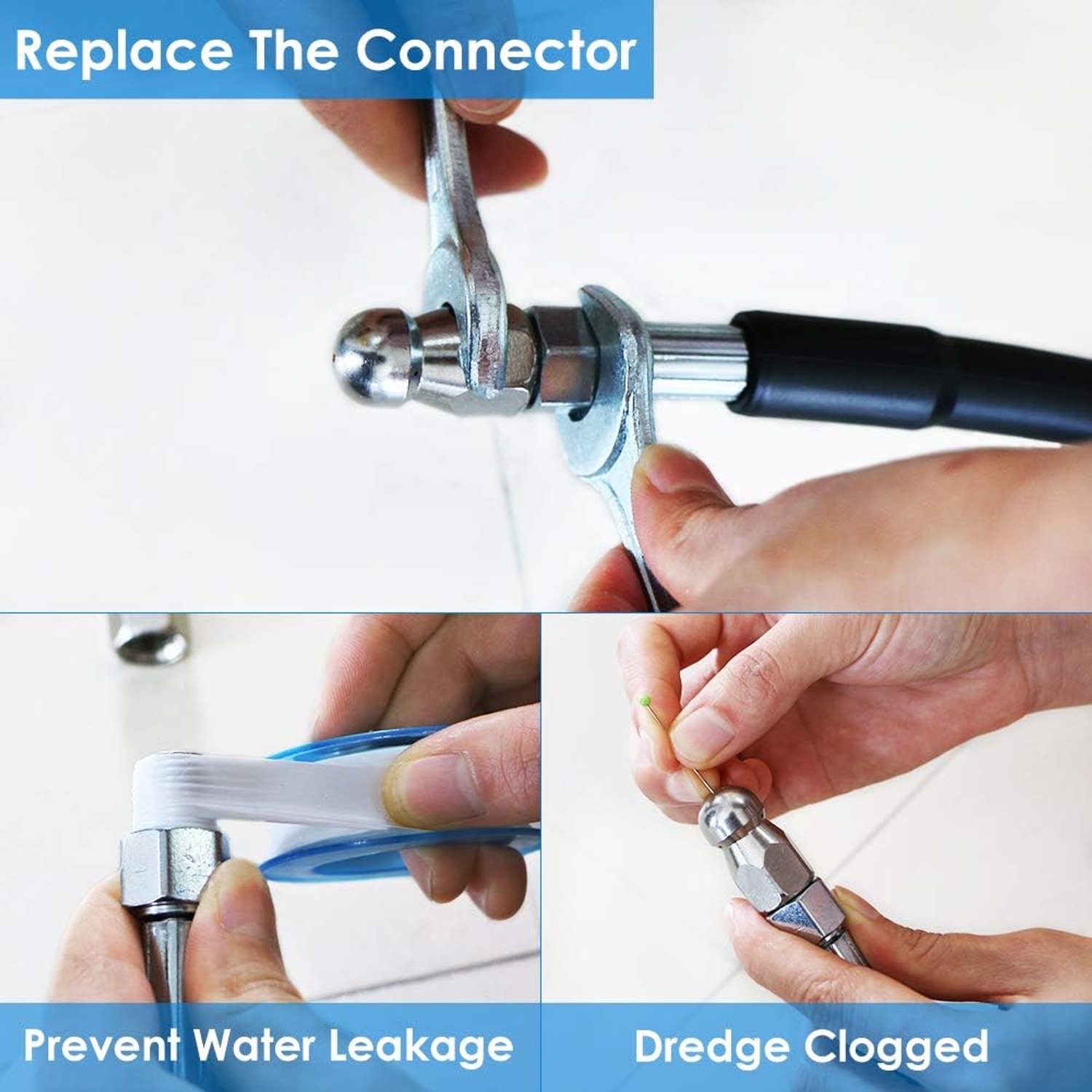
Pull the nozzle off, check the orifices, and clear them with the supplied pins if anything looks partly blocked. Never open up an orifice with a drill bit or a nail. The hole size is part of how the nozzle is designed to perform, and widening it ruins it.
The short version
If you already own a pressure washer, a best sewer jetter kit for home use turns it into a drain cleaning tool for a fraction of what a dedicated machine costs. The 100 feet of reach is the headline, because it lets you work a whole run from one access point.
The hose is polyester reinforced with a TPU cover, 0.25 inches outside diameter, rated to 5800 psi. Four nozzles cover straight flushing, rotating scour and two ways to attack a corner. The M22 to 1/4 inch coupler and quick connect plug get you onto most home machines, and the wrenches, tape and cleaning pins mean you are not improvising halfway through.
Start slow, use the right nozzle for the situation, flush it out when you are done, and it should keep earning its place in the garage for a long time. Beyond drains, the same hose is handy for siding, driveways, gutters and downspouts, which makes it less of a once-a-year tool than you might expect.