
The complete guide
Gutter Mesh Buying Guide, How To Choose And Fit A Leaf Screen That Actually Works
The problem with an open gutter
An open eavestrough is a long, narrow tray sitting directly under a sloped roof. Everything that lands on the roof eventually washes toward it. Leaves, maple keys, twigs, moss, shingle grit, the odd tennis ball. The channel catches all of it and holds it, because that is what a tray does.
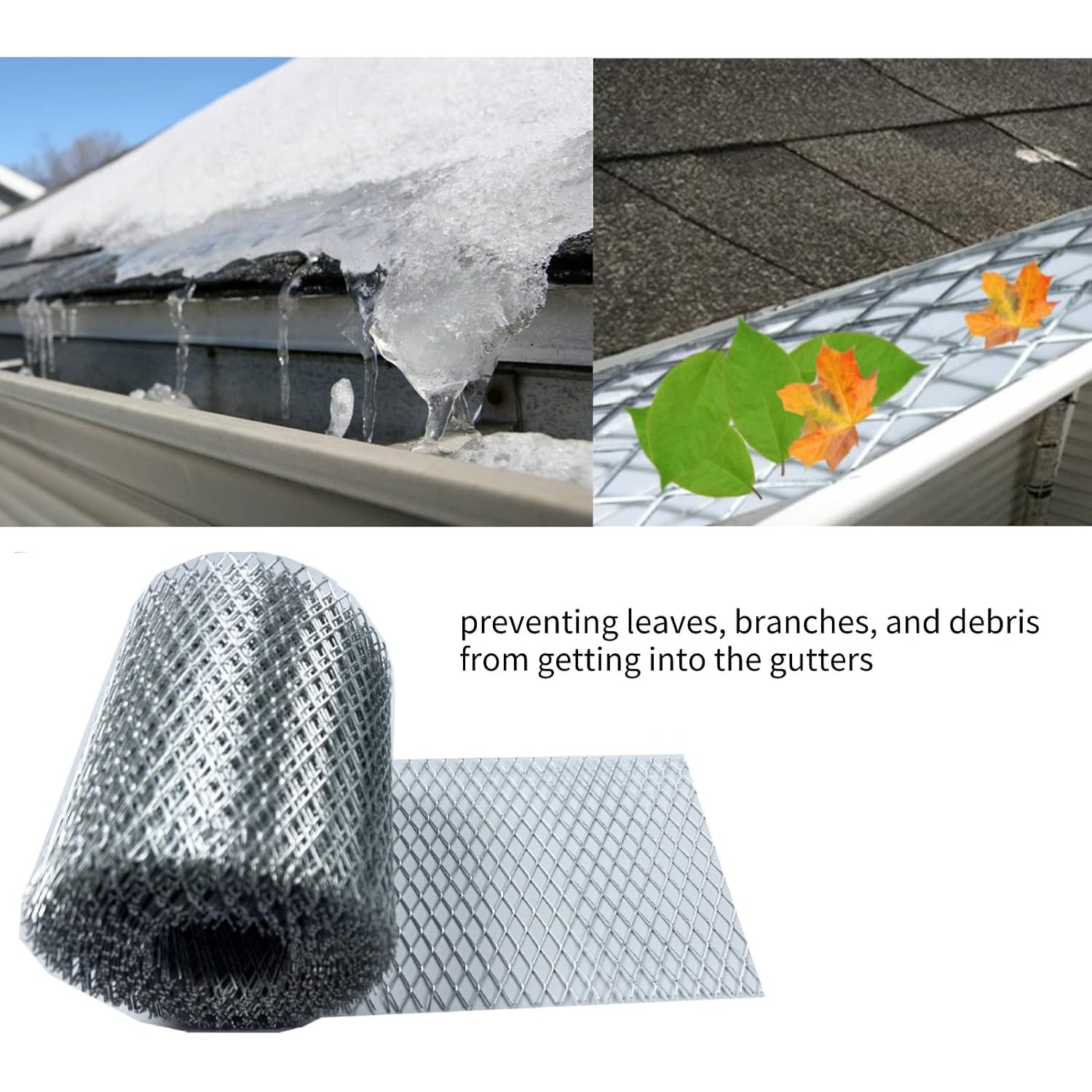
For a few weeks nothing seems wrong. Then the layer gets thick enough that water cannot find the downspout. Rain backs up, spills over the front edge, and lands in a steady line against the foundation or down the side of a window. In cold weather that standing water freezes, expands and pushes on the gutter fixings. Come spring, you find sagging sections and dark streaks down the fascia.
The usual answer is to climb a ladder two or three times a year with a trowel and a bucket. It works. It is also the kind of job people put off until the gutter is already overflowing, which is exactly the worst time to be up a ladder.
A mesh screen changes the shape of the problem. Instead of debris falling into a trough, it lands on a surface. Wind and rain move a lot of it along and off the edge. What stays behind sits on top, visible and easy to brush away, rather than packed into a wet mass below.
How a gutter mesh roll works
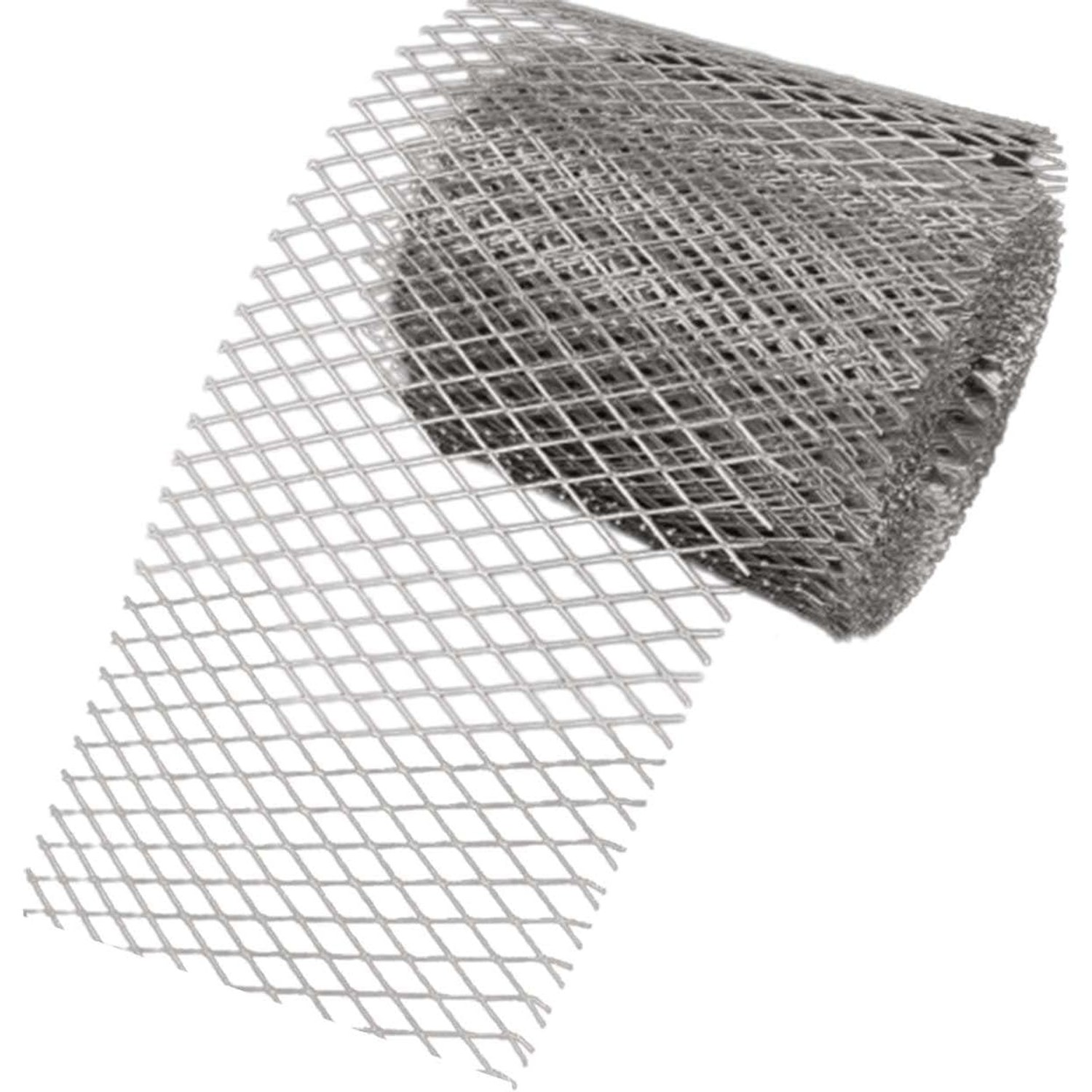
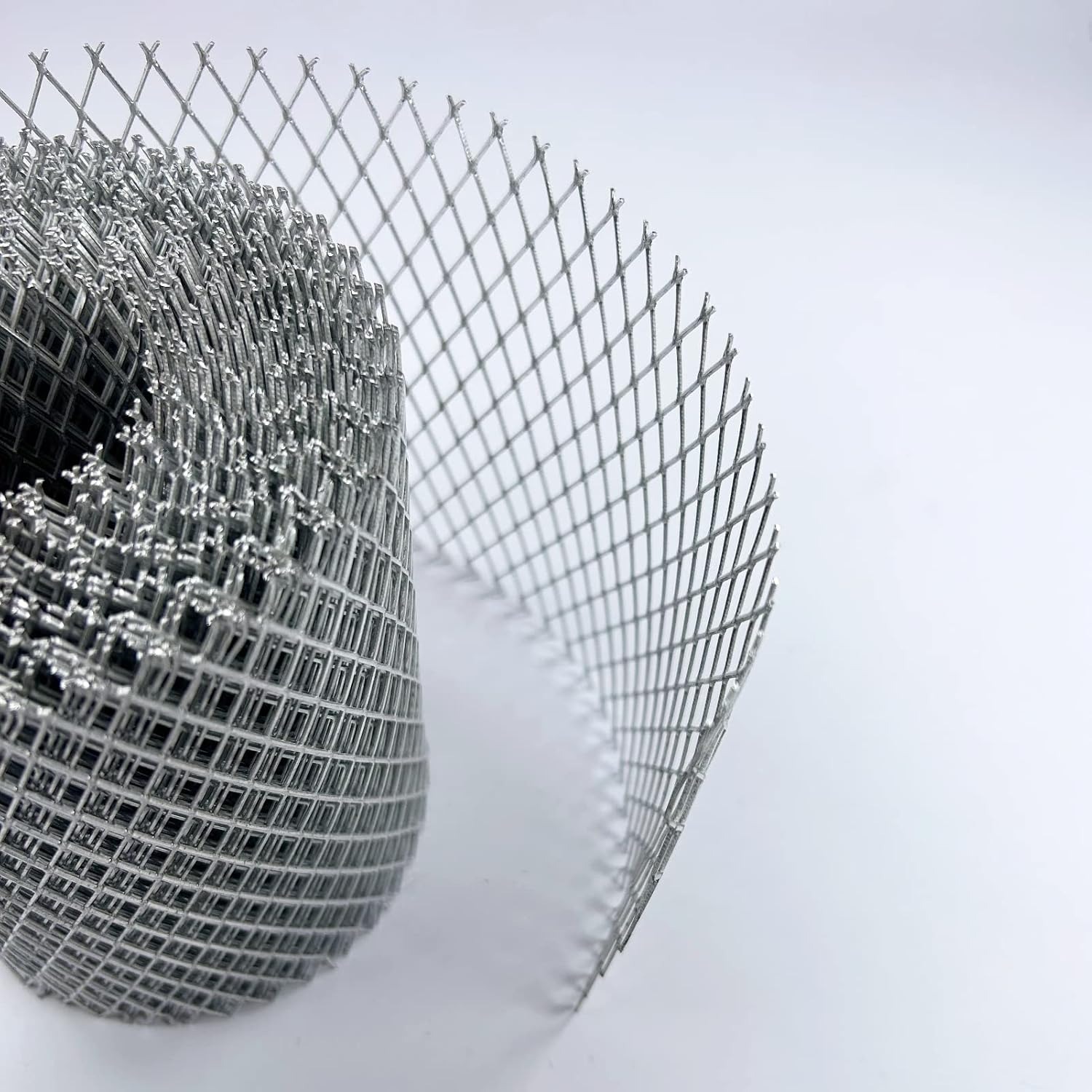
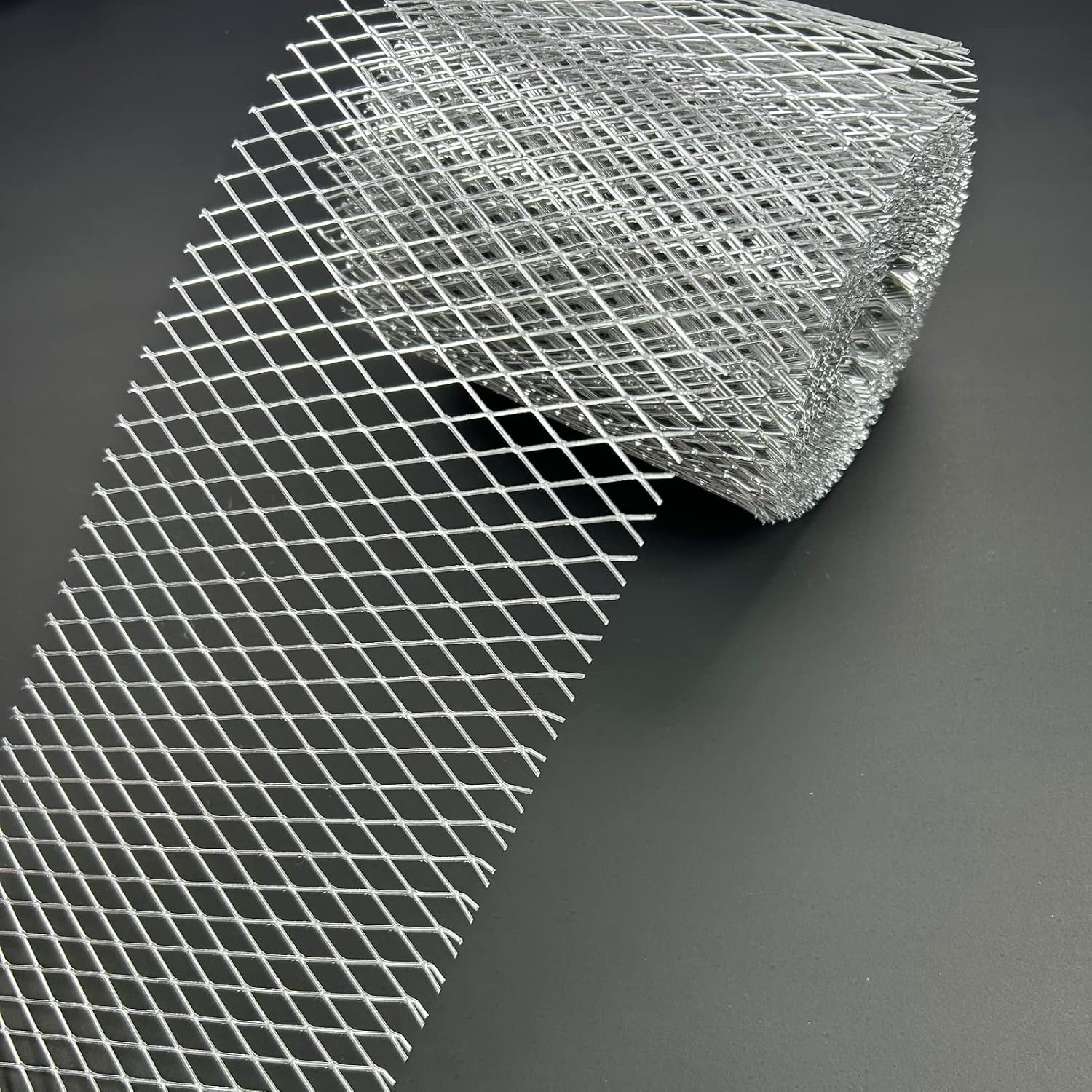
The idea is simple. You lay a strip of fine aluminum mesh across the open top of the gutter so it spans from the roof edge to the outer lip. Rainwater runs off the shingles, hits the mesh, and passes through the openings into the channel. Solid material is too wide to follow it and stays on the surface.
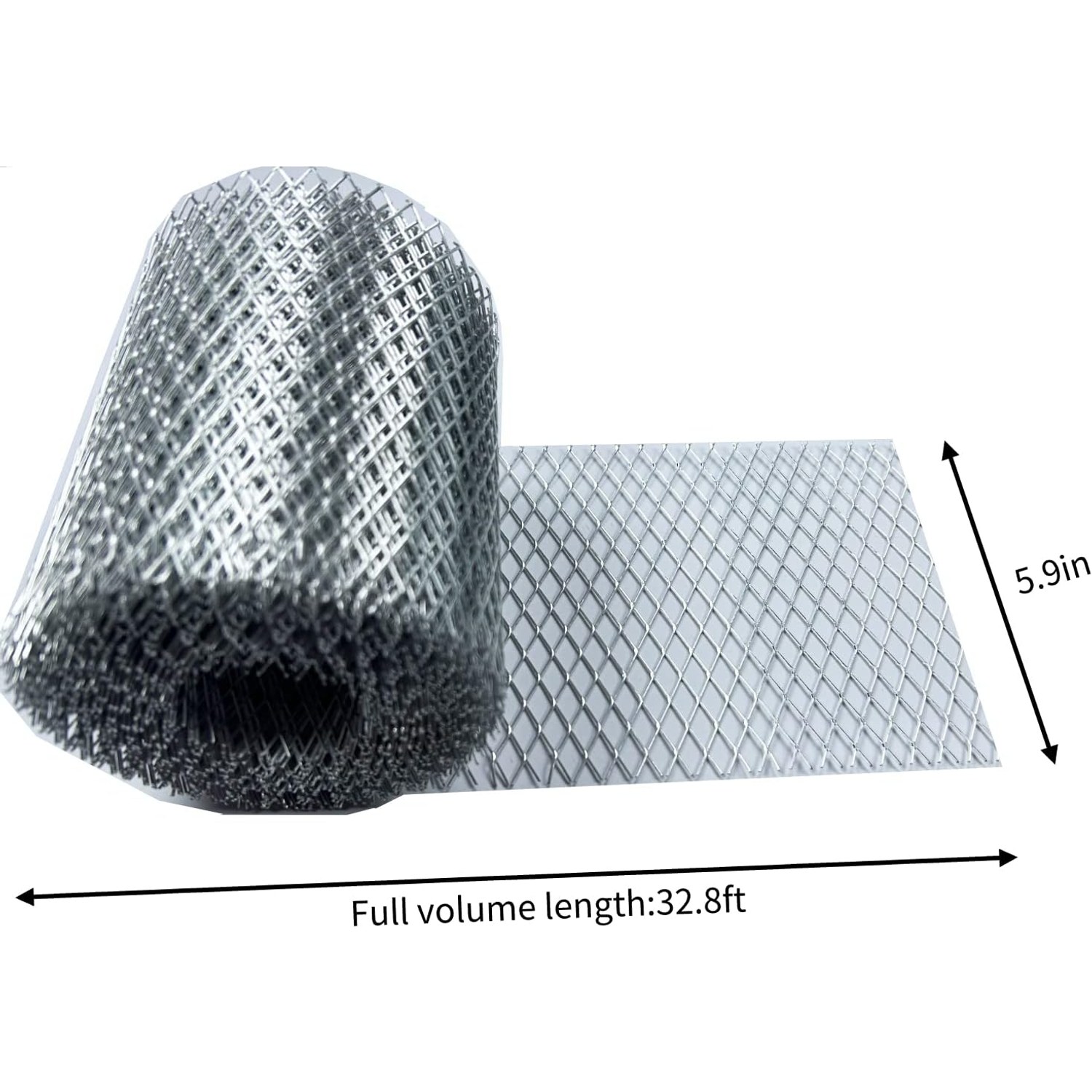
This roll is about 5.9 inches (150 mm) wide, which covers the open top of gutters measuring 5.9 inches across or narrower. It comes in a 33 foot length, roughly 10 metres, weighing 640 g in total. That light weight is deliberate. You can carry the whole roll up a ladder in one hand.
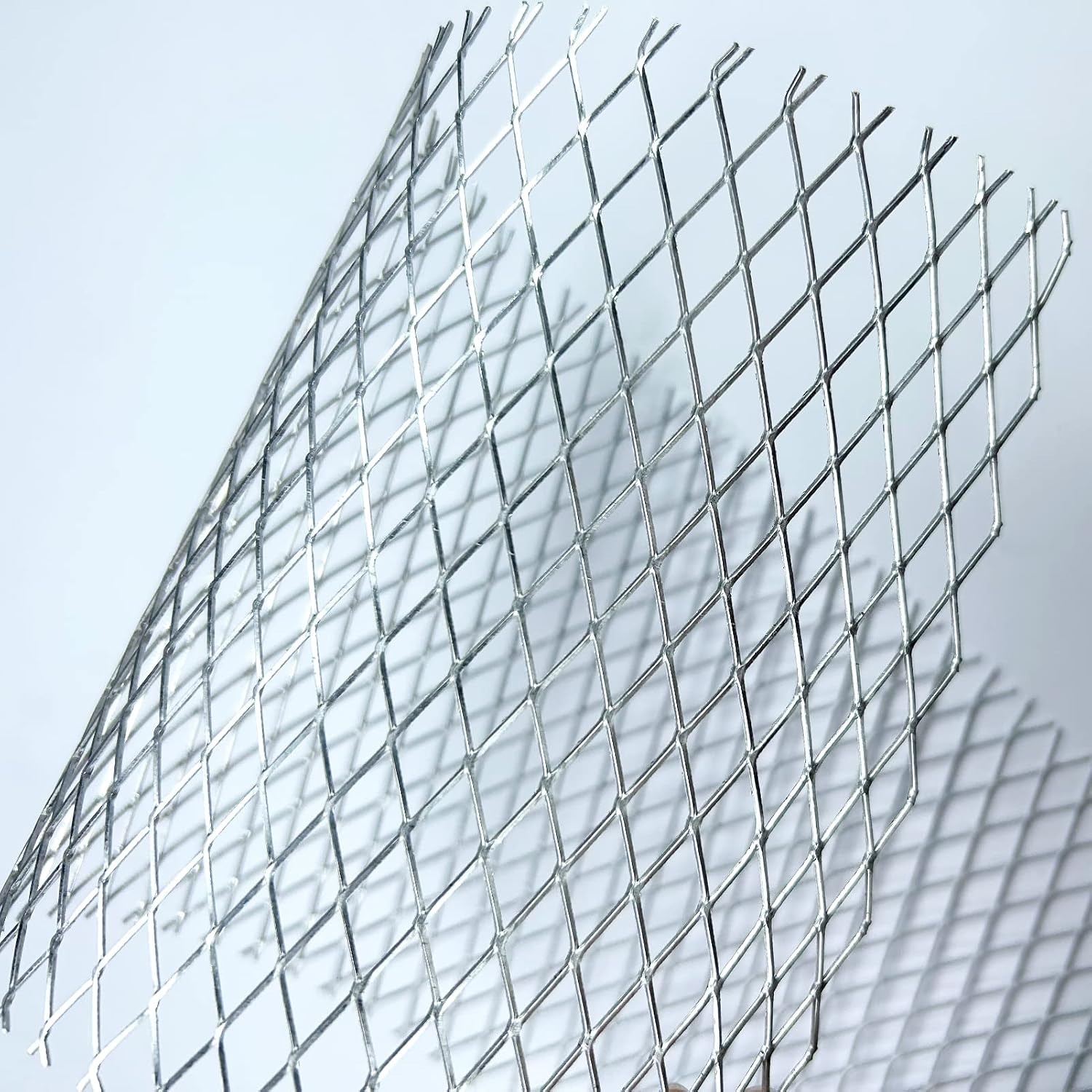
Because the mesh is aluminum formed by machine stretching, it has a consistent pattern and it resists rust the way bare steel screening does once the surface wears. Aluminum does dull over the years, developing a soft grey film, but that is cosmetic and does not change how water moves through.
The other thing a flexible mesh gives you is shape. If you press a slight arch along the centre line, leaves tend to slide toward the edges rather than settling flat in the middle. That small adjustment makes a real difference during a heavy leaf drop in October.
Who this suits
This is a fit for homeowners with standard eavestroughs and trees close enough to the roof that cleaning has become a chore. If you have maples, oaks, poplars or anything else that drops broad leaves, a fine metal mesh will keep almost all of it out of the channel.
It also suits anyone who prefers doing the job themselves. There is no drilling, no adhesive and no specialist kit. Scissors, a ladder, gloves. That is the full list.
It is less of a perfect match in two situations. If your gutters are wider than 5.9 inches, this roll will not span the opening and you need a wider product. And if your main problem is pine needles rather than leaves, expect a mixed result. Needles are thin and straight, so some pass through and some lodge in the mesh. You will still clean less often than with open gutters, but you will not get to zero.
Choosing the right amount
Measure before you buy. Walk the perimeter with a tape and note the length of each run, then add about ten percent for overlaps at joins and for the bits you trim away around brackets and corners. Divide the total by 33 feet and round up.
Most single-storey homes with gutters on two sides need two or three rolls. A larger house with four sides and a garage can need five or more. It is far better to have a spare half roll in the shed than to be short by eight feet on a Sunday afternoon.
Keep your offcuts. A short piece of aluminum gutter screen is useful for odd jobs around the yard, such as laying a square over a downspout opening or covering a yard drain to catch coarse debris before it reaches the pipe.
Fitting it without drama
Pick a dry, mild day. Ladder work on wet or frozen ground is not worth the risk, and cold shingles are brittle. Late summer or early autumn, before the main leaf fall, is the ideal window.
Clean the gutter first. There is no point sealing a channel that already holds a layer of sludge. Scoop it out, flush with a hose, and check that water reaches the downspout before you cover anything.
Work in short sections. Unroll three or four feet, slide the upper edge gently under the lower row of shingles, and let the front edge rest on the outer lip of the gutter. Do not force the shingles up. If they resist, lift just enough to slip the mesh under and no further.
Trim as you go. When you reach a hanger or bracket, cut a small notch so the mesh sits flat rather than bridging over. At corners, cut a mitre and overlap the two pieces by an inch or so. At the downspout outlet, leave the mesh continuous over the opening rather than cutting a hole, so debris cannot drop straight in.
Where two rolls meet, overlap the ends by a couple of inches and make sure the upslope piece sits on top. That way water running down the channel carries any surface debris over the join instead of catching at it.
Some people add a small clip or a short screw at intervals in exposed, windy spots. That is a judgement call based on your site. On most sheltered runs, the shingle edge and the gutter lip hold the mesh perfectly well.
Keeping it working
The maintenance routine changes rather than disappears. Twice a year, usually in late autumn after the leaves are down and again in spring, go up and look at the surface. If leaves have piled up, brush them off with a soft brush or rinse from a garden hose, working from the high end toward the downspout.
Skip stiff wire brushes and heavy scouring. They can bend the openings out of shape, which lets more debris through and looks untidy. Gentle pressure is enough, since anything sitting on the surface is loose by definition.
Check the downspout outlet while you are there. It is the one point where everything converges, so it benefits from a quick look. If a section of mesh has been crushed by a falling branch or an ice load, cut that piece out and drop in a fresh strip from the roll. Overlap the join and you are done in minutes.
One realistic expectation to set. No mesh is a sealed lid. Fine grit, shingle granules and small seed pods will work through over time and settle in the bottom of the channel. That is normal. A flush with a hose every couple of years clears it, and the volume is nothing like the compacted mass you get from an open gutter.
The short version
An aluminum mesh roll is the least complicated way to cut down on gutter cleaning. It lays in, trims with scissors and sits there quietly doing its job.
This one is 5.9 inches wide and 33 feet long, so check your gutter width before ordering and measure every run. Aluminum means it resists rust out, and the 640 g weight means a single person can fit it on a stepladder.
You will still check it twice a year. The difference is that you will be brushing leaves off a surface rather than digging wet sludge out of a trough, and you will not be doing it in the rain because water is already spilling over the edge.