
The complete guide
Downspout Strainers, A Practical Buyer's Guide
The problem starts at a hole the size of your fist
Gutter trouble almost never begins in the long open channel. It begins at the outlet, that small round or rectangular hole in the gutter floor where water drops into the downspout. A single wet leaf flattens over it. A twig lands crossways. Within one rainy week you have a plug of sodden debris, and everything arriving from upstream piles up behind it.
The result is a gutter that holds water instead of moving it. In summer that means a slow drip down the fascia and a stripe of green algae on the siding. In autumn it means the gutter overflows at the front edge every time it rains, dumping a curtain of water right where you least want it, against the wall and down into the soil beside the foundation. In winter it means that trapped water freezes, and a full gutter of ice is heavy enough to pull brackets loose.
Clearing that plug is also the worst part of gutter cleaning. Scooping leaves out of an open channel is unpleasant but easy. Digging a compacted wad out of a 3 inch pipe from the top of a ladder, with a wire or a hose, is a different job entirely. A strainer in the outlet is the cheapest way to avoid ever doing it.
How a downspout strainer works
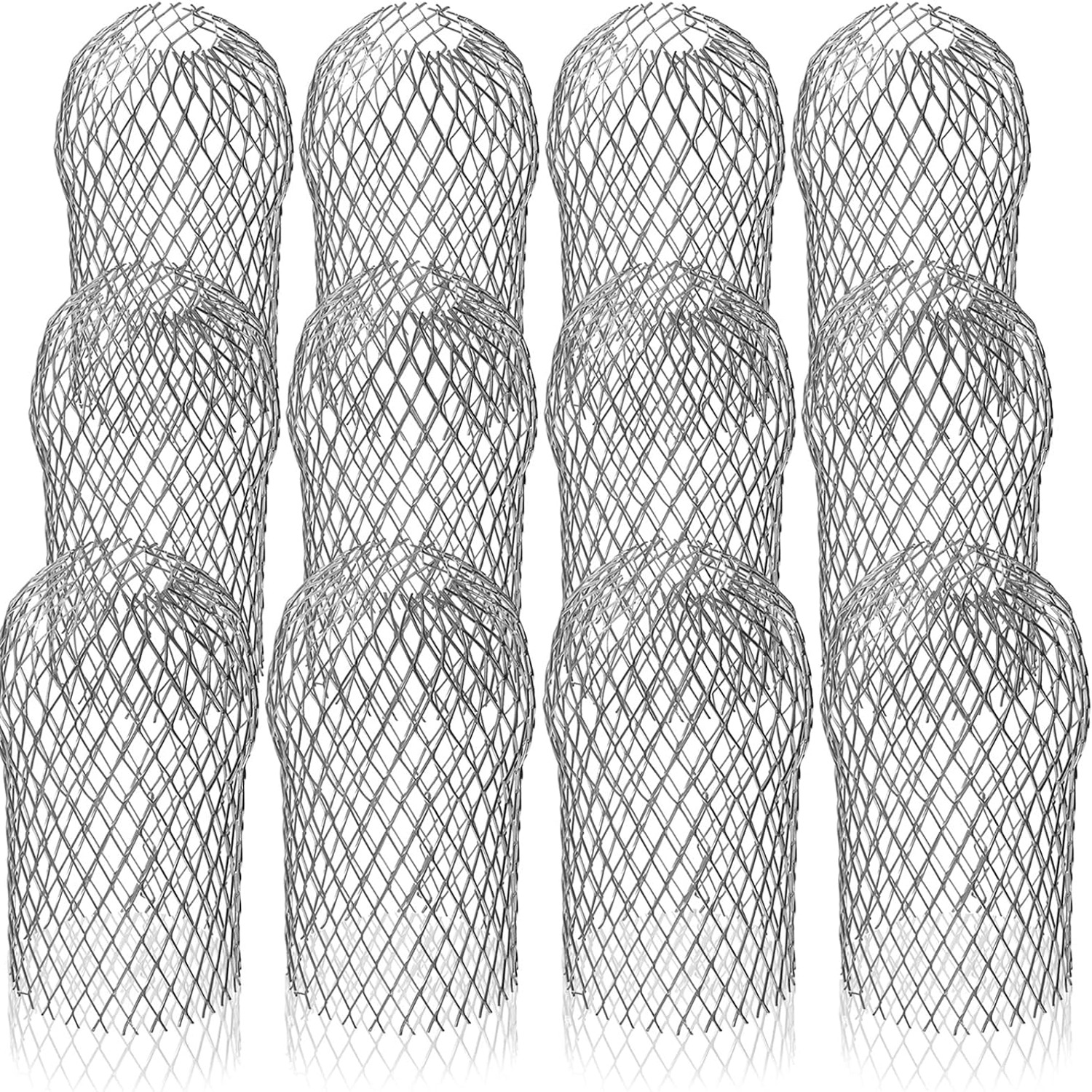
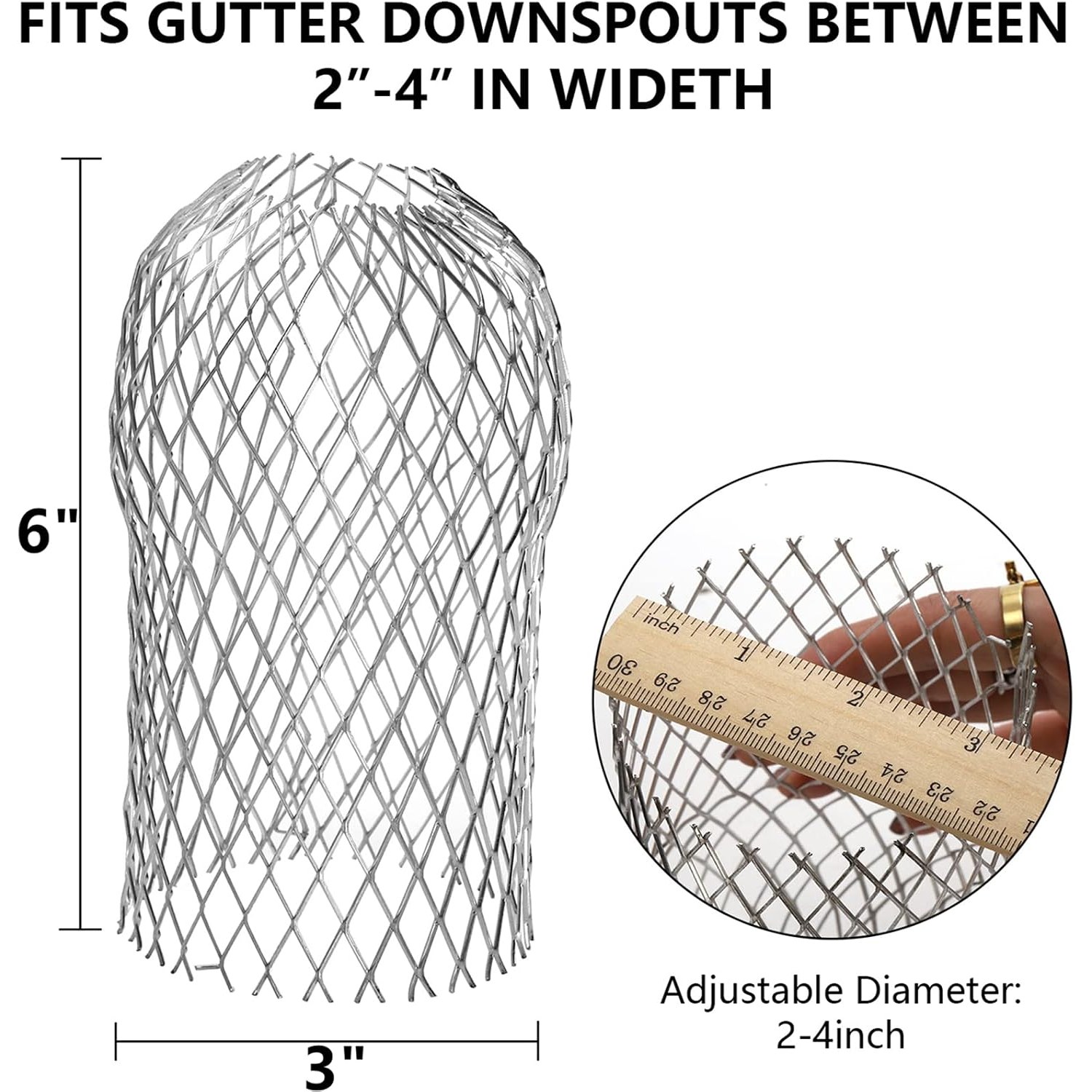
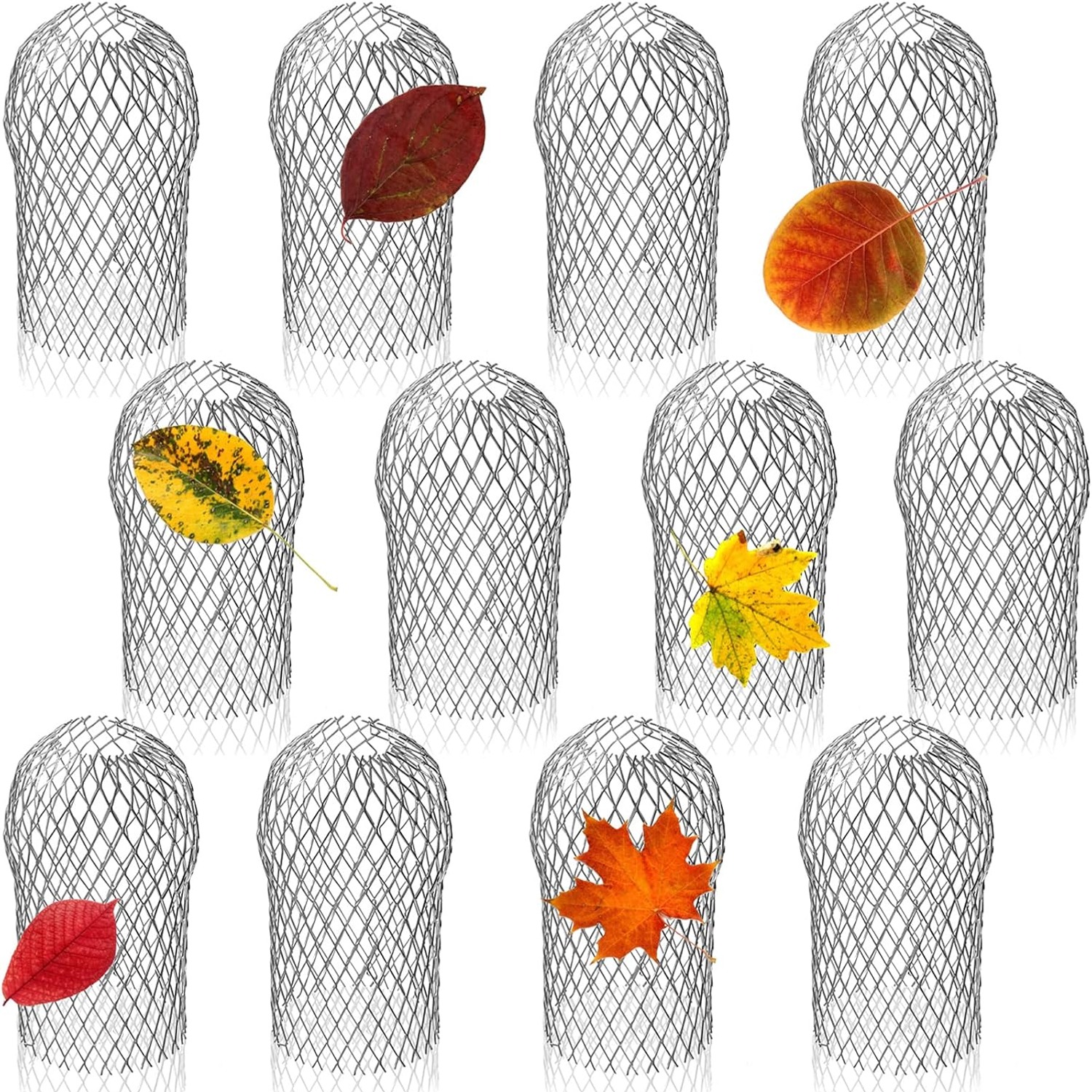
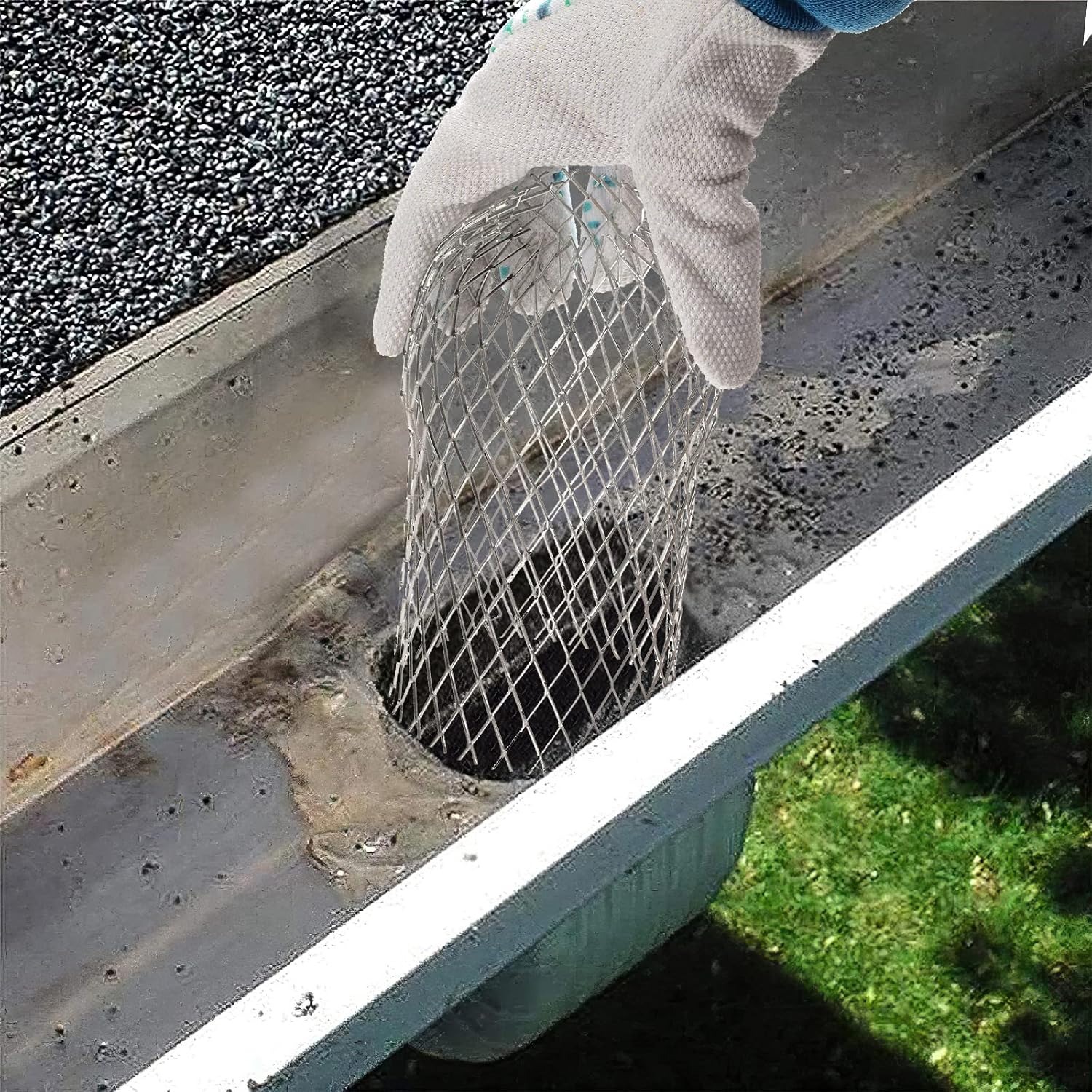
Think of it as a cage standing in a doorway. Instead of a flat screen lying over the hole, you get a cylinder of aluminum mesh roughly 3 inches across and 6 inches tall, sitting upright with its lower portion in the outlet and the rest standing proud in the gutter.
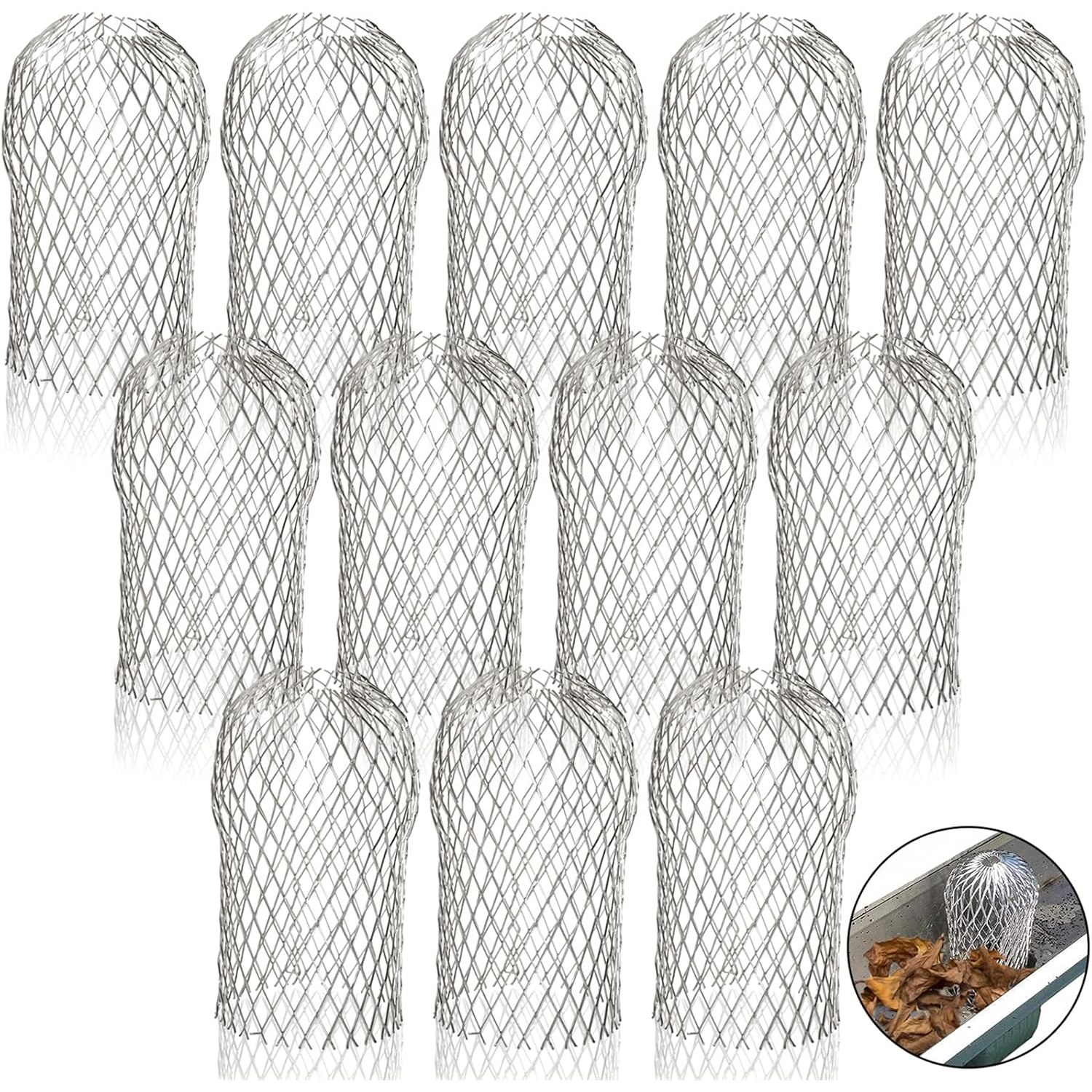
That shape matters more than it looks. A flat cover has only the area of the hole to pass water through, so the moment half of it is covered in leaves, flow drops by half. A cylinder standing up in the gutter has several times that surface area. Debris collects on one face, usually the upstream side where the water is flowing from, and rain keeps passing through the other faces. You lose some capacity but you rarely lose the drain entirely.
The second thing the cage does is hold debris at a height where moving water can work on it. Leaves pressed against the sides of the mesh get nudged along by the next flow of water rather than being sucked down. A lot of the time, debris that would have clogged your downspout simply ends up drifting further along the gutter, where you can scoop it out easily on your next clean.
Why aluminum
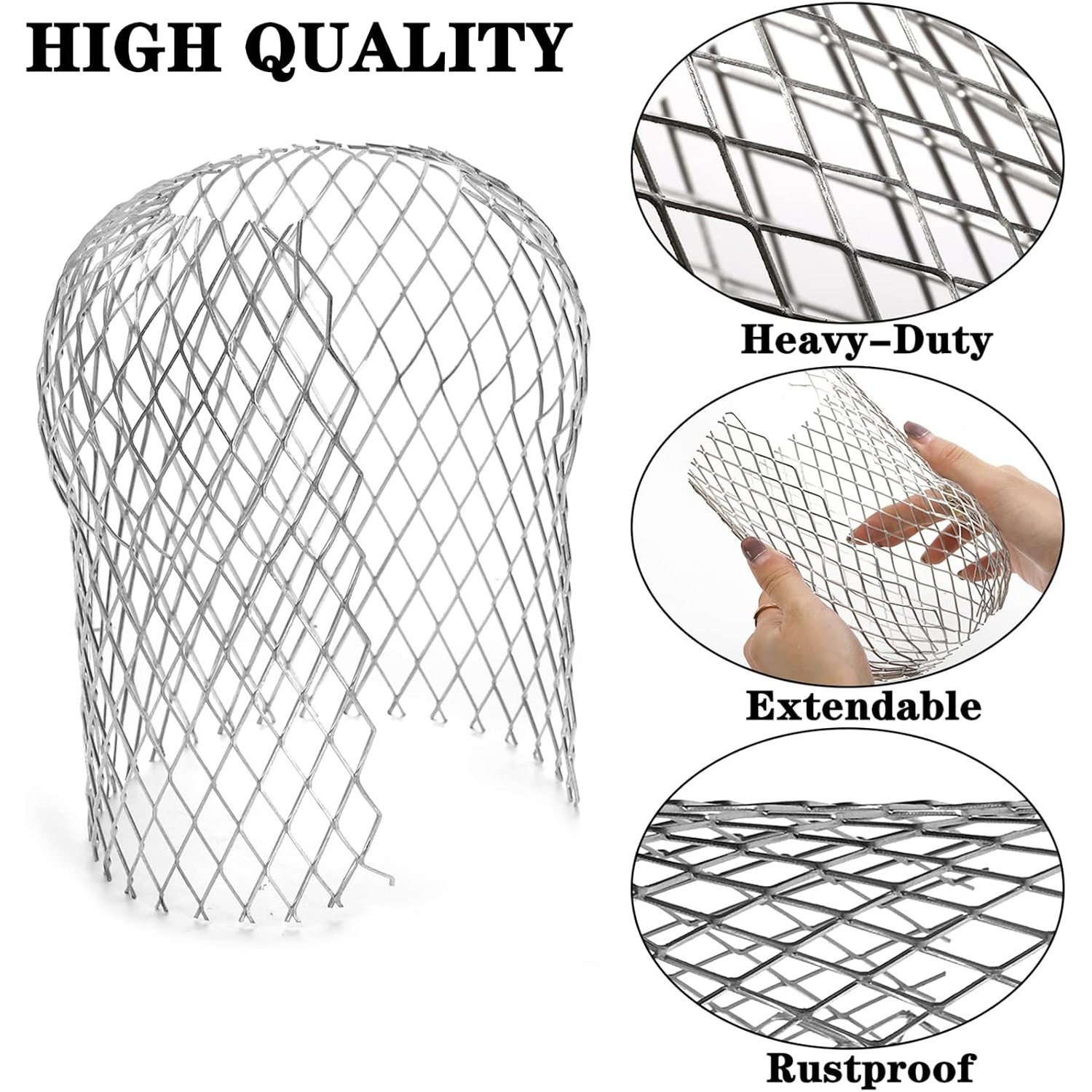
The one material fact given for these guards is aluminum, and it is the right choice for the position. An outlet strainer lives permanently in a mixture of standing water, decaying leaves and roof grit. That combination is hard on steel. Plain steel mesh rusts through, and even coated steel fails once the coating gets scratched by a cleaning tool.
Aluminum does not rust. It can dull, it can pick up a chalky film from mineral runoff, and it can discolour where it touches other metals, but it keeps its structure. For a part you want to fit once and forget about, that is the quality that counts.
The trade off is sharp edges. Cut aluminum mesh leaves burrs that will slice a bare finger easily, especially when the metal is wet and you are gripping hard. Put gloves on before you open the packaging, not after. Once the strainers are seated in the outlets, nobody touches them again until cleaning day, so it is a one time inconvenience.
Getting the size right
These roll to suit openings of roughly 2 to 4 inches, which covers the majority of residential gutter outlets. Before you order, go and measure. The number you want is the width of the hole in the bottom of the gutter, not the width of the downspout itself, though on most installations they are the same.
If your outlet is rectangular, measure both dimensions and use the smaller one as your guide. The mesh will bend into an oval or squared off shape without any trouble. It does not need to seal against the sides. It needs to sit firmly enough that wind and falling debris cannot knock it out.
Outlets larger than about 4 inches are outside the useful range here. Commercial buildings and some older homes with oversized eavestroughs fall into that group, and for those you want a larger diameter strainer rather than trying to stretch one of these.
Fitting them
Clean the gutter first. Fitting a strainer over a channel that already holds a layer of sludge just traps the sludge in place. Scoop out what is there, flush the run with a hose, and check that water actually drops away down each pipe.
Then, for each outlet, roll the mesh cylinder down to a diameter slightly smaller than the hole, push it in, and let it spring back against the pipe wall. You want tension. If it slides in loosely, pull it out and roll it tighter. If it will not go in at all, loosen the roll and twist it as you press down.
The whole job takes under a minute per outlet. There is nothing to screw, glue or seal, which also means there is nothing to undo later when you want to pull one out for cleaning.
Who this suits
Houses under mature trees get the most out of outlet strainers, obviously. So does anyone with an older roof that sheds granules, because that grit is what turns a loose pile of leaves into a solid plug.
Twelve guards is also more than most houses need, and that is deliberate. Four to six outlets is typical for a house, eight or more for a larger or L shaped roof. The extras go on the garage, the shed, the carport, anywhere that gets cleaned once a decade if at all. Keep one or two spares in the garage too, because the usual cause of death for a strainer is a ladder foot or a hand crushing it during cleaning, not the metal failing.
Keeping them working
A strainer is not a set and forget part, and anyone who tells you otherwise is selling something. Plan on lifting each one out twice a year. Knock off the debris, rinse the mesh with the hose, drop it back in. Five minutes per outlet.
Autumn is the critical check. In the two or three weeks when leaves are coming down hardest, the mesh can mat over quickly. A fast look from the ground during rain tells you plenty. If water is running over the front lip of the gutter near an outlet, the cage needs clearing.
Skip the chemical drain products. They do nothing useful for a mesh screen clogged with wet leaves, and the only fix is the mechanical one of lifting it out and shaking it off.
The short version
An aluminum downspout leaf filter is a small part doing one specific job, which is keeping debris out of the one section of your gutter system you cannot easily reach. It will not make gutter cleaning disappear. It will stop the annoying, difficult kind of blockage from forming in the first place.
Measure your outlet, order if it falls between about 2 and 4 inches, wear gloves, and give yourself an afternoon to clean the gutters and drop them in. After that it is twice a year with a hose. For a job that otherwise involves prodding a wire down a pipe from a ladder, that is a trade most people will take.