
The complete guide
How To Choose A Sink Strainer That You Will Actually Empty
The problem is not catching the scraps, it is emptying them
Almost any strainer will catch food. A folded piece of window screen would catch food. The part that nobody enjoys is the next step, when you have a soggy pile of vegetable peel, rice and tea leaves sitting in a shallow metal cup, and you have to get it out.
So most people improvise. They tip it upside down and bang it on the side of the bin. They poke at it with a fork. They push it out with a thumb and then wash their hands twice. Or, most often, they leave it there, which is how a strainer ends up permanently full and the sink starts draining slowly anyway.
That daily friction is the reason a lot of kitchen drain strainers get thrown in a drawer after a month. The design asks too much of you at the exact moment you are tired and want to be finished with the dishes.
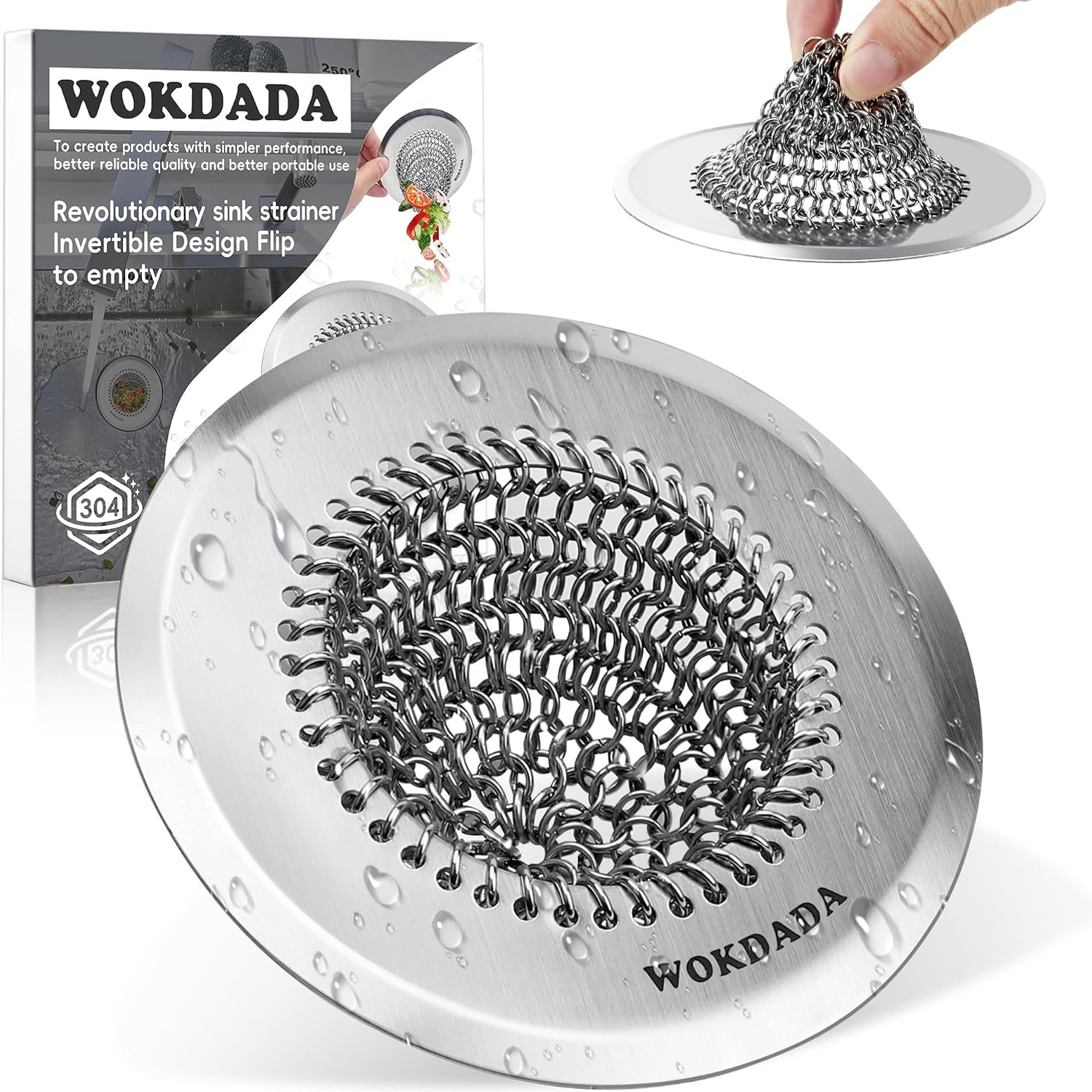
A reversible chain mesh sink strainer solves it in a way that feels obvious once you have used it. The basket is not a fixed cup. It is a flexible pocket of stainless steel chain mesh, so you can turn it inside out. Hold the ring over the garbage, push the pocket through, and the whole contents drop away. Your hands stay clean, the basket is empty, and the job took a second.
How the chain mesh design works
There are two things happening here, and they are related.
The first is the inversion. Chain mesh behaves like fabric. It bends, folds and turns, unlike a punched steel screen that holds one shape forever. Because the mesh is made of interlocking steel, it also has weight, and that weight helps carry the pocket through when you flip it. You are not fighting a stiff material.
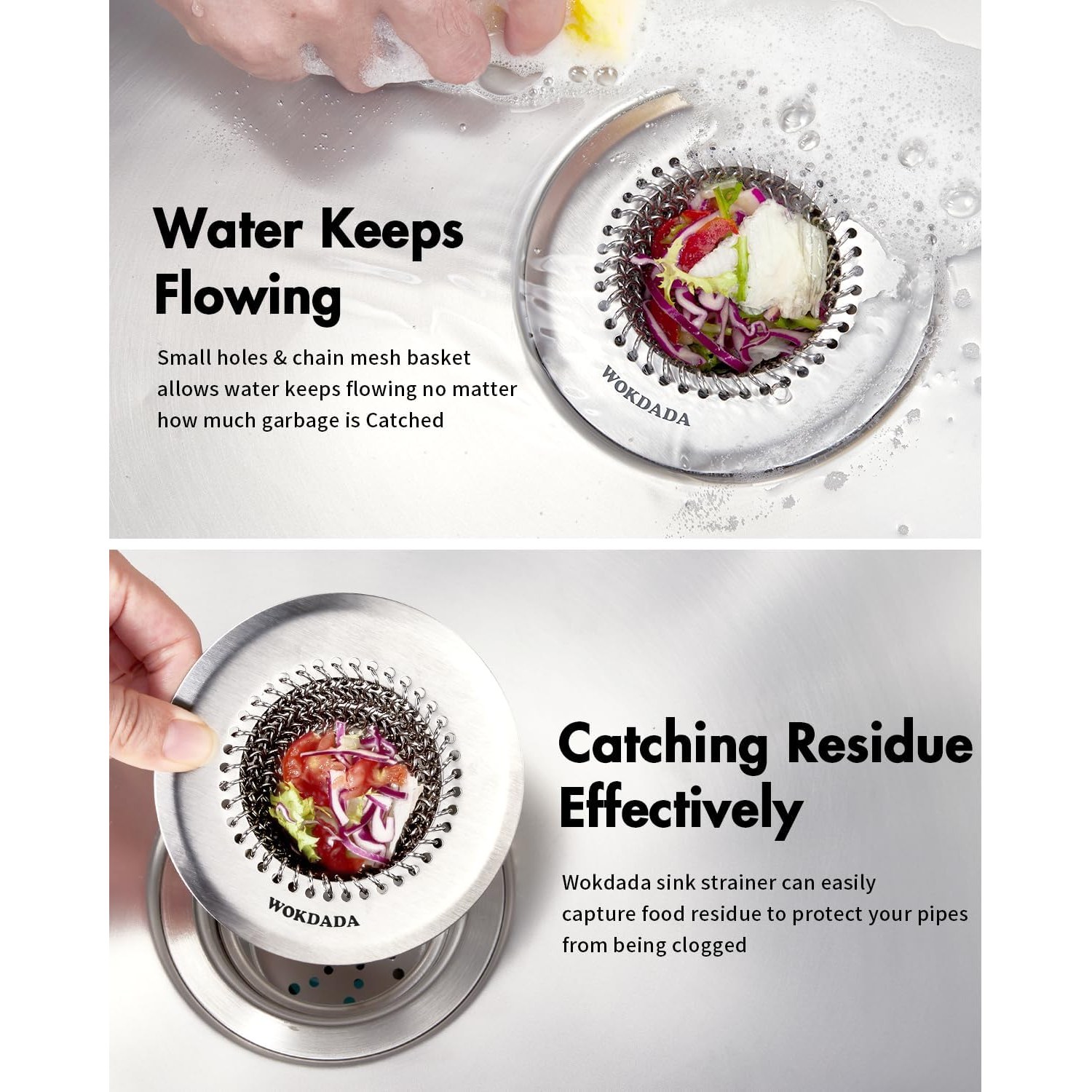
The second is drainage. A standard flat strainer has one escape route for water, which is the holes in its own base. When those holes get covered by a layer of wet scraps, the water stops, and you are left staring at a sink that is slowly filling with grey water. Here the water has a choice. It can pass through the gaps in the chain mesh, and it can also pass through the precision holes drilled around the metal ring that sits in the drain opening. Even when the basket is carrying a full load, the ring holes keep working.
That dual path is why this is described as anti-clogging. It is not a magic claim about your pipes. It is a straightforward point about the strainer itself not becoming the blockage.
The aperture is 3 mm. That number matters more than it sounds. Go much finer and you catch tiny particles but you slow the water to a trickle. Go much coarser and the scraps you care about slide straight through. Three millimetres sits in the useful middle, holding back peel, rice, pasta, seeds and shreds while letting water move.
The size question, which is the only one that really matters
Before anything else, measure your drain opening.
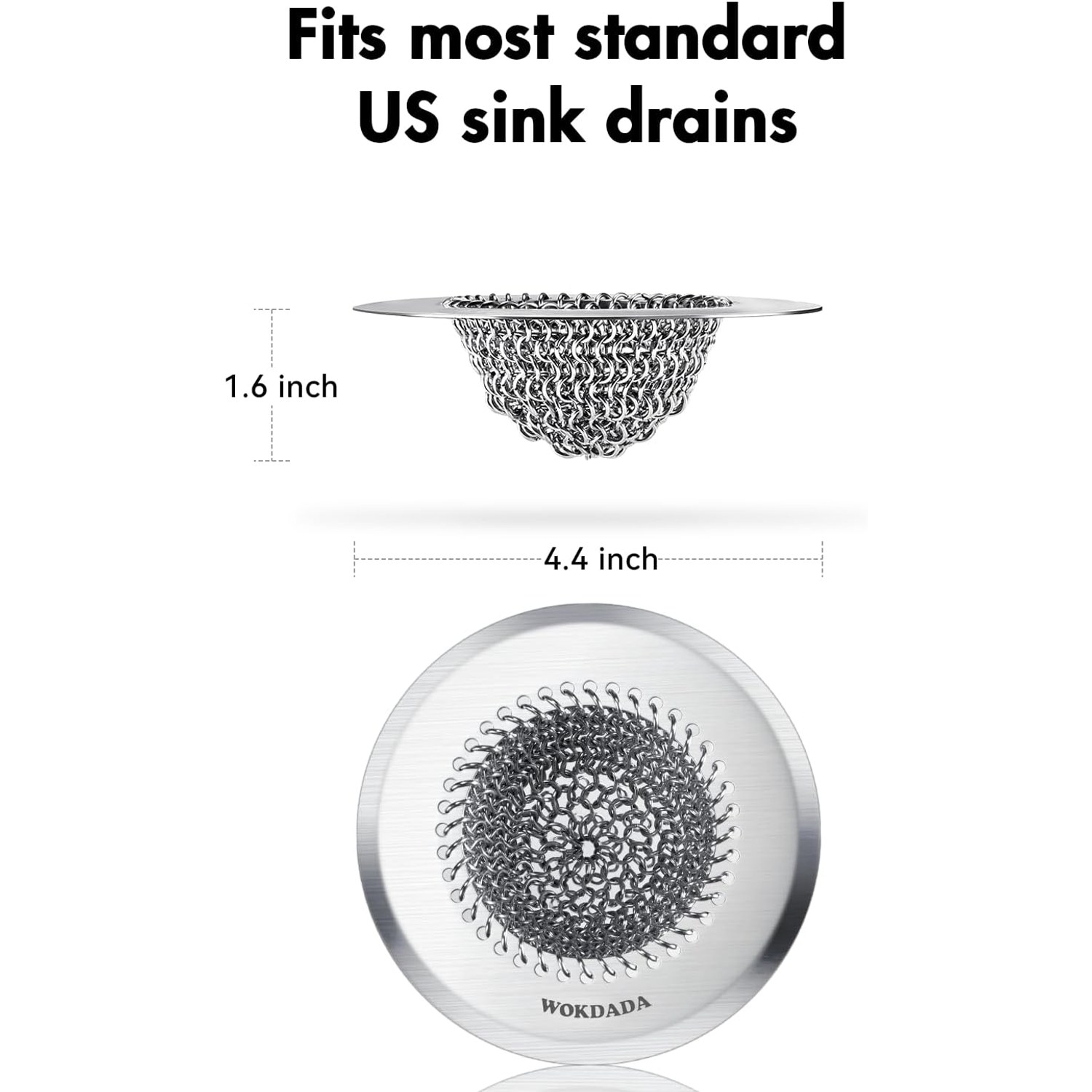
This strainer has a 4.4 inch (112 mm) outer size and is made for drain openings of 4.4 inches. Lay a tape measure or ruler across the opening at its widest point. If you get something close to 4.4 inches, you are in the right territory. If you get a noticeably smaller figure, this is the wrong size and no amount of flexible mesh will change that.
The basket depth is 1.6 inches (41 mm). That depth is the difference between emptying once after a full meal prep and emptying three times during it. If you cook from scratch, chop a lot of vegetables, or deal with the leftovers from a family dinner, the extra volume is the feature you will notice most after the flip action.
People often search for the best 4.4 inch sink strainer specifically because they have already measured and found that the smaller, more common sizes rattle around uselessly in their opening. If that is you, the measurement is the reason you are here.
Who this suits
It suits anyone who cooks regularly and is tired of the scoop-out routine. It suits households where more than one person does the dishes, because a strainer only works if everybody is willing to empty it. Lowering the effort is what makes that happen.
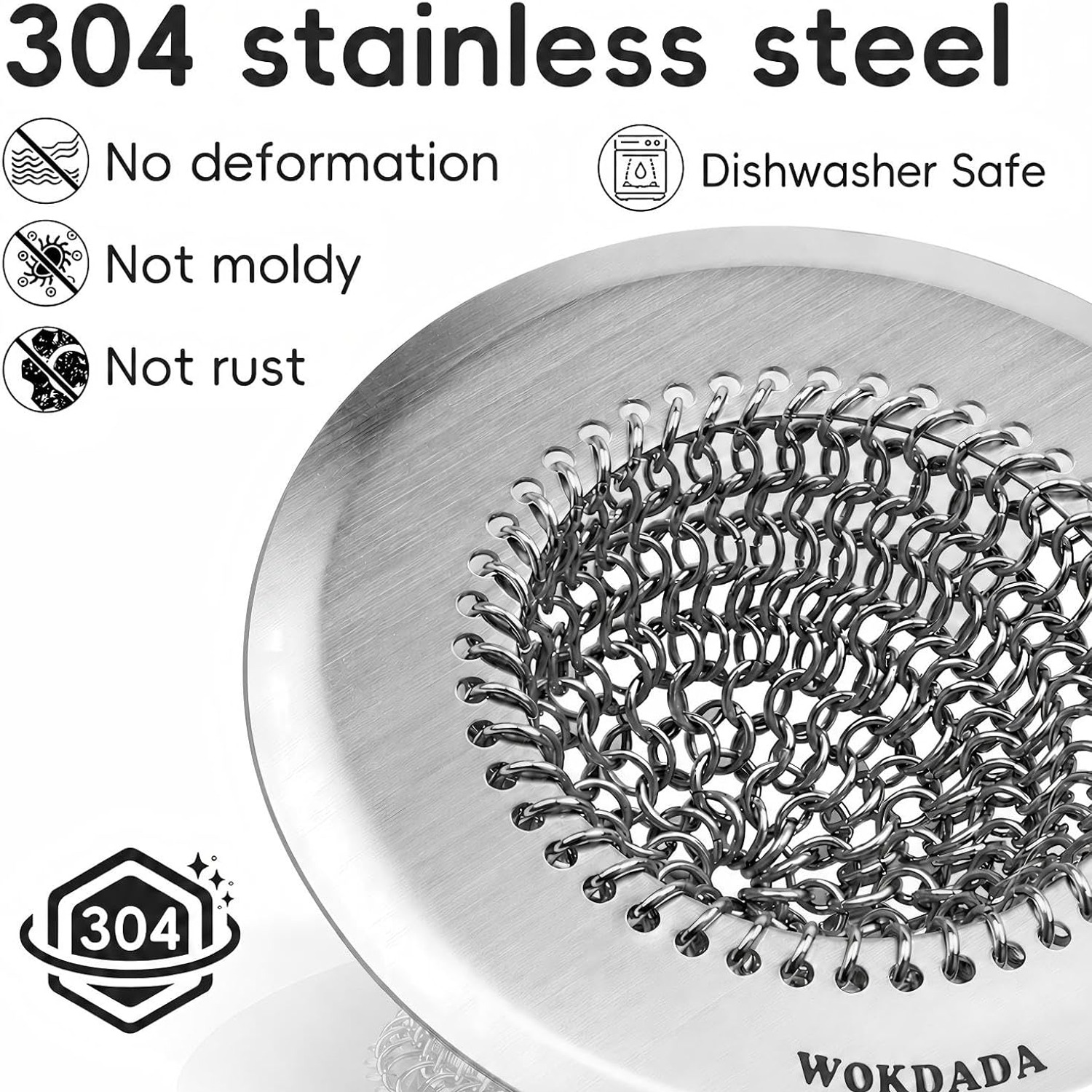
It suits people who have had plastic strainers go yellow, brittle and faintly smelly. Stainless steel does not do that. It rinses clean, it does not hold odour, and it keeps its appearance.
It also works beyond the kitchen sink. A bathroom sink, a tub drain or an RV sink with a matching 4.4 inch opening can all use one, and the flexible mesh is genuinely good at holding hair, which is the main reason bathroom drains slow down. Again, measure first. The size is the limit, not the location.
Who it does not suit is anybody who wants to fill the sink. This is a strainer and water passes through it by design. If you want to hold water, use the stopper that came with the sink.
Choosing between strainer types
If you are comparing options, here is the honest short list of what is out there.
Flat screens are cheap and they sit flush, but they hold almost nothing and they clog the fastest. Rigid steel baskets hold more and look tidy, but you are back to scooping, and food wedges into the corners where the sides meet the base. Silicone baskets are soft and can be squeezed out, but they stain, they catch grease, and many of them sag in the opening.
The chain mesh approach borrows the best bits. Steel durability, basket capacity, and the flexibility to invert. The trade-off is that it looks less like a seamless built-in fitting and more like a piece of kit, which some people do not mind at all and others care about.
One more honest point. No strainer clears an existing blockage. If your drain is already slow with nothing in it, the problem is in the pipe, and that is a job for a licensed plumber rather than a shopping decision.
Keeping it in good shape
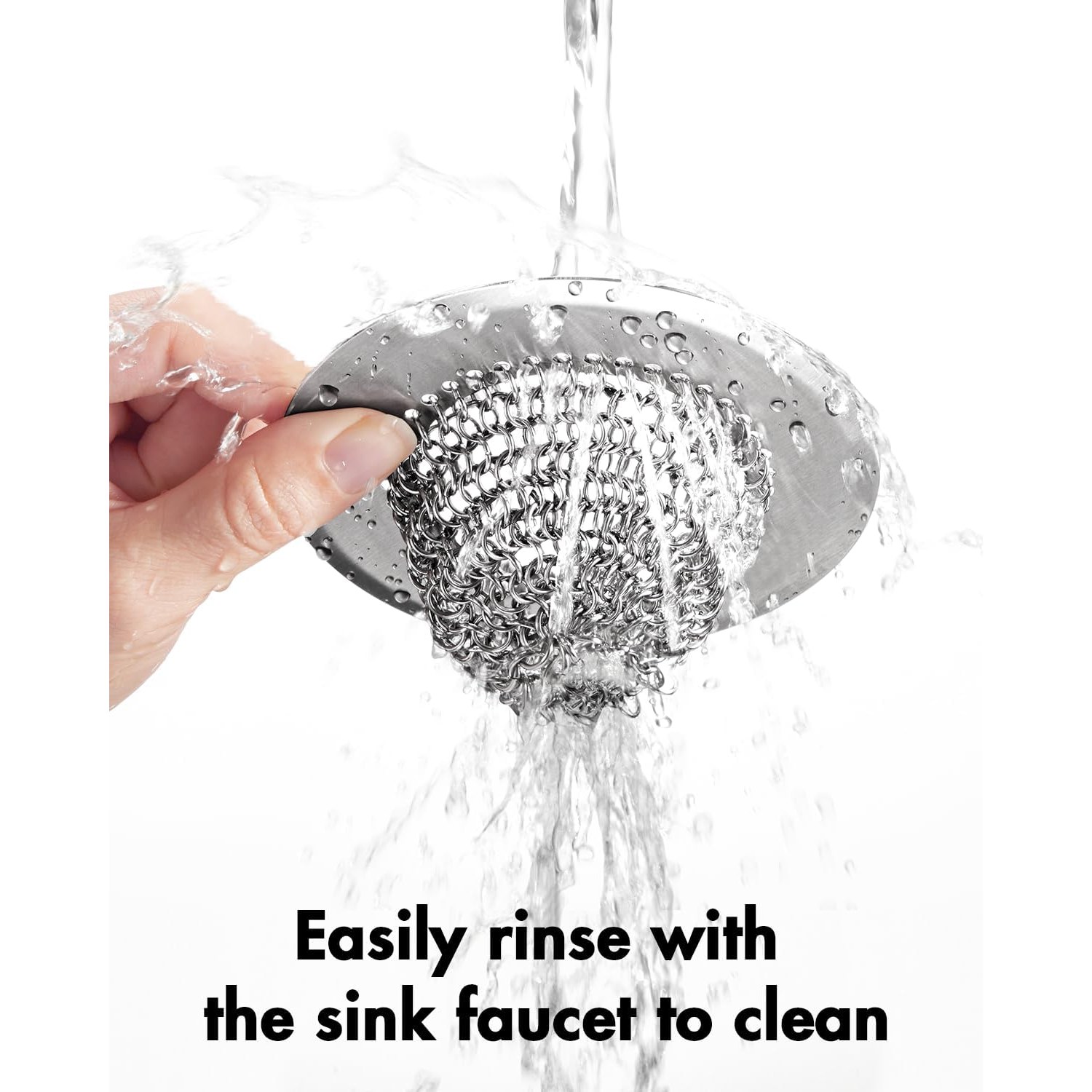
The routine is simple. Flip it out over the garbage, rinse it under the faucet, put it back. That is it on a normal day.
Once a week or so, give it a proper wash with warm soapy water and a soft brush, or just put it in the dishwasher with the rest of the load. Dry it afterwards if you want the finish to stay bright, because water left to evaporate on steel can leave marks over time.
Stay away from bleach, scouring powder and steel wool. They will dull the surface and do nothing useful. Stainless steel responds much better to mild soap and a little patience than it does to aggressive cleaning.
If grease builds up on the mesh, hot water with dish soap breaks it down. Let it sit a minute before you scrub rather than attacking it straight away.
The short version
Strainers fail for one reason. They are annoying to empty, so people stop emptying them. This one fixes that by making the basket flexible enough to turn inside out, which means the scraps drop into the bin without you touching them.
It is stainless steel, 4.4 inches (112 mm) across and 1.6 inches (41 mm) deep, with a 3 mm aperture and holes in the ring so water keeps moving when the basket is full. It rinses clean in seconds and goes in the dishwasher when you want more.
Measure your drain opening first. If it is 4.4 inches, this will drop straight in and you will not have to think about it again until the next time you chop an onion.