
The complete guide
How to Choose and Use a 25 Ft Drum Auger Drain Snake
The slow drain problem
It rarely happens overnight. The kitchen sink takes a few seconds longer to empty. The shower holds a puddle around your feet by the end of a wash. A month later the water sits there and the smell starts. By then the pipe has already been narrowing for a long time.
Inside the line, two things are usually going on. In the kitchen, warm grease and oil go down as liquid and cool into a sticky film on the pipe wall, which then catches coffee grounds, rice and every other small bit of food. In the bathroom, hair wraps around itself and binds with soap scum into a mat that sits right where the pipe bends. Both of these are physical obstructions. They need something to go in and break them apart.
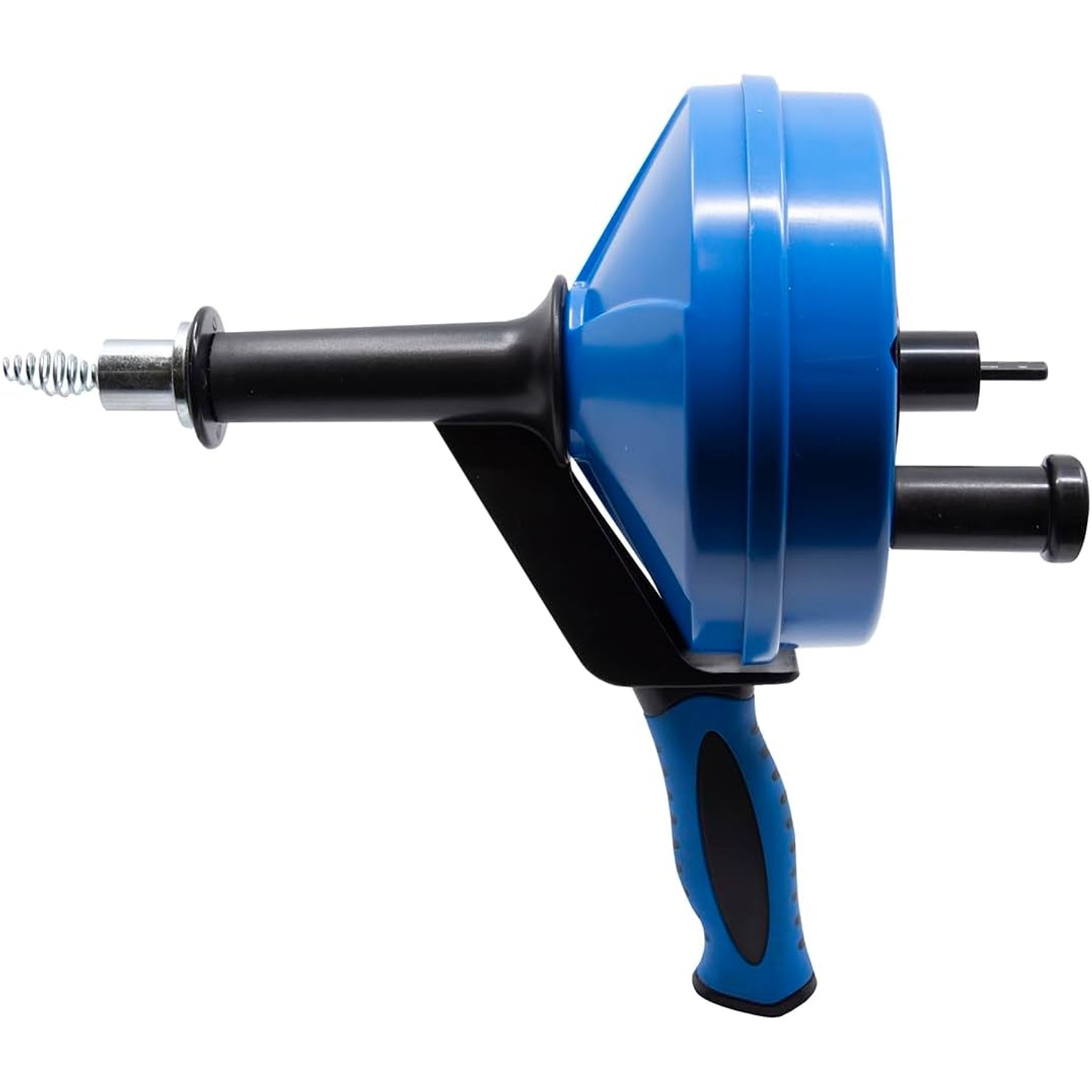
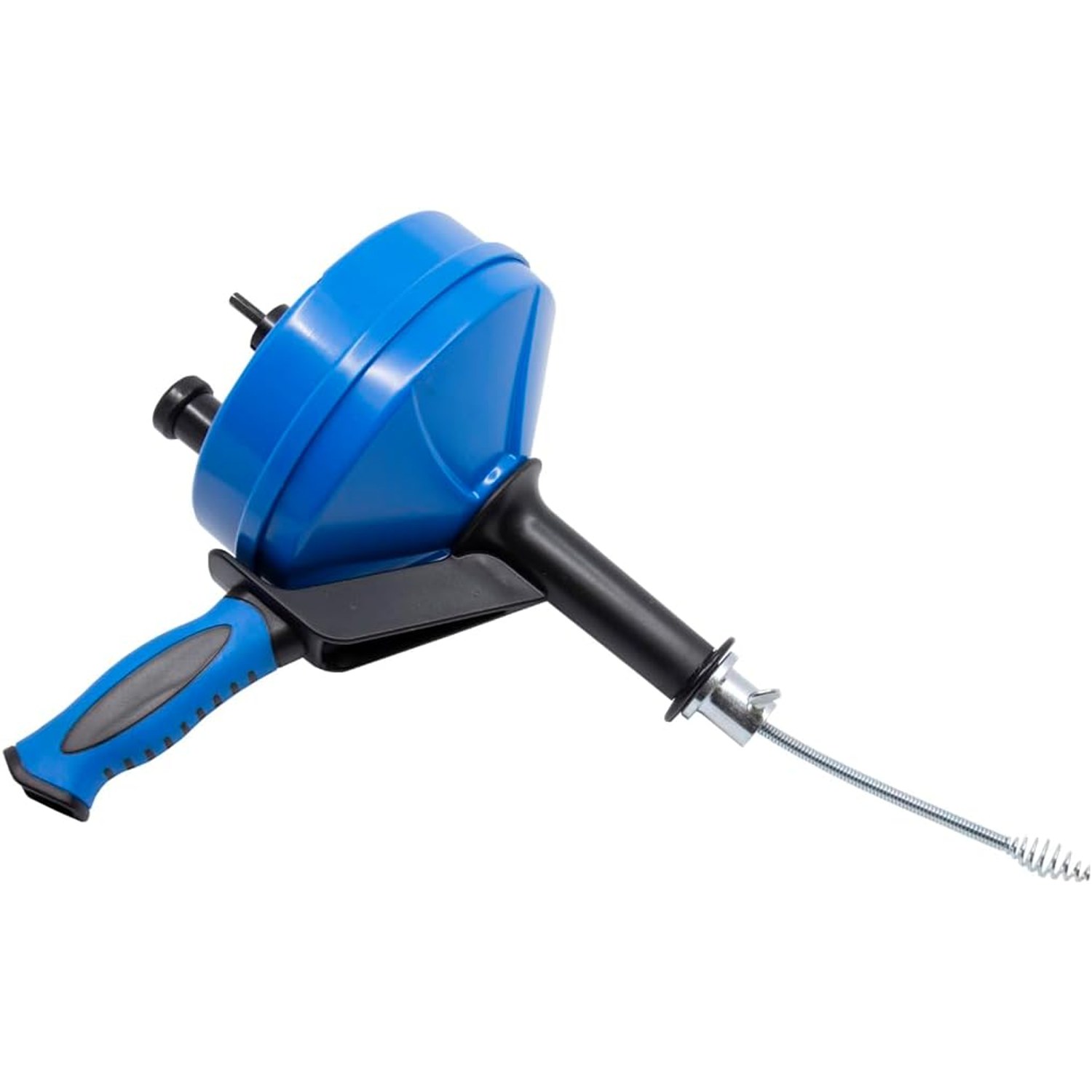
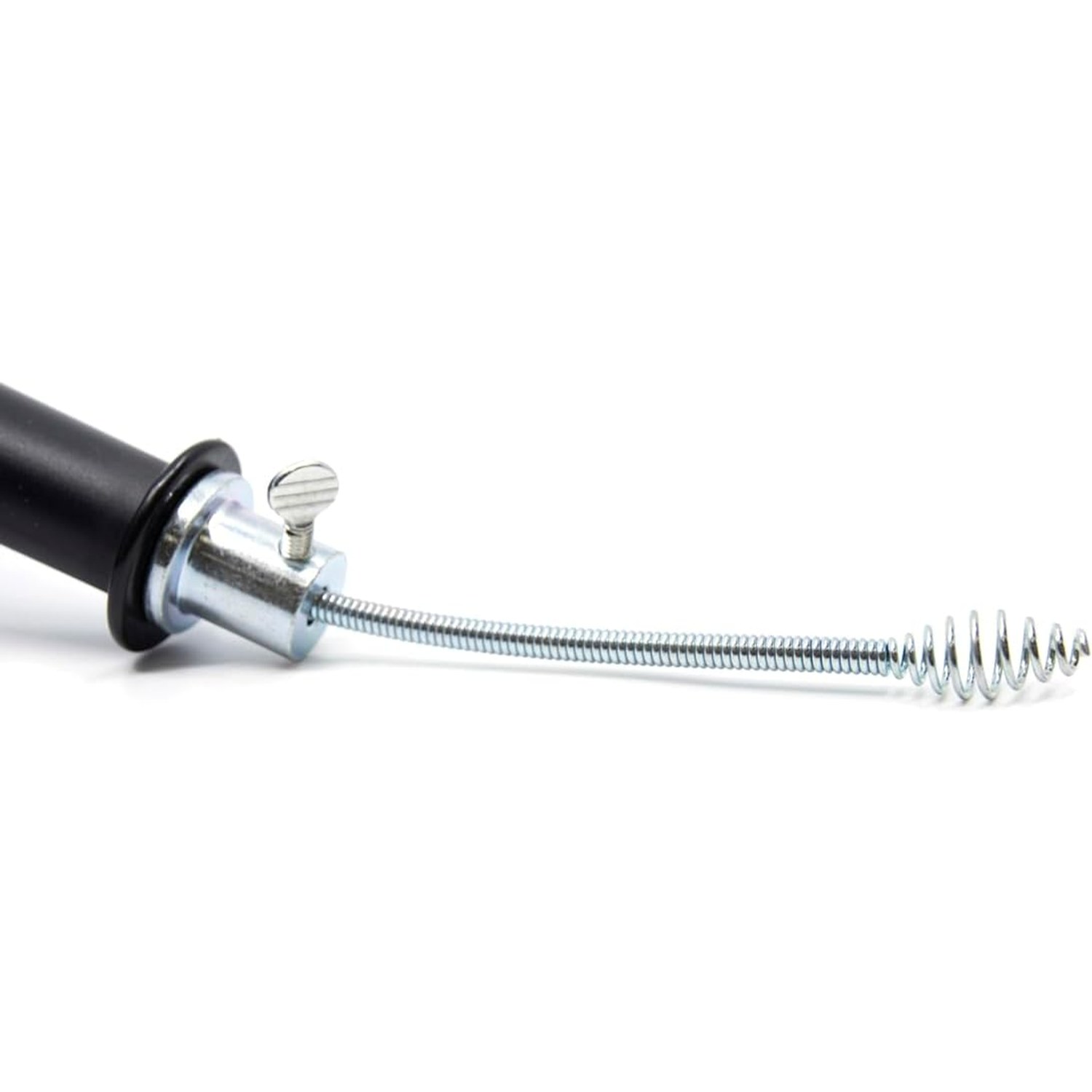
That is what a drum auger does. It is a long steel cable coiled inside a drum. You feed the cable into the drain opening, lock it, and turn the drum so the cable corkscrews forward through the trap and down the branch line. When it meets the clog, the turning action either chews through it or hooks into it so you can pull the whole mess back out. There is nothing clever about it, which is exactly why it works.
How this one is set up
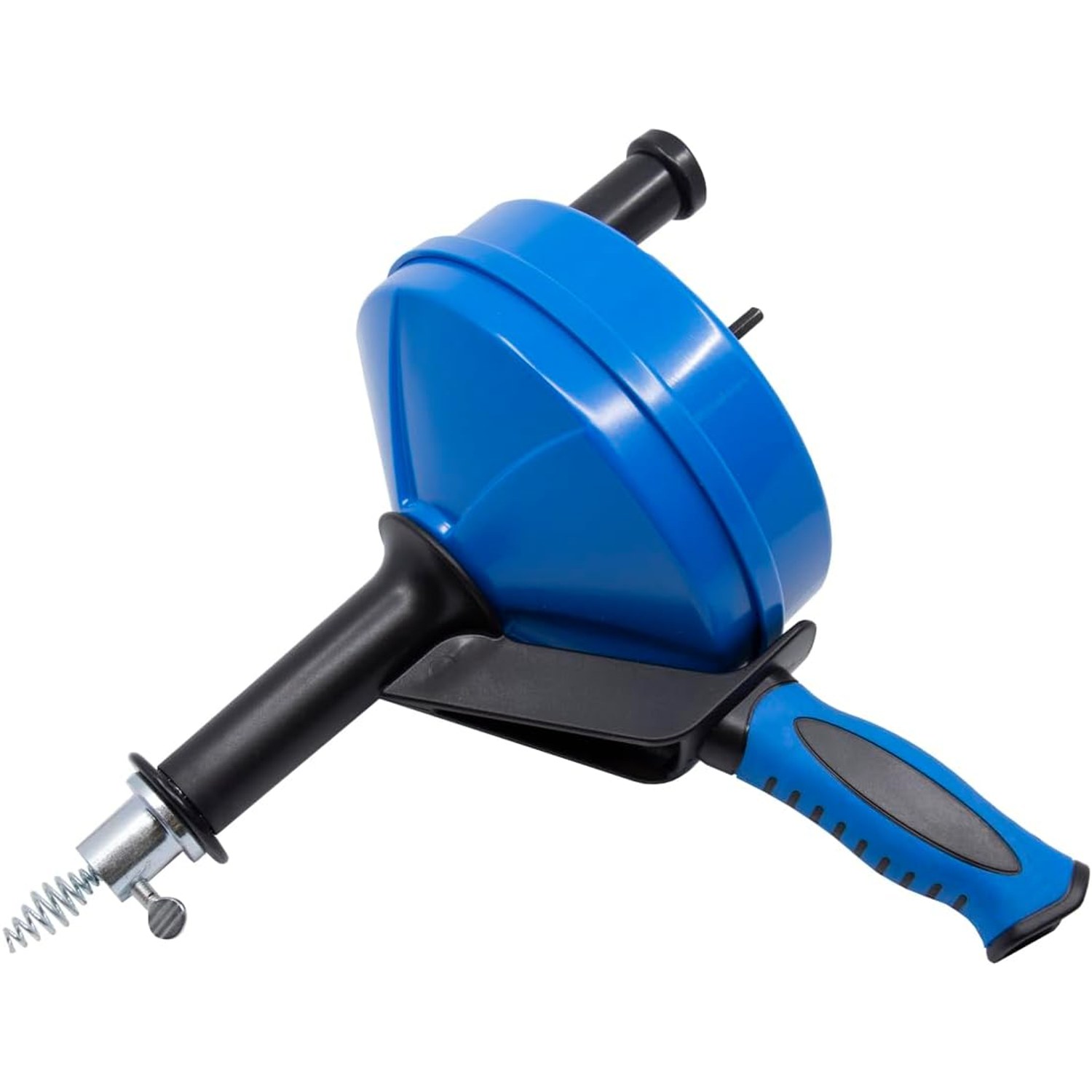
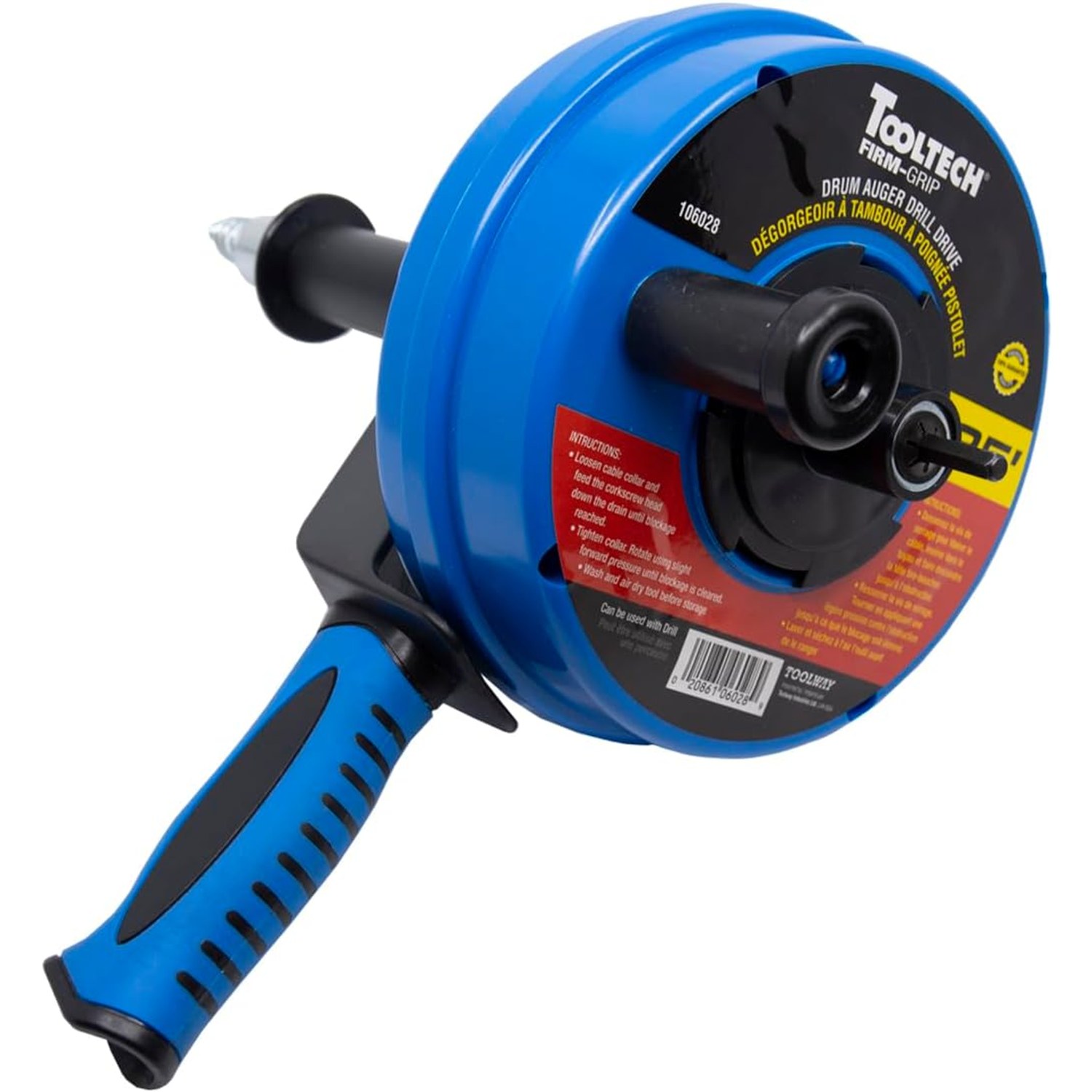
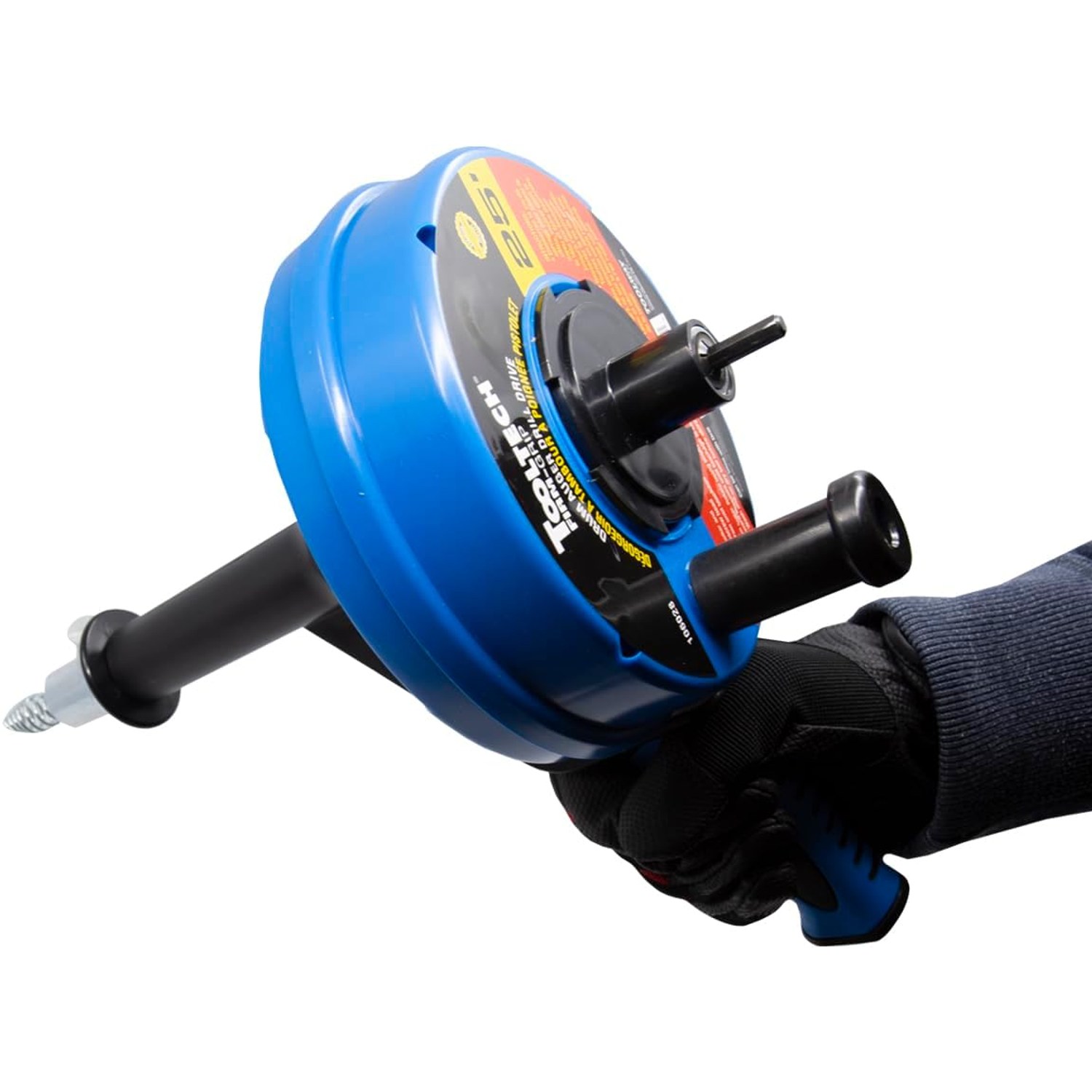
The cable here is 25 feet long and 1/4 inch in diameter, stored inside a steel drum with a grip handle. That handle matters more than it sounds. You hold the drum steady with one hand while the other feeds cable and turns, so a housing that is comfortable to hang on to makes a difference over a ten minute job.
The 1/4 inch size is the standard sort for household branch drains, the pipes that run from a single fixture to the main stack. It is thin enough to bend around a trap without fighting you and strong enough to push through the soft, greasy clogs that cause most household trouble. It is not a sewer cable and should not be treated as one.
There are two ways to drive it. The hand knob on the drum lets you turn slowly and feel everything the cable touches, which is how you want to work through a trap bend. When you hit something that will not move, the drum takes an electric drill. Keep the drill at or below 500 RPM, and keep a session to about 30 minutes. Speed is not the useful part here, the twisting is.
Near the far end of the cable there is a yellow tape marker. When that shows at the drum, the cable is out as far as it goes and you should stop drawing more. It is a small thing that saves people from pulling the cable loose while their attention is down the drain.
Who this suits
This is a homeowner tool first. If you have one or two drains that slow down every winter, or a tub that needs clearing twice a year because of long hair, a drum auger pays for itself the first time you use it instead of booking someone in. Renters with their landlord's blessing find it useful too, since it does not involve touching any fixed plumbing.
It also makes sense as a second tool for someone who already does their own maintenance. Plenty of people own a small hand spinner that handles the first few feet past a bathroom sink drain and nothing more. When a clog sits further along, that short tool just will not get there. Twenty-five feet covers a lot more of the line.
Where it does not suit is toilets. The maker is clear about this and so are we. A bare steel cable can scratch or chip the glaze inside a bowl, and a damaged toilet costs far more than a plumber visit would have. Toilets need a closet auger with a protective sleeve. Keep the two jobs separate.
It is also not the answer for a main line problem. If every fixture in the house is backing up at once, or water comes up in the tub when the washer drains, the blockage is downstream of everything and needs a licensed plumber with a proper machine.
Working out if the reach is right
Most household clogs are closer than people expect. Hair clogs in a tub are usually within the first metre or two. Kitchen grease build-up tends to sit in the horizontal run just past the trap. A 25 foot cable handles both with room to spare.
The quick test is to think about where the fixture sits relative to the nearest wall stack. If the sink or tub is on an outside wall with a short run to the stack, you are dealing with a few feet of pipe. If it sits in the middle of the house, a kitchen island for example, the run can be considerably longer. That is where the extra reach earns its keep.
For a single bathroom sink that clogs with toothpaste, a shorter tool would do. For a household where you want one tool that covers the kitchen, two bathrooms and a basement floor drain, this is a sensible middle size. Among the best drum augers for home use, 25 feet of quarter inch cable is the length most people land on.
Using it without making a mess
A bit of preparation saves a lot of cleanup. Clear everything out from under the sink. Put a bucket and some old towels down. Pull the stopper out of the tub or lift the grate off the floor drain so the cable has a clean path. Put on heavy gloves and eye protection, because the cable comes back dirty and the end can flick when it lets go of a clog.
Feed the cable in by hand until you feel it stop. That first stop is usually the trap bend, not the clog. Loosen the lock, push a bit more cable through, tighten, and turn gently while you push. The cable will work its way around the bend. Rushing this part is how cables kink.
Once you are past the trap, keep feeding and turning. When you meet real resistance, that is the clog. Work the cable into it with steady turns rather than shoving. If it hooks, pull back slowly and expect to bring something unpleasant up with it. If it chews through, you will feel the resistance fade and the cable will move freely again.
Run hot water from the faucet for a few minutes to flush the line. If the water drains properly, you are done. If it still backs up, feed the cable further and try again.
Looking after the cable
The one thing that kills a drain cable is being put away wet. Pull it fully out, wipe it down with a rag as you wind it back in, and let it dry before storing. A wipe of machine oil along the cable before it goes back in the drum helps with rust between jobs.
Store the drum somewhere dry and off the floor. Before each use, run your gloved hand along the cable and look for kinks, flattened sections or broken strands. A cable that has started to unwind should be retired, because a strand that lets go inside a pipe is a much bigger problem than the clog was.
The short version
A 25 ft drum auger drain snake gives you 1/4 inch of steel cable inside a steel drum, turned either by the hand knob or by a drill kept under 500 RPM. It suits kitchen sinks, bathroom sinks, utility sinks, tubs, showers and floor drains. It is not for toilets, and it is not for main sewer lines.
Work slowly, feel your way through the trap, flush with hot water afterwards, and dry the cable before it goes away. Do that and you have a tool that handles the routine blockages in a house for years, sitting in the closet ready for the next time the sink starts to slow down.