
The complete guide
Choosing a Two Way Toilet Plunger with Holder, A Practical Buyer's Guide
The problem nobody plans for
A blocked toilet never gives you notice. It happens at the worst moment, usually with other people in the house, and the clock starts the second the water rises instead of falling. That is when you find out what you actually own. A lot of homes have a plunger of some sort, but it is often the wrong shape, the handle is too short, and it has been living in a damp corner with nothing underneath it.
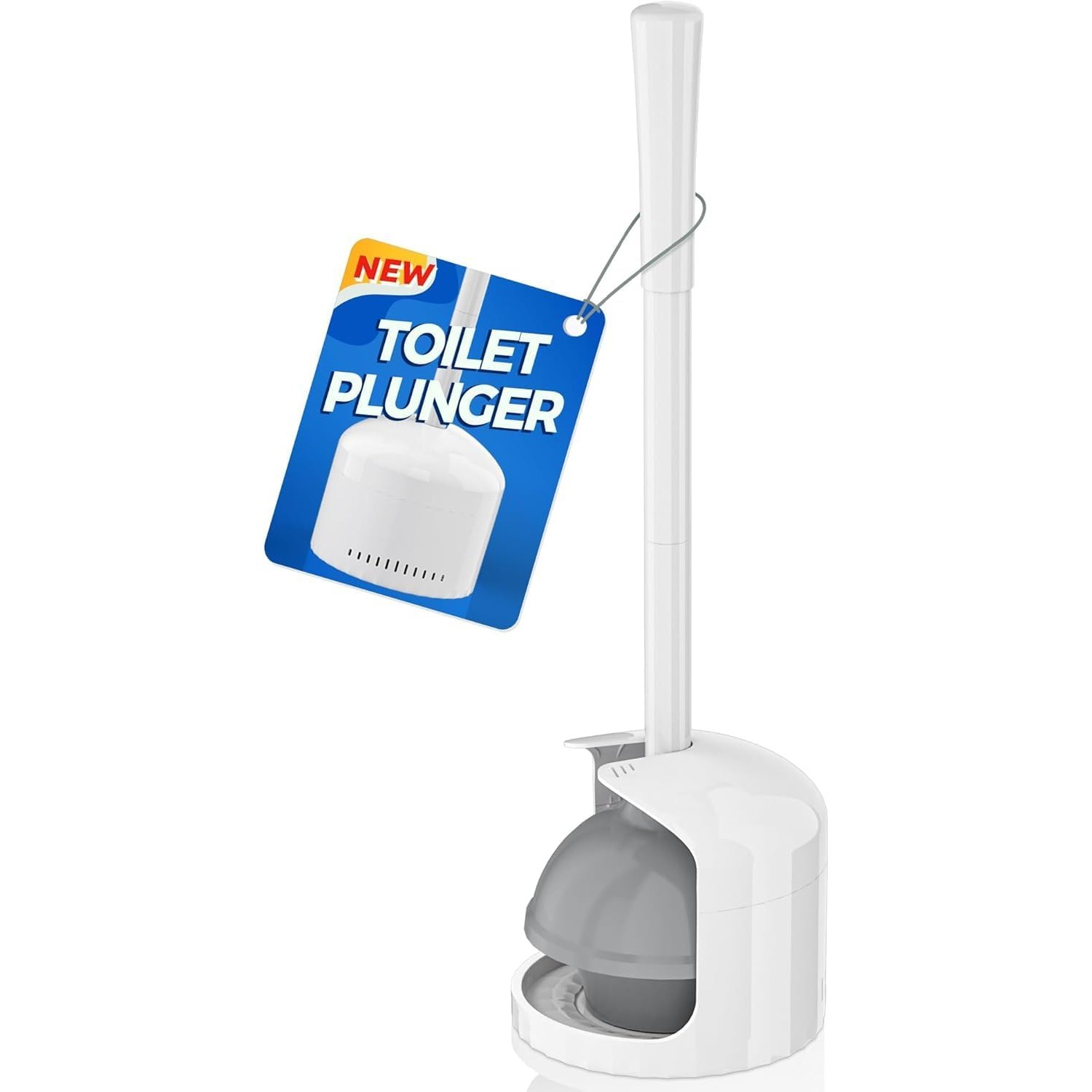
The two way toilet plunger with holder deals with all three of those problems at once. One head that changes shape for different fixtures, a long handle so you are not crouching over the bowl, and a base that catches the drips. That is the whole pitch, and it is a sensible one.
Why the shape of the head matters so much
Plunging is not about strength. It is about a seal. If the rubber does not sit tight against the surface around the drain opening, you are just pushing air around, and air compresses instead of moving the blockage. Get a proper seal and every stroke sends a pressure pulse straight down the pipe, which is what loosens packed paper or a knot of hair.
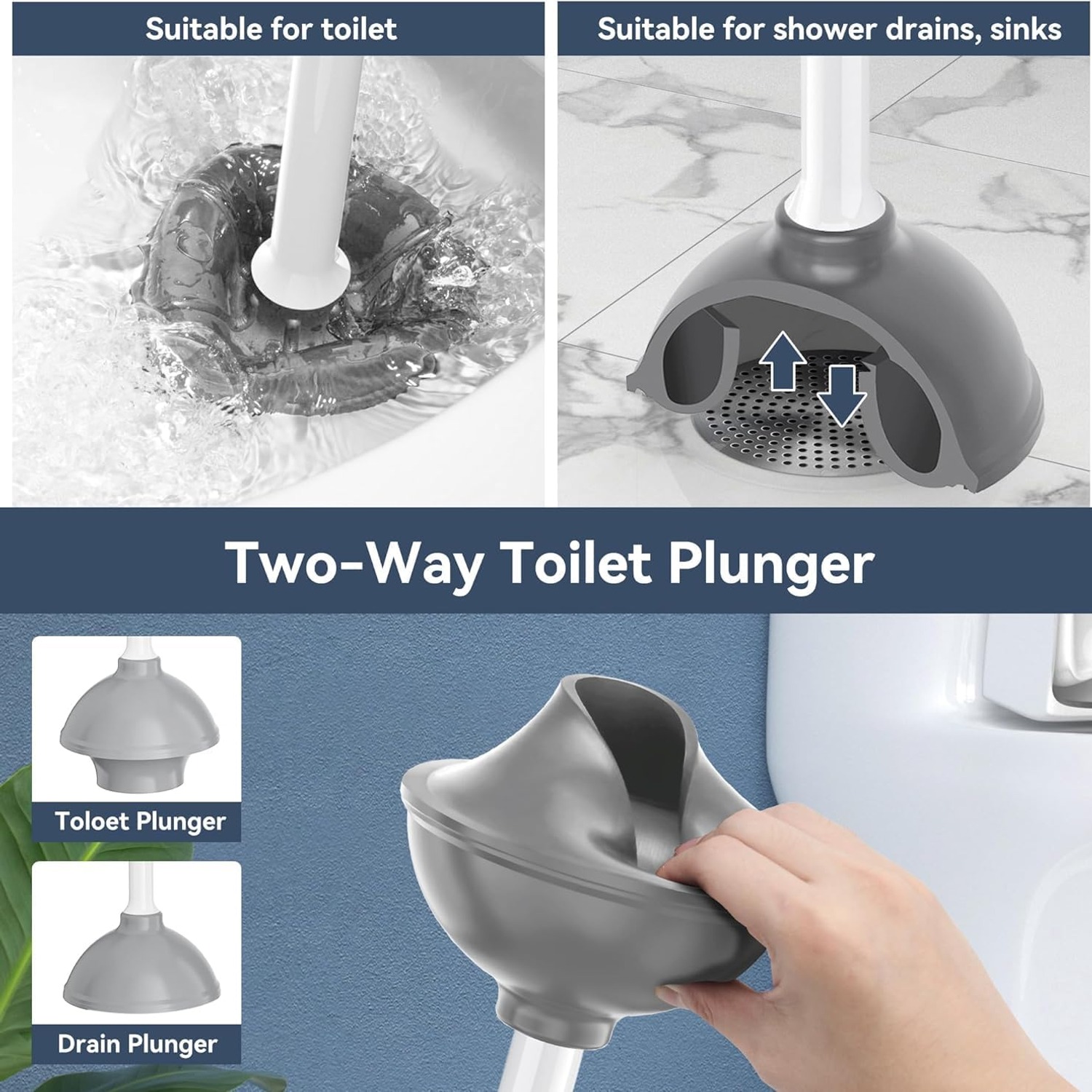
Toilets and flat drains need different shapes to achieve that. A toilet has a curved throat that drops away under the water, so the rubber needs a tapered extension that sinks into it. A bathroom sink or shower drain has a flat surface around the opening, so you need a wide, flat cup that can sit squarely on it.
This plunger does both because the inner flange folds. Pull it out for the toilet and you have the tapered shape. Push it back up inside the cup and the bottom goes flat for sinks and shower floors. People searching for the best flange plunger for toilets and the best plunger for bathroom sink are usually looking at two separate products. Here it is one.
Natural rubber and why softness helps
The head is natural rubber. That gives it the flex to squash slightly against porcelain, enamel or tile, which is exactly what you want. A stiff plastic cup skates around and breaks its seal halfway through a stroke. Softer rubber stays put.
It also means the head takes the shape of the opening a little, which forgives small differences in fixture design. Shoppers looking for the best natural rubber plunger are usually chasing that quality, because it is the difference between a tool that works first time and one that makes a lot of noise and achieves nothing.
Rubber does need a small amount of care. Rinse it, let it dry, keep it out of the sun. Do that and it lasts.
The handle makes the job bearable
The handle on this one is 18.5 inches, about 47 cm. That is longer than the stubby handles you find on cheap plungers, and the extra length changes the job in two ways.
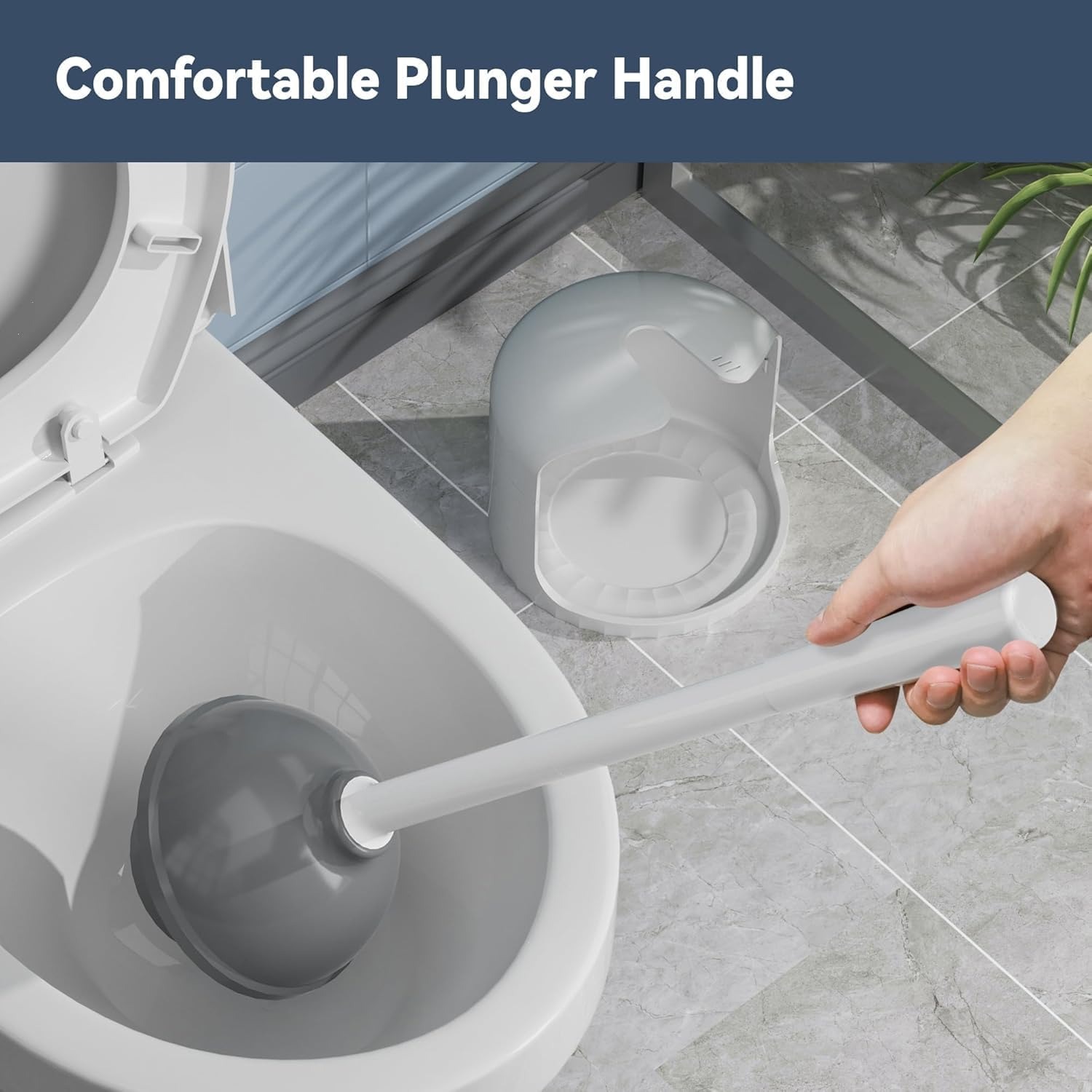
First, purchase. A longer shaft lets you put weight behind each stroke from a standing position rather than hunching over. Second, distance. Your hands stay well above the water, which is the single biggest reason people dread the task.
The grip area is wide and long, so you can get both hands on it comfortably. Wet hands and a thin handle are a bad combination, and this is a problem worth solving before you need to solve it. If you are comparing options, the best long handle plunger is usually the one that lets you stand up straight while you use it.
The holder is more useful than it looks
Plunger storage is where most products fall down. A plunger comes out of the bowl wet. If it goes straight on the floor, you get drip marks. If it goes in a sealed bucket, the water sits there and turns stale.
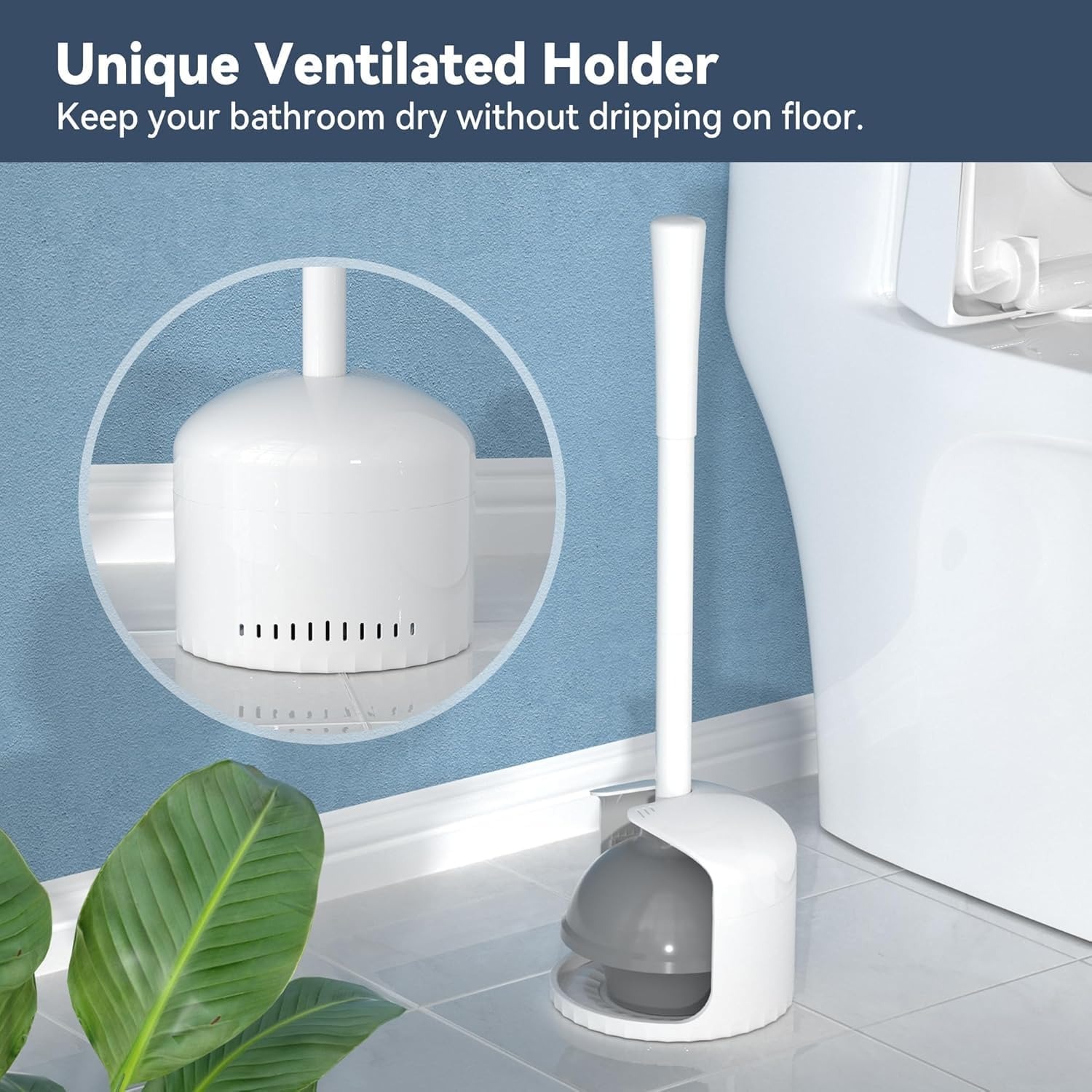
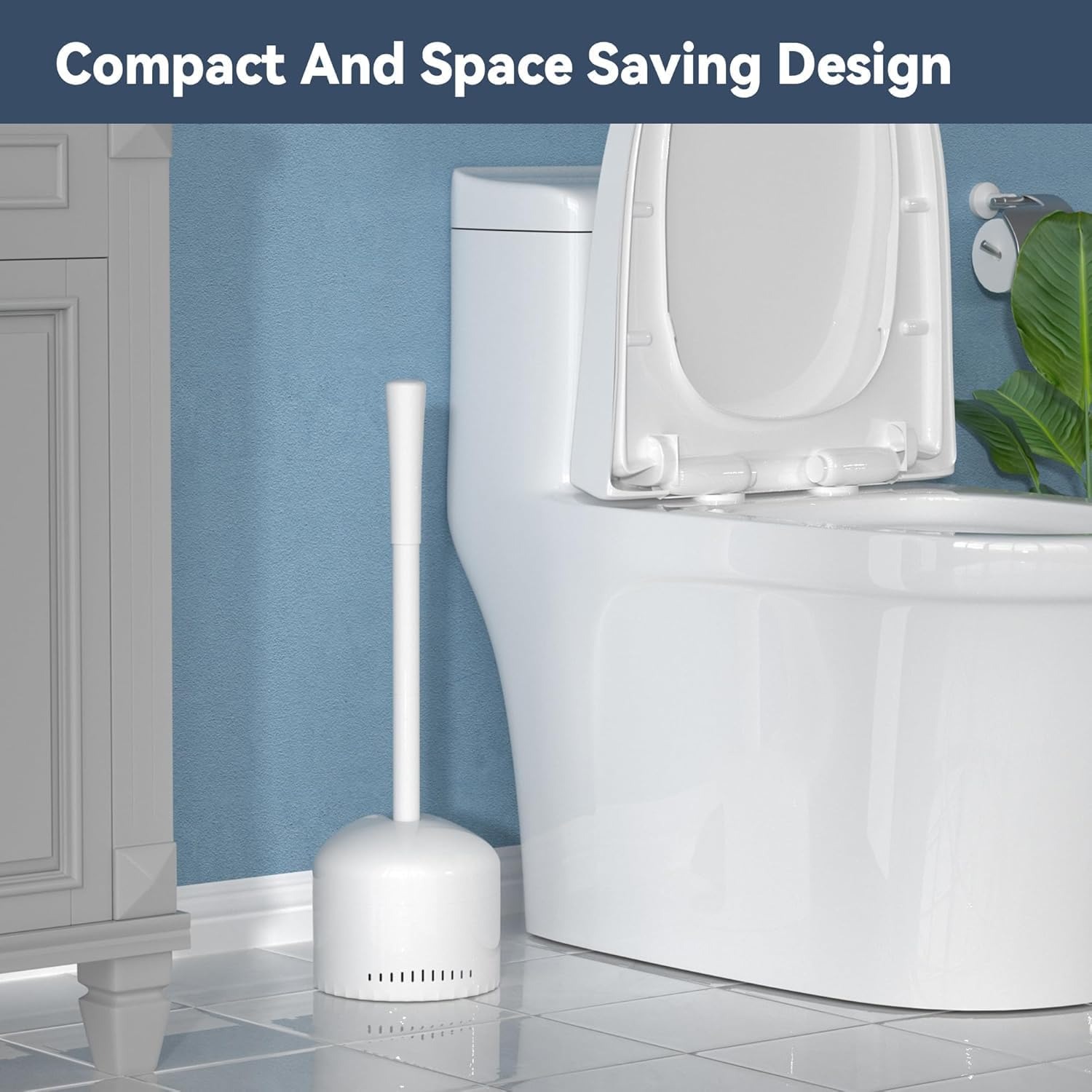
The ventilated base here splits the difference. Drips run off the head into the tray, and the vents let air move through so what collects dries out on its own. You empty and wipe the base occasionally and that is the maintenance done.
There is a second benefit to the base that people only appreciate after a while. Turn it around and the rubber head sits mostly hidden. In a small bathroom, or one that guests use, that tidies up a corner that otherwise draws the eye. If you have been looking for the best bathroom plunger with drip tray partly for appearance reasons, this is the feature that does that work.
Who this suits
It fits most households well. If you have one bathroom and want a single tool that covers the toilet, the sink and the shower drain, this is a simple answer. If you have a guest bathroom and want something that does not look like a workshop item, the hidden head position helps. Renters and holiday homes benefit for the same reason, one product instead of several.
It suits anyone dealing with the everyday soft blockages. Too much paper, hair around a shower drain, soap and grease build up in a sink trap. Those are the jobs a plunger is built for.
It is not the answer for everything. A solid object stuck in the trap will not move for any plunger. Neither will a problem out in the main drain line, where water backs up into more than one fixture at the same time. That is a sign to stop and call a licensed plumber, and any fixed plumbing work, meaning cutting, moving or connecting pipes, should go to a licensed plumber as well.
How to actually use it
Start with enough water in the fixture to cover the head. Water carries the pressure, air does not. If the toilet bowl is nearly empty, add water from a jug. If it is close to the rim, bail some out into a bucket so you have room to work.
Lower the head in at an angle so the cup fills with water instead of trapping air. Seat it over the opening and press down gently first to settle the seal. Then work in steady strokes, pushing and pulling, for ten to twenty repetitions. The pull matters as much as the push, because it rocks the blockage from both directions.
Pause and check. If the water level drops, keep going in shorter bursts. If nothing has changed after several sets, stop. More force is not the answer, and you risk splashing or stressing the fixture.
On a bathroom sink, block the overflow opening with a damp cloth before you start. On a double kitchen sink, block the second drain. Otherwise your pressure escapes through the easiest route instead of going down the pipe.
Care and storage
Rinse the head under running water after every use and shake it off over the bowl. Stand it in the ventilated holder. That handles the day to day.
Every few weeks, lift the plunger out, tip the base, and wipe it with warm soapy water or a normal bathroom cleaner. Dry it before putting the plunger back. Avoid long soaks in harsh products, because they age rubber faster than regular use does.
Store the set somewhere ventilated and out of direct sun. Beside the toilet or inside the vanity both work. Keep it away from heaters, since heat is hard on rubber over time.
Checking the fit
The listed product dimensions are 47.42 x 14.48 x 14.48 cm, and the item weight is 550 g. The 14.48 cm figure is the width across the base and head, so measure the gap where you plan to keep it. In a tight spot between a toilet and a wall, a few centimetres either way decides whether it looks intentional or awkward.
Colour, material of the handle, and country of origin are not specified by the maker, so judge the product on the measurements and the construction described rather than on assumptions.
The short version
A plunger only has one job, and it only does that job if it can hold a seal. This one covers both common shapes with a folding rubber flange, gives you an 18.5 inch handle so you can stand up and work properly, and comes with a vented base that catches drips and lets them dry.
It handles the ordinary soft blockages in a toilet, a bathroom sink or a shower drain. It will not solve a wedged object or a main line problem, and it does not pretend to. For everything else, having the right shape of rubber already sitting in a tidy base, ready to go, is worth a great deal at the moment you need it.