
The complete guide
How to Choose a Kitchen Sink Strainer and Stopper Basket
The small part that saves you a plumbing bill
Nobody thinks about the sink basket until the water starts backing up. Then it becomes the most important thing in the kitchen. A drain basket is a cheap piece of steel doing a job that the rest of your plumbing cannot do for itself, which is keeping solid waste out of the pipe in the first place.
Kitchen drains fail slowly. Coffee grounds settle. Rice swells. Small scraps of food catch on a rough spot in the pipe and everything after that catches on them. By the time the sink drains slowly, there is usually a fair amount of material sitting in the trap. A basket that actually catches waste stops that process before it starts, and it costs a fraction of a service call.
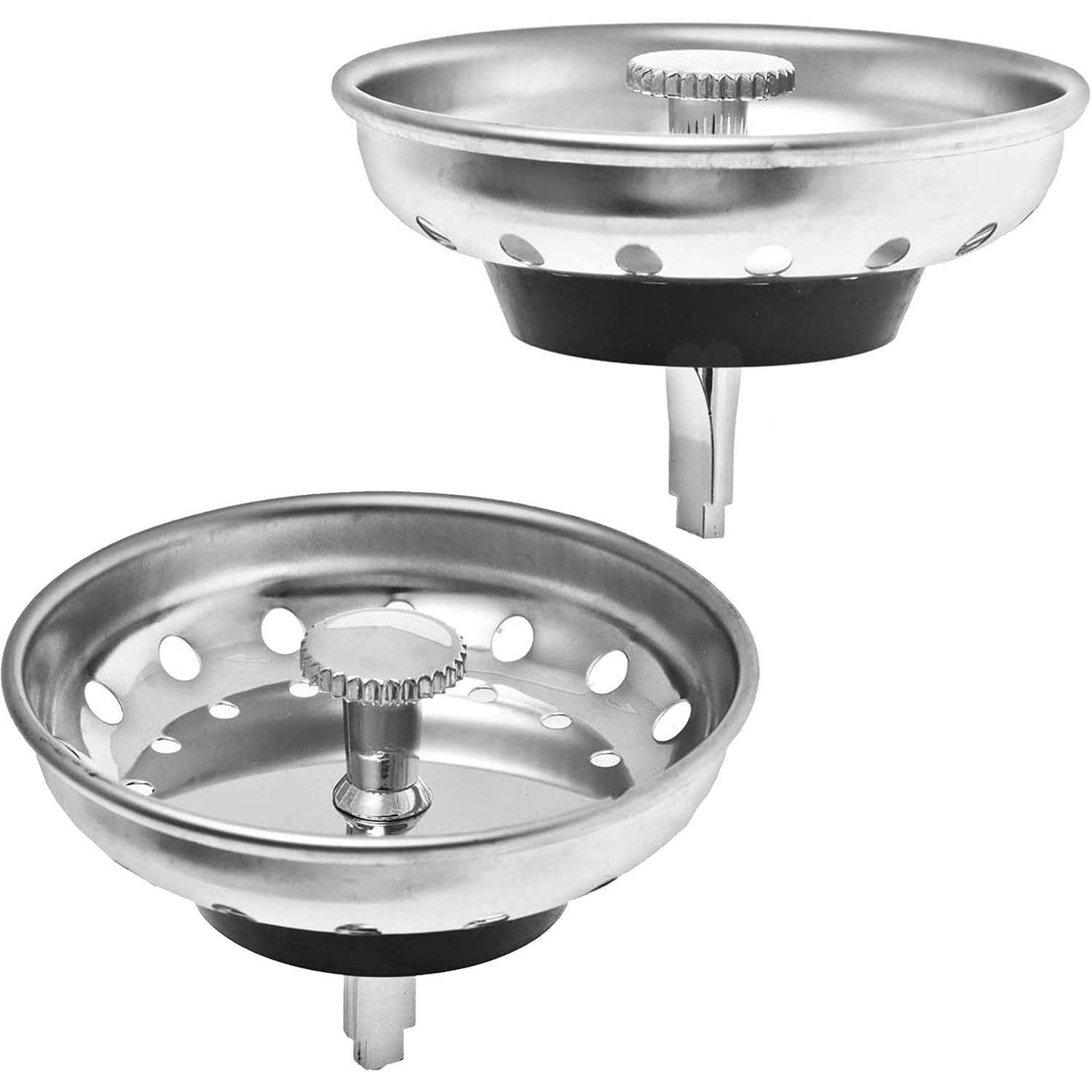
The second job matters too. A kitchen sink that will not hold water is a daily nuisance. Soaking a casserole dish, hand-washing glassware, rinsing vegetables in a filled bowl, all of it needs a seal. A combination basket does both jobs with one part, which is why the sink strainer and stopper basket 2 pack is a common replacement choice.
How a post-style basket works
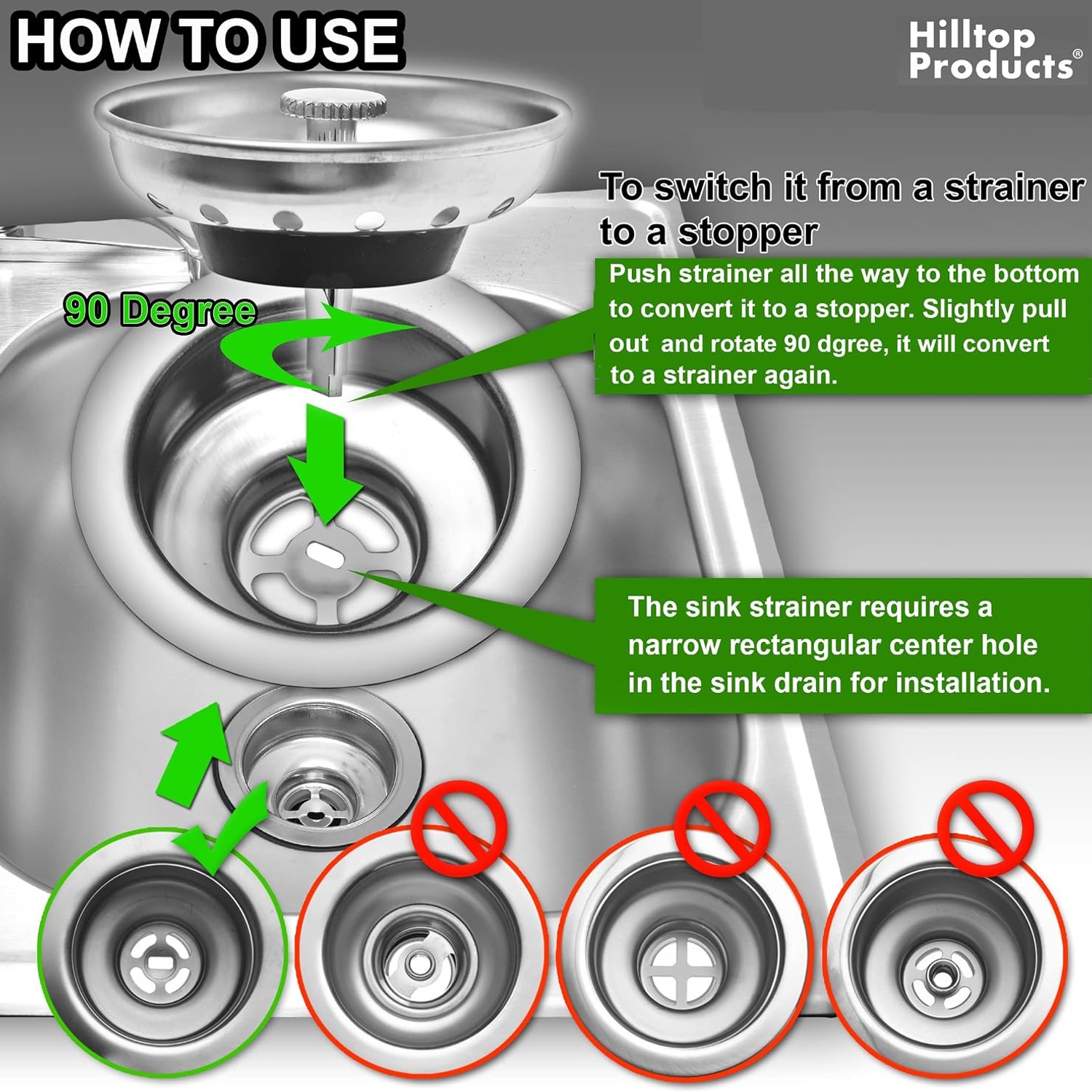
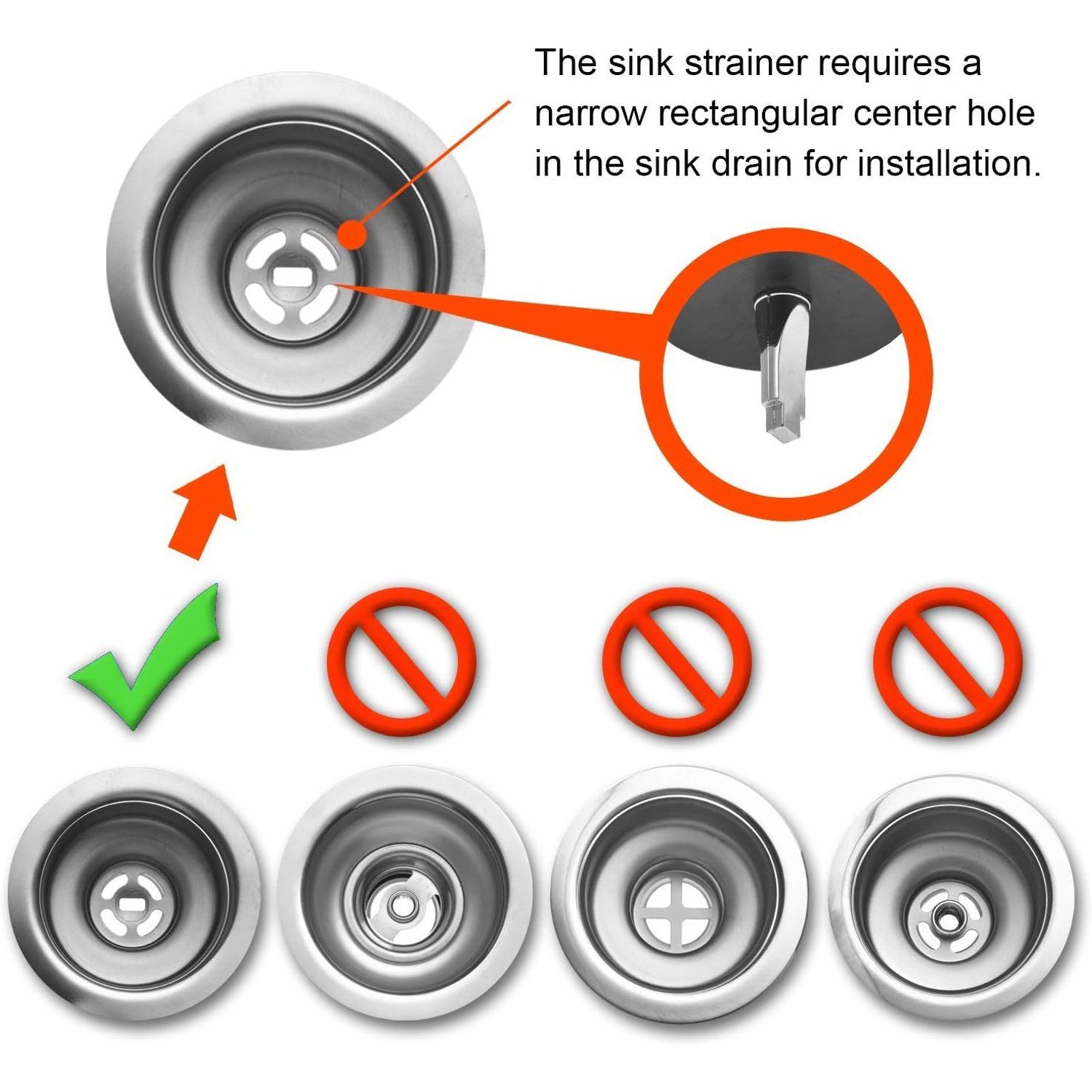
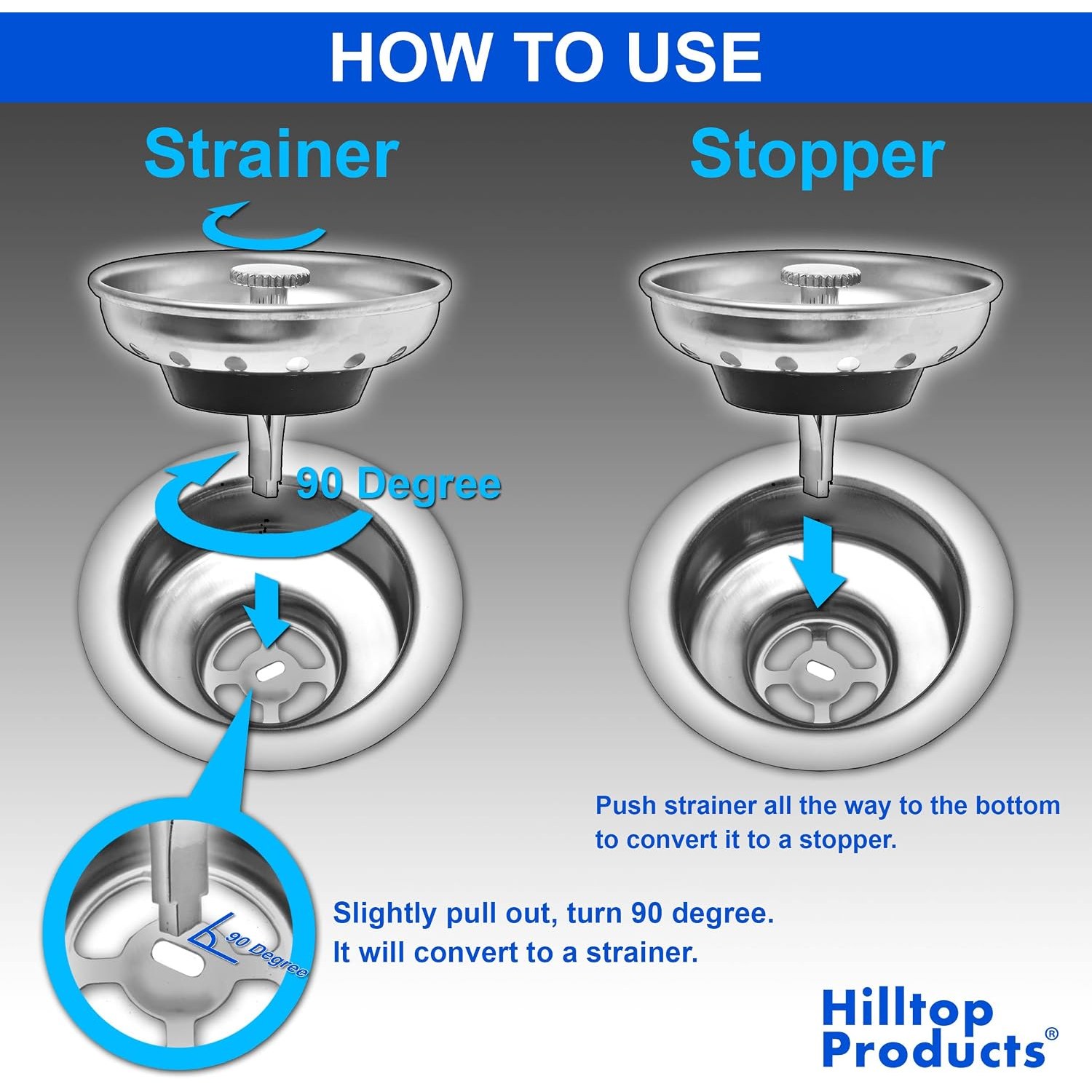
Look down at your drain opening. In most kitchen sinks there is a crossbar across the middle with a narrow rectangular slot cut into it. A post-style basket has a single post running down from the centre of the basket, and that post drops into the slot.
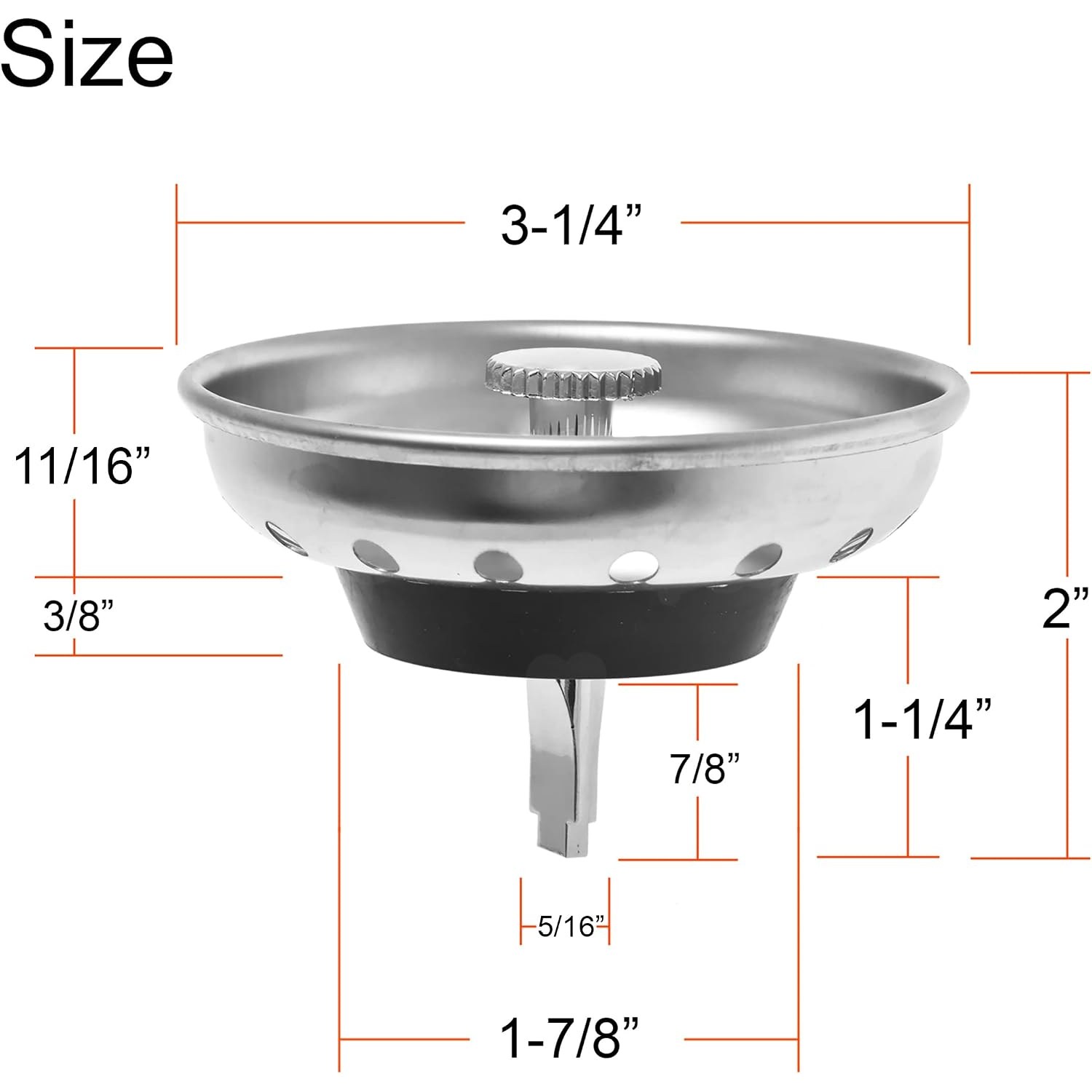
When the knob is pulled up, the seal lifts away from the drain seat and water runs through the holes in the basket. This one has 32 of them, which is enough to keep a sink draining at normal speed even with a bit of waste collecting in the bottom. Push the knob down and the seal presses into the seat, and the sink fills.
That is the entire mechanism. No lever, no linkage under the counter, no spring to break. It is the reason post-style baskets stay popular even though fancier systems exist. There is almost nothing in one to go wrong, and when it does eventually wear out, you drop in a new one and carry on.
The grip on the centre is more useful than it sounds. When you are emptying a basket full of wet scraps, having a dry knob to lift it by is the difference between a two-second job and a mess.
Checking that it fits before you order
This is the part people skip, and it is the only part that really matters. There are two things to check.
First, the diameter. Lift out your old basket and measure straight across the drain opening at the widest point. A standard kitchen sink opening comes out at about 3.5 inches (89 mm). This basket is made for exactly that, with a stated compatible groove diameter and hole size of 3.5 inches.
Second, the centre hole style. Look at the crossbar in the drain. If there is a narrow rectangular slot in the middle, a post-style basket will seat correctly. If the crossbar has a round hole, or no hole at all, or the drain uses a twist-and-lock basket with a rubber seal around the rim, then this is not the right type. A post with nowhere to sit will not seal, and you will end up with a basket that rattles and a sink that empties itself.
It is worth taking a photo of your drain opening on your phone before you order. If you are unsure, send it to us and we will tell you whether a post-style basket suits. That takes a minute and saves a return.
For a double-bowl sink, check both openings. They are usually the same, but on sinks where one side has a garburator fitting, they will not be. The best 3.5 inch sink strainer for one bowl may be wrong for the other.
Materials and why they matter here
The build listed for this basket is stainless steel with plated chrome and a plastic knob, finished glossy. That combination is normal for kitchen drain parts, and there is a practical reason for each piece.
Steel takes the heat. A kitchen sink sees water that comes out hot and detergent that is more aggressive than most people realise. Thin plastic baskets soften and warp over time, and once a basket warps it stops sealing. Steel holds its shape.
The chrome plating is what makes it wipe clean. Food residue and grease do not grip a glossy surface the way they grip a matte or textured one. That is also why the plating is worth protecting. Steel wool and scouring powder will dull it, and once the plating is scratched the surface starts catching grime.
The plastic knob is there because you touch it several times a day, often with wet hands. Plastic stays comfortable to grip and does not transfer heat the way a metal knob would when the sink is full of hot water.
Living with it day to day
The routine is simple. Leave the basket in the drain with the knob up. Scrape plates into the garbage before they go in the sink, because a basket is a backstop, not a disposal system. Rinse dishes as normal and let the basket catch what gets past you.
When the basket starts holding a visible layer of waste, lift it out by the knob, tip it into the garbage and rinse it. Thirty seconds. Doing that after each wash-up keeps the drainage holes clear, and clear holes mean the sink keeps draining at full speed.
Once a week or so, give it a proper clean. A soft brush and dish soap will shift grease from around the holes, or it can go on the top rack of the dishwasher. The maker states it is dishwasher safe, which takes the chore off your hands entirely.
Two things to avoid. Do not attack the chrome with abrasives. And do not reach for chemical drain cleaners when things slow down, since the better fix is almost always mechanical, and those products are hard on both your pipes and your hands.
A note on expectations. A basket catches solids. It does not stop grease, which goes down as a liquid and hardens further along the pipe. Pour cooking fat into a container and bin it rather than rinsing it away, and your drain will stay healthy far longer than any strainer alone can manage.
Why a two pack is the sensible buy
Sink baskets have a way of disappearing. They get tipped into the garbage along with the scraps, left in the dishwasher, or knocked off the counter and dented. Replacing one at a time means living with a sink that will not hold water until the next order arrives.
Having a spare also means you can run one through the dishwasher while the other stays in service. For a double-bowl sink, two is simply what you need. People shopping for the best replacement sink basket usually end up buying a second one within a year anyway, so it makes sense to have it on hand from the start.
Store the spare somewhere dry, under the sink or in a drawer, and dry it properly before you put it away so the plating stays clean.
The short version
Measure your drain opening and check for a rectangular slot in the crossbar. If you have 3.5 inches and a slot, this basket drops straight in with no tools.
It strains when the knob is up and seals when the knob is down. Steel and chrome handle hot water and detergent. Lift it out, tip the scraps in the garbage, rinse, and put it back.
Two in the pack means one for each bowl or one in reserve. Keep the holes clear, keep grease out of the sink, and this cheap part will do more for your plumbing than anything else in the kitchen.