
The complete guide
How to Choose and Use a Flexible Drain Brush Set
The problem nobody notices until the water sits
A drain does not fail overnight. It slows down so gradually that you adjust to it without realizing. The bathroom sink takes a second longer to empty. Then five seconds. Then there is a small pool of grey water sitting around the stopper while you brush your teeth.
What is happening inside the pipe is simple. Soap, hair, toothpaste, shaving cream and skin oils stick to the pipe wall. Each layer catches the next one. The opening gets narrower and narrower until the water cannot get through fast enough. In a kitchen sink it is the same story with grease and food residue doing the sticking.
The reason this is frustrating is that most of the tools people reach for do not touch that film. A plunger pushes water at it. A pour in cleaner runs down the middle and past it. Neither one scrubs. A brush does, and that is the whole argument for owning one.
How a flexible drain brush actually works
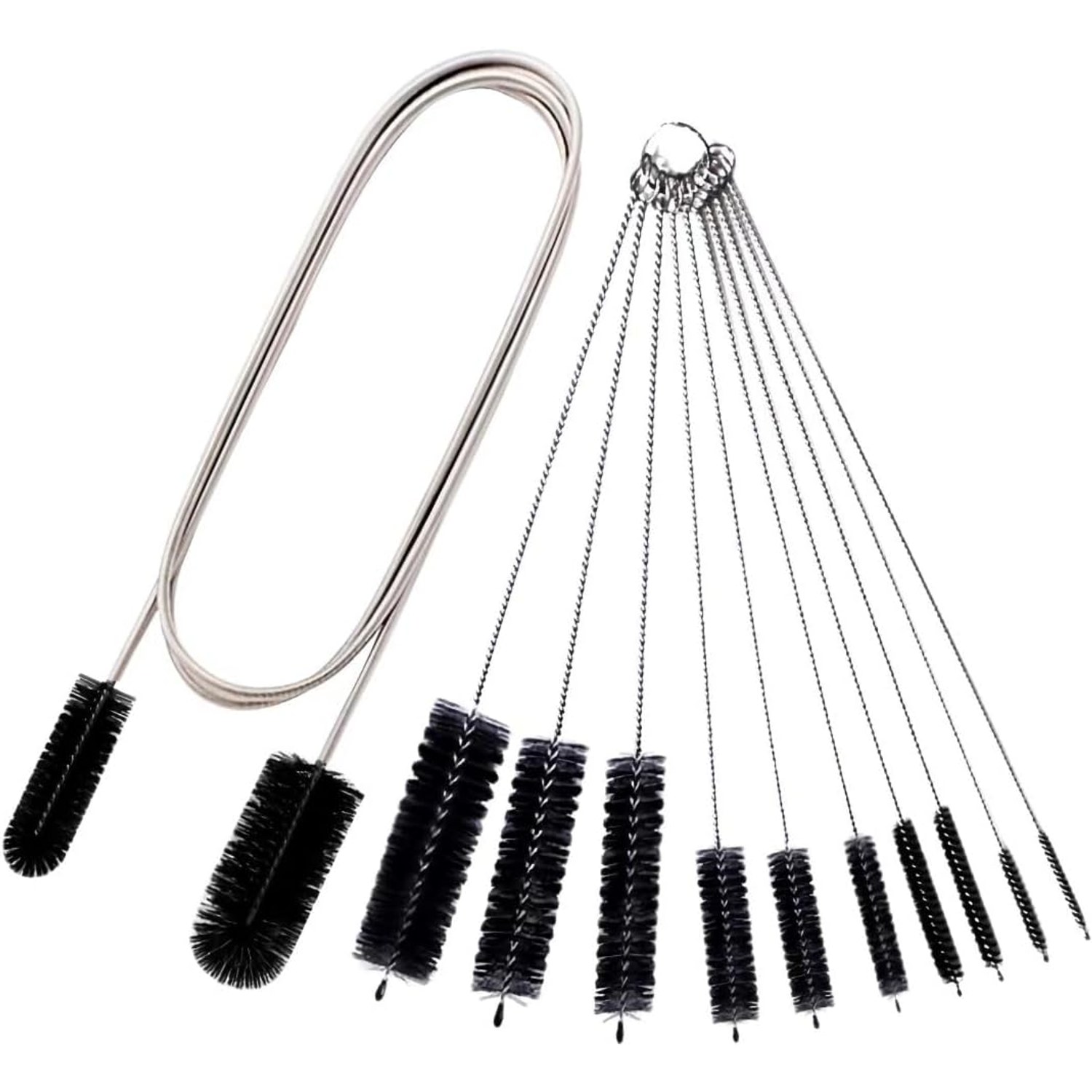
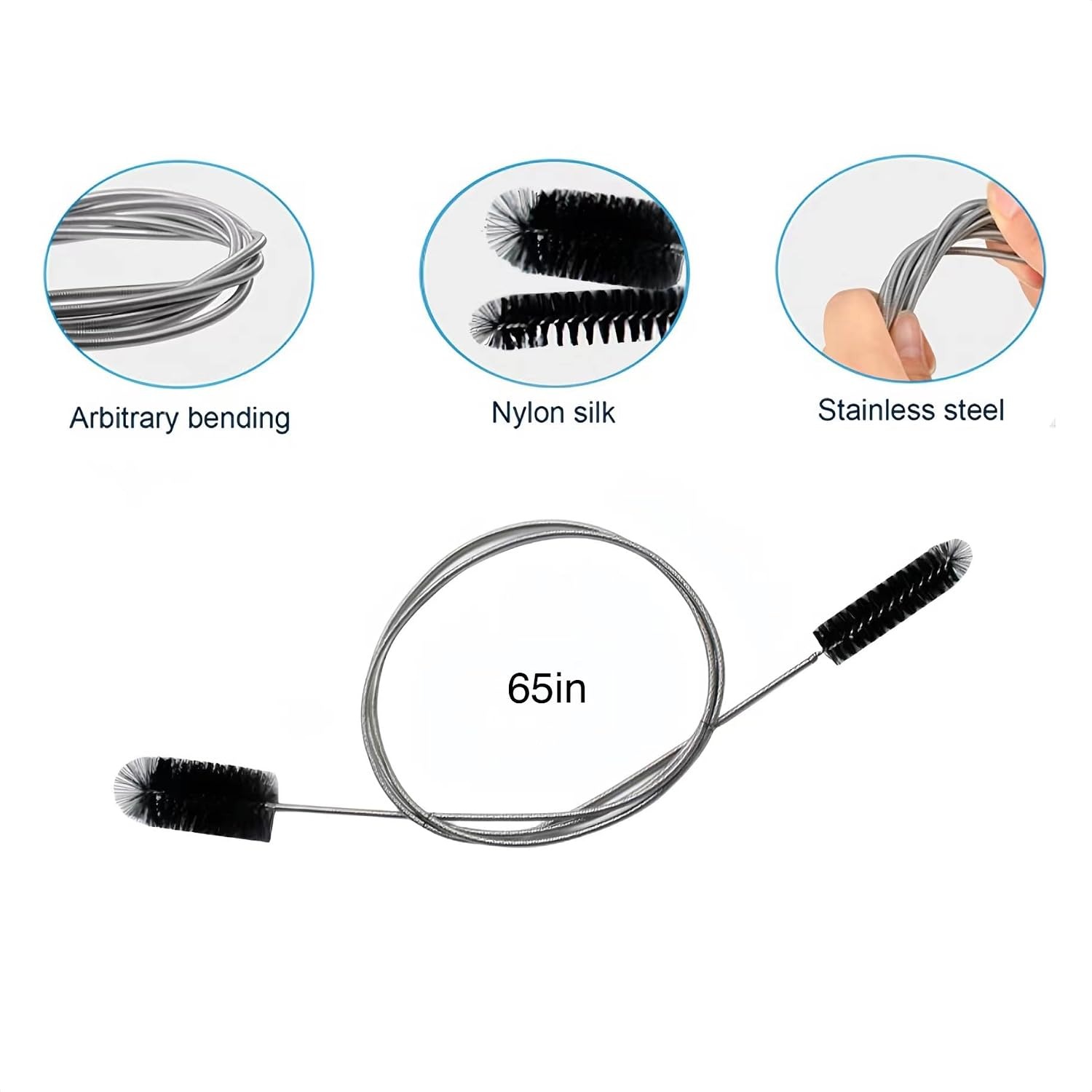
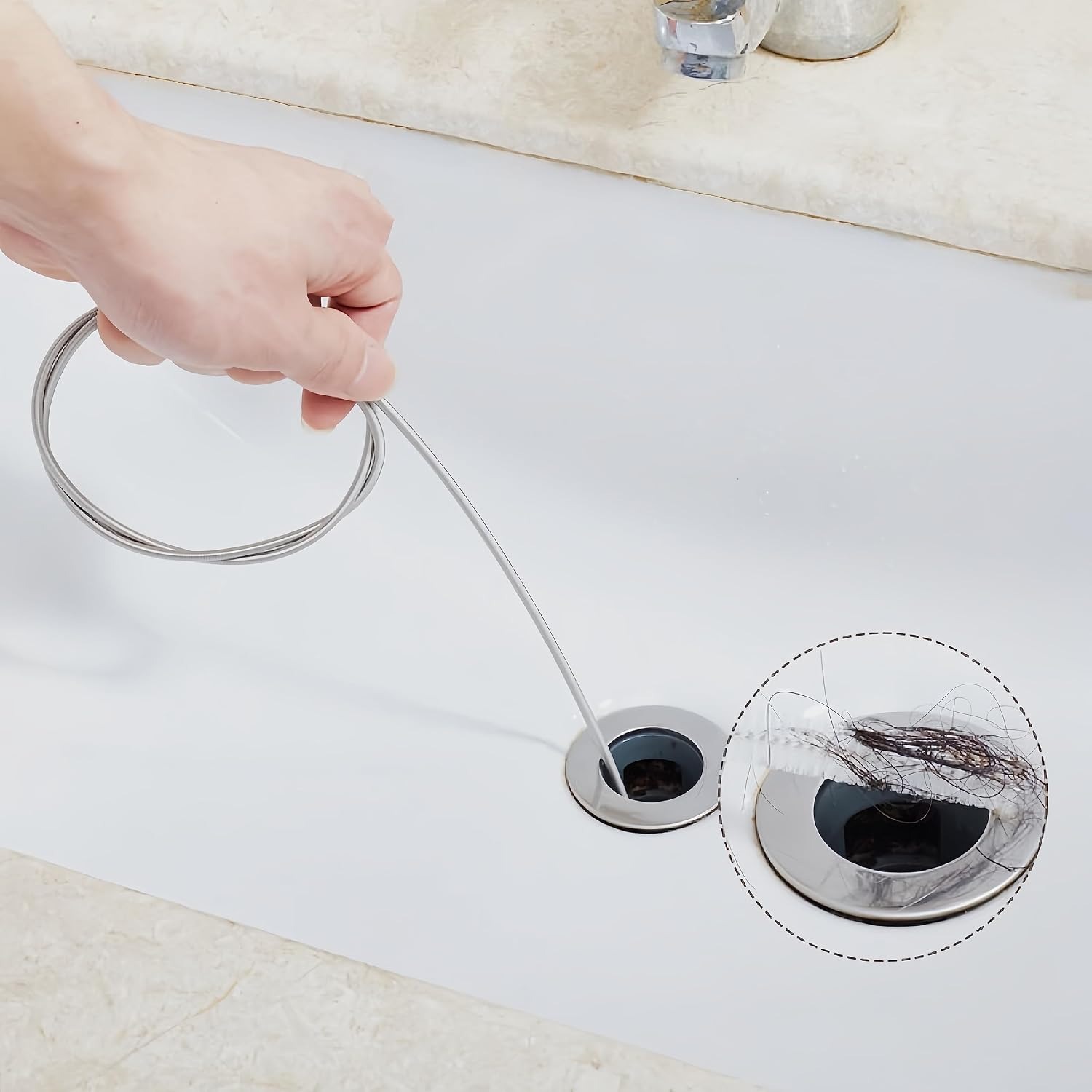
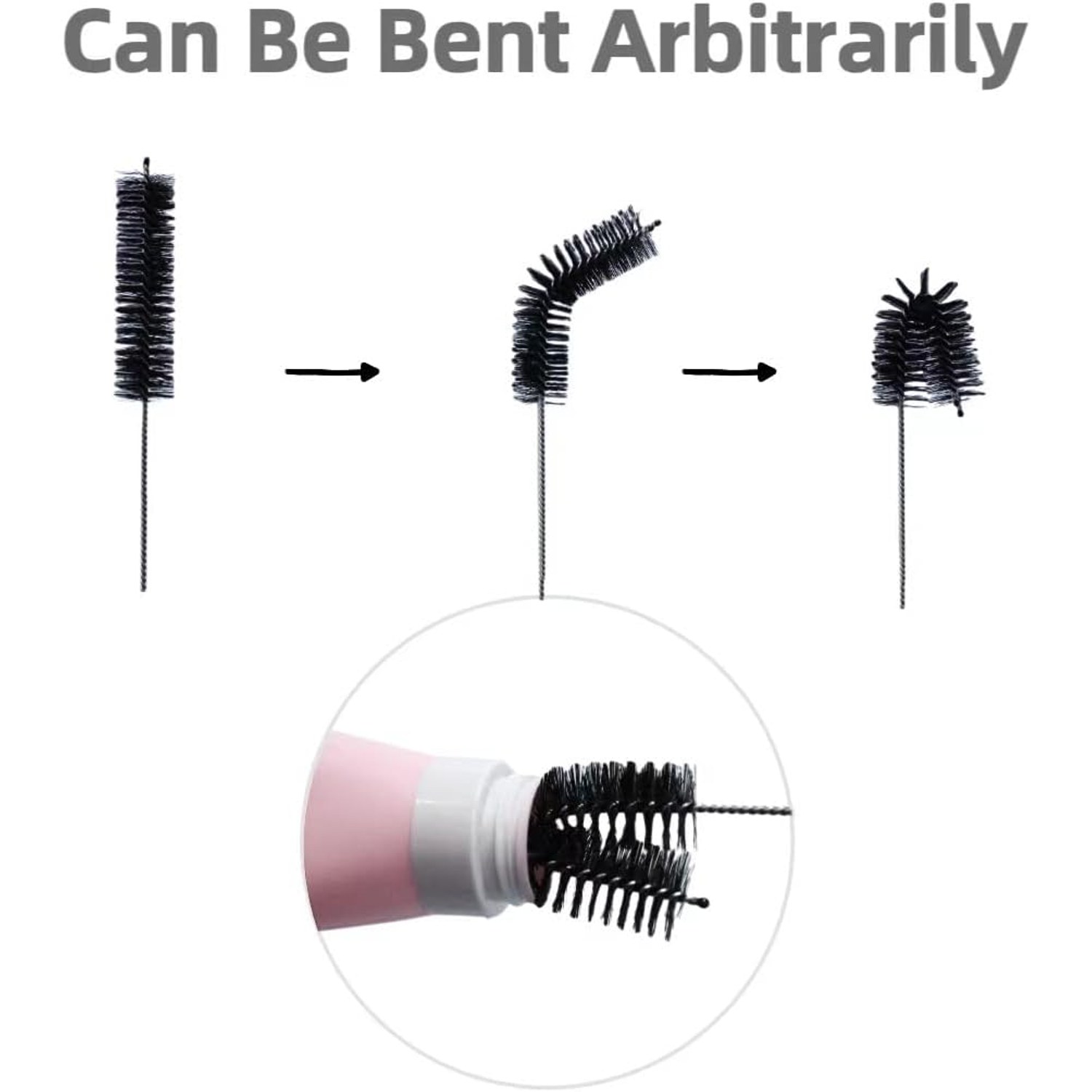
The long brush in this set is 65 inches of brush length wound around a stainless steel spring core. The spring is the clever part. It is stiff enough along its length that you can push and twist it, but it bends sideways without kinking, so when it meets the U bend under a bathroom sink it follows the curve instead of stopping dead.
Around that core sit nylon bristles. As you turn the brush, the bristles sweep the inside wall of the pipe. Soft buildup breaks loose and either washes away with running water or comes back out tangled in the brush when you pull it. You will see what was in there, which is unpleasant and also the point.
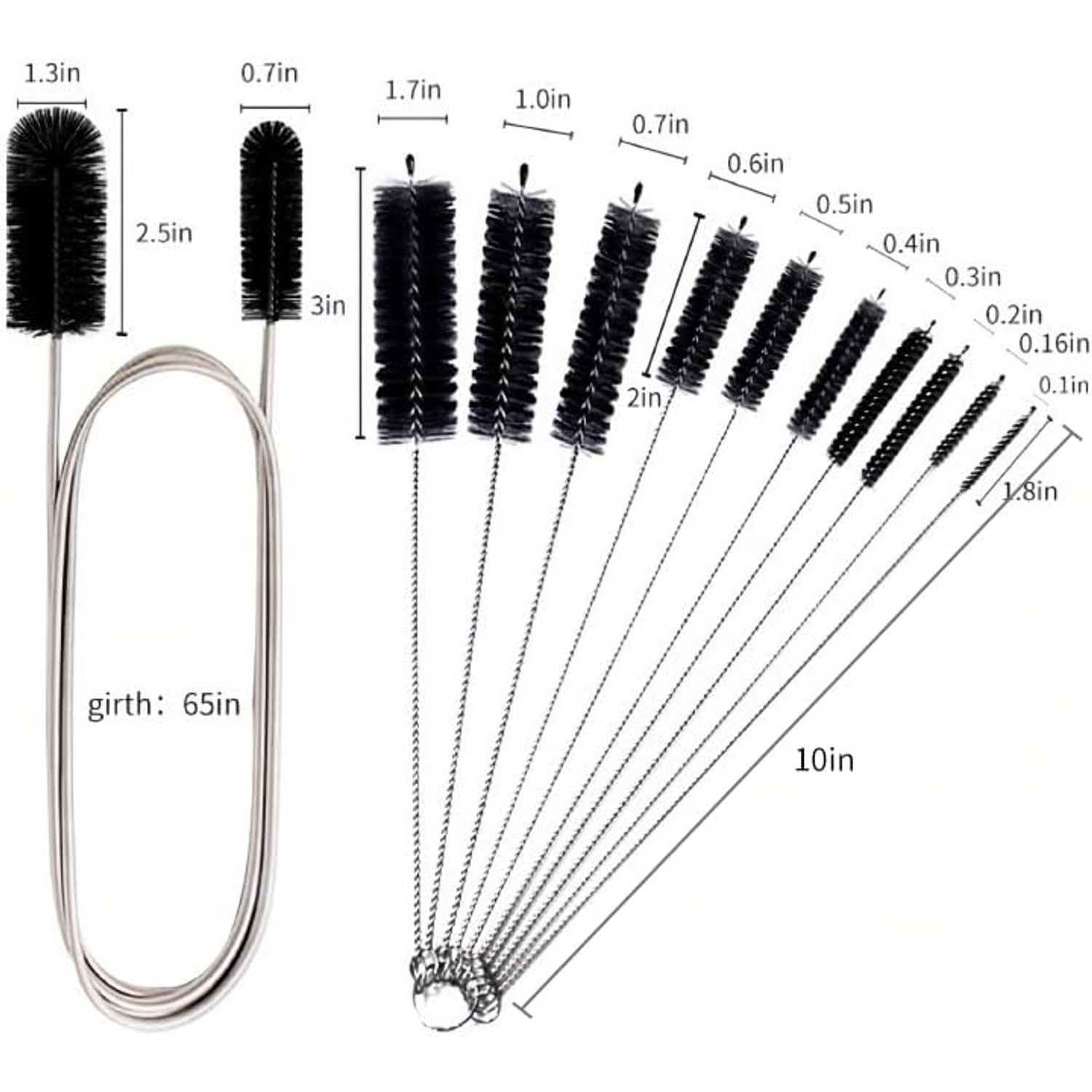
The brush is double ended. One head is 1.3 inches across, the other is 0.7 inches. That matters more than it sounds. Pipe diameter changes as you move through a system, and having two sizes on the same tool means you can flip it over and try again without hunting for a second brush.
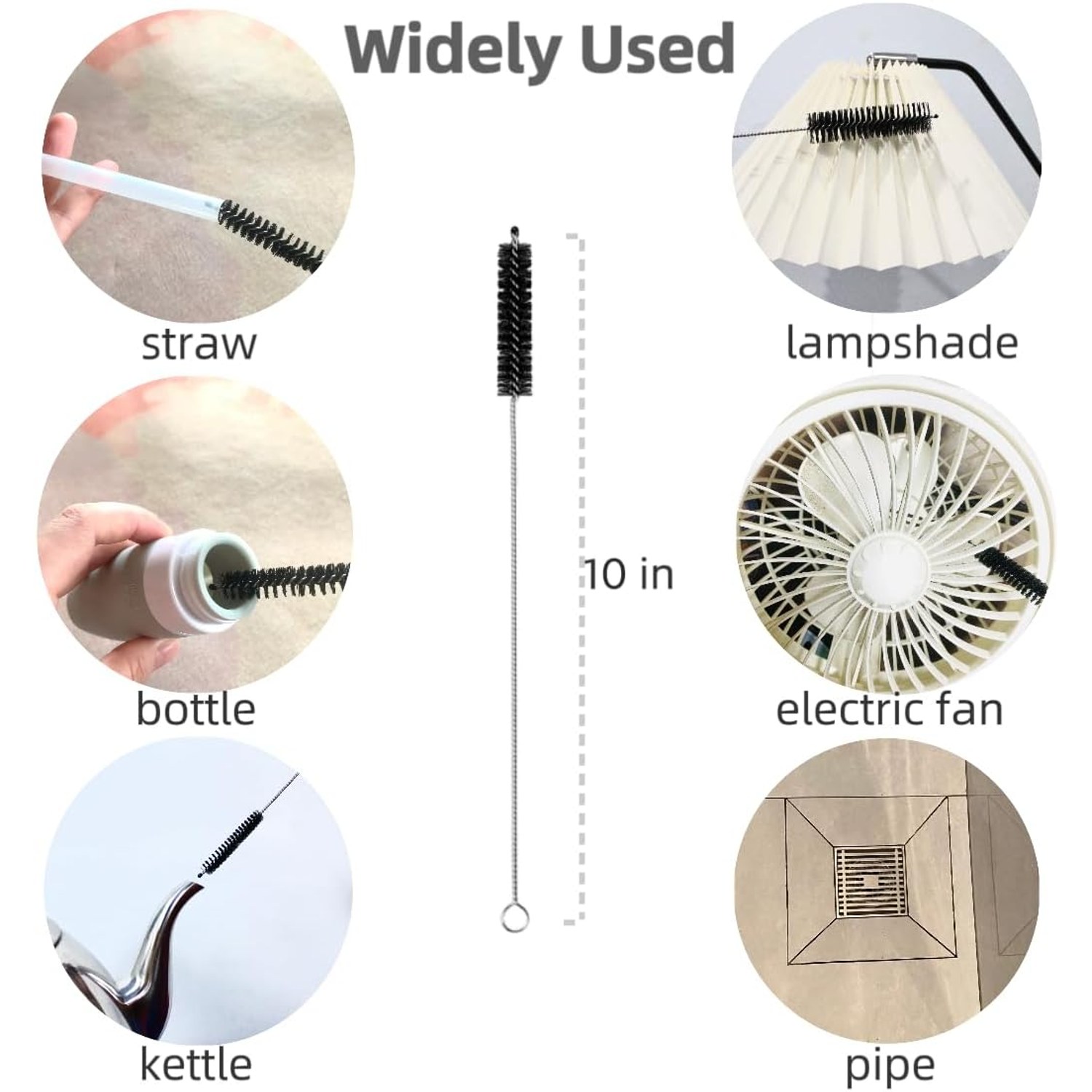
Alongside it, you get ten single head tube brushes, each 10 inches long. The diameters are 1.7, 1.0, 0.7, 0.6, 0.5, 0.4, 0.3, 0.2, 0.16 and 0.1 inches. These are not filler. They do the jobs the long brush is too big or too floppy to handle, like the inside of a stopper housing, a faucet aerator, an overflow slot or a length of narrow tubing.
Who this set suits
If you rent, this is a good tool to own because it is maintenance you can do yourself without touching the plumbing. If you own, it saves you from reaching for a call out over something that is really just housekeeping.
It suits households with long hair, where the bathroom sink and tub collect a lot every week. It suits kitchens that cook with oil, where the greasy film builds quietly. And it suits anyone who likes the idea of a washable tool over a single use one. Rinse it, hang it, use it again.
It is not the right tool for a pipe that has already stopped completely. If water will not move at all, or if the problem sits past the point you can reach, that is a licensed plumber's job. The same applies to anything that means cutting, moving or connecting pipework.
How to choose the right size for the job
Start by measuring. Hold a ruler across the drain opening and note the width. Then pick the closest listed brush diameter, or go one step under rather than one step over. A brush that is slightly small still scrubs. A brush that is too big jams, and then you are working to get it back out.
For a standard bathroom sink, most people find the 0.7 inch end of the long brush is the right starting point. For a tub drain opening, the 1.3 inch end or the 1.7 inch tube brush usually fits better. For a faucet aerator, work down through the middle sizes until one slides in with a little friction.
The thinnest brushes, the 0.16 and 0.1 inch ones, are worth keeping aside for narrow tubing. They are fine and will bend if you force them, so they want a light hand.
One thing worth saying: the best flexible drain brush for your house is whichever one actually fits your drains. That is why the range of sizes here is the value, not the length alone.
Using it without making a mess
Put a towel or a shallow bucket under the work area first. Whatever comes back out on the bristles has to go somewhere, and it will drip.
Run warm water before you start so the buildup softens. Add a little dish soap if you are working on a kitchen pipe, since the soap helps break the grease rather than just pushing it along.
Feed the brush in slowly, turning as you go. Do not shove. If the head catches, back it off an inch, turn it the other way and try again. When you hit the trap, ease into the bend and keep rotating. The spring will find its way.
Pull the brush back out in stages rather than one fast yank, and wipe or rinse it each time before going back in. Two or three passes gets more off than one aggressive one.
Finish by running hot water down the drain for a minute to flush what you loosened.
Looking after the brushes
Rinse every brush you used under warm water straight away. Work a drop of dish soap through the bristles with your fingers and rinse again until the water runs clear.
Then hang them. Each handle has a hole for exactly this reason. Hanging lets air get at both the bristles and the steel core, and dry steel lasts longer than wet steel sitting in a drawer. A small hook inside the vanity cupboard is all it takes.
Straighten the long brush before you store it. Spring steel is happy to flex, but it is happier returning to straight than sitting coiled for a month.
If a bristle head starts looking flat and tired after heavy use, trim nothing and replace the brush. Flattened bristles stop scrubbing, and the set is cheap enough that there is no point nursing a worn piece along.
Where the small brushes earn their keep
People buy the set for the 65 inch brush and then end up using the little ones constantly. The overflow slot on a bathroom sink is one spot. The underside of a pop up stopper is another, and it is genuinely grim once you look at it.
A faucet aerator is worth doing twice a year. Unscrew it, brush the screen under running water, screw it back on. Water pressure often improves noticeably.
Narrow tubing of any kind, the sort you cannot get a cloth into, is the other obvious use. This is where the best nylon tube brush set earns its space, because nothing else in a normal kitchen drawer reaches.
The short version
Eleven brushes. One long flexible one at 65 inches with two head sizes, ten short ones in ten diameters from 1.7 inches down to a tenth of an inch. Nylon bristles, stainless steel handles, a hanging hole in each.
Use them every few weeks and your drains stop slowing down in the first place. Rinse them, hang them, and they keep working. Measure before you pick a size, go slow around the bend, and leave anything that needs pipes taken apart to a licensed plumber.